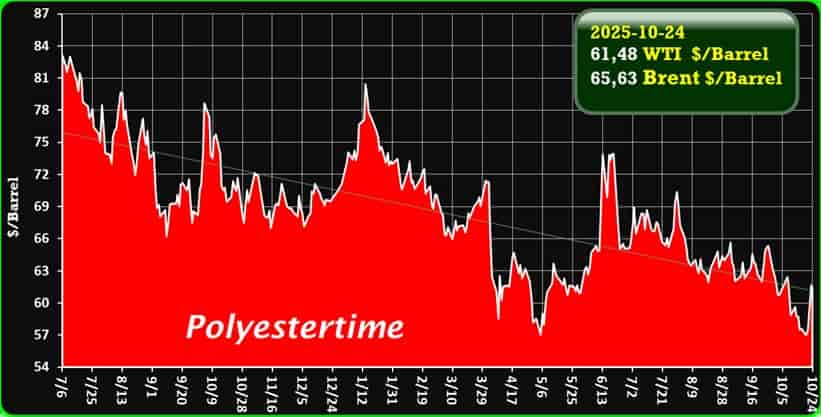
Global oil price rises sharply amid new U.S. sanctions on Rosneft and Lukoil – indicating tighter supply and stronger upside 24-10-2025
Oil Price – Current oil market snapshot
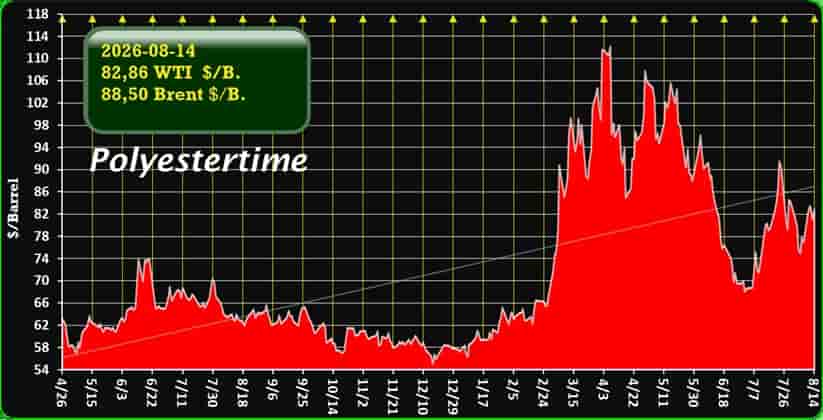
As of Friday, October 24 2025, the global oil price continues to reflect heightened geopolitical tension and supply uncertainty. According to Reuters, Brent crude futures were trading around US$65.63 per barrel, down slightly from the previous day’s surge, while U.S. West Texas Intermediate (WTI) stood at about US$61.43. Reuters+2Angel One+2
| Benchmark | Price | Movement | Weekly outlook |
|---|---|---|---|
| Brent | ~ US$65.63/bbl | -0.55% intraday | On track for ~7% weekly gain Angel One+2Moneycontrol+2 |
| WTI | ~ US$61.43/bbl | -0.58% intraday | Similar weekly strength Reuters+1 |
While the intraday drop suggests some profit-taking, the weekly gain underscores that the oil price environment is being driven by more than short-term trading: structural supply concerns are now front and centre.
Why is the oil price responding?
1. New sanctions on Russian oil majors
The primary driver behind the surge in oil price is the announcement by the U.S. government of sanctions targeting two of Russia’s biggest oil producers: Rosneft and Lukoil. These companies together account for a meaningful share of Russian oil exports — industry commentary suggests over 3 million barrels per day of exports are exposed. Atlantic Council+2Atlantic Council+2
The sanctions include freezing U.S. assets of those companies, and threats of “secondary sanctions” against purchasers (such as refineries in India or China) that continue to transact. Reuters+1
2. Supply-side risk & buyer caution
Because major buyers in Asia (notably China and India) are reconsidering or pausing purchases of Russian crude for fear of sanctions exposure, the stop-gap effect is to tighten perceived supply flows, thereby pushing up the oil price. Reuters+1
3. Market sentiment & technicals
Analysts note that although the oil price shot up more than 5% on the sanction news, the market is in a “wait-and-watch” mode, looking for further escalation or relief. Reuters+1 At the same time, some corrective signals are emerging, signalling that while momentum is positive, the upward move may pause or be tempered. Economies.com
Impact of the sanctions on global oil flows & the oil price
The sanction measures targeting Rosneft and Lukoil mark a significant shift in energy geopolitics. The key implications:
-
Russia’s export revenue hit: Since these companies accounted for a large portion of Russia’s oil-export earnings, curtailing their business imposes pressure on Moscow’s financial resources. AP News+1
-
Shift in buyer behaviour: Chinese and Indian refiners are increasingly cautious about engaging with these Russian suppliers, which may force them to seek alternative supplies — likely at higher cost. Reuters+1
-
Potential for global supply tightening: If Russian exports decline or become more costly to ship (owing to sanctions/shadow-fleet pressure), global supply margins may shrink — which tends to drive the oil price higher. Atlantic Council+1
-
Uncertainty remains: While the threat is real, it remains to be seen how much of the disrupted Russian oil flow will simply be rerouted, discounted, or replaced — which means the oil price response might hinge on actual execution more than only the headline sanction. Reuters+1
What this means for consumers and markets
-
For oil-importing nations: A higher oil price often translates into higher fuel costs, inflationary pressures, and stress on balance-of-payments.
-
For oil companies and energy-sector investors: The oil price environment is now more favourable for upstream producers, but also carries greater risk from geopolitics.
-
For global economy: While the oil price remains moderate compared to historical highs (mid-US$60s per barrel), the direction and volatility matter. A renewed price climb could strain heating/transportation costs, especially during winter in the Northern Hemisphere.
- Oil Price – Surging Supply Risks Propel Oil Price to Unexpected Gains Amid Weak Demand — Global Markets Caught Off Guard and Investors Brace for What’s Next