Oil Price Volatility Signals Fragile Global Demand Outlook
Oil price trends April 2026 reveal volatile markets as Brent and WTI fluctuate amid geopolitical tensions, weakening demand signals, and uncertain global economic outlook
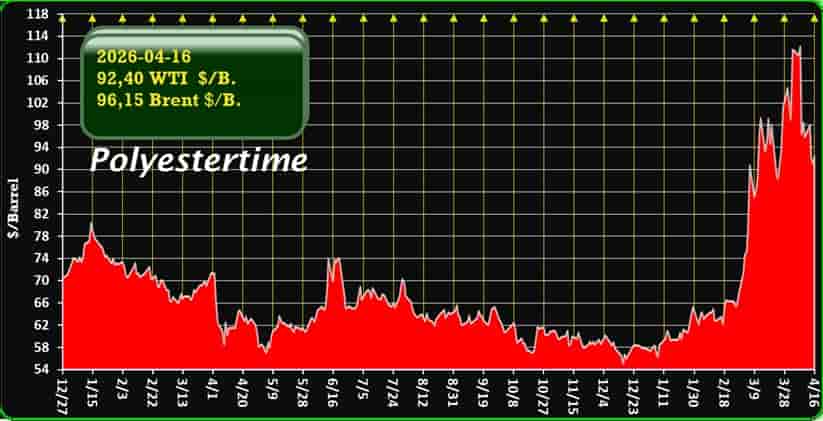
Oil Price Trend: April 16, 2026 Snapshot
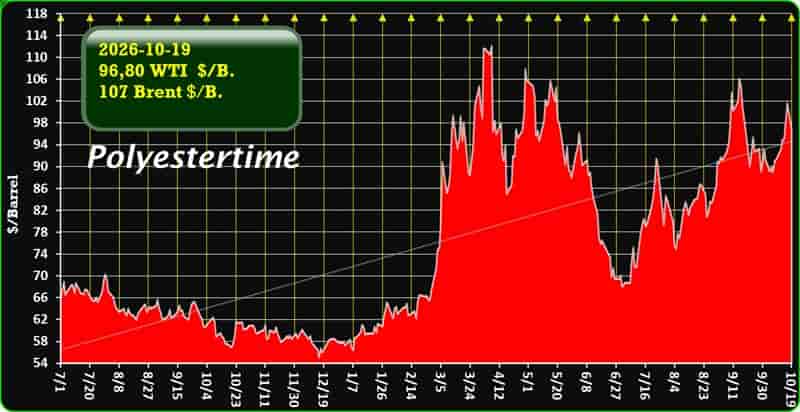
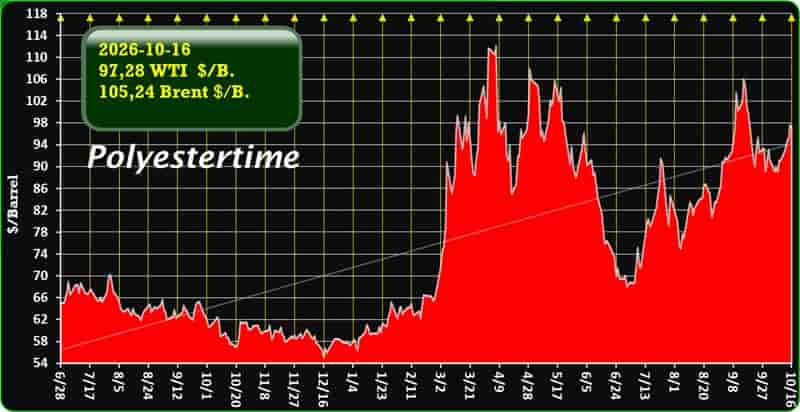
As of April 16, 2026, the oil price remains elevated but volatile, reflecting a complex interplay between geopolitical disruptions and weakening global demand. Brent crude is trading in the $90–100 per barrel range, while West Texas Intermediate (WTI) fluctuates between $85–95 per barrel.
Recent sessions show downward pressure after earlier spikes above $100, with Brent around $94–96 and WTI near $91–92 following optimism over potential diplomatic progress in the Middle East.
Key Benchmarks Overview
| Benchmark | Price Range (April 2026) | Recent Movement |
|---|---|---|
| Brent Crude | $90–100/bbl | Slight pullback after peaks |
| WTI Crude | $85–95/bbl | More volatile, sharper declines |
What Is Driving the Oil Price Today
1. Geopolitical Risk and Supply Disruptions
The dominant driver of the current oil price environment is the ongoing geopolitical tension involving Iran, the U.S., and regional actors. Disruptions in the Strait of Hormuz, a critical artery for global oil flows, have significantly constrained supply.
At one point, supply disruptions removed millions of barrels per day from the market, pushing prices sharply higher earlier in April.
However, even tentative ceasefire discussions or diplomatic signals quickly trigger price corrections, highlighting how sensitive the oil price is to geopolitical headlines.
2. Demand Destruction: A Growing Concern
A critical theme shaping the oil price outlook is “demand destruction”—a concept increasingly emphasized by the International Energy Agency (IEA).
The IEA now expects global oil demand to decline in 2026, reversing earlier growth forecasts.
Higher prices are already forcing consumers and industries to cut back:
- Reduced air travel and fuel consumption
- Energy rationing in emerging markets
- Shift toward efficiency and alternative energy
In some regions, especially in Asia, fuel shortages and cost pressures are accelerating behavioral changes that could permanently reduce oil consumption.
This creates a paradox: high oil prices are themselves suppressing future demand, limiting further upside.
3. OPEC+ Policy and Market Balance
OPEC+ remains a central force in stabilizing the oil price. The group controls roughly 40% of global oil supply, and its production decisions directly influence price direction.
Recent signals indicate:
- Gradual production increases to offset shortages
- Cautious approach to avoid oversupply
- Continued monitoring of demand weakness
At the same time, inventory levels in OECD countries have risen modestly, suggesting that supply constraints may ease if geopolitical tensions subside.
4. Economic Data and Global Growth
Macroeconomic conditions are increasingly influencing the oil price.
Key factors include:
- Slower growth in Asia-Pacific economies
- Inflationary pressures reducing consumption
- Central banks maintaining cautious monetary policy
The combination of high energy costs and weakening demand raises concerns about stagflation-like conditions, where economic growth slows while prices remain elevated.
Investor Sentiment: From Bullish to Cautious
Investor sentiment around the oil price has shifted notably in recent weeks.
Earlier in 2026, markets were strongly bullish due to supply shocks, with Brent surging significantly. However, sentiment is now turning more cautious:
- Analysts suggest energy prices may have already peaked
- The Brent–WTI spread is narrowing, signaling normalization
- Investors are rotating toward refining and diversified energy plays
This shift reflects growing awareness that demand risks may outweigh supply constraints in the medium term.
Oil Price Outlook: Short-Term Direction
Likely Scenario (Next 1–3 Months)
The short-term oil price outlook remains highly dependent on geopolitical developments:
- Bullish case: Continued supply disruption → Brent above $100
- Base case: Partial normalization → Brent stabilizes around $90–95
- Bearish case: Demand deterioration accelerates → prices trend lower
Forecast models suggest Brent could remain near $95 in Q2 before easing later in the year, assuming supply disruptions gradually resolve.
What This Means for the Global Economy
The current oil price environment has broad implications:
- Inflation pressure: Higher energy costs feed into transport and food prices
- Economic slowdown risk: Demand destruction signals weakening consumption
- Energy transition acceleration: High prices incentivize renewables and efficiency
For policymakers and businesses, the key challenge is balancing energy security with economic stability.
Final Takeaway
The oil price trend in April 2026 reflects a fragile equilibrium. While supply disruptions have pushed prices higher, the growing risk of demand destruction is emerging as the dominant force shaping the market.
In the near term, volatility will remain elevated. The direction of the oil price will hinge on whether geopolitical tensions ease faster than global demand weakens—a balance that will define energy markets in the months ahead.
Oil Prices Slip Again as Market Faces Geopolitical Tensions, Supply Disruptions, Weak Demand Signals and Rising Uncertainty Across Global Energy Markets
More…