Breakthrough materials promise stronger fusion reactors with 3 key performance gains
Composite materials for fusion reactors: a strategic leap forward
The development of composite materials for fusion reactors is entering a critical phase as industry and academia collaborate to solve one of fusion energy’s toughest engineering challenges. Mitsubishi Chemical, together with the University of Tsukuba and the Tokyo University of Science, has launched a research initiative aimed at designing next-generation materials for one of the most demanding components inside a fusion reactor: the divertor.
This effort reflects a broader push to make fusion energy viable, scalable, and reliable, addressing limitations in current reactor materials.
Why the divertor is the weakest link in fusion systems
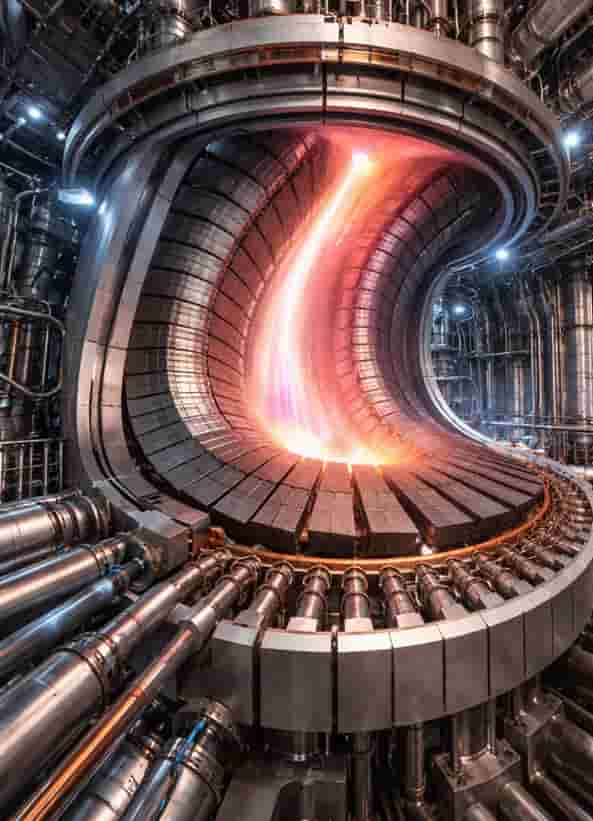
Inside a fusion reactor, the divertor plays a crucial operational role. Positioned within the vacuum chamber, it channels plasma away from the core and directs it toward absorber plates. Here, extreme heat is removed while waste particles and impurities are expelled.
This environment is exceptionally hostile. Materials used in the divertor must tolerate temperatures reaching thousands of degrees, intense thermal flux, and continuous neutron bombardment. Even small inefficiencies can compromise reactor stability and long-term operation.
Current designs, including those used in the ITER project, rely heavily on tungsten. While tungsten offers high melting resistance, it does not fully guarantee durability under sustained plasma exposure, creating a bottleneck for continuous fusion performance.
The promise of composite materials for fusion reactors
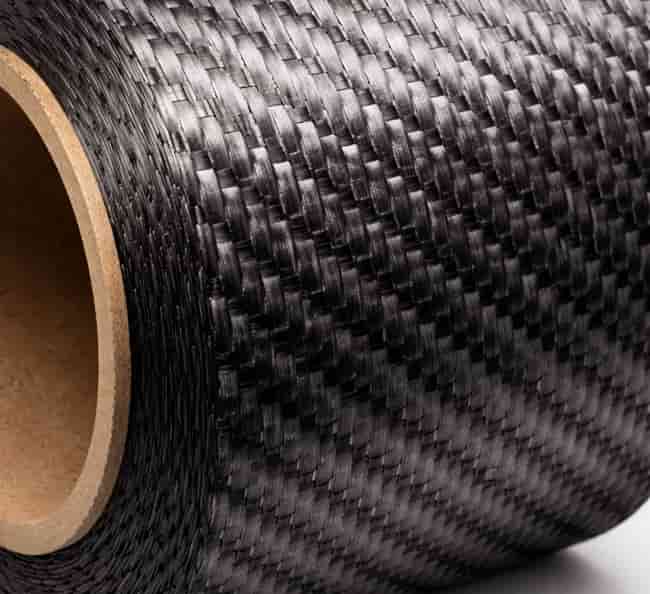
This is where composite materials for fusion reactors come into focus. Carbon fiber-reinforced composites are already known for their strength and thermal conductivity, particularly at temperatures exceeding 1000°C. However, researchers are now pushing these materials further.
The new approach involves enhancing carbon composites by impregnating them with high-melting-point metals. This hybrid structure is expected to deliver several performance advantages:
- Thermal resistance exceeding 2000°C
- Improved heat dissipation through higher conductivity
- Greater resistance to plasma-induced degradation
These properties could significantly outperform traditional materials and address key limitations in existing divertor designs.
A coordinated research effort across Japan
The project is structured to leverage specialized expertise across all partners. Mitsubishi Chemical is leading the development of high-performance composite structures with optimized strength and thermal behavior.
The University of Tsukuba is responsible for testing how these composite materials for fusion reactors perform under plasma exposure, a critical factor for real-world application. Meanwhile, the Tokyo University of Science is focusing on selecting suitable metals for impregnation and producing the corresponding material structures.
This division of roles ensures a comprehensive approach, from material design to validation under extreme conditions.
Beyond fusion: wider industrial implications
Although the primary goal is improving fusion reactor performance, the impact of these composite materials for fusion reactors could extend far beyond the energy sector.
Materials capable of withstanding extreme heat and stress are highly valuable in aerospace engineering. Potential applications include thermal protection systems for spacecraft re-entry and structural components for supersonic or hypersonic aircraft.
This cross-industry relevance increases the strategic importance of the research, positioning it at the intersection of energy innovation and advanced manufacturing.
The road toward practical fusion energy
The success of fusion energy depends not only on plasma physics but also on materials science. Without reliable materials, even the most advanced reactor designs cannot operate continuously or safely.
By advancing composite materials for fusion reactors, Mitsubishi Chemical and its academic partners are addressing a foundational challenge in the field. If successful, their work could help unlock more stable and efficient fusion systems, accelerating the transition toward clean, virtually limitless energy.
More….