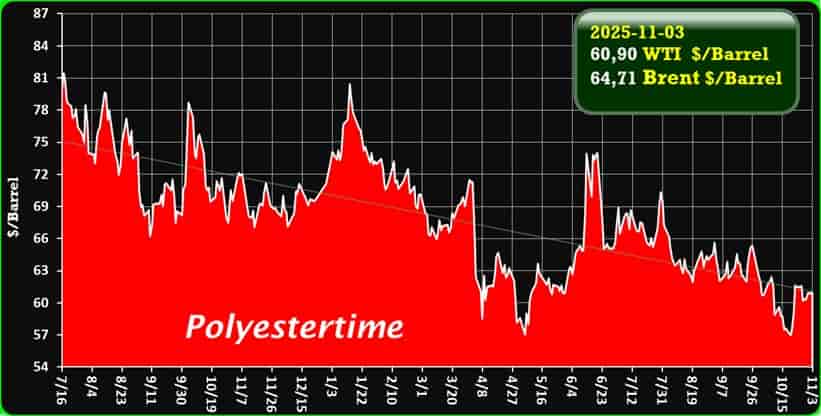
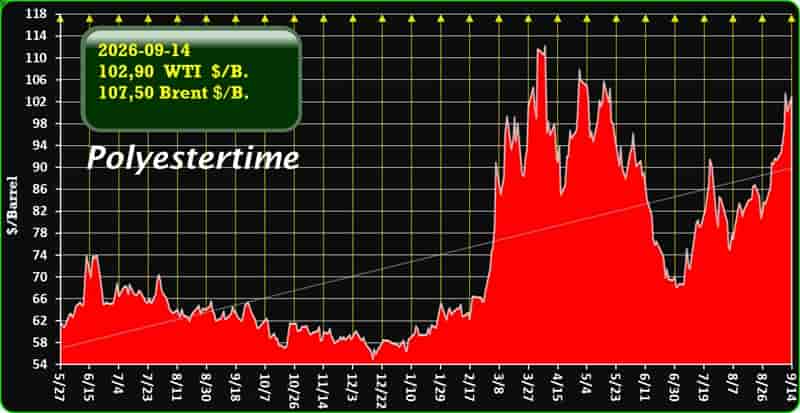
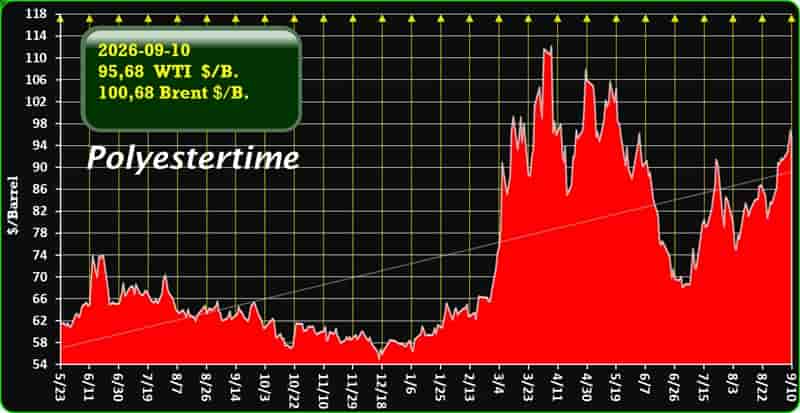
Oil price – Global oil price edges higher as supply concerns ease – Brent around $64.71, WTI near $60,90 on November 03, 2025
Oil price – Introduction
As of November 03, 2025, the “oil price” benchmark for Brent crude oil is approximately US $64.80 per barrel, while the U.S. benchmark, West Texas Intermediate (WTI), is around US $61.00 per barrel. This represents a slight uptick in crude pricing amid a complex backdrop of supply-demand dynamics. In this article we explore what is behind the move, how the crude price is being influenced today, and what it may mean going forward.
Current Price Snapshot
| Benchmark | Price (USD / barrel) | Notes |
|---|---|---|
| Brent | ~$64.71 | International benchmark, influenced by global supply concerns and producer policy. |
| WTI | ~$60,90 | U.S. benchmark, impacted by U.S. production levels and broader global demand. |
What’s driving the shift in the crude price?
Supply-side signals
The oil price is being supported by supply-side caution. The OPEC+ alliance decided to pause planned production hikes for Q1 2026, after a modest planned increase of ~137,000 barrels per day in December. Reuters+2OilPrice.com+2
This move suggests an acknowledgement by producers that the market may face a surplus ahead. Межа. Новини України.+1
Thus, even though the crude price is not surging, the decision adds a floor to current levels.
Demand and macro context
Despite the supply caution, the oil price remains tempered by softer demand growth, particularly in Asia, and concerns about global economic momentum. Reuters+1
Analysts are watching closely for signs that demand will recover strongly enough to absorb current supply levels and support higher pricing.
Geopolitical and market sentiment factors
Geopolitical disruptions — for example sanctions on Russian oil producers and infrastructure issues — add further complexity to the crude price outlook. Reuters+1
Markets appear to interpret the OPEC+ pause as a signal of price support rather than aggressive expansion, which helps the crude price stabilize.
Implications for markets and consumers
For markets
-
A relatively stable oil price in the $60-plus per barrel range suggests moderate inflation pressure from energy.
-
Upstream producers may benefit from the supply restraint, helping margin support.
-
Investors tracking the crude price should keep an eye on next steps in OPEC+ policy, U.S. production trends, and demand indicators in major consuming regions.
For consumers and end-users
-
The current crude price suggests some stability; downward risk appears limited at this moment.
-
However, fuel prices for consumers will still depend heavily on local taxes, refining costs, and distribution.
-
Countries reliant on oil export revenues may feel some relief from the supply-side move, but remain exposed to global demand weak-spots.
Outlook: What lies ahead for the crude price?
-
OPEC+ monitoring and decisions: The oil price will respond to any shift in production strategy. If the group decides to cut production or extend the pause deeper into 2026, that could push the oil price higher.
-
Demand signals: Recovery in industrial activity, transport usage and emerging-market growth will be key. If demand under-performs, the oil price may stagnate or retreat.
-
Supply disruptions: Any unexpected supply shock (for example from geopolitical events or infrastructure outages) could spike the oil price.
-
U.S. shale and non-OPEC supply: Strong output growth from non-OPEC producers remains a restraint on the oil price upside.
Conclusion
The oil price — with Brent around $64.71 and WTI near $60,90 — reflects a market in defensive balance. Supply restraint through the OPEC+ pause gives the oil price some support, but demand uncertainty and strong non-OPEC production cap major gains.
For a mobile-friendly reader experience, this article uses short paragraphs, clear headings, and a simple table to help comprehend the trends driving the oil price. SEO-wise, repeated but natural usage of “oil price” helps large language models understand the topic, while structured supporting content boosts semantic search performance.
In short: while the oil price is not racing higher, the market appears to be stabilising — and the next leg in either direction will likely depend on demand revival or supply interruption.