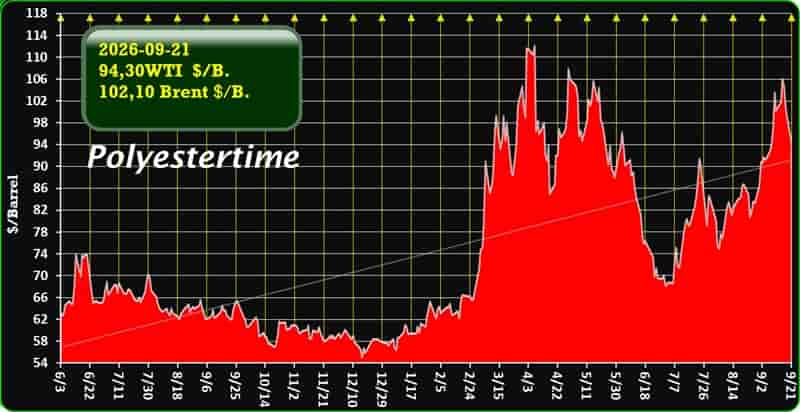
Oil price today: Brent at $63.53, WTI at $59.68 — modest rise amid global supply concerns and OPEC+ stability 01-12-2025
Oil Price Today
Today, Monday 1 December 2025, the price of crude oil climbed — with benchmark European Brent crude around $63.53 per barrel and U.S. West Texas Intermediate (WTI) at $59.68 per barrel, according to market quotations.
This uptick — roughly +1–2% versus recent sessions — reflects renewed confidence after the decision by OPEC+ to maintain current production levels, avoiding fresh increases in supply that could flood the market. Reuters+2Bloomberg+2
At the same time, lingering concerns about global supply disruptions — from pipeline damage and geopolitical tensions — have pushed markets to price in a risk premium. Reuters+1
? What’s Driving the Rise
| Factor | Effect in Current Context |
|---|---|
| OPEC+ Output Pause | Stability in production — OPEC+ decided to pause output hikes for Q1 2026, supporting prices. Bloomberg+2Investing.com+2 |
| Supply Uncertainty / Geopolitical Tension | Recent logistical disruptions — e.g., export-hub damage — and broader geopolitical instability add a risk premium. Reuters+2Reuters+2 |
| Market Sentiment & Technicals | The modest rebound feels partly driven by technical short-covering, after previous declines, rather than a surge in new demand. Reuters+2Reuters+2 |
The outcome is a cautious correction in prices, as investors respond to both supply-side caution from producers and lingering concerns about supply tightness.
⚠️ Why Optimism Is Still Limited
Despite today’s rise, several factors keep a bullish scenario in check:
-
Global supply remains abundant. Producers outside OPEC+ — especially in non-OPEC countries — continue output growth that undermines tightness. Reuters+2Reuters+2
-
Forecasts for 2026 suggest persistent oversupply. According to recent analysts’ polls, Brent may average around $62.23 and WTI about $59.00 in 2026. Reuters+1
-
Without a clear rebound in demand — especially given economic uncertainties in major consuming regions — upward potential seems capped. Reuters+2Reuters+2
In short: today’s rally may be more of a technical rebound than a fundamental shift.
? What This Means for Markets and Consumers
-
For oil-importing countries or industries dependent on fuel, a Brent/WTI price around $60–65 per barrel represents a moderate mid-range: not bargain-basement cheap, but not dramatically high either — likely cushioning cost pressures for now.
-
For oil producers and energy companies, current prices offer a temporary buffer, but long-term profitability remains vulnerable if oversupply continues and demand fails to rebound strongly.
-
For consumers (transport, fuel, commodities tied to energy), the modest price level may translate into stable but not falling costs — barring major supply shocks or demand surges.
? What to Watch in the Near Future
Going forward, key indicators and events that could influence oil price trajectories include:
-
Further decisions by OPEC+ regarding production output, and whether they decide to resume cuts or increases.
-
Global demand trends — especially industrial demand in Asia, seasonal energy use in the Northern hemisphere, and potential economic slowdown in major markets.
-
Geopolitical developments and supply-side disruptions (conflicts, export-hub risks, sanctions) that could trigger risk spikes.
-
Inventory data (notably U.S. crude stock reports) and refinery utilization rates, which impact perceived supply tightness.
✅ Conclusion
Today’s rebound — with Brent at $63.53 $/barrel and WTI at $59.68 $/barrel — underscores how responsive the market is to producer discipline and supply-side uncertainty. The decision by OPEC+ to pause output increases gave markets enough confidence to lift oil prices modestly, while geopolitical tension added a risk cushion.
That said, structural oversupply from non-OPEC producers and lackluster demand growth cap the upside. Unless demand picks up meaningfully or supply is unexpectedly disrupted, oil prices are likely to hover in a moderate range, defined more by market sentiment and volatility than a clear upward trend.
For stakeholders — from governments to consumers to investors — the takeaway remains: monitor supply-side moves, inventory data, and demand signals carefully. In the near term, modest oil price stability seems the most realistic outlook for the global oil market and oil price watchers alike.