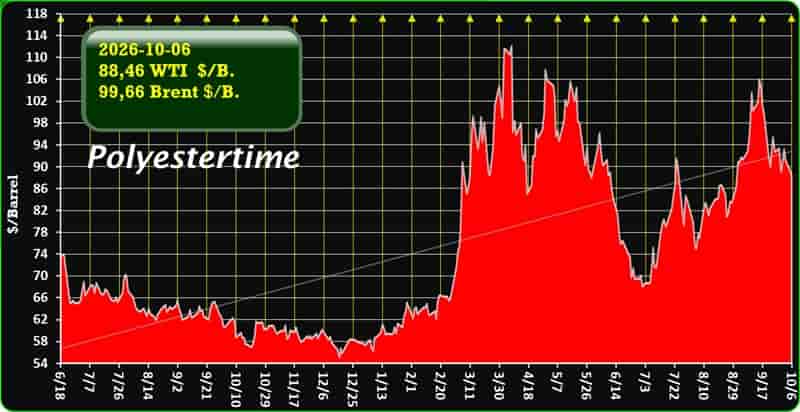
Oil Price Trend Today: Brent Around $60.27 and WTI Near $56.54 on January 07, 2026 — Oversupply Pressure and Geopolitics Weigh on Global Energy Markets
📊 Oil Price Movement on January 07, 2026
As of January 07, 2026, global oil price trends show Brent crude trading around $60.27 per barrel and West Texas Intermediate (WTI) near $56.54 per barrel. These benchmarks remain below historical highs and reflect persistent downward pressure in early 2026 markets. Prices are slightly weaker compared with recent sessions, driven mostly by supply concerns and tempered demand forecasts. Reuters+1
📈 Today’s Price Snapshot
| Benchmark | Approximate Price (Jan 07, 2026) | Movement Trend |
|---|---|---|
| Brent Crude | ~$60.27/barrel | Slightly lower / pressured |
| WTI Crude | ~$56.54/barrel | Moderately lower |
This continued softness comes amid renewed focus on global supply dynamics and geopolitical developments. Reuters
🔍 Main Factors Influencing Oil Price Today
🛢️ 1. Global Supply & Demand Imbalances
Markets are signaling ongoing oversupply risks in 2026. Analysts highlight that global oil production is outpacing demand growth—with forecasts pointing to ample inventories and supply expanding faster than consumption. This imbalance weighs on prices and keeps oil price benchmarks subdued near current levels. sergeytereshkin.com+1
Even as demand slowly grows, the pace isn’t strong enough to absorb increases, particularly from major producers and reopening of sanctioned barrels. sergeytereshkin.com
📊 2. OPEC+ Policy and Production Decisions
OPEC+ has taken a cautious stance, suspending planned production increases for early 2026 to stabilize markets amid concerns over oversupply. However, the existing elevated output—especially from Saudi Arabia and Russia—continues to exert downward pressure on oil price levels. sergeytereshkin.com+1
The group’s careful messaging suggests they aim to balance market share with price support, but the current outlook remains tilted toward ample supply more than tightening conditions. Reddit
🌍 3. Geopolitical Developments
Geopolitics remains a key influence:
-
U.S. announcements about Venezuelan oil shipments introduced fresh supply into markets, contributing to downward movements in both Brent and WTI. Reuters+1
-
Progress or prospects for peace in conflicts like Ukraine may ease logistical constraints, possibly reopening Russian supply lines and further pressuring oil price trends. Equityworld Futures
Such developments reinforce traders’ view that geopolitical risk premiums are muted relative to underlying supply/demand fundamentals.
📉 4. Economic Data & Investor Sentiment
Market participants have shown cautious sentiment, reflecting broader macroeconomic uncertainty. With headline indices trading flat or mixed and traders awaiting key economic releases, risk appetite in energy markets remains subdued. XTB.com
Additionally, bearish forecasts from some analysts—suggesting Brent could dip toward $50/bbl later in 2026—are contributing to a cautious positioning at current oil price levels. OilPrice.com
📈 What Investors Are Thinking Now
In general, investor sentiment in the oil patch is guardedly bearish to neutral:
-
Many traders are positioning for continued supply surplus and weaker prices through the first half of 2026.
-
Some market analysts expect crude to weaken further, influenced by strong non-OPEC production and slow demand uptake.
-
A minority of strategists still see support emerging if geopolitical tensions spike or if OPEC+ tightens output later in the year.
This sentiment mix is evident in both futures positioning and reduced open interest—signaling some traders stepping back amidst uncertainty. AP News
🔮 Short-Term Outlook: Where Oil Price May Head Next
Looking ahead, several key forces will shape oil price dynamics:
📍 Short-Term Outlook (Next Weeks to Months)
-
Continued supply pressure could keep Brent and WTI near current levels or slightly lower.
-
Seasonal demand changes and inventory reports (e.g., EIA weekly data) will be watched closely for any signs of tightening.
-
Geopolitical risk events could trigger short-term spikes, but trends lean toward cautious markets.
Analysts suggest that unless demand substantially accelerates or producers cut output meaningfully, prices could drift toward the low-$50s per barrel by mid-2026. OilPrice.com
🌐 What This Means for the Global Economy & Energy Markets
💡 For Consumers
Lower oil price benchmarks typically translate to reduced fuel costs, easing inflation pressures and benefitting transport and manufacturing consumers.
📊 For Producers & Energy Firms
Sustained lower prices mean tighter margins for high-cost producers and may slow investment in new supply projects. Energy equities have already shown relative weakness as investors rotate toward sectors benefiting from cheaper energy inputs.
📉 For Global Growth
While cheaper energy can support broader economic activity, prolonged price softness may impact nations reliant on oil revenues, potentially constraining fiscal balances.
Conclusion:
The oil price trend as of January 07, 2026, reflects a market coping with persistent oversupply, cautious demand, and mixed geopolitical signals. Brent staying near $60.27 and WTI around $56.54 denote a soft fundamental backdrop that—aided by OPEC+ strategies and macroeconomic data—points toward continued subdued pricing in the near term. For consumers this may ease costs, while producers remain vigilant amid evolving market dynamics.