Sustainable biorubber in Europe Shows How Birch Bark Can Deliver Scalable Low-Carbon Materials for Industry and Secure Supply Chains 08-01-2026
Sustainable biorubber : a scalable, low-carbon alternative for Europe
Sustainable bio-rubber is emerging as a critical material for Europe’s industrial future. Rubber is indispensable across manufacturing sectors such as automotive, construction, healthcare, and consumer goods. Today, however, most rubber supply depends either on fossil-based synthetic rubber or on natural rubber sourced from plantations in Southeast Asia. Both options expose Europe to environmental damage, carbon-intensive production, and fragile global supply chains. Sustainable biorubber
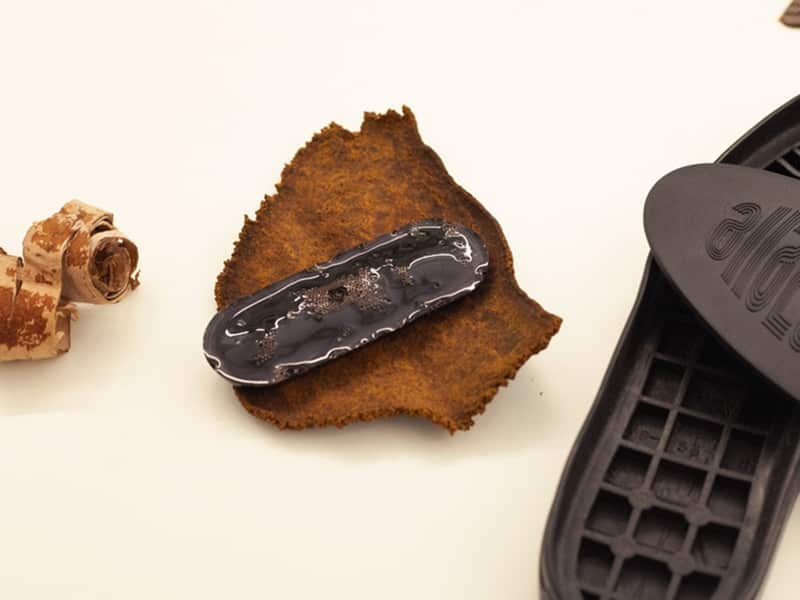
A European research and innovation effort has now demonstrated that sustainable bio-rubber derived from birch bark can provide a practical, scalable, and low-carbon alternative. By transforming a widely available forestry residue into high-performance rubber, Europe gains a pathway toward climate goals while strengthening industrial resilience.
Why Europe needs sustainable bio-rubber
Conventional rubber production carries significant risks. Fossil-based synthetic rubber relies on petrochemicals with high greenhouse gas emissions and volatile prices. Plantation-based natural rubber depends heavily on monoculture farming systems that contribute to deforestation, biodiversity loss, and land-use conflicts. Climate change further threatens rubber tree yields, increasing uncertainty in global supply. Sustainable biorubber
Sustainable bio-rubber addresses these challenges at their root. By shifting to renewable, regionally sourced feedstocks, Europe can reduce emissions, shorten supply chains, and lower exposure to geopolitical and climate-related disruptions. This makes sustainable bio-rubber not only an environmental solution but also an economic and strategic one.
Birch bark as a renewable European feedstock
Birch bark is an abundant by-product of Europe’s pulp, paper, and plywood industries. For decades, it has been underutilized, often burned for energy or discarded. Yet birch forests are widespread across Northern and Central Europe, and much of the resource comes from responsibly managed, FSC-certified forestry operations.
Using birch bark as a feedstock enables sustainable bio-rubber production without competing with food crops or driving land-use change. It also supports a circular bioeconomy by upgrading an existing residue into a high-value industrial material. This approach aligns closely with European sustainability policies and forest management principles.
Low-carbon performance at industrial scale
The sustainable bio-rubber developed through this European project, commonly referred to as Reselo Rubber, has been engineered to meet demanding industrial performance requirements. The material is fully bio-based and, when produced at scale, can achieve up to 90 percent lower carbon dioxide emissions compared to traditional fossil-based rubbers.
Importantly, sustainable bio-rubber from birch bark avoids the environmental harms associated with tropical rubber plantations. There is no need for deforestation, and biodiversity is preserved by relying on existing forestry systems rather than monoculture expansion. This significantly improves the overall life-cycle impact of rubber products made in Europe.
Preparing biorefinery processes for scale
Scaling sustainable bio-rubber requires more than laboratory success. The project placed strong emphasis on industrial readiness, focusing on biorefinery optimization and process efficiency. Key advances included improved solvent recovery, refined process steps, and collaboration with engineering experts to ensure manufacturability at large volumes.
Availability assessments confirm that Europe produces sufficient birch bark each year to support industrial-scale sustainable bio-rubber production. This makes it feasible to establish a fully European rubber value chain, from raw material to finished products. Forestry stakeholders are increasingly exploring alternative uses for birch bark, and sustainable bio-rubber provides a compelling, high-value outlet.
Drop-in compatibility for existing industries
For widespread adoption, sustainable bio-rubber must integrate seamlessly into existing manufacturing systems. Extensive testing with industrial partners has shown that birch bark-based rubber can be processed using current production infrastructure. This drop-in compatibility reduces barriers to entry and minimizes the need for costly equipment changes.
Collaborations with companies in footwear, automotive components, and tire-related applications have validated both performance and reliability. Products developed using sustainable bio-rubber meet or exceed established benchmarks, demonstrating that sustainability does not require compromising on quality or durability.
Unlocking additional value from biorefinery fractions
The sustainable bio-rubber process also generates additional material fractions beyond the main rubber component. One of these fractions already has established market applications, and partnerships are expanding its commercial use. Another fraction shows promise but requires further research before it can move beyond energy applications into higher-value markets.
This multi-output approach strengthens the overall economics of sustainable bio-rubber production. By maximizing resource efficiency, the biorefinery model supports long-term competitiveness and reduces waste across the value chain.
Aligning production capacity with market demand
The next step for sustainable bio-rubber in Europe is the construction of a commercial-scale production plant. While the technical foundation is solid and unit costs decrease as volume increases, market alignment remains critical. Production capacity must grow in parallel with demand to avoid financial risk during scale-up.
Supportive policy frameworks can play a decisive role. Carbon-based taxation, incentives for bio-based materials, and public procurement standards favoring low-carbon products would accelerate market adoption. Such measures would help sustainable bio-rubber compete with established fossil-based alternatives and reinforce Europe’s leadership in green materials.
A resilient future for Europe’s rubber supply
Sustainable bio-rubber from birch bark demonstrates how innovation, forestry resources, and industrial collaboration can converge to solve complex challenges. By reducing emissions, avoiding deforestation, and building regional supply chains, this material offers Europe a resilient and future-proof alternative to conventional rubber.
As industries seek to decarbonize without sacrificing performance, sustainable bio-rubber stands out as a scalable solution that aligns environmental responsibility with economic opportunity.
More…