Major Boost: Pakistan PET Recycling Gains New Capacity
Pakistan PET recycling gains momentum with new Karachi washing line
Pakistan’s bottle-recycling industry is adding significant processing capacity as demand grows for recycled PET suitable for new food and beverage packaging.
BoReTech announced on August 26, 2026, that an 8.5-tonnes-per-hour PET bottle washing line supplied to Ismail Resin Pvt. Ltd. is now operating at the company’s recycling facility in Port Qasim, Karachi.
The equipment supplier says the line has reached stable operation and is achieving a yield above its original design target. No independently audited production figures were publicly available at the time of publication, so these operational results should be understood as company-reported data.
Key facts
- Project owner: Ismail Resin Pvt. Ltd.
- Location: Port Qasim, Karachi, Pakistan
- Technology supplier: BoReTech
- Stated processing capacity: 8.5 tonnes per hour
- Feedstock: Post-consumer PET bottles
- Intermediate product: Washed recycled PET flakes
- Intended application: Bottle-to-bottle recycling after further processing
- Operational status: Reported as stable by BoReTech on August 26, 2026
Why washing quality matters
Collected PET bottles contain more than PET. A typical bale can include caps, labels, adhesives, dirt, residual liquids and bottles made from other polymers.
PVC contamination is particularly problematic. Even relatively small quantities can affect PET during high-temperature processing, reducing the quality and commercial value of the recycled material.
A bottle-to-bottle washing line therefore has two connected jobs: recovering as much usable PET as possible and removing contaminants consistently.
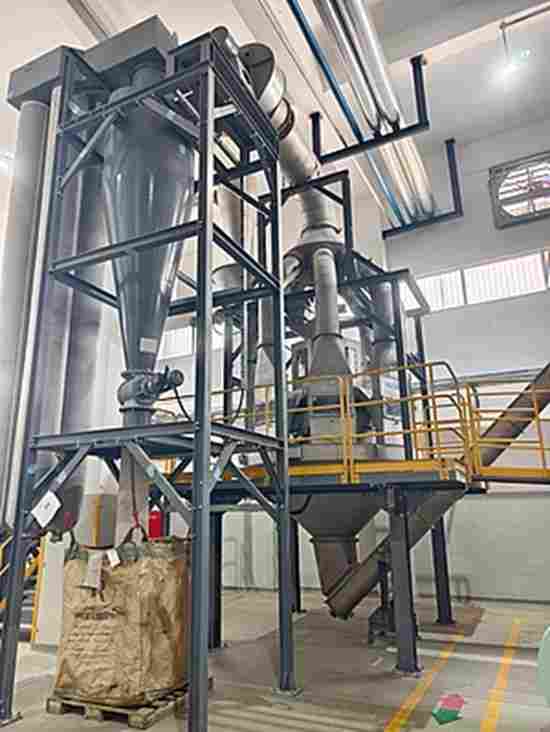
At the Ismail Resin facility, compressed bottle bales are opened before the material passes through label separation, size reduction and washing stages. The resulting flakes must then undergo additional processing, such as pelletizing and solid-state polycondensation, before they can be considered for food-contact packaging.
A configuration adapted to difficult feedstock
BoReTech says it customized the installation around the size, shape and contamination profile of the bottles arriving at the Karachi plant.
Its bale-breaking equipment is designed to open oversized or elongated bales and create a more even material flow. Stable feeding is important because sudden changes in volume can reduce separation efficiency and disrupt downstream machinery.
The line also employs BoReTech’s Mega Aspirator to separate lightweight label material from PET. According to the supplier, the system has improved label removal and helped control PVC contamination.
An engineering manager at the Ismail facility reported improved separation after the equipment entered operation. However, the companies have not published detailed third-party test results showing final PVC concentrations, energy consumption, water use or average production yield.
What “food-grade” means in this project
Washed flakes alone are not automatically authorized for direct food contact.
Food-contact suitability depends on the complete recycling process, its operating conditions, feedstock controls and the rules of the market where the final packaging will be sold. Washing is the front end of a longer decontamination and quality-assurance chain.
The US Food and Drug Administration’s public database records a favorable opinion for a physical PET recycling process submitted by Zhejiang BoReTech Environmental Engineering. The record is dated June 4, 2025 and applies to specified food types and conditions of use.
An FDA No Objection Letter is an assessment of a particular recycling process under defined conditions. It is not a general certification of every plant, production run or finished package using equipment from the same supplier.
This distinction matters for buyers evaluating food-grade rPET. The operator must demonstrate that the installed process, feedstock and operating controls meet the applicable authorization and customer specifications. Pakistan PET recycling
Pakistan is building a broader rPET base
The Ismail project is not an isolated addition.
Recent industry reporting published on August 25–26, 2026 says Novatex Ltd. has also installed a Starlinger recycling system near Lahore. That system reportedly produces as much as 3,000 kilograms of food-contact rPET chips per hour, representing more than 24,000 tonnes of potential annual output.
The two projects perform different roles and their stated capacities are not directly comparable. The Ismail installation’s 8.5-tonnes-per-hour figure concerns front-end bottle washing, while the Novatex figure describes output from a pellet-production system.
Together, however, they show expanding investment in Pakistan PET recycling—from preparing contaminated bottle waste to producing resin that can potentially return to packaging.
Collection remains the critical constraint
More processing capacity does not automatically guarantee a circular bottle economy.
Plants require a predictable supply of suitably sorted bottles. Collection quality, traceability and contamination control all influence operating costs and the amount of material that can be recovered.
Pakistan’s Single-use Plastics (Prohibition) Regulations 2023 include recycling plans and collection responsibilities for producers, importers and beverage manufacturers. Importantly, these federal regulations expressly apply to the Islamabad Capital Territory, not automatically to every province or city in Pakistan.
A broader national system still requires coordination between federal authorities, provincial governments, producers, recyclers and the formal and informal collection sectors.
Environmental performance also needs measurement
Turning bottles into new bottles can reduce demand for virgin plastic, but a plant’s environmental value cannot be judged from nameplate capacity alone.
Credible performance reporting should include:
- The quantity of bottles actually processed
- The percentage of usable PET recovered
- Water and energy consumed per tonne
- Wastewater treatment and reuse
- The destination of labels, caps and rejected material
- Average contaminant levels in finished flakes
- Traceability of incoming food-contact feedstock
Publishing these indicators would make it easier for customers, regulators and communities to evaluate the project’s real contribution.
What comes next
The reported start-up of Ismail Resin’s washing line gives Pakistan another high-capacity destination for discarded PET bottles. It could strengthen the supply of clean flakes for domestic bottle-to-bottle production and create additional demand for collected material.
The larger test will be whether processing capacity is matched by dependable collection, transparent quality controls and verifiable end markets.
If those pieces develop together, Pakistan PET recycling can move beyond isolated plants and toward a more complete circular value chain.
Frequently asked questions
What is the capacity of the Ismail Resin washing line?
BoReTech reports a nominal processing capacity of 8.5 tonnes of post-consumer PET bottles per hour. This is an equipment throughput figure, not a guarantee of equivalent finished-rPET output.
Where is the recycling line located?
The installation is at Ismail Resin’s facility in Port Qasim, Karachi, Pakistan.
Does the line make finished food-grade pellets?
Not by itself. It produces washed PET flakes. Further controlled processing, decontamination, testing and regulatory compliance are required for food-contact applications.
Why must PVC labels be removed?
PVC can degrade at PET processing temperatures and affect the color, stability and quality of recycled PET.
Are the operating results independently verified?
The capacity, stable-operation status and above-target yield were reported by BoReTech. Public independent operating or audit data were not identified.
Sources
- BoReTech project announcement, August 26, 2026
- Recent report on additional Pakistani rPET capacity, August 26, 2026
- US FDA recycled-plastics submissions database
- Pakistan Single-use Plastics (Prohibition) Regulations 2023
Boretech and ECC Launch Major PET Tray Recycling Project in Egypt