PET Bottle Circularity – Is Reusable Plastic Packaging Safe for Microwave and Dishwasher Use? As Europe advances toward a more circular economy, reusable food packaging is gaining traction—from coffee cups to takeaway containers 10-06-2025 - Archive
PET Bottle Circularity
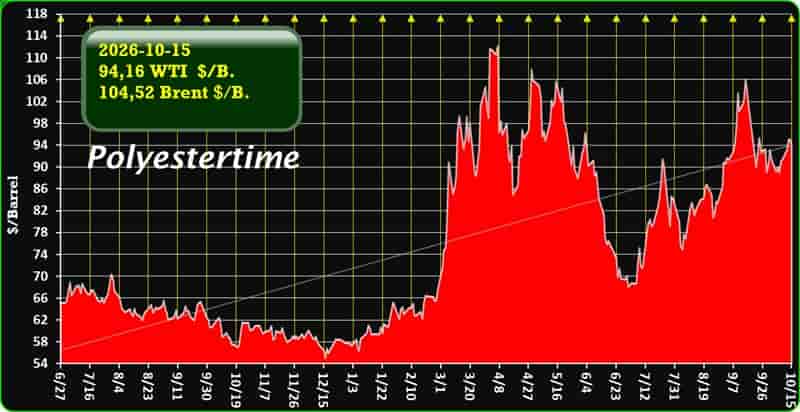
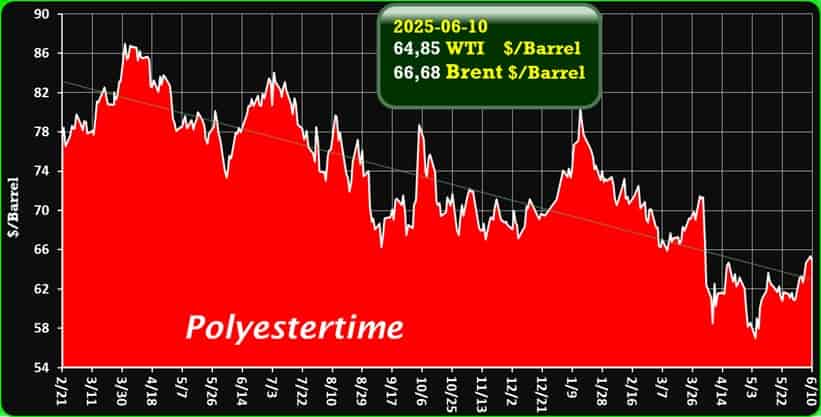
Crude Oil Prices Trend
EPBP Gains Strategic Role in European PET Bottle Circularity
The European PET Bottle Platform (EPBP), a key industry initiative focused on improving the sustainability of PET bottles, has been officially recognized as a liaison organisation to the Technical Committee on Packaging within the European Committee for Standardisation (CEN). This new status marks a significant milestone in EPBP’s mission to drive the transition towards a fully circular economy for PET packaging.
What Is EPBP?
EPBP is a platform that brings together stakeholders from across the PET bottle value chain—including manufacturers, recyclers, and industry experts—to develop and share guidelines on designing PET bottles for recycling. These efforts aim to support bottle-to-bottle recycling, ensuring that PET bottles can be reused to create new, high-quality packaging with minimal waste. PET Bottle Circularity
Recognition at the European Standardisation Level
With its new liaison status, EPBP now plays an active role in guiding the CEN’s discussions on sustainable packaging. This recognition acknowledges the platform’s technical expertise and long-standing efforts to improve recyclability standards.
Argiris Dabanlis, Technical Manager of EPBP, highlighted the significance of this advancement, stating:
“This liaison role is an important recognition of EPBP’s contribution to advancing PET bottle circularity in Europe. It is a great opportunity for EPBP to bring its extensive expertise to CEN’s discussions on packaging circularity and continue helping companies in the PET bottle industry to design PET bottles for recycling on the path to circularity.” PET Bottle Circularity
Alignment with New EU Regulations
The timing of EPBP’s new role is especially important given the recent adoption of the Packaging and Packaging Waste Regulation (PPWR) by the European Union. Under this regulation, the European Commission is expected to incorporate the standards developed by European standardisation bodies, like CEN, when defining future design-for-recycling criteria.
This move underscores the central role that CEN—and by extension, EPBP—will play in shaping the legislative framework that governs the circularity of packaging materials across the EU.
Driving Bottle-to-Bottle Recycling Forward
As a liaison organisation, EPBP aims to leverage its influence to ensure that new standards promote real-world recyclability, not just theoretical compliance. PET Bottle Circularity
The platform is focused on helping packaging companies design PET bottles that can be efficiently collected, sorted, and recycled into new bottles without compromising quality.
This step is critical in building a sustainable, circular supply chain for PET plastics—one that reduces reliance on virgin materials and minimizes environmental impact.
Looking Ahead: Full PET Circularity
By actively contributing to CEN’s technical discussions and aligning with the goals of the PPWR, EPBP reinforces its commitment to creating a fully circular PET bottle ecosystem. This includes promoting innovations in material design, ensuring the compatibility of packaging components, and fostering industry-wide adoption of best practices for recyclability. PET Bottle Circularity
With EU-wide policies pushing for higher recycling targets and a reduction in packaging waste, EPBP’s leadership and technical expertise will be instrumental in guiding the PET bottle industry through this critical phase of transformation.
Why This Matters
Plastic waste remains one of the most pressing environmental challenges of our time. By improving the recyclability of PET bottles and ensuring that they can be reused efficiently, EPBP’s work supports broader EU goals for climate neutrality and resource efficiency.
This new liaison role not only enhances EPBP’s influence but also signals a deeper integration of industry knowledge into the development of standards that shape the future of sustainable packaging in Europe. PET Bottle Circularity
Final Thoughts
The European PET Bottle Platform’s enhanced role within the CEN framework positions it at the heart of future sustainability efforts in packaging. As Europe strives for a greener, more circular economy, platforms like EPBP will be crucial allies in turning policy into practical, impactful action.

Vibac Reduces BOPP Film Thickness to Cut Plastic in Packaging
In a significant step towards more sustainable packaging, Vibac—a leading producer of BOPP (biaxially oriented polypropylene) films and adhesive tapes—has introduced a new generation of ultra-thin lamination films. These monomaterial films are now available in thicknesses as low as 10 microns, a notable reduction from the standard 18–20 micron options traditionally used in packaging.
A Response to Market Demands for Less Plastic
This innovation is driven by mounting pressure from both regulators and the food industry to reduce plastic content in packaging. Notably, manufacturers of dry foods such as biscuits inspired this move by requesting thinner films that maintain performance while minimizing environmental impact. PET Bottle Circularity
By pairing thinner BOPP films with slightly heavier paper, Vibac has achieved a functional structure that lowers overall plastic content without compromising packaging integrity. This solution also facilitates easier recycling by maintaining a monomaterial composition when polypropylene is used as the primary substrate.
Performance Without Compromise
Despite the reduced thickness, Vibac’s new films deliver excellent results in high-speed packaging environments. They come in several variations to meet diverse industrial needs:
- ? Low sealing temperature films for energy-efficient processing
- ⚡ High-slip films to optimize packaging machine speed
- ? Heat-stable alternatives to polyester for enhanced thermal resistance
“Our low-thickness metallized films maintain excellent performance in terms of reliability and weldability,” said Alberto Depaoli, General Manager of Vibac. “These innovations have helped us remain one of Italy’s top producers of plastic film.” PET Bottle Circularity
Transitioning to Fully Recyclable Packaging by 2030
The new 10-micron films are a crucial milestone on Vibac’s path toward offering recyclable, monomaterial polypropylene-based packaging by 2030. These are intended to replace multilayer structures that rely on less sustainable materials like polyester or aluminum foil in the barrier layer.
Production of the new thin films began last month at Vibac’s state-of-the-art facility in Viggiano (PZ). This development complements several other sustainability initiatives currently underway.
A Broader Commitment to Innovation and the Planet
As part of its ongoing “Velo” sustainability project, Vibac is working on a number of green technologies. Giuseppe Leone, the project lead, highlighted several key initiatives:
- ❌ PVDC-free films, eliminating problematic chlorinated barriers
- ?️ Barrier films against mineral oils, ensuring food safety
- ? Heat-stable polypropylene films with Alox (aluminum oxide) coating
In addition, an 18-micron anti-fog film has been developed for fourth-range applications (ready-to-eat fruits and vegetables), ideal for paper lamination while maintaining product visibility and shelf appeal. PET Bottle Circularity
Inside Vibac: A Global Production Powerhouse
Headquartered in Ticineto, in the province of Alessandria, Vibac operates across two main divisions:
- BOPP Division: Produces flexible packaging and label films
- Adhesive Tape Division: Manufactures self-adhesive tapes for various industries
With six production sites and nearly 1,000 employees, Vibac has a global footprint that includes operations in:
- ?? Italy: Termoli, L’Aquila, Vinci (FI), Grumento Nova (PZ)
- ?? Canada
- ?? Serbia
- ?? United States (most recent addition)
Vibac’s integrated production model spans from in-house paper manufacturing to adhesive formulation, film coating, and final product conversion—ensuring full quality control and product traceability throughout the supply chain. PET Bottle Circularity
Looking Ahead: Packaging That Protects the Product and the Planet
With the introduction of thinner, recyclable films, Vibac is not just responding to market demand—it’s leading the charge toward a more sustainable packaging future. Their innovations are proof that technical performance and environmental responsibility can go hand in hand.
As industries race to meet 2030 environmental targets, Vibac’s commitment to material innovation, recyclability, and process efficiency sets a compelling example for the global packaging sector.
Is Reusable Plastic Packaging Safe for Microwave and Dishwasher Use?
As Europe advances toward a more circular economy, reusable food packaging is gaining traction—from coffee cups to takeaway containers. However, rising reuse brings new questions: Is it safe to heat or wash reusable plastic containers? What happens when they’re repeatedly placed in microwaves or dishwashers?
The Push for Reusability in Europe
The Packaging and Packaging Waste Regulation (PPWR) is driving a shift toward reusable formats, with ambitious targets for beverage, transport, and grouped packaging. Distributors of drinks and takeaway foods must offer customers the option to bring their own containers. By 2030, at least 10% of such products should be available in reusable packaging. PET Bottle Circularity
While this is a step forward for sustainability, it also raises legitimate concerns: repeated exposure to heat and chemicals can compromise plastic’s safety. Yet, there’s currently no unified system to assess these risks.
The Hidden Dangers of Reuse
Heating plastic in microwaves or washing it in dishwashers—whether at home or in industrial settings—can increase the release of substances like:
- Non-intentionally added substances (NIAS)
- Microplastics
These substances may pose a risk to human health, yet there are no standard testing methods or mandatory labeling requirements to indicate whether a container is microwave- or dishwasher-safe. PET Bottle Circularity
While many manufacturers voluntarily add symbols or text to guide consumers, the absence of legal standards means these labels vary widely in accuracy and design. Worse, there is no reliable way to confirm if these claims have been independently verified.
Introducing the Safereuse Project
In response to this gap, Aimplas—Spain’s Plastics Technology Centre—has launched the Safereuse project. Its mission: to assess the safety of reusable plastic food packaging under typical conditions of microwave heating and dishwasher cleaning.
According to Maria Carmen Moreno, a researcher at Aimplas’ Food Contact and Packaging Laboratory, “short-term bioassays are essential for identifying potential toxicological risks.” The project uses biological testing on cells and tissues to analyze substances released during repeated use. PET Bottle Circularity
A Methodology to Close the Gap
The project’s end goal is to create a standardized methodology that manufacturers, regulatory authorities, and consumers can trust. By building a scientific framework, Safereuse aims to:
- Protect consumer health
- Enable better regulatory compliance
- Help industry verify product safety more effectively
“This methodology will support better market surveillance,” said Moreno. “It will also help shift public perception by showing that plastics can be safe and sustainable when properly managed.”
Collaboration and Funding
Safereuse is supported by the Valencian Institute of Competitiveness and Innovation (IVACE+i) and the European Regional Development Fund (ERDF). Key partners include Spanish manufacturers Pohuer Creative Injection and Great Plastic, who bring practical expertise to the lab-based research. PET Bottle Circularity
What This Means for Consumers and Industry
Until robust standards and labels are implemented, consumers should take care when reusing plastic packaging. Look for containers explicitly marked as microwave- or dishwasher-safe, and avoid heating plastics that are not clearly labeled.
For industry players, the Safereuse project represents a major step toward credible safety standards that can align with Europe’s sustainability goals while protecting public health.
Toward a Safer, More Sustainable Future
Reusable packaging is here to stay—but it must be safe as well as sustainable. With initiatives like Safereuse, Europe is moving closer to a future where circular packaging doesn’t compromise consumer safety. PET Bottle Circularity
Biodegradable Microplastics Linked to Diabetes and Gut Damage: Study
A groundbreaking new study reveals that microplastics from polylactic acid (PLA)—a material widely praised for being biodegradable—can pose serious health risks. Researchers from China and the United States have found that these PLA-derived microplastics can disrupt gut function and potentially contribute to diabetes and inflammatory bowel disease.
PLA Microplastics Disrupt Gut Health
The study, published in the Proceedings of the National Academy of Sciences, demonstrates for the first time that microplastics can enter and interfere with the body’s metabolic cycle. These findings are particularly alarming because PLA is a common component in many “eco-friendly” products like food packaging and disposable utensils.
Researchers observed that when ingested, microplastics from PLA not only damaged the gut lining in mice but also disrupted the gut microbiota’s metabolism.
This disruption may trigger chronic conditions such as inflammation, metabolic disorders, and even diabetes. PET Bottle Circularity
“This is the first time in the world that microplastics have been found to enter the body’s metabolic cycle,” said Cui Xuejing, associate researcher at China’s National Center for Nanoscience and Technology and corresponding author of the study.
Environmental Benefits, Hidden Health Risks
PLA plastics are celebrated for their lower environmental footprint compared to traditional petroleum-based plastics. They break down faster and are considered compostable under industrial conditions. However, this new research highlights a growing concern: while PLA may be better for the planet, it might not be safer for our bodies.
Due to its increasing use in packaging and cutlery, human exposure to PLA microplastics through food and drink has become more common. This oral ingestion is now under the spotlight as a potential contributor to long-term health problems. PET Bottle Circularity
Microplastics Are Ubiquitous
This study adds to the growing body of evidence that microplastics are pervasive in modern life. In recent years, microplastics have been discovered in human lungs, kidneys, placenta, blood, and even breast milk. Researchers estimate that the average adult ingests about 5 grams of microplastics each week—roughly the weight of a credit card. Infants may be even more vulnerable due to high exposure from plastic feeding bottles.
What This Means for Consumers
While PLA products may seem like a safer choice for the environment, consumers should be aware of the possible health trade-offs. This study doesn’t suggest eliminating PLA entirely but rather calls for more research and better regulation of biodegradable plastics that may inadvertently harm human health.
Experts urge individuals to reduce their reliance on all single-use plastics, including biodegradable ones.
Using alternatives like glass, stainless steel, or certified BPA-free reusable containers may help minimize exposure to potentially harmful microplastics. PET Bottle Circularity
The Takeaway
This landmark research offers a sobering reminder that not all “green” products are risk-free. As scientists continue to explore the long-term effects of microplastic exposure, both consumers and manufacturers should consider health implications alongside environmental benefits.
Reducing overall plastic use, choosing safer alternatives, and supporting further research can help ensure that sustainable materials are truly safe for both the planet and people.

Doğa Holding Teams Up with Tomra to Advance PET Recycling in Turkey
Doğa PET, a new initiative by Doğa Holding, is setting a high standard for plastic recycling in Turkey through a strategic partnership with Tomra Recycling. By integrating cutting-edge, sensor-based sorting systems, the company aims to produce high-quality PET flakes and rPET pellets for use in food packaging and textiles. PET Bottle Circularity
A High-Performance Facility for Sustainable Production
Located in northwestern Turkey, the Doğa PET facility is already making waves in the recycling industry. It processes over 4,200 metric tons of PET bottles each month. From this input, it yields approximately 1,000 metric tons of PET flakes and 2,000 metric tons of rPET granules monthly—an impressive output powered by advanced technology.
At the heart of this innovation are Tomra’s sorting machines, which include:
- 4 x Autosort units for bottle sorting by material and color
- 2 x Innosort Flake units for precise color and polymer flake sorting
- 2 x Autosort Flake units for food-grade flake purification
From Bottle to Bottle: Closing the Loop with High Purity
Depending on customer requirements, the plant delivers PET flakes for sheet production, while the rPET pellets are primarily used for bottle-to-bottle recycling and high-end textile applications. Achieving purity standards similar to virgin materials is crucial for these industries. PET Bottle Circularity
“Instead of downcycling PET into lower-grade products, our goal is to retain as much of its original quality as possible,” explains Selçuk Gökhan Gerlikhan, General Manager of Doğa PET. “Tomra’s technology plays a vital role in helping us meet this challenge.”
Hitting Ambitious Purity Targets—And Surpassing Them
Doğa PET’s commitment to precision has delivered measurable results in a short time. The company set a polymer purity target of 99.998% and achieved it. For color sorting, the goal was 99% transparency—with less than 1% light-blue PET allowed. Actual results exceeded expectations, with color deviations under 0.5%.
The team strategically manages light blue PET separation. When needed, it isolates the blue tones for other applications, minimizing waste while maintaining the highest quality for clear flakes.
Behind the Scenes: The Sorting Process
According to Serkan Orhan, Tomra’s Sales Manager for Turkey and the Middle East, the PET sorting process at Doğa PET follows a highly automated sequence:
- Four Autosort machines sort incoming PET bottles by color and polymer type.
- The material is then crushed, washed, and dried. PET Bottle Circularity
- Innosort Flake units sort flakes by color and polymer.
- Autosort Flake systems ensure food-grade purification by removing contaminants like PVC, PC, and PS.
This streamlined process maximizes efficiency and ensures that the final product is suitable for food contact or textile use, meeting stringent EU and industry regulations.
Real-Time Quality Control with AI-Driven Monitoring
To meet food-grade certification requirements—specifically that less than 5% of input PET is non-food grade—Doğa PET invested in a smart material analyzer developed by PolyPerception.
This AI-powered solution uses high-definition cameras and sensors to monitor material composition in real time. Placed before the fourth Autosort unit, the analyzer continuously tracks the presence of non-food grade bottles and generates batch-specific data.
“This provides transparency and helps us ensure the safety and compliance of every production batch,” notes Gerlikhan. “It’s not just about internal confidence—it also supports certification and customer trust.” PET Bottle Circularity
Beyond Bottles: Serving the Textile Sector
While bottle-to-bottle recycling is a key focus, Doğa PET also supplies rPET granules to the textile industry. This sector, especially the filament production segment, demands exceptional purity and color consistency.
“In textile applications, the final quality of the fiber depends heavily on the input material,” Gerlikhan says. “Thanks to Tomra’s sorting systems, we meet the stringent demands of both the packaging and textile markets.”
A Partnership Built on Innovation and Trust
Tomra’s role extended beyond equipment supply. “We were involved from the feasibility study stage,” says Orhan. “The speed at which Doğa PET reached its production and quality goals proves the strength of this collaboration—and how powerful modern sorting systems can be.” PET Bottle Circularity
Setting a New Benchmark in Circular Economy
Doğa PET’s achievement highlights the growing momentum for high-quality PET recycling in Europe and the Middle East. By integrating advanced sensor-based sorting systems, the company is not only reducing waste but also helping industries transition to a circular economy.
Through partnerships like the one with Tomra, Doğa Holding is transforming plastic waste from a global challenge into a valuable resource—paving the way for sustainable, scalable recycling infrastructure. PET Bottle Circularity
Key Takeaways
- Doğa PET recycles 4,200+ metric tons of PET bottles monthly using Tomra systems.
- Produces 1,000 tons of flakes and 2,000 tons of rPET granules monthly.
- Purity targets exceeded: 99.998% polymer, < 0.5% color variance.
- Real-time analysis by PolyPerception boosts compliance and traceability.
- Supports both food-grade and textile-grade rPET applications.

♻️ ESA Unveils Bold Circular Economy Vision for 2040
The Environmental Services Association (ESA) has released a transformative position paper outlining its ambitious roadmap to a circular economy in the UK by 2040. This vision sets out clear goals, actionable pathways, and a call for systemic change that outpaces current government targets by a full decade.
Launched at an exclusive reception at the National Portrait Gallery on 4 June, the event brought together influential figures, including Defra Minister Mary Creagh and Professor Paul Ekins, Deputy Chair of the Government’s Circular Economy Task Force.
The Vision: A Circular Future by 2040
At the heart of ESA’s vision is a commitment to double the UK’s resource productivity and eliminate all avoidable waste by 2040. PET Bottle Circularity
Among its most notable targets:
- ? A national 75% recycling rate for municipal-like waste streams
- ? Phasing out landfill disposal entirely
- ? Investment of up to £15 billion in circular infrastructure
- ? Creation of 40,000 green jobs across re-use, repair, and remanufacturing sectors
According to the ESA, these goals are achievable if policy and regulation are carefully designed to foster investment and innovation.
The Five Pillars of Circular Transformation
The ESA outlines a five-part framework for achieving its vision. Each pillar addresses a key component of a functioning and sustainable circular economy.
1. Reduce Waste at the Source PET Bottle Circularity
Reducing the generation of waste is the first and most important step. This involves:
- Encouraging efficient use of raw materials
- Designing products for durability and reuse
- Shifting societal norms around consumption and disposal
Designing out waste—by considering the full lifecycle of products and packaging—is essential to minimizing future environmental impacts.
2. Maximise Recyclability and Recovery
For materials that cannot be avoided, ESA emphasizes designing them for a circular future:
- Ensure all materials have a clear end-of-waste specification
- Support the creation of viable end-markets for secondary materials
- Promote the use of mono-materials in packaging to aid recycling
This approach ensures that no product or packaging type becomes a dead end in the materials loop. PET Bottle Circularity
3. Involve the Entire Value Chain
A circular economy is only effective when all stakeholders are involved. ESA calls for:
- ? Manufacturers and designers to consider end-of-life solutions
- ?️ Households and businesses to participate through better sorting and disposal
- ?️ Local authorities to offer consistent, comprehensive recycling services
Education and communication campaigns will also play a crucial role in boosting participation across the country.
4. Enhance Recycling and Waste Treatment
Improving how we treat and process waste will help minimize what is left behind. Key actions include:
- Reducing process losses during treatment PET Bottle Circularity
- Minimising sorting inefficiencies
- Creating standardized material outputs for industrial reuse
- Investing in technology and innovation for smarter recovery
Less waste in = less waste out. Better processes mean more materials stay in the loop.
5. Stop Materials from Leaving the Loop
Closing the loop isn’t enough—we must also prevent leaks:
- ? Crack down on waste crime and illegal dumping
- ? Ensure that exported waste is processed to end-of-waste standards before leaving the UK
Without safeguards, valuable materials can be lost forever—or worse, become a pollutant elsewhere. PET Bottle Circularity
What Comes Next?
The ESA emphasizes that these goals are only attainable through robust and smart policy-making. The report urges the UK Government to:
- Design strategic policy drivers to unlock investment
- Incentivise circular behaviours across the economy
- Ensure economic synchronization to support closed-loop systems
With the right conditions in place, the UK could not only meet its waste and resource goals, but become a global leader in circular innovation. PET Bottle Circularity
Final Thoughts
The ESA’s Circular Economy Vision for 2040 is a clear, comprehensive, and optimistic roadmap. It demonstrates how the waste and resources sector can lead a green transformation with high economic returns, massive job creation, and measurable environmental impact.
As the UK seeks to modernize its approach to resources and sustainability, the ESA’s vision provides a compelling blueprint for moving beyond waste—toward a truly regenerative future.