Recyclable-Carbon-Fiber – Smart-Plastic 02-02-2022 - Archive
Recyclable-Carbon-Fiber – Smart-Plastic
-Henkel opts for preferential heating from KHS for energy-efficient PET bottle production
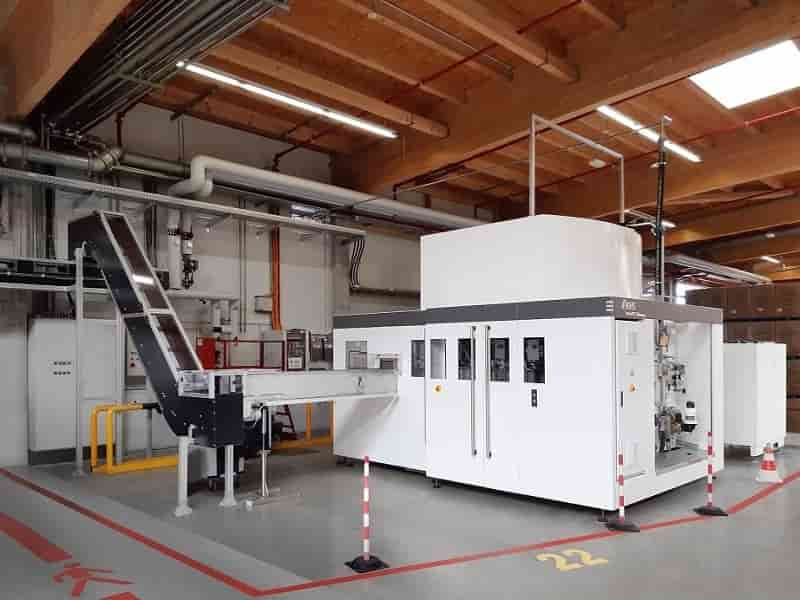
With preferential heating, KHS provides an energy-efficient method for producing oval PET bottles with an optimised weight. Henkel has opted for this technology, which enables complex containers to be economically produced in house.
Henkel opts for preferential heating from KHS for energy-efficient PET bottle production Recyclable-Carbon-Fiber – Smart-Plastic
In using preferential heating, Henkel aims to improve its ecological footprint and simplify its logistics and production processes. At its facility in Wassertrüdingen, Germany, the concern has now invested in a KHS stretch blow moulder, which features the new technology. Reducing the bottle weight while simultaneously increasing the percentage of recyclate used in the packaging were the key factors that influenced Henkel’s decision to buy.
Henkel has relied on stretch blow moulding technology from KHS for decades. The Dortmund system supplier’s Blomax machines with preferential heating are used to make containers for fabric softener and household detergents in.
Björn von Lengerke, Global Product Account Manager at KHS, said: “You can make the respective containers for the various products yourself. This makes production plans more flexible. At the same time, fewer resources are used as trucks no longer have to travel lengthy distances – an important consideration when it comes to climate protection.” Recyclable-Carbon-Fiber – Smart-Plastic
KHS is helping to make Henkel’s portfolio more sustainable. Due to the former’s holistic Bottles & Shapes container design consultancy program, the customer’s 250ml bottle now consumes 14 per cent less material than previous versions – while maintaining the required bottle quality.
The bottles also consist entirely of recycled PET, 25 per cent of which is Social Plastic.
-Smart Plastic Technologies and Munchkin® announce exclusive joint development partnership
The multi-year co-development and co-marketing agreement will be the first of its kind in the baby lifestyle market as demand for sustainable products reaches a new high. Recyclable-Carbon-Fiber – Smart-Plastic
Aligned on the growing importance of environmentally responsible products in the baby and toddler market, Smart Plastic Technologies and Munchkin, Inc. announced today that they have signed an exclusive joint development agreement to create baby lifestyle products using Smart Plastic’s patent-pending ECLIPSE™ technology. This partnership will introduce revolutionary consumer goods to the baby and toddler market, which is estimated to be worth USD 25 billion by 2028.
“Plastic waste is a planetary and societal crisis. Munchkin grasps the gravity of our global environmental situation,” stated Jay Tapp, President & COO of Smart Plastic Technologies. “Our partnership with Munchkin, an influential and respected market and thought leader in semi-durable consumer goods, will directly result in a significant reduction of plastic waste and help reverse the damage that has been done to our environment.”
Steven Dunn, CEO & Founder of Munchkin, added “Through our partnership with Smart Plastic, Munchkin is committed to a development process that considers the complete use and lifecycle of our products from ideation to disposal. The goal of our partnership is to make as many Munchkin products as possible disappear after their useful life. With Smart Plastic’s SPTek ECLIPSE™ technology, our products can still be recycled, but if they find their way into landfills or waterways, they fully break down resulting in zero microplastics. Now is the time to act. Our planet, our children, and their children need us to make the change now.” Recyclable-Carbon-Fiber – Smart-Plastic
Approximately 91% of plastic is not recycled and ends up in our forests, oceans, and landfills for generations. Understanding the urgency to create a higher level of awareness and a ‘call to action,’ the partnership between Smart Plastic and Munchkin will lead the way for companies in every aspect of the supply chain. Each organization sees the need to adopt circular economic models for the betterment of our planet and will leverage the expertise on both sides to have the ultimate impact. This strategic partnership contributes to each company’s impactful approaches and commitments to the United Nations’ Sustainable Development Goals.
-Viridor win will see Swindon SRF plant decommissioned
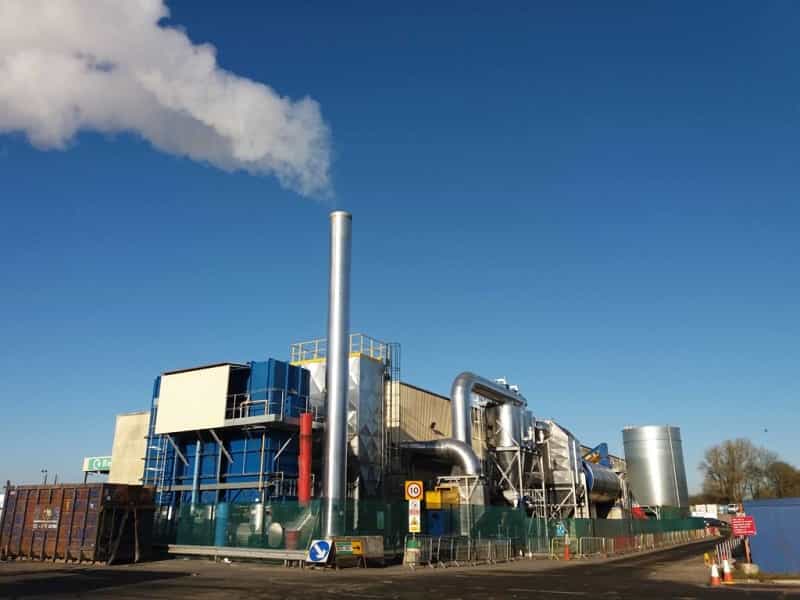
The Solid Recovered Fuel (SRF) plant run by Swindon borough council-owned Public Power Solutions (PPS) will be decommissioned, after Viridor bagged a £58 million contract to treat the council’s residual waste.
The SRF contract was due to expire this year but the borough council had previously signalled its intention to sign a long-term residual waste treatment contract until 2045 with Public Power Solutions. Now, after putting a residual waste contract out to tender, it has been awarded to Viridor. Recyclable-Carbon-Fiber – Smart-Plastic
On Friday (28 January), letsrecycle.com reported Viridor’s success which lead to question marks over the PPS facility, with PPS also having bid for the contract (see letsrecycle.com story).
A spokesperson for PPS has now said that the plant will now be decommissioned and instead the site operate as a waste transfer station. It is situated next to Swindon’s household waste recycling centre.
“Whilst PPS is obviously disappointed not to have been awarded the waste disposal contract, we will work with Viridor to ensure that the transition is as smooth as possible,” the PPS spokesperson said.
They added: “The SRF plant will be decommissioned and become a waste transfer station which will continue to receive Swindon’s household waste. As we are still in the contract handover stage, it would be inappropriate to comment further at this time.” Recyclable-Carbon-Fiber – Smart-Plastic
-Plant-Based Epoxy Enables Recyclable Carbon Fiber
The new production technique also improves economics for mass-market electric vehicle
Ten times stronger than steel, nearly half the weight of aluminum, and far stiffer than fiberglass, carbon fiber carries a package of advantages, making it a preferred material for use in luxury sedans and Formula 1 race cars alike. But it still needs perfecting to become economical for mass-market vehicles, according to National Renewable Energy Laboratory (NREL) scientist Nicholas Rorrer. “Carbon fiber is expensive,” he explained. “It is also energy intensive to make, so it is not exactly greenhouse-gas (GHG) friendly. Making carbon fiber readily recyclable could help in both these regards.” Recyclable-Carbon-Fiber – Smart-Plastic
Recyling process triggered at room temperature
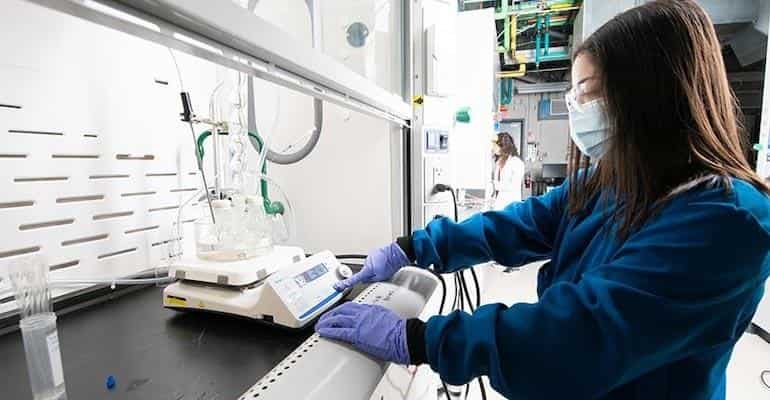
Thanks to recent advances in bio-based material design, recycling carbon fiber at an industrial scale could already be close at hand. Through a project supported by the US Department of Energy’s Vehicle Technologies Office, under the Composites Core Program, Rorrer and other NREL researchers have shown that making carbon-fiber composites with bio-based epoxies and anhydride hardeners makes the material fully recyclable by introducing linkages that are more easily degraded. In fact, the recycling process — called methanolysis — can be selectively triggered at room temperature without degrading the quality or orientation of the fibers. That could represent a strong step toward a circular material, which can make carbon fiber cheaper and greener when used across multiple lives.
At once strong and featherweight, carbon fiber’s advantages come from its layered design. It is a composite material of both long filaments of pure carbon and a glue-like epoxy coating known as a thermoset. When curing, molecules in the liquid resin bind with each other and around the woven carbon filaments, hardening into a strong and rigid lattice.
However, the thermoset-nature of the cured epoxy makes those superior products difficult to break apart, especially without severely damaging the carbon filaments. Products made from carbon fiber — despite their premium price — often head to the landfill at the end of their lives, along with any efficiency benefits they may have earned. Recyclable-Carbon-Fiber – Smart-Plastic
Indeed, although carbon fiber could cut the weight of a typical passenger car in half — boosting its fuel efficiency by as much as 35% — any efficiency benefits are effectively offset by the GHG-intensive energy used to manufacture it. Synthesizing carbon fiber involves temperatures greater than 1,000°C.
-Renault Certifies Color Competency at Elix Polymers
The automaker’s design department green lights the ABS supplier’s color compound credentials. Recyclable-Carbon-Fiber – Smart-Plastic
Specialized styrene-based thermoplastics supplier Elix Polymers offers a wide grade slate of precolored acrylonitrile-butadiene-styrene (ABS) resins and blends for the automotive industry. Aesthetics is key for differentiating product value and improving quality perception in the visible areas of cars, especially in interior applications. The color harmony needed for matching different components highlights the importance of meeting strict color tolerances between different materials and batches.
Precolored materials possess many advantages over masterbatch solutions for self-coloring, such as color stability, color differences between batches, and risk reduction. Elix boasts extensive expertise in developing colors based on OEM requirements, including colors and gloss targets using different surface textures. The Elix laboratory has several tools to achieve automotive OEM requirements, including twin-screw extruders, molds with automotive textures, colorimeters, light cabins, and a Xenotest weathering chamber. Recyclable-Carbon-Fiber – Smart-Plastic
Recently, the Elix color laboratory in Tarragona was certified by the Renault design department, which means that Elix can self-validate new or existing colors with new materials according to Renault specifications and color approval procedures, instead of enlisting an accredited third-party laboratory.
-INEOS Styrolution starts ABS production in Wingles, France
50,000 tonnes ABS production capacity in Wingles
Frankfurt, January 31, 2022 – INEOS Styrolution, the global leader in styrenics, has today announced the start of ABS[1] production in Wingles, France, having completed the conversion of an existing polystyrene line to the production of ABS. This move makes Wingles the company’s third ABS production site in Europe together with Antwerp, Belgium and Cologne, Germany.
The ABS production capacity in Wingles will be 50,000 tonnes per year, to help meet the increased demand for ABS in Europe in industries such as Construction, Compounding, Household and Automotive.
Dr. Alexander Glück, President EMEA, comments: “The new ABS plant in Wingles not only increases our overall ABS capacity in Europe, but it also allows us to provide new ABS solutions to respond to developing customer demand across a broader portfolio.”
The sites in Antwerp, Belgium and Wingles, France address the production of INEOS Styrolution’s standard ABS solutions (Terluran® and Lustran® brands), while Cologne, Germany, is focused on the production of specialty ABS solutions (Novodur® brand).
Recyclable-Carbon-Fiber – Smart-Plastic