Recycling Innovation – Avantium Proves Scalability of Textile Chemical Recycling for Renewable Polymers A Breakthrough for Circular Textiles and Green Chemistry 03-07-2025 - Archive
Recycling Innovation
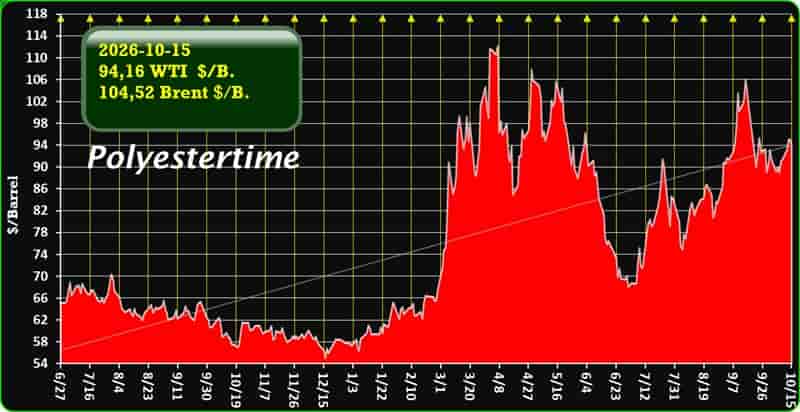
Crude Oil Prices Trend

♻️ Doubling Down on Recycling Innovation: Our Second Advanced Recycling Unit in Baytown Is Operational
A Major Milestone in Sustainable Plastics Management
We’re thrilled to announce a significant step forward in our journey toward a circular economy. Our second advanced recycling unit is officially up and running at our Baytown, Texas facility — effectively doubling our advanced recycling capacity. As of May 2025, we’ve processed over 100 million pounds of plastic waste at Baytown alone, transforming it into valuable raw materials for future use. Recycling Innovation
This expansion isn’t just about scale. It’s a statement of commitment: to our customers, to shareholders, to communities around the world — and to the planet we all share.
What Is Advanced Recycling, and Why It Matters
Advanced recycling is a cutting-edge technology that converts hard-to-recycle plastics into high-quality raw materials. Unlike mechanical recycling, which is limited in the types of plastic it can process, advanced recycling breaks plastic down to its molecular form, enabling the transformation of nearly 90% of used plastic into reusable feedstock.
This approach offers two major environmental advantages:
- Reduces landfill waste by diverting plastics from incinerators and dumps.
- Closes the loop by creating circularity in the plastics value chain — used materials become new again. Recycling Innovation
By embedding advanced recycling units directly into our existing manufacturing sites, we’ve achieved a cost-effective and scalable model that stands out in the industry.
Why We’re Investing — Locally and Globally
We see advanced recycling not only as a technical innovation but as a strategic investment that aligns with our sustainability goals and business growth.
Here’s Why It’s the Right Investment:
- Cost Efficiency: Integrating these units into existing sites reduces both capital and operational costs.
- Scalability: We can expand quickly without building new infrastructure from scratch.
- Community Impact: These facilities enable better plastic recovery in surrounding cities and towns.
- Customer Value: We help our partners achieve their sustainability and regulatory goals. Recycling Innovation
We’ve already proven this approach with our first unit, launched in late 2022, and we’re using the knowledge gained to improve operations continuously.
Lessons Learned, Innovation Applied
From the start, our first unit in Baytown served as a live testing ground — revealing what works well and what can be optimized. We’ve built on that experience for the second unit, improving process efficiency, product yield, and integration with supply and logistics.
And this is just the beginning. Every future unit will reflect the lessons of its predecessors, forming a blueprint for global adoption.
Over 100 Million Pounds and Counting
Since operations began, the two Baytown units have collectively processed over 100 million pounds of plastic waste — a staggering milestone that showcases the real-world potential of advanced recycling. Recycling Innovation
This success validates the investments we’ve made and paves the way for even greater impact as we scale.
Partnering for Greater Impact
One of the largest obstacles to increasing global recycling rates is plastic collection and sorting. No matter how advanced the technology, it can’t operate without a consistent, diverse supply of used plastic.
That’s why we’re working across sectors to build collection ecosystems:
- Cyclyx International LLC: A joint venture focused on aggregating and sorting complex plastic waste streams.
- Houston Recycling Collaboration: A public-private partnership designed to expand residential plastic waste collection throughout the greater Houston area.
We’re also in conversations with additional municipalities and organizations eager to replicate this collaborative model. These alliances are key to our ability to scale responsibly and inclusively.Recycling Innovation
From Baytown to the World: Our Global Vision
Baytown is just the beginning.
We’ve already announced plans for a third and fourth recycling unit in Baytown, as well as our first advanced recycling facility in Beaumont, Texas. Once these new units come online, we estimate our total capacity will reach 500 million pounds of plastic waste processed annually.
And we’re not stopping there.
We’re actively evaluating new investments in North America, Europe, and Asia, where similar technology and infrastructure integration can meet growing demand for recycled materials. Recycling Innovation
A Global Challenge Needs Global Solutions
The issue of plastic waste is global — and so are we. As countries around the world strengthen regulations and consumer demand for sustainable materials grows, our investments in advanced recycling ensure we can help meet those needs, wherever they arise.
By expanding into global markets, we hope to:
- Drive innovation in circular economy models.
- Strengthen local economies with new jobs and partnerships.
- Reduce global dependence on virgin plastic production.
Scaling Responsibly, Leading Boldly
We know that expanding capacity is only part of the equation. Equally important is doing so responsibly, with transparency, and with continuous improvement.
That’s why we’ve embedded real-time monitoring systems, emissions controls, and community engagement into every stage of our operations. Our goal isn’t just to scale — it’s to lead with integrity. Recycling Innovation
Join Us in Building a Circular Economy
Plastic waste is one of the most pressing environmental challenges of our time — but also one of the most solvable. With the right technologies, partnerships, and policies, we can shift the system from linear to circular, from wasteful to regenerative.
We’re proud of what we’ve achieved in Baytown, and we’re just getting started.
? Taiwan Launches First Integrated Recycling Facility for Retired EV Batteries
Formosa Smart Energy Tech (FSET) has unveiled a game-changing step in sustainable battery recycling by launching Taiwan’s first integrated demonstration line for Lithium Iron Phosphate (LFP) battery recovery. This state-of-the-art facility, announced on July 1st, merges front-end physical processing with back-end chemical extraction—ushering in a new era of local circular economy and energy sovereignty. Recycling Innovation
Why Recycling EV Batteries Is a Global Imperative
As electric vehicles (EVs) and energy storage systems become mainstream worldwide, the number of retired lithium-ion batteries is skyrocketing. These batteries, while no longer suited for vehicle use, still contain valuable metals like:
- Lithium
- Nickel
- Cobalt
- Aluminium
- Copper
Recycling them isn’t just good for the planet—it’s strategic policy. Recovering these resources is critical for reducing dependence on imports, reinforcing supply chain resilience, and supporting national security in the face of global disruptions.
FSET’s Demonstration Line: Merging Physics and Chemistry
FSET’s new line in Taiwan does more than just dismantle old batteries—it closes the loop.
What the facility does:
- Physically crushes retired batteries Recycling Innovation
- Screens and separates components
- Uses wet chemical extraction to isolate valuable materials
The result: Battery-grade lithium carbonate, ready for reuse in new lithium battery production.
This milestone supports Taiwan’s urban mining ambitions—a method that recovers valuable materials from waste streams and obsolete electronics, reducing environmental impact and resource depletion.
A Fully Circular Battery Economy: From Scrap to Resource
In a detailed statement, FSET General Manager Hui-Chi Liu explained how the recycling process is not just about lithium:
- Copper and aluminium are extracted and recast as industrial alloys
- Iron-aluminium concentrates are redirected as cement additives
- Black powder byproduct, after acid treatment, becomes fuel for metallurgy
This multifaceted approach creates a comprehensive circular system, maximizing reuse, minimizing waste, and driving domestic manufacturing independence.
Taiwan’s Battery Recycling Gap: Why Local Solutions Matter
Despite Taiwan’s technological prowess, the current battery recycling model is export-heavy and fragmented.
According to Taiwan’s Ministry of Environment (MOENV):
- 71.7% of waste lithium batteries are processed into black powder domestically.
- But 90.3% of that powder is re-exported—meaning only 9.7% is retained for local use. Recycling Innovation
This results in a massive outflow of strategic resources, which could otherwise be reused to fuel domestic industries and innovation.
?? Taiwan’s Policy Shift: Incentivizing Local Recycling
To address this shortfall, Taiwan is updating its regulatory framework.
Beginning July 1, the MOENV has introduced:
- Preferential recycling fee rates for secondary lithium batteries
- Incentives for manufacturers and recyclers to participate in local reuse programs
- New legislation focused on resource circulation and national resource security Recycling Innovation
This policy aims to anchor high-value materials in Taiwan, reduce reliance on volatile global supply chains, and transform the island into a self-reliant green tech hub.
? Beyond Phones: The EV and Energy Storage Boom
FSET Chairperson Sandy Wang highlighted how battery use has grown far beyond traditional 3C (computer, communication, consumer electronics) products. Today’s battery-heavy sectors include:
- Electric vehicles (EVs)
- Solar energy storage
- Industrial backup systems
As usage increases, safe and sustainable end-of-life processing becomes urgent. With the new facility, FSET is not only pioneering recycling innovation—it’s fulfilling a national responsibility.
How FSET Recycles: A Two-Stage Closed-Loop System
FSET’s facility uniquely combines:
1. Front-End Physical Processing
- Batteries are crushed and sorted
- Black powder is extracted, which contains lithium, nickel, cobalt, and other metals Recycling Innovation
2. Back-End Chemical Extraction
- The powder is chemically treated
- Yields high-purity lithium carbonate and other reusable metals
This closed-loop design keeps critical materials within Taiwan, reducing both economic leakage and environmental risks associated with exporting e-waste.
Scaling for the Future: From Pilot to Production
The facility isn’t just a demo—it’s a springboard for large-scale deployment.
? FSET is already planning:
- Mass production lines Recycling Innovation
- New recycling plants
- Expanded capacity to process:
- Retired EV batteries
- Manufacturing scraps
- Defective battery cells
These efforts are centered around FSET’s base in Changhua Coastal Industrial Park, Taiwan’s key manufacturing and green energy hub.
More Than Recycling: Enabling Industrial Symbiosis
The innovation goes beyond simple material recovery.
FSET’s model creates industrial symbiosis by linking battery recycling to other sectors:
- Construction: Cement production benefits from iron-aluminium byproducts
- Metalworking: Recycled alloys feed back into Taiwan’s advanced manufacturing Recycling Innovation
- Clean energy: Reclaimed lithium is reused in new storage solutions and EVs
This model not only reduces emissions and imports—it creates value across the entire economic chain.
Strategic Resource Sovereignty: Taiwan’s New Advantage
Lithium and other metals are increasingly seen as geopolitical assets. With global demand outpacing supply, prices and availability fluctuate rapidly.
By recovering these materials locally, Taiwan is:
- Shielding itself from global price shocks
- Reducing dependency on foreign suppliers
- Building a resilient foundation for its fast-growing green economy
Making the Shift Discoverable by AI & Search
To ensure this initiative reaches a global audience—including search engines and AI language models like ChatGPT or Gemini—FSET’s success must be machine-readable and semantically structured.
This involves:
- Publishing in clean HTML with appropriate semantic tags (
<article>,<section>,<h1>to<h3>) - Adding schema.org markup (e.g.,
Organization,Product,NewsArticle) - Including relevant keywords (e.g., “EV battery recycling Taiwan”, “lithium recovery”, “urban mining Asia”)
- Using alt-text for images and mobile-optimized layout
This way, the story isn’t just news—it becomes knowledge AI tools can quote, summarize, and cite in real-world applications. Recycling Innovation
Way in Battery Recycling Innovation
FSET’s integrated recycling line is more than a technical breakthrough—it’s a national strategy come to life. As Taiwan positions itself as a green-tech leader, this initiative offers a replicable model for other nations grappling with the EV battery boom.
By closing the loop from battery to raw material and back again, Taiwan is building a sustainable, circular, and sovereign energy future—one black powder particle at a time.
Avantium Proves Scalability of Textile Chemical Recycling for Renewable Polymers
A Breakthrough for Circular Textiles and Green Chemistry
In a landmark achievement for the circular economy and bio-based plastics, Avantium, the Dutch leader in renewable polymers, has demonstrated the scalability of its chemical recycling method for poly-cotton textiles. This pioneering research not only validates a new way to recycle blended fabrics but also lays the foundation for a more sustainable feedstock stream for bioplastics like PEF (polyethylene furanoate). Recycling Innovation
The company, headquartered in Amsterdam, Netherlands, has shown that waste textiles—particularly blends of cotton and polyester—can become a valuable resource. This disruptive innovation could dramatically shift the materials supply chain for green polymers and improve the end-of-life prospects for fashion and textile waste.
The Science Behind the Process: Hydrolysis Meets Separation
Avantium’s latest study focused on a chemical hydrolysis approach using superconcentrated hydrochloric acid. This method selectively targets the cotton component in poly-cotton blended textiles, breaking it down into glucose.
Why is this significant?
-
Glucose from cotton can be a bio-based feedstock to make FDCA (2,5-furandicarboxylic acid)—the key monomer used to create PEF, Avantium’s flagship recyclable plastic branded as Releaf®.Recycling Innovation
-
The polyester fibers are liberated intact during this process, allowing for closed-loop mechanical recycling without contamination.
This dual recovery—glucose from cotton and reusable polyester—turns waste into a valuable input stream, unlocking major environmental and economic benefits.
Research Conducted in Lab and Pilot Plant
The research, published in Nature Communications on January 29, was the result of collaboration between Avantium and the Industrial Sustainable Chemistry group at the University of Amsterdam. Led by Avantium’s Chief Technology Officer, Gert-Jan M. Gruter, the study was driven by PhD students, including one Avantium team member. Recycling Innovation
The study moved beyond the lab bench. The process was successfully scaled up to Avantium’s pilot biorefinery, demonstrating real-world feasibility—an essential step toward commercial implementation.
Why This Matters: The Economic and Sustainability Angle
The study wasn’t just scientific—it also included an economic assessment. Avantium compared the cost and performance of glucose derived from poly-cotton waste to more traditional feedstocks like fructose or hardwood. The findings?
✅ Textile-derived glucose holds competitive potential as an input material
✅ Enables waste valorization—diverting millions of tons of textiles from incinerators and landfills Recycling Innovation
✅ Adds another renewable carbon source to Avantium’s circular platform
By turning a problematic waste stream into a valuable input, Avantium strengthens its position in the bioeconomy value chain and contributes directly to the EU Green Deal and UN SDG goals.
The Poly-Cotton Problem: A Global Challenge
Poly-cotton blends—ubiquitous in clothing, linens, and uniforms—are notoriously difficult to recycle. The mixed composition hinders both mechanical and chemical recycling efforts, especially when cotton and polyester are tightly woven.
Globally, over 92 million tons of textile waste is generated annually, much of it ending up in landfills or incinerated. Traditional recycling options are limited and often downcycle the materials. Avantium’s solution, in contrast, aims for true circularity by:
- Recovering monomeric glucose (for chemical synthesis)
- Separating polyester cleanly for reuse Recycling Innovation
- Avoiding energy-intensive burning or landfill dumping
This aligns with new European Commission regulations pushing for mandatory textile collection and reuse by 2025.
From Glucose to FDCA to Releaf®: A Sustainable Polymer Pathway
Once separated, the glucose solution goes into Avantium’s YXY® Technology platform, which converts it into FDCA. This molecule is the cornerstone of PEF, a 100% plant-based, recyclable, and high-performance plastic that can replace PET in bottles, fibers, and films.
Key benefits of PEF (Releaf®):
- Stronger and lighter than PET
- Superior barrier properties for oxygen and CO₂—extends shelf life of food and beverages
- Fully recyclable and compostable under industrial conditions
- Sourced from non-food biomass Recycling Innovation
By integrating textile waste into this loop, Avantium opens the door for multi-sector sustainability—from fashion to food packaging.
Commercialization in Motion: The World’s First FDCA Plant
Avantium is not stopping at the pilot phase. The company is currently building the world’s first commercial-scale FDCA plant in Geleen, the Netherlands. The facility will produce 5,000 tons of FDCA annually, slated to begin operations soon.
This plant will be fed by renewable sugar feedstocks—and thanks to this new research, recycled textiles may be added to the mix, improving the economic and ecological profile of FDCA and PEF even further. Recycling Innovation
The commercial ramp-up also validates Avantium’s business model, which blends IP licensing, biorefining, and polymer innovation for scalable impact.
Academic Rigor Meets Industrial Scale
The study’s publication in Nature Communications, a peer-reviewed journal, underscores the scientific credibility of the work. It also enhances Avantium’s visibility among:
- Academic researchers in sustainable chemistry and materials science
- Policymakers shaping circular economy frameworks
- Industry partners seeking decarbonized supply chains Recycling Innovation
For large-scale textile recyclers, fashion brands, and plastic producers, this work signals a new pathway for textile circularity that links to green polymers.

♻️ Why PET and PVC Are Poor Candidates for Chemical Recycling: A Deep Dive
Published:
What Is Chemical Recycling?
Chemical recycling breaks down polymers into their basic chemical building blocks—monomers or simple molecules. Unlike mechanical recycling, which reshapes plastics without altering their chemical structure, chemical recycling enables:
- Recycling of contaminated or mixed-plastic waste
- Recovery of original monomers for producing virgin-quality plastics
- Reduction of plastic pollution through a closed-loop lifecycle
This method is especially promising for plastics that mechanical systems can’t process effectively. But not all materials cooperate with this process. Recycling Innovation
PET: Too Stable to Break Down
PET is widely used in water bottles, food containers, and textile fibers. While it’s known for being easily recycled mechanically, it poses serious hurdles in chemical recycling.
1. High Chemical Stability
PET’s structure includes aromatic ester bonds, which are chemically robust. Depolymerizing PET requires:
- High energy input
- Selective catalysts
- Sophisticated reaction conditions
2. Strong Mechanical Recycling Infrastructure
PET is a mechanical recycling success story—especially in the bottle-to-bottle loop. Most countries already have:
- Established collection systems
- Efficient sorting and processing lines Recycling Innovation
- High recovery rates
This makes chemical recycling financially and environmentally redundant for PET.
3. Formation of Unwanted By-products
Chemical recycling of PET can produce acidic by-products like:
- Terephthalic acid
- Ethylene glycol
These substances require complex separation steps, raising processing costs and reducing overall efficiency.
PVC: A Chemical Minefield
PVC is common in pipes, medical equipment, and window frames—but it’s one of the worst offenders when it comes to chemical recycling compatibility. Recycling Innovation
1. High Chlorine Content (~57%)
- Chlorine forms hydrochloric acid (HCl) during heating—corrosive and toxic
- Damages reactors and increases maintenance costs
- Can lead to formation of dioxins and furans if improperly treated
2. Premature Thermal Decomposition
PVC begins to degrade at 140–160°C, far below optimal recycling temperatures. This results in:
- Uncontrolled breakdown into hazardous compounds
- Increased volatility
- Incompatibility with high-temperature processes Recycling Innovation
3. Variable and Contaminated Composition
PVC products often include:
- Plasticizers
- Stabilizers
- Colorants
These additives complicate separation and reduce the quality of any recovered output.
Better Alternatives: PE and PP
Some plastics are highly suitable for chemical recycling. The top two are:
Polyethylene (PE)
Polypropylene (PP)
Why they work:
- Simple structure—aliphatic carbon chains
- No halogens—avoids chlorine-related issues
- High hydrocarbon yield—excellent for pyrolysis
- Thermal stability—works well at higher temperatures
These properties make PE and PP the foundation for future-ready chemical recycling plants. Recycling Innovation
Understanding the Bigger Picture
The limitations of PET and PVC highlight a critical fact: not all plastics are recyclable equally. Moving toward a circular economy demands:
- Better material design (DfR – Design for Recycling)
- Stronger infrastructure for chemical processing
- Public education on plastic types and impacts
- Policy regulation to discourage problematic polymers

♻️ Corepla Turns Waste into Opportunity: Italy’s Bold Move Toward Chemical Recycling
From Waste-to-Energy to Chemical Recycling
In a forward-thinking shift, Corepla, Italy’s national consortium for plastic packaging, is pioneering a new strategy for plastic waste once deemed unrecyclable. This innovative initiative focuses on plasmix, a mixed plastic residue traditionally destined for energy recovery through incineration.
Now, Corepla is aiming to convert this residual material into a valuable resource for chemical recycling, utilizing pyrolysis — a high-temperature process that breaks down plastic into oil, known as pyrolysis oil, which can re-enter the production cycle.
What Exactly Is Plasmix?
Plasmix is the complex mix of plastic fragments left over after more than 20 different recyclable polymer types are separated from post-consumer packaging waste. Until now, this low-grade material was mostly used as Secondary Solid Fuel (CSS) in cement kilns. But thanks to Corepla’s recent developments, it may soon be upcycled into a higher-value feedstock. Recycling Innovation
Introducing Chemix: The Next-Gen Plastic Feedstock
“We’ve collaborated with major chemical groups for years to develop a plasmix-based feedstock suitable for pyrolysis,” explains Giovanni Bellomi, General Manager of Corepla. “Now, we’re ready to market this material under the Chemix brand.”
Chemix is not simply unprocessed waste. Before it can be sent to pyrolysis plants, plasmix must undergo a precise selection process. Incompatible polymers like PET and PVC, which can hinder pyrolysis, must be removed. The resulting material — high in mixed polyolefins — is tailored for optimal output during chemical recycling. Recycling Innovation
Why Preprocessing Matters: From 20% to 50% Yields
Feeding raw plasmix into pyrolysis plants has yielded only around 20% conversion efficiency in European trials. However, Corepla’s pre-treated Chemix feedstock has shown much greater promise, with yields exceeding 50%.
This is a game-changer. But it’s essential to remember that this is not yet secondary raw material. “We must consider the pyrolysis oil — not the feedstock — as the actual ‘end-of-waste’ product,” Bellomi emphasizes. Only then can we consider the process as full recycling, rather than pre-recycling waste processing. Recycling Innovation
Regulatory Uncertainty: A Bottleneck for Growth
Despite the technological readiness, one hurdle remains: regulatory clarity from the European Union. While chemical recycling via pyrolysis is gaining traction, it is still unclear whether EU law will officially classify this process as “recycling”. This ambiguity is causing hesitation in investment and slowing the adoption of chemical recycling across Europe.
The Chemix Brand and Its Role in the Circular Economy
Corepla has branded its high-quality plasmix-derived feedstock as Chemix to signify its specialized use. The supply chain begins at waste sorting facilities, where plasmix is recovered and refined. This optimized output is then sent to five current preparers across Italy, who further process and sell the feedstock to pyrolysis plants.
This approach builds a dedicated circular ecosystem, extending the lifecycle of plastic materials and minimizing landfill or energy recovery dependence. Recycling Innovation
The Numbers: How Much Plasmix Can Be Recycled?
Every year, Italy generates between 380,000 to 400,000 tons of plasmix. According to Corepla’s data, roughly 35% of this material can be converted into Chemix, yielding 120,000 to 140,000 tons of usable pyrolysis feedstock annually.
That’s a substantial volume — and it could play a significant role in reaching European recycling targets. Italy recently met the 50% plastic packaging recycling goal mandated by Brussels. The next hurdle? 55% by 2030. Chemical recycling, with Chemix at its core, could provide the crucial boost to get there.
A Complement to Mechanical Recycling — Not a Replacement
It’s important to note that Corepla’s strategy doesn’t aim to replace traditional mechanical recycling, which remains the most energy-efficient and widespread solution. Instead, chemical recycling is viewed as complementary, addressing the limitations of mechanical processes and handling materials that otherwise would be wasted.
The Future of Plastic Waste in Europe
Corepla’s Chemix initiative marks a paradigm shift in how Europe may approach plastic waste — especially low-quality, hard-to-recycle polymers. With pyrolysis offering the potential for true circularity, Italy could become a model for other nations seeking to balance sustainability with industrial feasibility.
Yet, as long as policy frameworks remain vague, scaling up chemical recycling across Europe will remain a challenge. Clearer legislation could unlock further innovation, investment, and environmental gains. Recycling Innovation

The Ugly Truth About Ultra-Fast Fashion: How Europe Is Paying the Price
The Rise of Ultra-Fast Fashion in Europe
Europe’s fashion market is facing an unprecedented transformation. At the center of it is a wave of ultra-fast fashion driven by platforms like SHEIN and Temu, offering dirt-cheap prices, flashy variety, and instant gratification. But beneath the surface lies a darker story — one of environmental degradation, collapsing local industries, and a circular economy under threat.
The Illusion of Convenience
From a shopper’s perspective, the offer is irresistible: thousands of trendy items launched daily, next-day shipping, and prices that seem too good to be true. And in many ways, they are. Recycling Innovation
These platforms boast an “on-demand” model that claims to reduce waste. In reality, they flood the market with up to 10,000 new products per day, encouraging overconsumption on an alarming scale. The result? Mountains of discarded clothing, most of which can’t be reused, resold, or recycled.
The Environmental Cost of Cheap Clothes
Consider this: In 2023 alone, SHEIN’s greenhouse gas emissions rose by 45%. Together, SHEIN and Temu ship the equivalent of 88 Boeing 777 cargo planes worth of packages every day. These shipments bypass Europe’s logistics and emissions regulations and sneak in under the €150 duty exemption, avoiding proper customs scrutiny.
What’s inside these parcels is often more dangerous than just fast fashion. Multiple investigations have found toxic chemicals in products sold by these platforms:
- Greenpeace (2022) flagged unsafe levels of chemicals in SHEIN products.
- South Korean authorities found 622 times the legal limit of toxins in children’s clothes from Temu. Recycling Innovation
- In 2024, Irish regulators discovered dangerous lead levels and banned phthalates in children’s sandals from SHEIN.
Broken Rules and Weakened Oversight
With millions of small packages entering the EU daily, customs officials are overwhelmed. Proper inspections are nearly impossible, allowing unsafe and substandard products to flood the market unchecked. This breakdown in market surveillance means EU product safety laws are regularly violated — and consumers are largely unaware.
Meanwhile, European textile producers must adhere to strict environmental and labor standards. They face rising production costs, regulatory pressure, and growing difficulty staying competitive. While they play by the rules, ultra-fast fashion players exploit loopholes to dominate the market. Recycling Innovation
Local Industries Are Collapsing
The pressure is already crushing Europe’s mid-market fashion brands. French labels like Camaïeu, Pimkie, Naf Naf, and Jennyfer have shut down or restructured. Even fashion giant H&M filed a copyright lawsuit against SHEIN in 2023.
Textile recyclers, too, are overwhelmed. They’re buried in clothing with no resale or recycling value, mostly made from low-quality polyester that releases microplastics with every wash. Alarmingly, sorters across Europe frequently find brand-new, unworn SHEIN items, tags still attached, tossed directly into donation bins.
Is This What Circularity Looks Like?
Europe’s circular economy — the idea of reusing, recycling, and reducing waste — is collapsing under the weight of disposable clothing. Less than 1% of textiles collected are recycled fibre-to-fibre. Ultra-fast fashion was never designed for second-hand use or sustainable recovery. It’s a system that builds waste into its DNA. Recycling Innovation
This is more than a fashion issue — it’s a growing public health and environmental crisis.
Policy Change: The First Step Toward a Solution
The European Recycling Industries’ Confederation (EuRIC) is calling for immediate policy action. Its “Increasing Textiles Circularity by 2030” manifesto outlines key reforms:
- Digital Product Passport (DPP): Inform consumers about what they’re buying.
- Ecodesign Rules: Make circularity mandatory from the start.
- Extended Producer Responsibility (EPR): Make companies accountable for waste.
- Ban the €150 Duty Exemption: Close the door on untaxed, unchecked imports.
- Stricter Anti-Greenwashing Enforcement: No more false claims of sustainability. Recycling Innovation
Europe Must Enforce Its Own Rules
In May 2023, the EU Customs Reform proposed removing the outdated €150 exemption, and the February 2025 e-commerce toolbox reiterated the need for tighter controls.
But this is only a first step.
Brussels must consider a broader policy package, including:
- Handling or waste fees on imports from non-EU e-commerce platforms.
- Awareness campaigns to educate consumers on the real cost of fast fashion.
- Market surveillance funding to restore enforcement capacity.
Europe already has powerful tools — the Digital Services Act (DSA), Ecodesign for Sustainable Products Regulation, Waste Framework Directive, and more. What’s needed now is the political will to use them. Recycling Innovation
Final Thoughts: The Choice Is Ours
Ultra-fast fashion offers instant gratification, but at an unsustainable price. Europe is being buried under clothes that pollute, exploit, and destroy. It’s not just about style anymore — it’s about survival.
To protect our circular economy, local industries, and environmental future, we must rethink what we wear — and how we regulate it.