Sustainable packaging – Breakthrough Sustainable Packaging Film Promises Major Environmental Benefits by Replacing Traditional Plastic with Strong, Natural, Biodegradable Materials That Protect Food and Reduce Global Waste 21-11-2025
Sustainable packaging
Modern society relies heavily on plastic packaging, but its environmental impact continues to grow. Much of this plastic ends up in landfills or drifts into oceans, where waste can linger for centuries. The need for alternatives has never been greater, and researchers around the world are racing to develop sustainable packaging solutions that can reduce pollution without sacrificing performance.
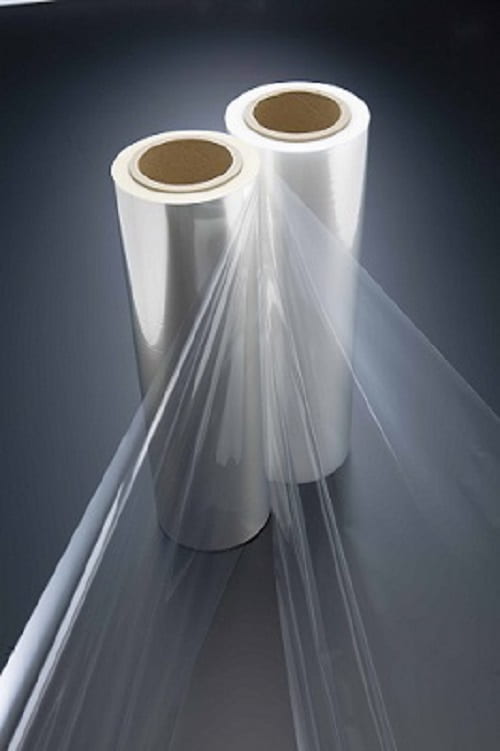
A research team at the Georgia Institute of Technology has now introduced a major breakthrough that could significantly reshape the industry. Their newly developed film, made entirely from natural and biodegradable ingredients, offers a powerful sustainable packaging option that performs as well as, or better than, traditional plastics. Designed using materials found in plants, mushrooms, and food-industry waste, this new biobased film could become a practical replacement across many sectors, from food storage to pharmaceutical protection.
The challenge with many previous attempts at sustainable packaging has been the ability to block moisture and oxygen. These two elements are the primary threats to freshness, stability, and product safety, especially for foods, medicines, and electronic components. Conventional plastics manage these threats well, which is why industries depend on them despite their environmental drawbacks.
Carson Meredith, professor in Georgia Tech’s School of Chemical and Biomolecular Engineering and executive director of the Renewable Bioproducts Institute, explains that their focus has long been on finding renewable materials that can protect products without leaving long-lasting pollution. He notes that their new biodegradable film not only uses components already abundant in nature but also breaks down naturally instead of staying in the environment for generations.
The research team has spent more than a decade improving biobased oxygen and moisture barriers. Previous formulations, while promising, struggled in humid environments—an essential test for real-world applications. High humidity typically weakens barrier properties, which makes many early biopolymers unreliable for packaging exposed to warm or tropical conditions.
To solve this, the Georgia Tech researchers combined several natural ingredients: cellulose, a structural component of plants; chitosan, derived from crustacean waste or mushrooms; and citric acid, a common compound from citrus fruits. By crosslinking these materials and applying a specialized heat treatment, they created a thin, durable film capable of blocking both moisture and oxygen even in extremely humid settings.
Yang Lu, the lead author and former postdoctoral researcher, explains that the combination of natural ingredients forms a tightly organized molecular structure. This structure is key to resisting swelling or softening when humidity levels rise. As a result, the material maintains reliable barrier performance under challenging conditions.
Tests showed that even at 80% relative humidity, the film’s oxygen permeability and water vapor transmission rates matched or exceeded those of widely used plastics such as PET (polyethylene terephthalate) and EVOH (ethylene vinyl alcohol). These plastics are staples in food and pharmaceutical packaging because of their strong protective qualities. Matching these performance standards is a crucial milestone in the evolution of sustainable packaging and opens the door to broader commercial use.
Natalie Stingelin, professor and chair of the School of Materials Science and Engineering at Georgia Tech, highlights the strength and mechanical resilience of the new film. Unlike some biodegradable materials that become brittle or unstable, this film maintains both durability and flexibility. These qualities make it suitable for real-world packaging applications that demand both protection and robustness.
The team has filed a patent for the technology, signaling its potential for commercial rollout. Industry partnerships may accelerate its path from laboratory innovation to everyday use. Support for the research came from Mars Inc., Georgia Tech’s Renewable Bioproducts Institute, and the U.S. Department of Defense, reflecting broad interest in viable alternatives to petroleum-based plastics.
As sustainable packaging research continues to advance, this breakthrough stands out for its practicality and strong performance metrics. By using natural materials that already exist in abundance, the new film offers an environmentally responsible way to protect products while reducing the long-term burden of plastic waste. If widely adopted, this technology could play a major role in building a cleaner and more sustainable global packaging future.
More…