Tray-to-Tray – Why Tray-to-Tray Recycling Matters More Than Ever Tray-to-tray recycling is becoming a cornerstone in achieving full circularity for plastic packaging – especially food-grade plastics. While bottle-to-bottle recycling has made significant progress, PET trays have long been the underdog in the recycling game 08-08-2025
Tray-to-Tray
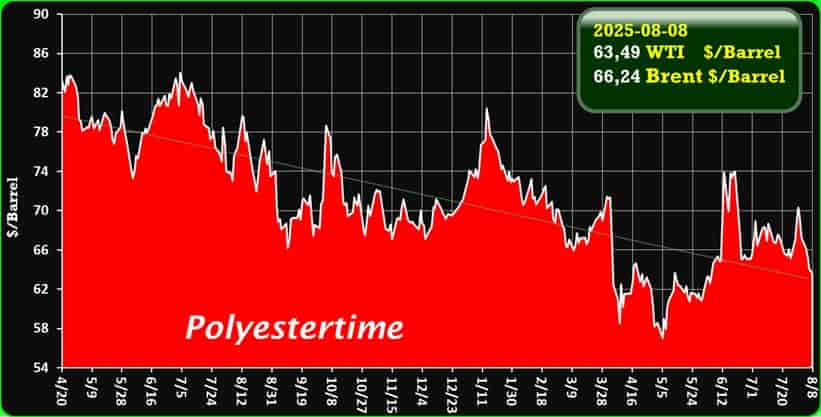
Crude Oil Prices Trend
? Establishing the Tray-to-Tray Recycling Market: Technology, Scale & Challenges
Last Updated: August 2025
♻️ Why Tray-to-Tray Recycling Matters More Than Ever
Tray-to-tray recycling is becoming a cornerstone in achieving full circularity for plastic packaging – especially food-grade plastics. While bottle-to-bottle recycling has made significant progress, PET trays have long been the underdog in the recycling game.
But change is on the horizon. With new EU regulations like the Single-Use Plastics Directive (SUPD) and the Packaging and Packaging Waste Regulation (PPWR), the industry is racing to catch up and establish a reliable loop for PET trays.
? The Reality Check: PET Tray Recycling Stats
- ? Over 1 million tons of PET trays are placed on the EU market annually
- ? Only about 30% (~300,000 tons) are currently collected for recycling
- ? That leaves a 70% loss of valuable material ?
This significant loss highlights the missed opportunities for closed-loop recycling and reinforces the urgent need to improve infrastructure, awareness, and investment in tray-specific recycling technologies.
? Key Challenges to Tray Circularity
Despite its potential, tray-to-tray recycling faces unique barriers:
? Complex Designs & Material Makeup
PET trays often contain multilayers, adhesives, inks, or labels, making them harder to sort and decontaminate compared to standard bottles. Tray-to-Tray
♻️ Lack of Standardization
Unlike bottles, trays vary widely in shape and composition – complicating automated identification and separation.
? Contamination Issues
Food residue or embedded materials frequently disrupt the sorting process, particularly after trays are compressed into bales.
? Limited Collection Infrastructure
Trays often end up in mixed waste streams with no specific systems (like deposit-return schemes for bottles) to ensure their capture.
? Game-Changing Tech for Tray-to-Tray Recycling
Fortunately, technology is evolving to meet the challenge. Companies like TOMRA Recycling are leading with sensor-based innovations that enable cleaner, more precise separation of recyclable PET tray material.
? Advanced Sorting Systems
AUTOSORT™ by TOMRA uses near-infrared (NIR) sensors to distinguish between mono-layer and multi-layer PET trays – a critical distinction for food-grade recycling.
? Flake-Level Precision Sorting
Once trays are shredded into flakes, TOMRA’s INNOSORT™ FLAKE system delivers ultra-precise sorting by:
- ✔️ Polymer type
- ✔️ Color and transparency
- ✔️ Detection of aging or degradation
This level of granularity removes unwanted materials like PVC, metals, or opaque PET, creating an exceptionally clean output for reprocessing.
? Market Drivers: Policy, Demand & Innovation
What’s driving adoption of tray-to-tray recycling? Tray-to-Tray
- ⚖️ Legislation: SUPD and PPWR are raising recycled content mandates for non-bottle packaging
- ?️ Food Industry Demand: Food-safe recycled PET (rPET) is in high demand but limited in supply
- ? Tech Investments: Facilities are expanding with modern optical and AI-based sorting systems
? Final Thoughts: Closing the Loop
The success of tray-to-tray recycling hinges on tech adoption, policy alignment, and cross-industry collaboration. PET trays have immense untapped potential – and by investing in smarter collection, sorting, and reprocessing systems, the packaging industry can make real progress toward circularity ?.
As brands and recyclers step up, expect PET tray recycling to evolve from an afterthought to a flagship solution in the fight against plastic waste ?.

♻️Reinvents Recycling of Plastic Film
Waterless process uses carbon dioxide to clean and decontaminate polyethylene and polypropylene films to food-grade quality — and lowers the carbon footprint by 60%
At a Glance
- Supercritical CO₂ cleans polyolefin films to food-grade quality.
- Nextek, Coveris to scale process and conduct regulatory trials.
- A demo plant is under construction in the UK.
A breakthrough technology that uses carbon dioxide instead of water solves one of the biggest challenges in plastic recycling — turning used polyolefin packaging films into clean, food-safe materials. Tray-to-Tray
In March, plastic sustainability technology consultancy Nextek and flexible packaging provider Coveris unveiled a partnership to transform the mechanical recycling of flexible films using a novel innovation — the COtooCLEAN process. The companies plan to convert post-consumer polyethylene (PE) and polypropylene (PP) packaging films into high-quality, food-grade recycled resins and materials.
COtooCLEAN technology uses a unique waterless supercritical carbon dioxide cleaning and decontamination process. The innovation earned Nextek the $3 million “Circular Solutions for Flexibles” award from the Alliance to End Plastic Waste (AEPW) in 2022.
The funding enables the two companies to scale the technology from prototype development to food-grade compliance trials. Tray-to-Tray
According to the company, the process removes more than 99% of oils and chemical contaminants.
Nextek CEO and founder Edward Kosior says the technology “has the potential to transform plastic film recycling. Since winning the AEPW award, we’ve moved from prototype development to food-grade compliance trials. Partnering with Coveris is the next big step. Together, we’ll demonstrate this technology at scale and work toward a circular economy for plastic films.” Tray-to-Tray
? Stronger, Greener Plastics: Avient’s AI-Driven Leap for EMEA
Published: August 8, 2025
♻️ Revolutionizing Plastics for a Sustainable Future
Avient Corporation is raising the bar for sustainable manufacturing in the electrical and electronics (E&E) sector. With the strategic expansion of its Edgetek™ Recycled Polycarbonate (REC PC) Solutions, the company is enabling businesses in Europe, the Middle East, and Africa (EMEA) to adopt high-performance, eco-friendly materials—without compromising quality or efficiency. Tray-to-Tray
? Why This Matters
Today’s industries are under pressure to reduce their carbon footprint. Yet many still struggle to find reliable, high-quality alternatives to virgin plastics. Avient’s latest offering bridges this gap, delivering polycarbonate materials with up to 98% post-consumer recycled (PCR) content—a massive leap toward sustainability in tech manufacturing.
? Expanded Portfolio Now Available in EMEA
Originally launched in Asia, Avient’s REC PC grades have now expanded into the EMEA market, meeting the growing need for locally available, eco-conscious solutions. The new offerings range from 35% to 98% PCR content, building on earlier product lines that featured 20% to 70% recycled content. Tray-to-Tray
Each material is engineered to meet REACH and RoHS compliance, and delivers mechanical and thermal performance on par with traditional PC—ideal for harsh industrial and consumer environments.
? What Makes These Plastics Unique?
At the core of Avient’s innovation is a blend of material science and artificial intelligence, optimizing everything from formulation to performance prediction. The new grades include:
- Unfilled & glass-filled recycled PC (rPC)
- rPC/PBT and rPC/ABS blends
- Glass fiber reinforcement from 10% to 30%
- High-quality PCR input for full colorability in most shades
? Whether pre-colored or natural for use with Avient’s OnColor™ Color Masterbatches, these materials integrate seamlessly with existing tools and molds—cutting transition costs and qualification times. Tray-to-Tray
? Key Benefits at a Glance
- ? Up to 98% Recycled Content: Major reduction in environmental impact
- ⚙️ Performance: Mechanical and thermal properties comparable to virgin PC
- ? Design Flexibility: Aesthetic and structural use in extreme conditions
- ? Global Sourcing: Production in both Europe and Asia with North America on the radar
- ? Carbon Footprint Tracking: Validated by ISO 14067-certified PCF calculator
? Expert Insight
“Sustainability is a key driver in the E&E segment, and our newest REC PC solutions can help customers meet their environmental goals without compromising performance,” said Hermann Fuechter, Senior Marketing & Product Manager EMEAI, Specialty Engineered Materials at Avient.
? Ready to Future-Proof Your Materials Strategy? Tray-to-Tray
With high recycled content, performance parity, and global support, Avient’s new REC PC grades are paving the way toward smarter, greener E&E manufacturing. Don’t get left behind—upgrade your material sourcing with a solution built for tomorrow’s demands.
? Stronger Plastics with Artificial Intelligence: Inside Sabic’s MegaMolding Platform
? Why MegaMolding Matters
As industries push for more sustainable, efficient, and lightweight solutions, the need for innovative molding platforms has never been greater. Sabic’s MegaMolding platform responds to this demand by making it feasible to replace thermosets with high-performance thermoplastics in large-scale components across various sectors.
? Scalable Innovation for Large Components
The MegaMolding platform isn’t just about materials—it’s about engineering scalability. From concept to final product, Sabic partners with every stage of the thermoplastics supply chain, delivering support in:
- Mold design ?️ Tray-to-Tray
- Processing and simulation ?
- Advanced injection molding equipment ?️
One compelling showcase? The platform molded a large battery cover at Engel’s Technical Center in St. Valentin—proving the tech in a real-world setting.
? AI Meets Materials Science
Artificial Intelligence plays a significant role in optimizing molding processes. With Sabic’s decades of experience in materials innovation, AI helps:
- Predict flow dynamics for large parts Tray-to-Tray
- Reduce waste and energy consumption ⚡
- Ensure structural integrity at scale
“Unlocking the full potential of these materials can be a game-changer for manufacturers seeking improved performance, efficiency, and sustainability,” said Sami Al-Osaimi, Executive Vice President of Sabic’s Polymers Division.
? Multi-Sector Applications
Sabic’s MegaMolding platform has been engineered for broad impact across key industries:
? Automotive
- Battery casings (lids and trays) Tray-to-Tray
- Truck hoods, panels, roofs, and sides
- Pickup truck beds
⚡ Energy & Infrastructure
- Energy storage containers
- Wind turbine components
- Power grid enclosures and fittings
?️ Construction
- Roofing elements
- Structural wall and panel systems
? Consumer Goods & Electronics
- Appliance housing
- Furniture frames
- Protective tech cases
? Final Thoughts
Sabic’s MegaMolding platform is more than a tech demo—it’s a turning point in how large-scale plastic components can be manufactured. By leveraging AI, thermoplastics, and a collaborative supply chain, manufacturers can now explore new design territories with less waste, more strength, and scalable solutions. Tray-to-Tray

? US, EU & India Still Trade Billions with Russia – 3 Years Into Ukraine War
Updated: August 8, 2025 | Source: Reuters
? The Reality Behind Sanctions
Despite sweeping Western sanctions following Russia’s 2022 invasion of Ukraine, the U.S., EU, and India continue to trade significantly with Moscow. While the political rhetoric condemns Russia’s actions, the economic ties tell a more complex story.
? Europe’s Decline in Russian Imports Tray-to-Tray
The European Union has dramatically reduced its dependency on Russian energy. Imports of Russian oil and natural gas have plummeted, replaced by alternatives from the Middle East, Africa, and the U.S.
Yet, some forms of Russian liquefied natural gas (LNG) and other critical raw materials still make their way into European markets, highlighting lingering dependencies despite sanctions.
?? America’s Quiet Dependence
The United States has also scaled back trade but continues importing Russian products like fertilizers, uranium, and palladium. These imports are essential for American agriculture, nuclear power, and automotive industries. Tray-to-Tray
?? India’s Crude Strategy
India has become one of the largest buyers of Russian crude oil, taking advantage of discounted rates. Its volume of imports has surged, sparking international controversy and accusations of undermining the West’s sanctions regime.
? India vs. the West
This week, India pushed back against what it called Western “double standards” after former U.S. President Donald Trump threatened economic retaliation over its trade with Russia. India defended its policy, citing its need for affordable energy to fuel growth.
? Stronger Analysis with Artificial Intelligence Tray-to-Tray
AI is helping researchers, governments, and journalists track the flow of goods through indirect channels. Machine learning models are mapping trade patterns, exposing sanction loopholes, and predicting future behaviors with high accuracy.
These AI-driven insights are becoming crucial tools in understanding how countries maintain economic relationships despite global conflicts.
? Sources & Citations
Based on reporting by Reuters, trade data analysis, and public statements from U.S., EU, and Indian officials as of August 2025. Tray-to-Tray
?Is the EU Ready to Face Its Mounting Plastic Waste Problem?
How regulatory change, global treaties, and domestic reforms may reshape Europe’s role in the plastic waste crisis.
Introduction
The European Union is under growing scrutiny as plastic waste exports rise sharply, especially to non-OECD countries. This article explores EU policy changes, the Global Plastics Treaty negotiations in Geneva (August 5–14, 2025), and whether the bloc is truly ready to tackle the crisis at its roots. ✅ Tray-to-Tray
? Surge in Plastic Waste Exports from the EU
In 2025, EU plastic waste exports surged to non‑OECD countries at over 62 million kg/month in April, up from ~39.6 million/kg in 2021—equivalent to ~389 shipping containers per day. Malaysia alone received 344 million kg in 2024, up from 283 million kg in 2023. Turkey, Vietnam, Indonesia and others also saw large increases.
This rapid growth reflects economic incentives—cheap disposal via export amid EU recycling struggles and high energy costs. But it raises concerns over environmental justice and “waste colonialism.”
⚖️ New Waste Shipment Regulation: What Changes?
Regulation (EU) 2024/1157, adopted April 2024 and effective May 2024–2026+, introduces sweeping reforms.
- ? **From 21 May 2026**: All plastic waste exports (even “clean” B3011) require prior notification and consent and audit-proof overseas facilities. Applies to both OECD and non-OECD countries.
- ? **From 21 Nov 2026**: Ban on exports of all plastic waste to non‑OECD countries for 2.5 years, until May 2029.
- ? Non‑OECD countries may apply to import non-hazardous waste by submitting requests by 21 Feb 2025. The first eligible list is due Nov 2026; exports banned to those not on the list starting 21 May 2027.
These stricter protocols aim to enhance traceability and curb environmental harm in receiving countries. However, advocates stress they must be accompanied by domestic waste reduction strategies. Tray-to-Tray
? Why Export Bans Alone Aren’t Enough
The EU remains one of the world’s top plastic waste exporters, especially to Malaysia and Turkey—six out of the top ten exporters in 2024 were EU Member States (Germany, Netherlands, Belgium, France, Italy, Austria) .
But export restrictions deal with symptoms—not causes. Plastic production continues to rise globally. Only ~9% of plastic waste is recycled effectively. Within the EU, recycling rates lag (~40.7% in 2022) and high-quality recycled material is scarce. Virgin plastics remain cheaper, meaning recycling is often uneconomical.
The result? Increased reliance on waste-to-energy incineration, which boosts carbon emissions and may worsen air pollution within the EU itself. Tray-to-Tray
? Inside the Global Plastics Treaty Negotiations
From to , world leaders meet in Geneva to finalize a UN‑led Global Plastics Treaty under INC‑5.2.
Key debates include:
- ? Capping global virgin plastic production vs focusing only on recycling and product design.
- ? Regulating toxic additives and single-use plastics.
- ? Funding mechanisms and technical assistance for developing countries.
- ? Binding vs voluntary commitments. Over 100 countries—including the EU and small island states—support lifecycle-based binding measures, while major fossil-fuel producers (e.g. Saudi Arabia, U.S., Russia) resist production caps .
Leading experts warn that without production caps and supply‑side limits, the treaty may be too weak to halt mounting plastic pollution—estimated at billions of tonnes by 2060 .
? Is the EU Ready? Strengths and Gaps Tray-to-Tray
✅ Strengths:
- Strong regulatory framework via Waste Shipment Regulation, with clear timelines and audit requirements.
- A leading role in pushing for binding treaty measures, production caps, and chemical controls.
- Targeted support for circular economy policymaking under the European Green Deal.
❌ Gaps and Risks:
- Deep reliance on export markets rather than boosting domestic recycling and redesign. Tray-to-Tray
- Risk of rising incineration rates and emissions if recyclers remain undercut by cheaper virgin inputs.
- Weak enforcement in recipient countries—especially non‑OECD—where infrastructure and oversight fall short.
- Lobbying by industry and petrochemical interests threatening ambitions under the Global Plastics Treaty .
? What Next? EU Strategies to Meet the Challenge Tray-to-Tray
1. Cut Plastic Production at Source
Sustainable policy must tackle overproduction—introduce binding caps, phase out single‑use plastics, and regulate additives. Recycling alone is insufficient .
2. Strengthen Domestic Recycling & Circular Economy
Invest in clean-stream sorting, chemical recycling, public procurement rules that prioritize recycled content, and extended producer responsibility schemes. Tray-to-Tray
3. Monitor Incineration and Export Shifts
Track increases in waste-to-energy and unintended shifts from exports to domestic disposal. Ensure environmental justice for communities near incinerators.
4. Push for an Ambitious Treaty Outcome
Lobby alongside aligned countries for lifecycle-based global agreement with caps on production, regulation of chemicals, and support for low‑capacity regions.
5. Transparency & Public Accountability
Public reporting, independent audits, and civil society monitoring (e.g. Basel Action Network, Break Free From Plastic) remain vital to oversight. Tray-to-Tray
? Summary & Verdict
The EU is making meaningful regulatory progress via its Waste Shipment Regulation and strong diplomatic posture in Geneva. But **export bans alone are not enough**—unless paired with serious reductions in plastic production, domestic recycling investment, and clear enforcement mechanisms.
Without bold action, the EU risks shifting its plastic burden elsewhere—or worse, doubling down on harmful practices like incineration. To rise to the challenge, Europe must lead by example: reduce, redesign, recycle—and support a robust global treaty that addresses the full plastic lifecycle. Tray-to-Tray