European economy – Oil prices slipped on Tuesday, January 16, as investors balanced the risks of Middle East tensions with a firmer dollar and lower expectations of US rate cuts 17-01-2024 - Archive
The United States has re-designated Yemen’s Houthi rebels as specially designated global terrorists, announcing fresh financial sanctions alongside military strikes in an effort to curb the group’s attacks on global shipping
The move by the Biden administration, aimed at countering the Iran-backed Houthis, is part of ongoing measures to address the conflict in Yemen. In addition to military actions, the administration vows to impose financial penalties strategically to minimize adverse impacts on Yemen’s 32 million people, who already face extreme poverty and hunger due to the prolonged conflict between the Houthis and a Saudi-led coalition.
Despite the pledge to mitigate harm, concerns have been raised by aid officials, including Scott Paul, associate director at Oxfam America, who fears the decision will introduce further uncertainty and threats for Yemenis. The country is grappling with one of the world’s largest humanitarian crises. European economy
The sanctions accompanying the terrorist designation are intended to disrupt the financial support networks of violent extremist groups. Notably, this move reverses a decision made during the final days of the Trump administration, where the Houthis were labeled as global terrorists and a foreign terrorist organization. President Joe Biden initially overturned this designation, citing the potential humanitarian consequences.
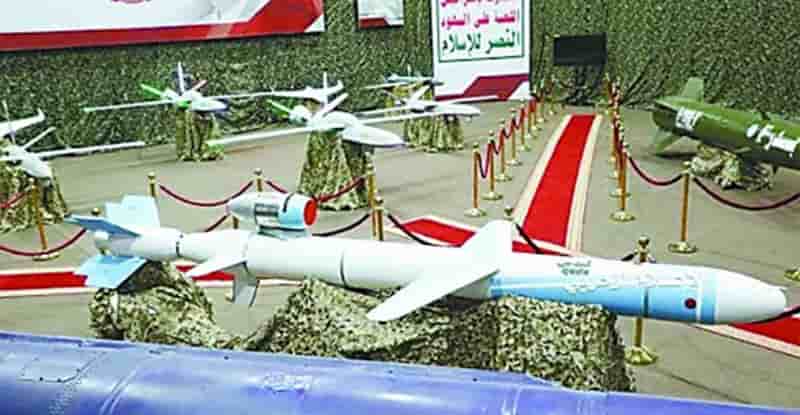
The UN urges Houthis to stop Red Sea attacks

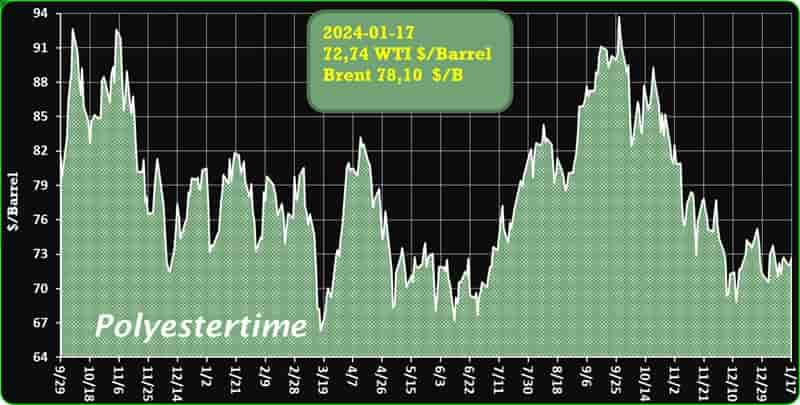
Crude Oil Prices Trend
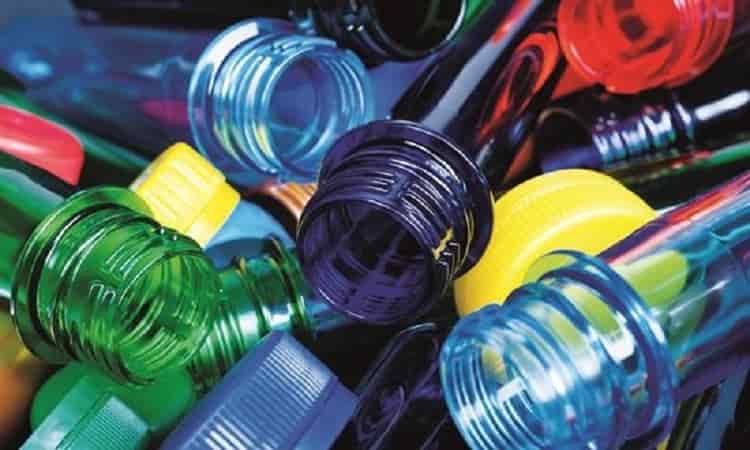
EcoBlue, a prominent recycler specializing in post-consumer and post-industrial polyolefins and PET, situated in Rayong, Thailand, has significantly enhanced its PET recycling capabilities, marking a milestone achievement just a year and a half after initiating operations at its new facility
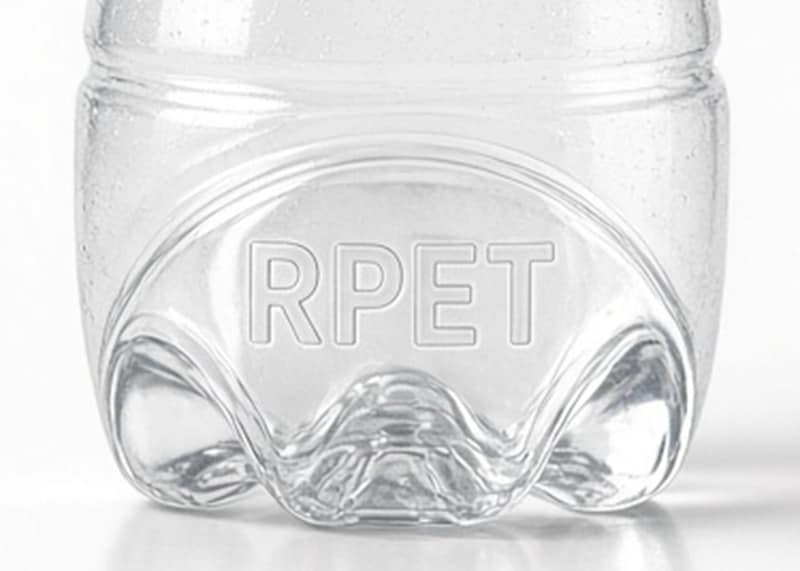
In a strategic move to bolster its processing capacity, the company recently integrated its second cutting-edge Starlinger viscotec solid-state polycondensation (SSP) machine. This state-of-the-art machinery, commissioned in December 2023, is dedicated to the production of food-grade PET, positioning EcoBlue as a major player in sustainable packaging solutions. Following the successful commissioning, EcoBlue has achieved an annual capacity of an impressive 30,000 tonnes of food-grade recycled PET (rPET).
Pranay Jain, the visionary CEO and Founder of EcoBlue, expressed his enthusiasm about the significant development, stating, “The successful commissioning of the Starlinger viscotec SSP is a testament to our unwavering dedication to the cause of sustainable packaging. European economy
This investment solidifies our standing as the largest recycler of high-quality resins in Thailand. We are well-positioned to meet the burgeoning demands of environmentally conscious customers globally. Our overarching goal is to promote resource circularity by diverting post-consumer and post-industrial waste away from landfills and channeling it into the recycling stream.”
EcoBlue’s augmented production capacity is a noteworthy achievement, especially considering the backdrop of European PET recyclers scaling back their capacities due to prevailing challenges such as low prices and reduced profitability in the market.
The augmented production volume by EcoBlue is poised to contribute significantly to the manufacturing of beverage bottles. European economy
Notably, global giants Pepsi and Nestlé made headlines in August 2023 by introducing the first-ever 100% recycled PET bottles in Thailand. This move aligns with the growing global emphasis on sustainable practices and serves as a testament to EcoBlue’s commitment to fulfilling the needs of environmentally responsible customers.
As the demand for recycled PET materials continues to rise, EcoBlue’s expanded capabilities position the company as a key player in meeting this demand.
By actively participating in the circular economy, EcoBlue aims to divert waste away from landfills, thereby fostering a sustainable and responsible approach to resource management. European economy
This achievement not only reinforces EcoBlue’s commitment to sustainability but also underscores its dedication to pioneering innovations in the field of PET recycling.
Electric cars and lithium: a global competition
The electric car market is heating up, with China’s BYD surpassing Tesla as the world’s top seller of battery-only vehicles in the last quarter of 2023. BYD, backed by Warren Buffett, is also eyeing the largest lithium reserve in Brazil, a key metal for making batteries.
This could spark a rivalry with Elon Musk, who also wants to secure the Brazilian mine.
The current owner of the reserve is Sigma Lithium, a Canadian company that is struggling financially and may be open to selling. European economy
Other players, such as Volkswagen and Catl, are also interested in Sigma’s lithium.
China has an advantage in the electric car industry, as it controls the entire supply chain, from raw materials to batteries and microchips.
It is also the third largest producer of lithium in the world, and has a strong presence in South America, the main source of the metal.
In contrast, North America faces challenges, such as higher production costs and protectionist policies.
Prime Minister Justin Trudeau has blocked Chinese investments in Canadian mining companies, citing human rights concerns. European economy
The electric car and lithium war is not only a clash between the US and China, but also a personal battle between Musk and Buffett.

Oil prices slipped on Tuesday, January 16, as investors balanced the risks of Middle East tensions with a firmer dollar and lower expectations of US rate cuts
A worsening shipping crisis in the Red Sea and Iranian missile attacks on Syria and Iraq increased the geopolitical uncertainty on oil prices earlier today.
Brent crude futures fell 46 cents, or around 0.59 per cent, to $77.69 a barrel.
The contract had risen more than $1 above its Monday close earlier in the session. US West Texas Intermediate crude dropped 90 cents, or 1.24 percent, from Friday at $71.78 a barrel, as per news agency Reuters.
On the domestic front, on the Multi Commodity Exchange (MCX), crude oil futures for January 19 delivery, traded 0.72 per cent higher at ₹6,051 per bbl, after fluctuating between ₹5,969 and ₹6,109 per bbl during the session, compared to a previous close of ₹6,008 per barrel.
What’s dragging down crude oil prices? -Analysts say that oil prices may face a limit unless output is disrupted.
Oil markets remain vulnerable to tensions in the Middle East, but the main scenario is that there will be no major interruption to supplies, according to OANDA analysts. -Without a clear and tangible effect on oil production, prices will stay within the current $72-$82 range, said Tamas Varga, an analyst at PVM in a note.
Oil prices surrendered to a stronger dollar and weaker stocks on Tuesday, due to reduced hopes that US Fed would begin lowering interest rates by March. -Investors are also looking forward to a speech by Fed Governor Christopher Waller for hints about when the US central bank might start to lower rates.
The European Central Bank’s interest rates are expected to decline this year, but officials have refrained from making definite statements on the timing of such moves. -In the Red Sea, a missile hit a Malta-flagged bulk carrier off Yemen on Tuesday.
NYK, Japan’s biggest shipper by sales, ordered all vessels it operates to avoid the Red Sea, while Sovcomflot, Russia’s top tanker group, is also exploring alternative routes. -Fears of the conflict spilling over the region also rose on Tuesday, as Iran’s targeting of the semi-autonomous Kurdistan region of Iraq sparked a diplomatic row.
Iran also struck Islamic State positions in Syria. Where are prices headed? Crude oil saw some profit-taking before key US economic data and a stronger dollar index.
The market also watched for possible backlash by the Iran-backed Houthi group for recent attacks by US and UK forces.
Worries about a ripple effect in the Israel-Hamas conflict due to air-strikes in Yemen added to the market’s unease.
The Houthi Group declared its plan to widen its targets in the Red Sea, including US ships, after the latest attack, adding to tensions that are supporting oil prices at lower levels, according to analysts.
‘’We expect continued fluctuations in crude oil prices during today’s session.
Crude oil has support at $71.80–71.20, with resistance at $73.05-73.80. In INR, crude oil has support at ₹5,920-5,840 and resistance at ₹6,110-6,190,‘’ said Rahul Kalantri, VP Commodities, Mehta Equities Ltd.

Germany, the locomotive of the European economy, is now stuck in a recession, marked by a sudden 0.3% drop in Gross Domestic Product (GDP) in 2023

Circular Plastics Case Competition aims to increase recycled PET supply
The second edition of the competition prompt participants to explore how to increase the supply of recycled polyethylene (rPET)
The Circular Plastics Case Competition is back for a second round. Organised by non-profit organisation Net Impact in partnership with Hillenbrand Inc and The Coca-Cola Company, the competition encourages emerging business professionals to rethink the plastics value chain by designing innovative solutions that help keep plastics in the economy and out of the environment. European economy
This year, the case competition will prompt participants to explore how to increase the supply of recycled polyethylene (rPET). The organisers hope the solutions presented will contribute to solving current rPET supply challenges due to low recycling rates, spurred by falling prices and profitability.
The deadline for submissions is March 29. Participating teams must have between two to five members and may include undergraduate students, graduate students, and professionals from around the world. Existing businesses and start-ups who are currently worth or raised more than $100,000 in capital cannot participate. European economy
Finalist teams will be paired with an expert mentor to refine their final pitch presentation before presenting virtually to a panel of experts at NPE in May. The first-place winner will be awarded $10,000, followed by $2,500 for second place, and $1,000 for third place.
“We initiated this competition to engage the next generation to think creatively and develop solutions that promote a circular plastics economy,” said Kim Ryan, president and CEO of Hillenbrand.
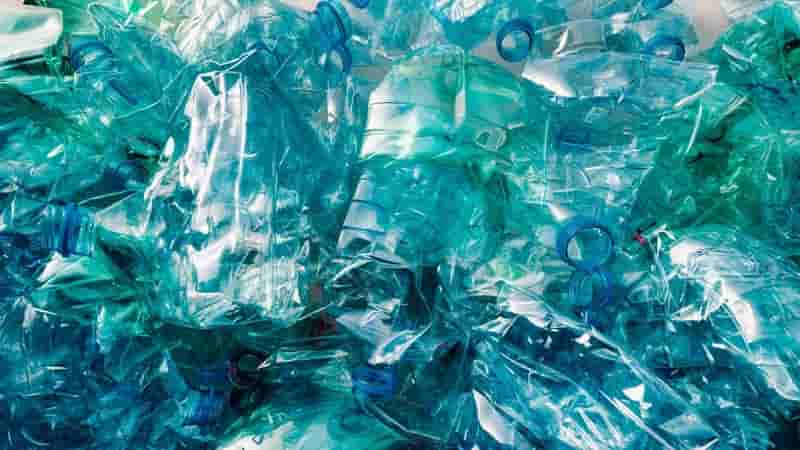
Towards zero plastic waste in 2050
Plastic consumption is still rising. Versatile compounds! But plastic recycling isn’t well organized. Therefore, the mountain of plastic waste is still growing. The world needs to find a solution to that problem, A subject addressed at Wageningen University. Their goal: no more plastic waste in year 2050.
Towards zero plastic waste European economy
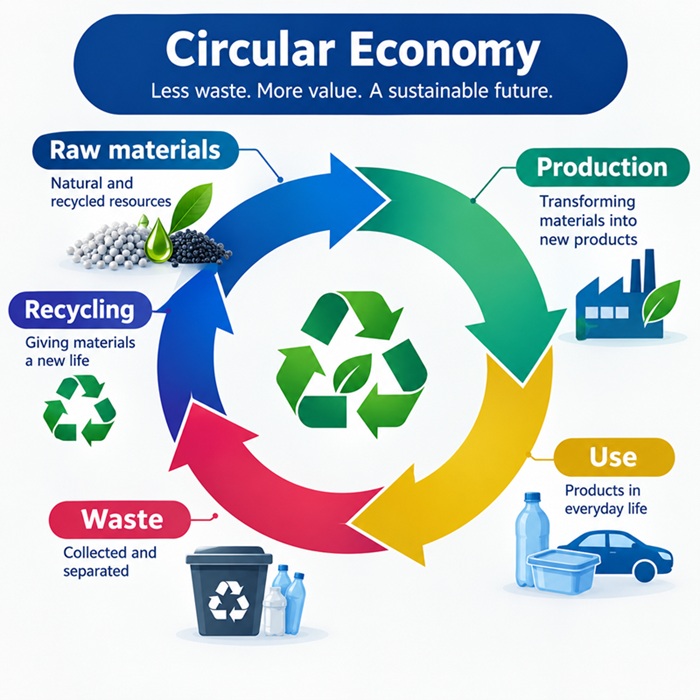
Global plastics production is still growing, even exponentially; as highlighted by an article on the site of Wageningen University and Research (WUR). But our goal is to arrive at a circular economy. Meaning: recycling all plastic waste. New plastic will then be produced from biobased resources. How do we get there? Researchers from Wageningen delved into that subject.
An appreciable part of plastics that aren’t reprocessed, end up as litter. The amount of litter is still growing. As does the amount of plastics produced. If policy doesn’t change, we will produce twice as many plastics in 2050 than we do now. Growth will primarily take place in Asia and Africa. European economy
Europe’s role
In its combat against plastic waste, Europe plays an important part. The European Commission issued guidelines intended to curb the use of plastics. The most ambitious one is the Packaging and Packaging Waste Regulation (PPWR). This requires high recycling percentages, high amounts of recyclate in new products and reuse of plastic articles. Moreover, this guideline puts a maximum to the number of plastic bags that a European consumer is allowed to use daily. Some countries, like the Netherlands, have even formulated stricter goals: a fully circular economy. Meaning that almost all paper, plastics and textiles should in due course be processed for reuse. And that the resource should be biobased. European economy
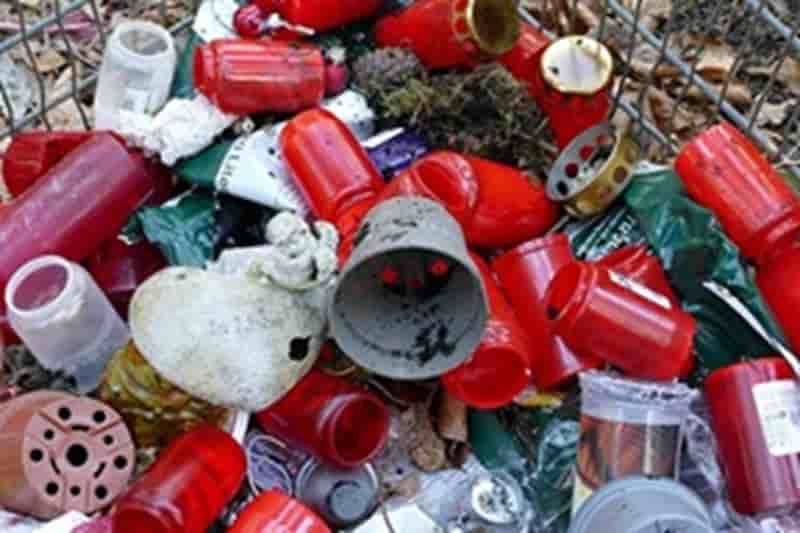
The European Union’s recent prohibition on exporting plastic waste within and beyond its borders poses a significant threat to the plastic packaging recycling market, according to warnings from Belgian industry association Valipac
The EU’s decision, part of an agreement on waste shipment regulation reached on November 17, mandates that plastic waste collected in EU nations must be stored and, if no buyers emerge for recycling, ultimately incinerated within Europe. Valipac highlights the risk of market collapse due to the inability to export collected plastic and insufficient recycling capacity within the EU. Belgium alone, with an annual consumption of 100,000 tons of commercial plastic packaging, faces challenges in processing around 24,000 tons currently exported outside the OECD. European economy
The association stresses the genuine risk of the plastic packaging waste market collapsing due to limited recycling capacity in the EU and insufficient demand for recyclate. Valipac emphasizes the economic factor, stating that manufacturing packaging from virgin plastic remains cheaper than using recyclate, leading to the majority of Europe’s plastic waste being exported for recycling into secondary products. Without addressing this issue, the plastic packaging waste market is at risk of collapse, hindered by a lack of sales outlets in Europe and the ban on exports to non-OECD countries.
In response, the European recycling industry confederation (EuRIC) advocates for binding recycled content targets as the sole solution to stimulate demand for recycled materials, creating markets for circular materials. European economy
Valipac encourages businesses by offering financial bonuses for using plastic packaging containing a minimum of 30% recyclate. However, EuRIC Secretary General Emmanuel Katrakis emphasizes the need for more recycled content targets across various materials, citing stagnation in the circular material use rate at the EU level. The trade association Plastics Europe echoes these sentiments, emphasizing the importance of a waste management system favoring plastic reuse and recycling, while also addressing challenges posed by the rise in imports of plastics labeled as recycled. European economy