Plastic pollution – Stressed Plastics: The Hidden Source of Pollution in Your Home How Everyday Plastic Products May Be Shedding Micropollutants 14-05-2025 - Archive
Plastic pollution
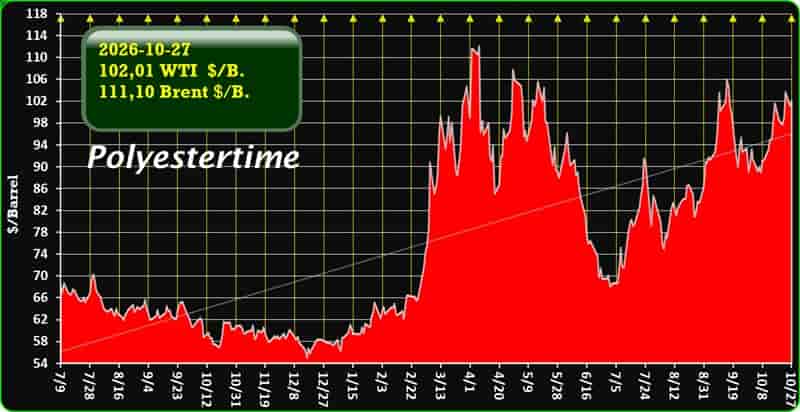
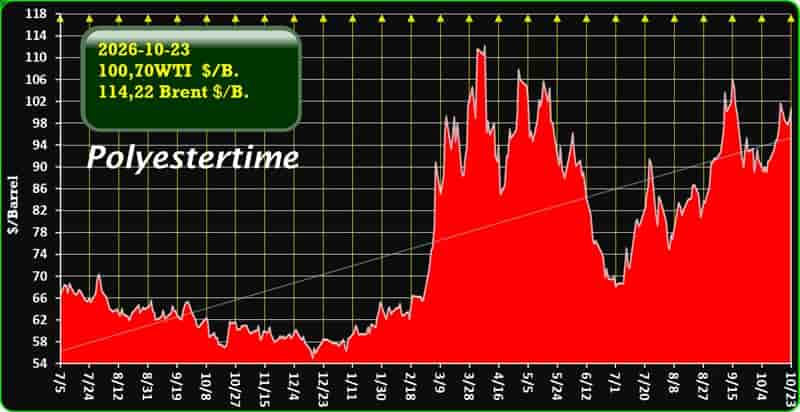
Crude Oil Prices Trend

Krones Maintains Profitable Growth in Q1 2025 Despite Global Headwinds
Krones has kicked off 2025 on a high note, continuing its upward trajectory in the face of persistent macroeconomic uncertainty. With resilient markets and steady customer investment, the company has remained firmly on the path of profitable and sustainable growth.
Strong Order Intake and Growing Revenue
Krones’ internationally diversified customer base played a key role in stabilizing order intake. While some regions experienced softer demand, others compensated with strong sales activity. Plastic pollution
- Order intake for Q1 2025 totaled €1,435.9 million, a 6.8% increase over Q4 2024. However, it showed a slight 3.2% decline compared to the exceptionally high Q1 2024.
- The book-to-bill ratio stood at 1.02, indicating strong and stable order flow.
- The order backlog rose to €4,315.4 million as of March 31, 2025, ensuring production schedules are secured through early Q2 2026.
Meanwhile, revenue surged by 13.1% year-over-year, reaching €1,410.0 million, up from €1,247.1 million in Q1 2024. This performance is partially attributed to the integration of Netstal Maschinen AG, acquired in March 2024. Even excluding this effect, Krones remained within its full-year revenue growth forecast of 7% to 9%.
Profitability Strengthens with Improved Margins
Efficiency initiatives and stable supply chains contributed to higher profitability during the first quarter:
- EBITDA rose by 19.1%, hitting €149.3 million (Q1 2024: €125.4 million).
- The EBITDA margin improved from 10.1% to 10.6%, falling well within the full-year target range of 10.2%–10.8%, despite minor dilution from the Netstal acquisition.
Krones also reported notable gains in pre-tax and net income:
- EBT increased by 21.2%, reaching €107.9 million (up from €89.0 million).
- EBT margin climbed from 7.1% to 7.7%.
- Net income grew to €75.9 million, a 15.3% rise compared to Q1 2024, with earnings per share at €2.40 (previous year: €2.08).
Solid Cash Flow and Financial Resilience
Krones demonstrated robust cash generation and balance sheet strength:
- Free cash flow (excl. M&A) remained high at €165.2 million, slightly down from the previous year’s exceptional level.
- Net cash at quarter-end stood at €589.7 million, significantly up from €438.7 million in March 2024.
- The company also maintained €850 million in unused credit facilities, reinforcing its financial flexibility.
Return on Capital Employed (ROCE) on the Rise
Improved earnings boosted return on capital:
- ROCE increased to 20.5%, up from 19.0% in the prior year, reflecting higher EBIT and effective capital utilization.
Outlook 2025: Growth Continues Amid Global Uncertainty
Despite a challenging global environment—characterized by trade conflicts, geopolitical tensions, and supply chain disruptions—Krones remains confident in its strategic direction and operational strength.
2025 Financial Targets Confirmed
Based on Q1 results and market expectations, Krones confirms its outlook for the full year:
- Revenue growth: 7% to 9%
- EBITDA margin: 10.2% to 10.8%
- ROCE: 18% to 20%
With a strong start to the year, a healthy order backlog, and a disciplined pricing and efficiency strategy, Krones is well-positioned to continue its profitable growth journey through 2025 and beyond.

Stressed Plastics: The Hidden Source of Pollution in Your Home
How Everyday Plastic Products May Be Shedding Micropollutants
Plastics are everywhere—from water bottles and food containers to household pipes—but new research shows they may be silently polluting our bodies and the environment. Scientists at the AMBER Centre, part of Trinity College Dublin, have discovered a little-known cause of this issue: internal stress created during plastic manufacturing.
What Is “Frozen-In” Stress?
When plastics are molded into items like bottles or kitchen tools, they are heated until molten and then rapidly cooled to retain their shape. While this fast-cooling technique makes production efficient, it comes at a hidden cost. The rapid temperature change causes the plastic to contract unevenly, trapping invisible pressure within the material. This is what scientists call “frozen-in” stress. Plastic pollution
This trapped stress eventually creates tiny blisters on the surface of the plastic. As these blisters rupture, they release microscopic plastic fragments—known as micropollutants—into food, water, and the surrounding environment.
A Closer Look at the Most Common Culprits
Polyethylene and polypropylene, which are found in everything from grocery bags to plastic food containers, are responsible for around 71% of plastic pollution worldwide. The Trinity College researchers focused on these two materials and recreated their manufacturing conditions in the lab.
By replicating the internal stress seen in mass-produced plastic goods, the team observed nanoscale blistering. As stress levels increased, these blisters grew in size and number. More importantly, they caused both the plastic polymers and chemical additives to migrate to the surface, eventually breaking off as micropollutants. Plastic pollution
Even Commercial Bottles Are Affected
The research didn’t just stay in the lab. Scientists examined real-world plastic products and found the same issue. Commercial polypropylene bottles, especially around the neck and cap areas—where stress tends to be highest—were shown to be hotspots for microplastic release.
This raises serious questions about the safety of using such containers for storing water and food over time, especially as these stressed areas degrade more rapidly.
Global Impact: Trillions of Plastic Particles
The scale of this problem is staggering. Over 400 million tonnes of plastic are produced globally each year. Of that, more than 20 million tonnes end up in the environment. Scientists now estimate that 170 trillion plastic particles are floating in the world’s oceans. Plastic pollution
Even more alarming is the fact that these micro and nanoplastics are being found inside the human body—in blood, lungs, and even placental tissue.
Rethinking Plastic Production
According to Professor John Boland, lead researcher and chemistry professor at Trinity College, “The very processes designed to strengthen and mold plastics are actually making them fall apart over time.” He stresses the urgent need for smarter manufacturing techniques that reduce built-in stress and minimize environmental impact.
Without changes to current production methods, the problem is likely to grow. Low-cost, high-speed manufacturing may be efficient, but it’s also leading to materials that degrade more quickly and release harmful pollutants. Plastic pollution
A Call to Action for Manufacturers
This groundbreaking study, published in Nature Communications, offers a wake-up call to the plastics industry. To reduce the release of micropollutants and protect ecosystems—and human health—manufacturers need to explore new technologies and rethink their processes.
What Can You Do?
- Choose alternatives to single-use plastics whenever possible.
- Avoid storing food or liquids in old, worn, or scratched plastic containers.
- Support brands and companies that invest in safer, more sustainable packaging.
Plastics may be convenient, but this research shows they come with long-term risks. The next time you reach for a plastic bottle or container, think about the stress it’s been under—and what that means for your health and the planet. Plastic pollution
The Sky Is the Limit for TOMRA: Unlocking the Future of Recycling with AI
At PRS Europe, BP&R caught up with Alberto Piovesan of TOMRA Recycling to explore the transformative impact of AI-driven sorting technology and the company’s latest award-winning innovations.
? GAINnext: A Big Win for Recycling Innovation
TOMRA’s breakthrough technology GAINnext recently took home the ‘Recycling Machinery Innovation’ award, and the team couldn’t be more excited. According to Piovesan, the recognition highlights years of research and development into neural networks and deep learning.
“Deep learning enables machines to interpret millions of images and identify objects based on visual traits—like shape and size—much like the human brain,” Piovesan explained. Plastic pollution
This powerful technology is layered with traditional NIR and VIS sensors, elevating the precision and adaptability of the sorting process. As recycling streams grow more complex, AI becomes essential to make sense of the vast data being collected.
? Flake Sorting: Raising the Bar in Material Purity
Another major advancement from TOMRA is in flake sorting technology, a crucial step for achieving the high-purity materials required for extrusion. The system can accurately identify various polymer types (PET, PP, PE), colors, and contaminants.
With increasing regulations like PPWR, there’s a sharper focus on removing harmful substances such as BPA.
TOMRA’s tech can now detect materials responsible for BPA contamination—like polycarbonate—and ensure cleaner, safer plastic flakes. Plastic pollution

Shell to Use Chemically Recycled Pyrolysis Oil from Freepoint for Pennsylvania Plant
In a significant move toward sustainability, Shell has entered a supply agreement with Freepoint Eco-Systems to use pyrolysis oil—produced from recycled plastic waste—at its polymer plant in Monaca, Pennsylvania.
A Strategic Partnership for Circular Plastics
Shell announced a “landmark agreement” with Freepoint Eco-Systems to receive a steady supply of pyrolysis oil sourced from chemically recycled plastic waste. The oil will be produced at Freepoint’s facility in Hebron, Ohio, and delivered to Shell’s Monaca, PA polymer plant, where it will serve as feedstock to create new plastic materials.
This deal marks another step in Shell’s effort to improve the circularity of plastics—a growing focus for energy and chemical companies worldwide aiming to reduce waste and carbon emissions. Plastic pollution
“This partnership demonstrates our commitment to advancing the circular economy and using recycled materials in our operations,” Shell stated in its announcement.
What is Pyrolysis Oil?
Pyrolysis oil is created through a high-heat process known as pyrolysis, which breaks down plastic waste into synthetic crude oil. This oil can then be refined and reused to produce virgin-quality plastic, effectively turning waste into a valuable resource.
The process represents a major innovation in chemical recycling, which offers a scalable alternative to mechanical recycling—especially for plastics that are difficult to recycle using traditional methods.
Freepoint’s Hebron Plant Nearing Completion
Although still in its commissioning phase, Freepoint’s plant in Ohio is expected to ramp up production significantly later this year. Once fully operational, the facility aims to produce up to 130 million pounds of pyrolysis oil annually. Plastic pollution
This volume would make it one of the largest producers of pyrolysis oil in North America, playing a critical role in supporting companies like Shell that are integrating recycled feedstocks into their operations.
First Rail Shipment Already Delivered
On April 22, Freepoint successfully delivered its first railcar of pyrolysis oil—not to Pennsylvania—but to Shell’s Norco, Louisiana facility, signifying the beginning of supply chain activity and commercial readiness.
While Shell has not disclosed the exact volume or duration of the supply agreement, the company emphasized that it views this as a long-term step toward transforming the way plastics are sourced and produced. Plastic pollution
Why This Matters
Boosting Plastic Circularity
This agreement helps move the needle in the chemical industry’s shift from a linear to a circular model—where plastics are not just produced, used, and discarded, but reused and regenerated.
By sourcing recycled feedstocks like pyrolysis oil, Shell can continue manufacturing plastics while cutting down on fossil fuel dependency and reducing landfill waste.
Meeting Sustainability Goals
The move supports Shell’s broader sustainability and net-zero targets, as well as increasing consumer and regulatory demand for greener alternatives in plastic production.
Final Thoughts
The Shell-Freepoint deal may be a glimpse into the future of plastic production, where recycling and resource recovery are integral to the value chain. Plastic pollution
With Freepoint’s Ohio plant ramping up output and Shell committing to recycled feedstocks, this partnership highlights a growing alignment between industry innovation and environmental responsibility.
Stay tuned as both companies continue to shape a more sustainable plastics industry.

Saudi Arabia Partners with Sidel to Boost Advanced Packaging and Industrial Cooperation
A Major Step Toward Vision 2030 Goals
This MoU marks a crucial step in Saudi Arabia’s push to localise advanced manufacturing and develop globally competitive industrial capabilities. The agreement is aligned with the Kingdom’s ambitious Vision 2030—a roadmap for economic diversification, innovation, and private sector empowerment. Plastic pollution
According to Eng. AlSolami, “Sidel is a global leader in the packaging solutions market and a source of valuable sectoral knowledge. This partnership supports our ambition to build globally competitive industrial capabilities across strategic sectors.”
He added that Saudi Arabia is actively seeking partners who share its long-term vision and are ready to invest in the Kingdom’s growing industrial base and workforce.
Focus on Food and Beverage Packaging
The MoU outlines a joint effort to assess the feasibility of establishing local operations and services tailored to the food and beverage packaging industry. This sector is experiencing significant growth within the Kingdom, driven by increasing demand and national initiatives focused on food security and industrial self-reliance. Plastic pollution
Eng. Yousef Dhahi, Vice President for Industrial Services at the National Industrial Development Program, commented: “Our partnership with Sidel was established after a thorough assessment of market needs. Sidel has been in high demand among many manufacturers in the food and beverage sector.”
This initiative represents a broader effort to enhance local production capabilities, reduce reliance on imports, and transfer critical technologies to the Saudi market.
High-Level Meetings to Boost Industrial Ties
The agreement with Sidel is part of a larger agenda during the Saudi delegation’s visit to France. Minister Alkhorayef is also holding strategic meetings with the CEOs of major French industrial giants, including Airbus, Safran, and Lesaffre. These discussions aim to attract investments and forge long-term industrial partnerships. Plastic pollution
This trip reflects Saudi Arabia’s broader mission to position itself as a regional hub for advanced manufacturing by leveraging global expertise and fostering mutually beneficial relationships with international companies.
A Competitive Environment for Investors
Saudi Arabia continues to enhance its industrial landscape by offering a robust ecosystem of incentives, infrastructure, and regulatory support. The country’s focus on localisation, knowledge exchange, and talent development is central to its strategy for achieving industrial excellence.
Through agreements like the one with Sidel, the Kingdom demonstrates its commitment to attracting leading global companies to help build a future-ready industrial economy.
Final Thoughts
The collaboration between Saudi Arabia and Sidel is more than just a business deal—it’s a strategic step towards transforming the Kingdom into a powerhouse of innovation, sustainability, and industrial growth. Plastic pollution
With Vision 2030 guiding the way, partnerships like this one pave the path for a diversified and resilient economy.

2025 Plastic Sustainability Innovation Award Winners Announced
Recognizing Game-Changers in Sustainable Plastics
The Plastics Industry Association (PLASTICS) has unveiled the winners of its
2025 Plastic Sustainability Innovation Awards, celebrating the
trailblazers advancing environmentally friendly innovations across design, materials,
and end-of-life solutions. From cleaner recycling processes to groundbreaking new
materials, these awardees showcase the momentum behind a more sustainable plastics future. Plastic pollution
“These companies represent the innovation driving the plastics industry forward,” said
Patrick Krieger, Senior Vice President of Sustainability and Policy at PLASTICS. “Their achievements are a testament to the incredible progress being made across our industry.”
Let’s take a closer look at this year’s sustainability champions.
? Sustainable Innovation in Design: PureCycle’s PureFive Resin
Winner: PureCycle Technologies
PureCycle earned the Sustainable Innovation in Design Award for its
PureFive resin, a revolutionary product derived through a proprietary dissolution recycling process. Originally developed by Procter & Gamble (P&G), this method removes contaminants like color, odor, and additives from post-consumer recycled (PCR) polypropylene waste, resulting in ultra-pure recycled resin. Plastic pollution
The real innovation? PureFive can be seamlessly integrated into commercial
products, offering a drop-in solution for companies wanting to increase the
sustainability of their materials. In 2024 alone, the resin proved successful across
multiple applications, including fiber production, injection molding, and thermoforming.
“The path to solving the plastic waste problem is paved with innovations,” said
Tamsin Ettefagh, Chief Sustainability Officer at PureCycle.
“We’re focused on providing scalable, sustainable solutions that help our customersmeet their environmental goals.” Plastic pollution
? Sustainable Innovation in Materials: GreenMantra’s Ceranovus Additive
Winner: GreenMantra Technologies
GreenMantra Technologies took home the Sustainable Innovation in Materials Award
for its development of Ceranovus, a line of specialty polymer additives made
entirely from recycled plastics. Using the first commercially scaled molecular recycling
technology, GreenMantra transforms 100% waste plastics into high-performance synthetic waxes and polymer additives. Plastic pollution
Unlike traditional recycled plastics, Ceranovus additives are molecularly engineered through a proprietary breakdown process that converts long polymer chains into shorter, high-value compounds. The outcome: additives that enhance performance, boost processing efficiency, and advance circularity within manufacturing.
This innovation represents a leap forward in the value-added reuse of plastic waste,
creating not just recycled materials, but performance-enhancing components that close the sustainability loop. Plastic pollution
Other Award Categories: Recognizing Broad Impacts
While the article highlights the design and materials categories in detail, PLASTICS also
awarded innovations in the following fields:
? Sustainable Innovation in End-of-Life
Honoring technologies that improve recyclability, compostability, or biodegradation of
plastics post-use.
? Leadership in Sustainability
Celebrating organizations making a company-wide commitment to sustainable transformation in the plastics value chain. Plastic pollution
? People’s Choice Award
Chosen by popular vote, this award reflects public support for standout innovations
driving environmental progress in plastics.
Why These Innovations Matter
These awards aren’t just accolades—they’re signals of where the industry is headed. With
companies like PureCycle and GreenMantra leading the charge, the future of plastics may
be more circular, responsible, and aligned with global climate goals.
As consumer demand for sustainability grows, these technologies offer viable paths for
reducing waste and extending the lifecycle of plastic materials. From cleaner input to
smarter outputs, the message is clear: innovation is the key to a greener future.