Technopolymers – Italian Masterbatch Leaders Join Forces with Spain’s Delta Tecnic Strategic Acquisition Expands Delta Tecnic’s Portfolio and Reach 16-05-2025 - Archive
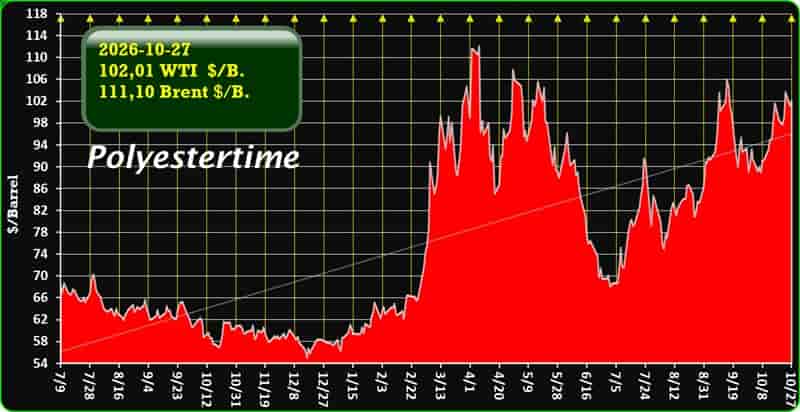
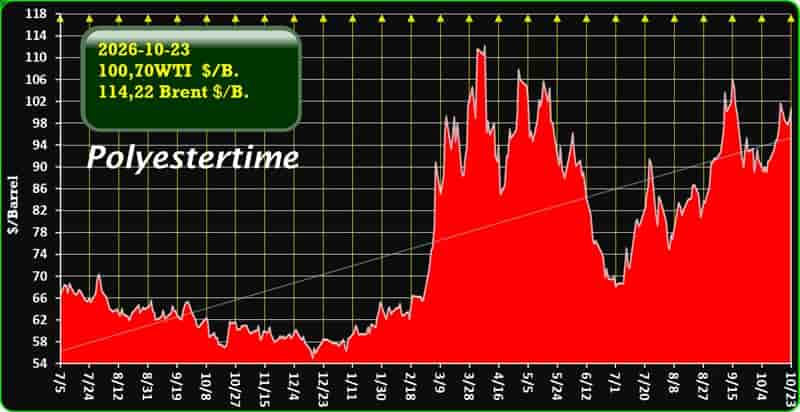
Crude Oil Prices Trend

The Race to 2027: Is the UK Ready for Mandatory Plastic Film Recycling?
Plastic film recycling is no longer optional — it’s becoming a necessity. As we look ahead to 2027, the UK faces mounting pressure to overhaul its approach to plastic film and flexible packaging waste. But are we truly ready?
Why Plastic Film Recycling Matters
Plastic films and flexible packaging make up around 27% of the UK’s consumer plastic packaging. Yet despite this significant share, only 7% of these materials were recycled in 2023. The gap is staggering — and it all comes down to limited infrastructure, minimal collection systems, and low public awareness.
In 2023, just 12% of local authorities offered curbside collection for plastic films. This means the vast majority of this waste ends up in landfills or incinerators, rather than being recycled into valuable materials. Technopolymers
The Scale of the Challenge
According to WRAP (Waste and Resources Action Programme), the UK generates between 336,000 and 450,000 tonnes of consumer plastic film every year. Most of this is made up of mono-polyethylene (mono-PE) and mono-polypropylene (mono-PP), which account for about 68% of the total volume.
But the road to recycling these films at scale is far from straightforward.
Hurdles We Must Overcome
? Infrastructure Bottlenecks
Current recycling systems aren’t designed to handle the surge in plastic film waste. Challenges include planning delays, limited space, and outdated equipment with long lead times.
? Material Complexity
Plastic films are light, often made from mixed polymers, and frequently contaminated. Multi-layered structures make separation and recycling technically difficult.
? Economic Viability
Low material value, high processing costs, and market saturation with cheap imports further complicate efforts. A lack of reliable data and alleged fraud in recycling claims erode trust and slow progress. Technopolymers
WRAP’s Five-Point Action Plan
To turn the tide, WRAP’s “Circular Films: Pathways to Scalable Recycling” report outlines a strategic roadmap. Here are the five key recommendations:
1. Recyclability by Design
Brands must commit to mono-material designs (PE or PP) and aim for 90% of all film packaging to be recyclable, up from today’s 67%.
2. Expand Collection and Processing
This includes scaling up kerbside and Front of Store collection networks, enhancing sorting technology, and increasing reprocessing capacity across the UK.
3. Build Stronger Domestic Markets
WRAP recommends introducing independent verification systems to prevent greenwashing and support traceable recycled content in packaging.
4. Financial and Policy Reforms
Revised Extended Producer Responsibility (EPR) schemes should fully fund the collection, sorting, and recycling of plastic film. Technopolymers
5. Public Awareness and Participation
Engaging consumers is essential. Clear labeling, consistent guidance, and education campaigns are vital to ensure proper disposal and encourage the acceptance of recycled-content products.
Industry Collaboration Is Key
Real progress demands unified action. Retailers, policymakers, manufacturers, and processors all have a role to play in advancing the UK’s recycling capabilities. Organizations must align with WRAP’s leadership to embrace Circular Living — focusing on sustainable design, responsible waste management, and meaningful investment.
The Role of the UK Plastics Pact
The UK Plastics Pact — an initiative uniting over 200 businesses, government agencies, and NGOs — offers a powerful platform to accelerate these goals. By connecting policy innovation with practical industry efforts, the Pact helps drive real-world results in plastic film recycling. Technopolymers
The Countdown to 2027
The clock is ticking. By 2027, mandatory plastic film recycling will be in effect, and the UK needs a scalable, economically viable system to meet this challenge.
If we act now — by improving infrastructure, refining policy, and fostering collaboration — plastic film waste can be transformed into a valuable resource. This not only benefits the environment but also boosts economic sustainability for future generations.

Italian Masterbatch Leaders Join Forces with Spain’s Delta Tecnic
Strategic Acquisition Expands Delta Tecnic’s Portfolio and Reach
In a major industry shift, Italian masterbatch specialists Ultrabatch, Masterbatch, and Eurocolor are now officially part of Spanish group Delta Tecnic, a move set to redefine the European plastic additives market.
The acquisition marks the culmination of a strategy initiated by Koinos Capital, an Italian private equity firm, which formed the Impact Formulators Group (IFG) to consolidate leading players in the Italian masterbatch sector. The entire IFG portfolio is now being transferred to Delta Tecnic, which is owned by Italian investment firm Investindustrial. Technopolymers
Who Are the Companies Involved?
Ultrabatch (Milan)
Ultrabatch, headquartered in Milan, focuses on the formulation of functional masterbatches, particularly for agricultural applications. Known for innovation and sector-specific solutions, the company has carved a niche in enhancing polymer
performance for farming use.
Masterbatch (Casei Gerola, PV)
Located in the province of Pavia, Masterbatch specializes in additive concentrates for flame retardancy. Its products primarily serve the construction and electrical cable industries, where fire resistance is critical. Technopolymers
Eurocolor (Lonate Pozzolo, Varese)
Eurocolor brings expertise in coloring and additive masterbatches for a wide range of plastics, including polyolefins, styrenic resins, and technopolymers. Its strong foothold in northern Italy adds valuable production capacity and market access to the group.
The Strategic Vision: ‘Buy & Build’
The sale to Delta Tecnic reflects the success of Koinos Capital’s entrepreneurial investment strategy, which focuses on creating industrial champions through buy-and-build models. Technopolymers
“This operation has generated significant returns in a short time for our investors,” said Francesco Fumagalli, Founding Partner of
Koinos Capital. “It perfectly represents our original entrepreneurial vision: to build a national champion with the potential to scale internationally.”
The transition also highlights the strong relationship Koinos Capital built with the entrepreneurs involved. Many of them reinvested in the IFG holding, showing confidence in the group’s direction and long-term growth potential.
What This Means for Delta Tecnic
New Capabilities and Geographic Expansion
With this acquisition, Delta Tecnic—already a powerhouse in color masterbatch production—will now expand into the segment of additive concentrates, strengthening its product offering and technological base. Technopolymers
The move also provides a strategic bridge for IFG to expand operations into Spain and Mexico, leveraging Delta Tecnic’s infrastructure and market knowledge.
Fast Facts About Delta Tecnic
- Founded over 40 years ago
- Specializes in color masterbatches
- Operates 3 production plants:
- Two in Barcelona, Spain
- One in Querétaro, Mexico
- Generates approximately €60 million in annual revenue
- Employs over 200 people
Why This Matters to the Plastics Industry
This consolidation not only enhances the global competitiveness of Delta Tecnic and IFG but also demonstrates how cross-border investment can accelerate innovation and market penetration in niche sectors like masterbatches.
The deal sends a clear signal: European plastics companies are consolidating to compete on a global scale, combining local expertise with international reach.
Final Thoughts
The acquisition of IFG’s Italian masterbatch operations by Delta Tecnic represents a win-win for both organizations. Technopolymers
It’s a textbook example of strategic synergy, where complementary strengths create a more powerful entity.
As the plastics and polymers industry continues to evolve, expect more deals like this—where smart investment meets sectoral specialization, building platforms with the scale and capability to lead internationally.

Indorama and IMG Launch Plastic Recycling Initiative in Mali
Tackling Plastic Waste in Bamako with Sustainable Solutions
In a strategic move to combat the rising plastic pollution crisis in West Africa,
Indorama Ventures, a leading global PET producer and recycler, has joined forces with
IMG Group, the parent company of PET businesses including Evertis and Selenis, to launch a transformative plastic recycling project in
Bamako, the capital of Mali. The initiative is being implemented in partnership with the NGO Ayuda en Acción.
A Region Struggling with Pollution
Plastic waste poses a major threat to the environment and public health in Mali, particularly in Bamako, where unmanaged waste and pollution from mining industries continue to affect the Niger River—a vital food and water source.
According to Greenpeace, this river dumps around 35,000 tonnes of plastic waste into the ocean every year, worsening ecological degradation in one of the world’s poorest nations. Technopolymers
Introducing Bamagreen: A Model for Circular Prosperity
The new recycling initiative—Bamagreen—marks the first project under the
Plastic2Prosperity programme, part of the adaPETation network established by IMG Group. The programme seeks to showcase how circular economy solutions can address environmental challenges while creating socio-economic opportunities, particularly for vulnerable groups such as women, youth, and displaced individuals.
Creating Jobs and Green Opportunities
Bamagreen is expected to directly engage around 1,950 people, with 40% of participants being women, in dignified employment focused on plastic recycling, education, and environmental awareness. The project also aims to indirectly benefit more than 100,000 residents through city-wide reforestation campaigns and waste education efforts. Technopolymers
Supporting Local Innovation and Entrepreneurship
At the heart of the initiative is local start-up Ecobuild, a social enterprise that will receive support to scale up its recycling operations. Indorama and IMG will equip Ecobuild with machines to convert plastic waste into flakes and practical, reusable products for local distribution and export across Mali and neighboring countries.
In a further boost to entrepreneurship, Ecobuild will establish a micro-loan fund that provides low-interest, five-year loans to help at least 30 individuals, primarily women, start their own circular economy businesses.
A Vision of Sustainability and Empowerment
“At Indorama Ventures, we believe that waste is not just a problem—it’s a powerful opportunity,” said Yash Lohia, Executive President and Chairman of the ESG Council at Indorama Ventures.
“By raising awareness and investing in circular solutions like Plastic2Prosperity, we can transform environmental challenges into engines of socio-economic growth. This project in Mali shows what’s possible when we work together to regenerate communities and our planet.” Technopolymers
Scaling a Global Impact
Carlota Calonje, Social Impact Manager at IMG Group, emphasized the broader vision behind Bamagreen. The project is intended as a scalable model, with plans to replicate its success in other regions where plastic pollution is both a challenge and a potential source of sustainable development.
Final Thoughts
With its integrated focus on environmental restoration, community empowerment, and entrepreneurship, the Bamagreen initiative stands as a beacon of hope for Bamako—and a blueprint for similar efforts worldwide. By transforming plastic waste into prosperity, Indorama, IMG, and their partners are not only cleaning up the environment but also laying the groundwork for inclusive, long-term development in Mali and beyond.

Myco Unveils Mushroom-Based Biodegradable Packaging to Replace Polystyrene
A Sustainable Leap in Packaging Innovation
Czech startup Myco has introduced a groundbreaking, 100% plastic-free alternative to polystyrene packaging. Crafted from a blend of mushroom mycelium and organic waste, this biodegradable material is poised to disrupt the traditional packaging industry with its eco-friendly and scalable solution. Technopolymers
What is Mycelium Packaging?
The material is made from mycelium—the root-like structure of fungi—which grows through organic waste like sawdust, hemp shavings, and paper. As the mycelium expands, it binds the particles together, forming a sturdy, foam-like structure.
This natural composite mimics the performance of conventional polystyrene but without the environmental drawbacks. It’s fully compostable, leaves no microplastics, and has a low carbon footprint.
“The material degrades naturally, creating zero microplastics and leaving a small carbon footprint.”
– Myco CEO David Šohaj Minařík
Scalable, Cost-Competitive, and Versatile
One of the most compelling aspects of Myco’s technology is its scalability. The company has developed a continuous production line that handles material preparation, drying, and shaping. This allows Myco to match the cost and performance of traditional foam packaging while being significantly more sustainable. Technopolymers
The material’s firmness and flexibility make it ideal for protective packaging, with the added benefit of being home-compostable.
Product Lines Built for Industry Use
- Myco FixPack: Custom-shaped moulds for securing products during shipping.
- Myco 4Pack & SafePads: Hybrid systems that combine mycelium and cardboard for comprehensive, eco-conscious packaging.
The company is also expanding into odor management solutions, developing Odour Concentrate Carriers and Aroma Diffusers, showcasing the versatility of mycelium beyond packaging. Technopolymers
Expansion and Global Collaboration
Myco is already collaborating with international partners and preparing for a strategic expansion into the German market. The growing interest in sustainable packaging options positions the company as a major player in the circular economy movement.
Industry Trends: A Broader Move Toward Biodegradables
Myco’s innovation aligns with broader global efforts to eliminate plastic packaging:
- University of Washington researchers created a 3D-printed compostable packaging using mycelium and coffee grounds, claiming it rivals the protective qualities of polystyrene.
- PAPACKS partnered with Ukrainian Hemp to establish a supply chain for certified industrial hemp, enabling the production of recyclable molded fiber packaging with reduced energy and carbon emissions.
These developments underscore a growing shift toward renewable materials in the packaging industry. Technopolymers
Why This Matters
The environmental toll of polystyrene is well-documented—it’s non-biodegradable, contributes to ocean pollution, and takes centuries to break down. Myco’s mushroom-based alternative provides an innovative and realistic path to eliminating harmful plastics from the supply chain.
Key Benefits of Myco’s Solution
- ✅ Plastic-free and biodegradable
- ✅ No microplastics or toxic residue
- ✅ Scalable and cost-effective
- ✅ Customizable for various packaging needs
As consumers and companies alike demand greener solutions, materials like Myco’s could become the new standard for sustainable packaging. Technopolymers

KHS and Husky Introduce 30% Lighter PET Bottle for Still Beverages
Innovative lightweight packaging is redefining sustainability and efficiency in beverage bottling. At drinktec 2017, KHS revealed an early concept of an ultra-light PET bottle. Now, in partnership with Husky, this concept has evolved into a production-ready bottle weighing only 5 grams for a 500 ml capacity—30% lighter than typical bottles used in the U.S. market.
The Drive Behind the Innovation
Rethinking Lightweighting
Reducing plastic usage is a top priority in the beverage industry, but with lightweighting comes structural challenges. As Fabian Osterhold, packaging designer at KHS Hamburg, points out, a key concern is the top load—the pressure a bottle can withstand from above without deforming. Technopolymers
“A bottle’s vertical strength determines whether it can be stacked or safely transported,” Osterhold explains.
Enhancing Structural Stability
To overcome these challenges, the “Factor 101” bottle design underwent several refinements:
- The shoulder area was reshaped to enhance resistance.
- A unique functional webbing was added to the bottle body for reinforcement.
- Most notably, a new pop-in base was developed.
When top pressure is applied, this base slightly collapses inward, boosting internal pressure and thus improving overall bottle stability.
Stronger Than Industry Standard
In commercial packaging, 200 newtons of top load is the common benchmark. The new KHS/Husky design surpasses that, withstanding 220 newtons, making it exceptionally robust for its minimal weight. Technopolymers
Collaboration with Husky: A Technical Synergy
Optimizing the Preform
Reaching this level of performance required more than reshaping the bottle—it demanded a complete redesign of the preform, the plastic blank that becomes the bottle during stretch blow molding.
This is where Husky’s injection molding expertise came into play. Together, KHS and Husky refined the preform to achieve:
- Precise length-to-wall thickness ratios Technopolymers
- Enhanced material distribution for better stretch performance
- Improved compatibility with KHS’s blow molding machinery
Temperature Control: The Secret to Less Plastic
A key innovation lies in KHS’s InnoPET Blomax Series V stretch blow molder. This machine uses focus lamps to apply highly controlled heating just beneath the neck ring of the bottle. The result?
- Optimized temperature zones ensure all plastic is properly stretched
- No leftover thick spots of unstretched material
- Less raw material is required without compromising quality
This precision heating contributes significantly to the 30% material reduction, and more importantly, allows the bottle to be produced using 100% recycled PET (rPET).
A Sustainable Step Forward
Compared to a typical 500 ml lightweight PET bottle weighing around 7 grams in the U.S., the KHS/Husky solution weighs just 5 grams, representing:
- 30% less plastic used Technopolymers
- Lower environmental footprint
- Reduced shipping weight and cost
- Full recyclability with rPET
Final Thoughts: Lighter, Smarter, Greener
The collaboration between KHS and Husky highlights how engineering precision and inter-company collaboration can lead to game-changing advancements in packaging.
As sustainability continues to dominate the packaging agenda, innovations like Factor 101 demonstrate that lighter can still mean stronger, smarter, and more eco-conscious.

Plastic Recycling Fraud: BPF Calls for Transparency and Action
Companies Accused of Misleading Claims on Recycled Content Technopolymers
The British Plastics Federation (BPF) has raised serious concerns about fraudulent reporting in the plastic recycling sector. According to the BPF, some companies are exaggerating the amount of recycled plastic in their products, either to secure financial benefits or to boost their environmental image.
This trend not only undermines genuine sustainability efforts but also creates an uneven playing field. Companies that make authentic investments in using recycled materials are left at a disadvantage compared to those cutting corners for profit or publicity.
The Need for a Global Recycling Verification System
To tackle this issue, the BPF is urging the development of a standardised verification system—both nationally and internationally.
Such a framework would help regulate claims about recycled content and ensure consistency across the plastics industry. Technopolymers
This recommendation aligns with the Organisation for Economic Co-operation and Development (OECD), which recently echoed similar concerns in its report, Monitoring Trade in Plastic Waste and Scrap 2025. The OECD noted that some countries still export plastic waste to non-OECD countries, making it difficult to trace the environmental impact and authenticity of recycled material claims.
Fraudulent Practices Impact Honest Businesses
The BPF has received reports from companies claiming they were driven out of business due to plastic packaging tax fraud. In these cases, competitors may have falsely reported high recycled content to avoid taxes or secure subsidies, putting compliant businesses at a severe competitive disadvantage.
To address this, the BPF is encouraging companies to report any suspicious or fraudulent activities related to plastic content declarations. They argue that increased reporting will help build awareness within government and regulatory bodies, potentially leading to more robust oversight. Technopolymers
OECD: Global Plastic Waste Trade in Decline
According to the OECD’s 2025 findings, the international trade in plastic waste continued to decline between 2022 and 2023. While this trend may reflect improved domestic recycling in some regions, the OECD also warns that a lack of transparency in exports—especially to non-OECD countries—makes it difficult to verify whether materials are properly recycled or simply dumped.
This lack of traceability highlights the urgent need for greater investment in national recycling infrastructure, particularly in the UK. The BPF believes that better facilities would make plastic material flows easier to track and less prone to manipulation or fraud.
A Global Path Forward: Reducing Plastic Pollution by 96% Technopolymers
The OECD’s long-term outlook, outlined in its report Policy Scenarios for Eliminating Plastic Pollution by 2040, presents a roadmap to drastically reduce environmental damage. The report claims that comprehensive global policies targeting the full plastics lifecycle could reduce plastic leakage into the environment by up to 96% by 2040.
This would require unified efforts—from curbing virgin plastic production to improving waste management and cracking down on fraudulent recycling practices.
Conclusion: Integrity Is Key to a Circular Plastic Economy
As the global community works toward a circular economy for plastics, the importance of trust and transparency cannot be overstated. The BPF and OECD are clear: fraud in recycling not only damages the environment but also erodes confidence in sustainable systems.
By establishing stricter regulations, increasing investment in recycling infrastructure, and encouraging the reporting of fraudulent behavior, the UK and its international partners can lead the charge in building a cleaner, more accountable plastics industry.