Plastic Pollution – Sumitomo Seika Unveils Advanced Pilot Plant for Sustainable SAP Development Sumitomo Seika Chemicals Co., Ltd. has reached a new milestone with the completion of a cutting-edge pilot plant dedicated to super absorbent polymer (SAP) development at its Himeji Works in Himeji City, Hyogo Prefecture, Japan 23-05-2025 - Archive
Plastic Pollution
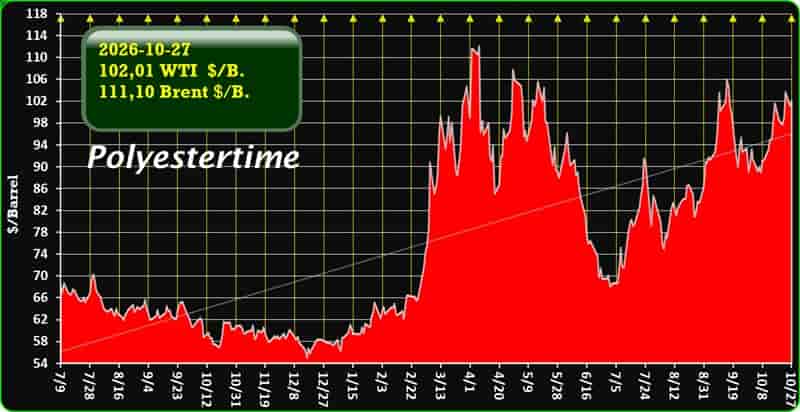
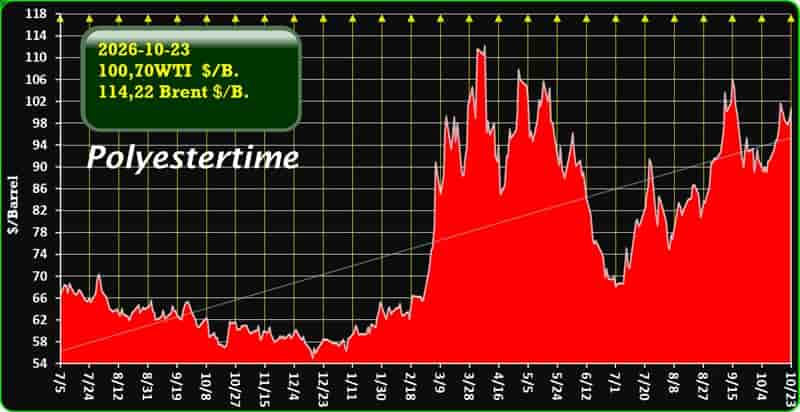
Crude Oil Prices Trend

♻️ PET Bottle Waste to Pave the Way for Greener Roads in the Philippines
In line with President Ferdinand R. Marcos Jr.’s commitment to sustainable and resilient infrastructure, the Department of Public Works and Highways (DPWH) has officially approved the use of PET plastic bottle waste as an additive in national road construction projects.
? From Plastic Pollution to Road Innovation
This initiative builds on the 2024 success of using Low-Density Polyethylene (LDPE) plastic bags in paving materials. The new move incorporates PET bottle waste into the asphalt mix to enhance durability and prolong the service life of bituminous concrete surface courses. Plastic Pollution
DPWH Secretary Manuel M. Bonoan signed a Department Order introducing this material under a new specification: Item 310 (19), defined as “Bituminous Concrete Surface Course with PET Plastic Bottle Waste, Hot-Laid.”
? Officially Standardized and Scaled Nationwide
The plastic-modified asphalt mix is now part of the official DPWH Standard Specification for Highways, Bridges, and Airports – Volume II. It has also been integrated into the Department’s Project and Contract Management Application, ensuring widespread adoption across:
- DPWH Regional Offices Plastic Pollution
- Unified Project Management Office Clusters
- District Engineering Offices nationwide
? A Vision for the Future
“Turning waste into a valuable resource for building better and more roads is the future of public infrastructure development in the country. The public can expect more of these policies as we vow to continue to fund construction innovations.”
– Secretary Manuel M. Bonoan
? What This Means for the Environment and Infrastructure
- Reduces plastic waste in landfills and oceans
- Improves road surface strength and longevity Plastic Pollution
- Promotes circular economy principles in infrastructure
? Final Takeaway
The Philippines is taking bold steps toward a greener, more innovative infrastructure model. By integrating plastic waste into its national roads, the country not only addresses pollution but also lays the groundwork for more sustainable and cost-effective public works.

Save EU Recycling: Plastics Recyclers Europe Calls for Urgent EU Action
Plastics Recyclers Europe (PRE) is sounding the alarm over a deepening crisis in the European plastics recycling sector. The industry faces a “serious and growing recession”, forcing many companies to shut down and threatening the EU’s Green Deal and circular economy goals.
In response, PRE has published a position paper titled “Securing a Future for Circular Plastics in Europe: Actions for a Competitive Plastic & Recycling Sector in the EU”. This document outlines six critical areas where immediate intervention is required to prevent the collapse of the sector. Plastic Pollution
1. Introduce Trade Defense Mechanisms
PRE urges the EU to implement customs tariffs and control measures on imported virgin and recycled plastics that are low-cost and unverified. These imports disrupt fair market competition, damage the viability of local recyclers, and undermine Europe’s circular economy ambitions.
2. Establish Customs Codes for Recycled Polymers
To boost transparency and traceability, PRE calls for the adoption of specific customs codes for recycled polymers. This would facilitate better import monitoring and ensure compliance with European sustainability and safety standards. Plastic Pollution
3. Enforce Rigorous Verification Systems
Robust verification systems are essential to confirm that both imported and EU-produced recycled materials meet regulatory standards. This step is vital to maintain consumer trust and ensure product quality across the industry.
4. Improve Surveillance of Imports
PRE demands more effective oversight of plastic imports to prevent the entry of non-compliant or low-quality materials. Enhanced monitoring will safeguard EU recyclers and uphold environmental standards.
5. Offer Targeted Tax Relief and Incentives
With high energy costs weighing heavily on the sector, PRE advocates for tax breaks and subsidies that would enable recyclers to stay competitive and invest in green innovation.
6. Streamline Compliance and Reduce Bureaucracy
PRE highlights the burden of excessive bureaucracy and proposes simplified and harmonised regulations across EU member states. Plastic Pollution
Reducing red tape will ease operational challenges and allow recyclers to focus on sustainable production.
PRE’s Final Appeal to EU Policymakers
“We call on policymakers to urgently implement these six strategic actions to confront the ongoing crisis,” says Ton Emans, President of Plastics Recyclers Europe. “Plastics recycling must be recognised as an essential sector for the EU—a cornerstone of competitiveness and environmental progress—and it must be protected accordingly.”

Royce Universal Expands rPET Operations in Thailand
Pioneering Plastic Recycling for Food-Grade Applications
Thai plastic product manufacturer Royce Universal Co., Ltd. now recycles approximately 15,000 tons of post-consumer PET annually. The result? High-quality food-contact rPET sheets and pellets used in packaging across Thailand, the US, Australia, and Japan.
Their certified pellets are marketed under the PetaRoyce brand, ensuring both sustainability and safety for consumer packaging. Plastic Pollution
State-of-the-Art Recycling Technology
✔️ Investment in Starlinger’s Bottle-to-Bottle System
In 2023, Royce installed the Starlinger RecoStar PET 165 HC iV+ recycling system at its Nakhon Pathom plant, 50 km west of Bangkok. With a processing capacity of 1,800 kg/hour, the technology ensures the food-contact safety of the final rPET pellets.
“Our goal is to recycle as much plastic waste as possible…
This helps the environment and enables circularity and sustainability.”
— Touchawatt Techamongkoljit, CEO of Royce Universal
Driving a Circular Economy in Thailand
♻️ New Project in the South
Royce is expanding operations to recycle PET bottles collected in southern Thailand. The material will be returned as food-grade pellets for local packaging applications — reinforcing a closed-loop recycling system. Plastic Pollution
? Blockchain for Transparency
To promote Extended Producer Responsibility (EPR) and prevent greenwashing, Royce is building a blockchain-based traceability system, ensuring full transparency across its recycling pipeline.
A Legacy of Innovation and Diversification
Founded in 1970 as Thai Creative Lighting Co., Ltd., Royce began by making decorative lamps. Over the years, it evolved into plastic furniture (Modern Furniture Ltd.), and by 2000, it launched Royce Universal Co., Ltd. to focus on packaging, roofing, and decking.
After a 2020 corporate restructure, Royce’s current pillars are:
- ? Furniture and houseware
- ?️ Building materials Plastic Pollution
- ? Food and beverage packaging
- ♻️ rPET production
PetaRoyce – A Brand for the Future
The introduction of the PetaRoyce brand in 2023 marks Royce’s next chapter as a premium rPET producer. With three production sites in Sam Phran and a workforce of over 500 employees, Royce leads the charge in circular packaging solutions in Southeast Asia.
? Suggested Tags
- rPET Thailand
- PET recycling
- Sustainable packaging
- Circular economy Thailand
- Food-grade recycled plastic
- Blockchain traceability

DKSH Performance Materials Acquires APN Plastics in Australia and Malaysia
DKSH Performance Materials has signed an agreement to acquire APN Plastics, a specialty polymers distributor with operations in Australia and Malaysia. The acquisition is set to enhance DKSH’s presence in Asia Pacific through a well-established and diversified customer base.
Strategic Acquisition Strengthens DKSH’s Footprint in Asia
This acquisition enables DKSH to scale operations in two key markets, building on APN Plastics’ 20-year history of technical excellence and distribution expertise in engineering and biomedical plastics. Plastic Pollution
About APN Plastics – A Trusted Industry Partner
A Two-Decade Legacy in Specialty Polymers
Founded in Melbourne in 2005 and expanded to Malaysia in 2015, APN Plastics now serves over 270 customers across Australia, China, Malaysia, Singapore, and Taiwan. The company is known for its deep technical knowledge and reliable service.
Market Diversity and Technical Expertise
APN Plastics works across several key sectors, including:
- Medical technology
- Infrastructure
- Transportation
- Consumer appliances Plastic Pollution
- Specialty packaging
- Irrigation
The company generates annual net sales exceeding CHF 25 million.
Leadership Perspectives on the Acquisition
Ian Hoult, Founder and Managing Director of APN Plastics:
“APN Plastics has spent two decades building strong, strategic relationships across the specialty polymer distribution industry. Joining DKSH marks a significant step forward in accelerating our growth and global presence.”
Thomas Sul and Natale Capri, Co-Heads Business Unit Performance Materials, DKSH:
“We are pleased to have APN Plastics on board to add new capabilities and to further scale our presence in Australia and Malaysia. We warmly welcome the team and look forward to growing the business together in Asia Pacific and beyond.” Plastic Pollution
Transaction Timeline and Integration
The closing of the transaction is expected during Q2 2025, subject to customary closing conditions. APN Plastics will be fully integrated into DKSH’s existing operations to ensure a seamless transition and continued customer support.
Learn More About DKSH’s Growth Strategy

Shell Polymers Enters Feedstock Agreement With Freepoint Eco-Systems
Partnership Will Supply Pyrolysis Oil for Polyethylene Production
Shell Polymers has announced a strategic feedstock agreement with
Freepoint Eco-Systems, securing a future supply of
pyrolysis oil derived from waste plastics.
This agreement reinforces Shell’s commitment to delivering
advanced recycling and mass-balanced products,
certified by the ISCC Plus system. Plastic Pollution
A Boost to Shell’s Sustainable Product Line
“This supplier agreement further strengthens our ability to provide advanced
recycling and mass-balanced products backed by ISCC Plus certification.
We are committed to helping our customers access certified, flexible solutions
that support their sustainability goals.”— Laura Chamorro, GM Commercial, Shell Polymers
Freepoint Facility: Key Stats
- Location: Hebron, Ohio
- Projected Output: Up to 130 million lbs of recycled feedstock annually
- Full Capacity Expected: By 2025 Plastic Pollution
This supply will help Shell’s Monaca plant in Pennsylvania – a facility
strategically located near 70% of the North American polyethylene market –
meet growing demand for sustainable plastic solutions.
What Is Pyrolysis Oil?
Pyrolysis oil is a liquid byproduct produced by heating waste plastics in
the absence of oxygen. It can be refined into valuable feedstocks for new plastic production,
enabling circular economy models and reducing reliance on virgin fossil resources.
Strategic Impact for Circular Plastics Economy Plastic Pollution
The agreement marks a significant step in advancing Shell’s circular plastics strategy.
By integrating recycled feedstocks into its polyethylene production,
Shell aligns itself more closely with industry sustainability standards and evolving
regulatory expectations.
While the exact volume of oil to be supplied under the agreement was not disclosed,
the partnership underscores a larger trend toward chemical recycling and certified supply chains
in the plastics industry.
SEO Keywords
- Shell Polymers feedstock agreement
- Freepoint Eco-Systems pyrolysis oil
- ISCC Plus certified polyethylene
- recycled feedstock plastics
- advanced recycling Shell
- circular plastics economy Plastic Pollution

Sumitomo Seika Unveils Advanced Pilot Plant for Sustainable SAP Development
Sumitomo Seika Chemicals Co., Ltd. has reached a new milestone with the completion of a cutting-edge pilot plant dedicated to super absorbent polymer (SAP) development at its Himeji Works in Himeji City, Hyogo Prefecture, Japan. This new facility marks a strategic leap forward in the company’s SAP business, emphasizing innovation, safety, and environmental responsibility.
Bridging R&D and Real-World Production
The newly established pilot plant is a scaled-down replica of the company’s full-scale SAP production facilities. It’s specifically designed to replicate industrial conditions—allowing Sumitomo Seika to conduct medium-scale experiments under manufacturing-like environments. Plastic Pollution
This setup bridges the gap between research and development and commercial production, helping to validate new technologies and accelerate their adoption in full-scale operations.
Engineered for Flexibility and Future Innovation
A standout feature of the plant is its highly flexible and expandable design. It’s engineered to operate under extreme conditions, including high temperature and pressure. This gives researchers the ability to test next-generation production processes and adapt to evolving technological demands.
Such flexibility ensures the facility remains relevant and valuable as SAP technologies and industry standards advance.
Accelerating Time-to-Market for New SAP Products
With this pilot plant, Sumitomo Seika is well-positioned to fast-track the commercialization of new, high-value SAP products. The facility supports not just product innovation, but also process optimization, making scale-up from lab to plant faster and smoother. Plastic Pollution
This is in line with the company’s commitment to continuous improvement, efficient resource use, and delivering high-performance materials tailored to the market’s changing needs.
Committed to a Greener Future
Sumitomo Seika continues to lead with its strong commitment to sustainability and corporate responsibility. The pilot plant plays a key role in advancing technologies that support carbon neutrality and environmental conservation.
By developing cleaner, more efficient manufacturing processes, the company aims to contribute meaningfully to the realization of a sustainable society—in line with its corporate philosophy: Sumitomo Seika’s Chemistry. Plastic Pollution
Building Leadership in the SAP Market
The completion of the pilot plant is more than just an infrastructure achievement—it’s a clear signal of Sumitomo Seika’s vision for the future. With enhanced R&D capabilities, the company is reinforcing its position as a global leader in sustainable SAP solutions.
As consumer and industry demands evolve, Sumitomo Seika is poised to meet these challenges with innovative, eco-conscious materials that perform at the highest level.