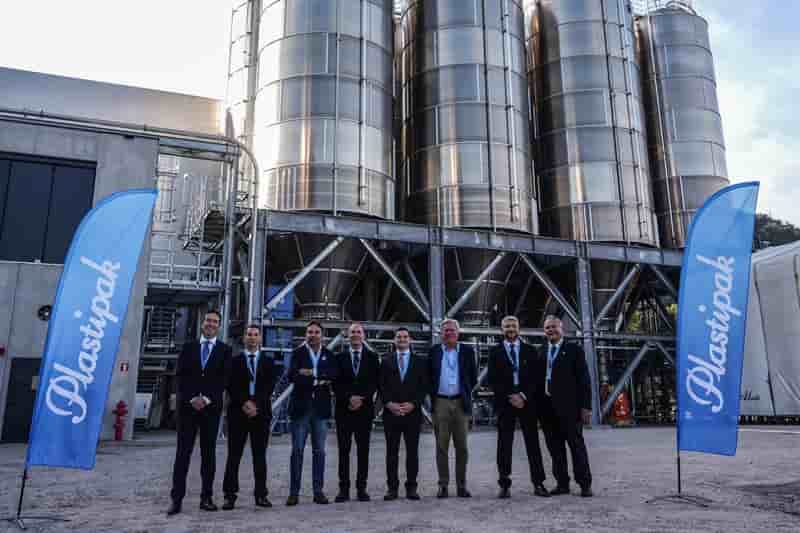
PET Bottle – Voluntary EPP Recycling Initiative: Closing the Loop on Expanded Polypropylene General Industries Deutschland (GID) is scaling up its innovative EPP LOOP program to push sustainable practices across Europe’s plastic industry 04-08-2025 - Archive
PET Bottle

| Polyestertime | |||
| ITEM | 28/07/2025 | 04/08/2025 | +/- |
| Bottle grade PET chips domestic market | 6,030 yuan/ton | 5,900 yuan/ton | -130 |
| Chinese bottle‑grade PET chips FOB export price
|
790 $/ton | 760 – 800 $/ton | – |
| LDPE CFR Est China | 1,070 $/ton | 1,075 $/ton | +5 |
| PET Semidull Fiber chips PET Bright | 5,900 yuan/ton
5,910 yuan/ton |
5,810 yuan/ton
5,850 yuan/ton |
-90
-60 |
| Pure Terephthalic Acid PTA domestic market
|
4,880 yuan/ton | 4,720 yuan/ton |
-160 |
| Pure Terephthalic Acid PTA FOB China | 620 $/ton | 640 $/ton | +20 |
| Monoethyleneglycol MEG South China | 4,519 yuan/ton | 4,470 yuan/ton |
-49 |
| Monoethyleneglycol MEG CFR China | 539 $/ton | 539 $/to | – |
| Paraxylene PX FOB Taiwan market | 850 $/ton | 823 $/ton |
-27 |
| Paraxylene PX FOB South-Korea market | 851 $/ton | 824 $/ton | -27 |
| Paraxylene PX FOB EU market | 863 $/ton | 883 $/ton | +20 |
| Polyester filament POY 150D/48F domestic market | 6,700 yuan/ton | 6,750 yuan/ton |
+50 |
| Recycled Polyester filament POY domestic market | 6,150 yuan/ton | 6,150 yuan/ton | – |
| Polyester filament DTY 150D/48 F domestic market | 7,875 yuan/ton | 7,950 yuan/ton | +75 |
| Polyester filament FDY 68D24F | 7,700 yuan/ton | 7,800 yuan | +100 |
| Polyester filament FDY 150D/96F domestic market
|
6,950 yuan/ton | 7,050 yuan/ton | +100 |
| Polyester staple fiber 1.4D 38mm domestic market | 6,650 yuan/ton | 6,660 yuan/ton | +10 |
| Caprolactam CPL domestic market | 8,800 yuan/ton | 8,950 yuan/ton |
+150 |
| Caprolactam CPL CFR China | 1,050 $/ton | 1,050 $/ton | – |
| Nylon 6 chips overseas market | North America: $2.76/kg
Europe: $2.26/kg Northeast Asia: $1.49/kg Southeast Asia: $1.65/kg Middle East: $1.63/kg |
North America: $2.57/kg
Europe: $2.46/kg Northeast Asia: $1.50/kg Southeast Asia: $1.87/kg Middle East: $1.67/kg |
– |
| Nylon 6 chips conventional spinning domestic market | 9,350 yuan/ton | 9,550 yuan/ton | +200 |
| Nylon 6 chips high speed spinning domestic market | 9,750 yuan/ton | 10,000 yuan/ton | +250 |
| Nylon 6.6 chips domestic market | 15,500 yuan/ton | 15,300 yuan/ton | -200 |
| Nylon6 Filament POY 86D/24F domestic market | 11,850 yuan/ton | 11,850 yuan/ton | – |
| Nylon6 Filament DTY 70D/24F domestic market | 14,050 yuan/ton | 14,050 yuan/ton | – |
| Nylon6 Filament FDY 70D/24F | 12,600 yuan/ton | 12,600 yuan/ton | – |
| -Spandex 20D domestic marke | 26,700 yuan/ton | 26,700 yuan/ton | – |
| Spandex 30D domestic market | 26,200 yuan/ton | 26,200 yuan/ton | – |
| Spandex 40D domestic market | 23,000 yuan/ton | 23,000 yuan/ton | – |
| Adipic Acid China domestic market | 7,150 yuan/ton | 7,250 yuan/ton | +100 |
| Benzene domestic market East China | 6,000 yuan/ton | 6,100 yuan/ton | +100 |
| Benzene CFR China | 731 $/ton | 750 $/ton | +19 |
| Ethylene South East market | 830 $/ton | 830 $/ton | – |
| Ethylene NWE market CIF | 839 $/t | 804 $/ton | -35 |
| Acrylonitrile ACN domestic market | 8,100 yuan/ton | 8,250 yuan/ton | +150 |
| Acrylonitrile ACN Acrylonitrile Southeast Asia | 1,15 $/ton |
1,065 $/ton |
-50 |
| Acrylic staple fiber ASF CFR China | 13,540 yuan/ton | 13,540 yuan/ton | – |
| VSF viscose staple fiber | 12,800 yuan/ton | 12,850 yuan/ton | +50 |
| PP Powder domestic market | 6,880 yuan/ton | 6,850 yuan/ton | -30 |
| Naphtha overseas market | 550 $/ton | 561 $/ton | +11 |
| Phenol domestic market
Jinan Dezheng Chemical Co., LtdYanshan Petrochemical Shandong Province |
6,590 yuan/ton | 6,643 yuan/ton | +53 |
-recycled PET = 4,200 yuan/ton — 4,200 yuan/ton –
On August 4, 2025, available industry‐source data suggests that bottle‑grade PET chips export prices were approximately in the range of USD 1,250 per metric ton.
For context and reference:
- In Q3 2024, bottle‑grade PET in Saudi Arabia was around USD 1,193/MT ex‑Riyadh, and in Veracruz (Mexico) about USD 1,251/MT—representing similar market conditions to early 2025 as markets stabilized
- A mid‑July 2025 market update described bottle‑grade chip pricing as “relatively stable, range‑bound” with firm sentiment continuing into quarter Q3 2025
So a reasonable estimate for early August 2025 global export pricing for bottle‑grade PET chips is roughly USD 1,250 per ton (FOB/CIF baseline). Pricing will of course vary by origin, destination, quality (intrinsic viscosity, virgin vs. recycled), logistics and trade terms.
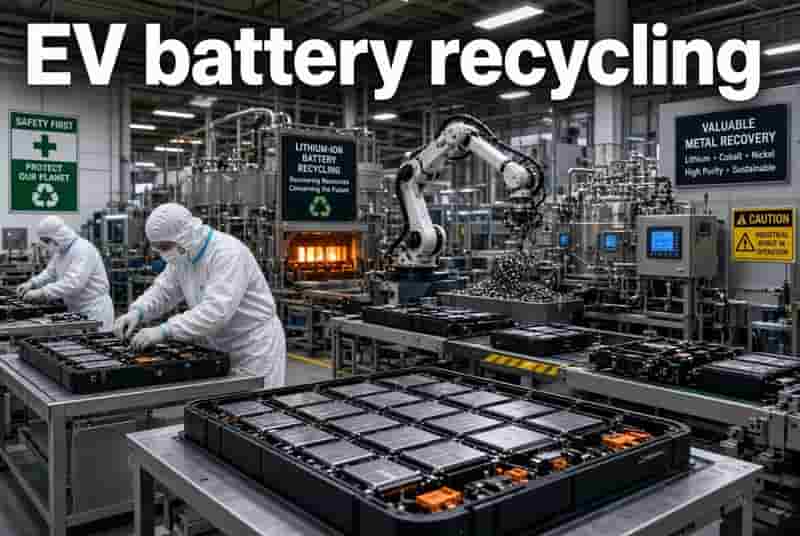
- Sustainable Plastics – Syensqo and cylib Unlock Next-Gen Lithium Recycling for EVs ♻️ A Major Leap for Battery Recycling Innovation 28-07-2025
- New enzyme technology for environmentally friendly plastic recycling
PET Bottle
US–EU Trade Deal Tariffs May Threaten Plastics Machinery Exports
Industry leaders warn new 15% tariffs could derail EU manufacturing competitiveness
Amaplast Sounds the Alarm on New Trade Barriers
European manufacturers of plastics and rubber machinery face a major challenge as a new
U.S.–European Union trade agreement introduces a sweeping 15 percent tariff on most EU imports. PET Bottle
According to Amaplast, the Italian trade group representing over 170 plastics and rubber machinery makers, this policy threatens a critical export sector.
The agreement, signed July 27 in Scotland by U.S. President Donald Trump and European Commission President Ursula von der Leyen, removes tariffs on U.S. exports to Europe while raising barriers for European goods entering the American market.
Italian Industry Could Be Hit Especially Hard PCR Bottlle
Italy, a global leader in plastics processing machinery, could see disproportionate impacts.
More than 70% of machinery produced in Italy is exported, with roughly 10% going directly to the United States, making it a vital market.
“This is not an agreement; it’s more like a surrender,” said Massimo Margaglione, Amaplast President and member of Confindustria.
“A blanket 15% tariff is a devastating blow for our companies, which have always driven Italian exports through quality, technology, and reliability.” PET Bottle
Strategic Challenges for European Manufacturers
The 15% import duty comes amid a tough international climate, including a weakened euro, global economic uncertainty, and unpredictable energy prices.
Amaplast says the deal risks exacerbating these conditions and stalling industrial investment.
The agreement also includes $750 billion in EU energy purchases from the U.S. and a commitment to invest $600 billion in the U.S. economy by 2028, according to a White House statement.
Officials celebrated the deal as restoring “America’s industrial might.” PET Bottle
Concerns Over Lack of Tariff Exemptions
Amaplast and other European stakeholders are pressing the EU to clarify which product categories might be exempt from the new tariffs.
So far, the deal lacks specifics—leaving many companies in the dark.
“We need immediate clarification,” Amaplast said in an official release, adding that the current form of the deal offers little support to EU industrial sectors already strained by global competition.
Still No Relief on Steel Tariffs
Adding to the tension, the deal does not address the long-standing 50% U.S. tariff on European steel.
Amaplast sees this as an additional burden on manufacturers who rely on high-quality European steel in their production chains. PET Bottle
“Particularly alarming is the failure to lift steel tariffs and the lack of clarity around exemptions,” the group said.
A Call for Coordinated European Strategy
Amaplast is urging the European Commission and national governments to adopt a more assertive and unified industrial policy.
The group warns that without strategic vision and coordination, Europe risks not only losing competitiveness but also weakening its broader economic and social cohesion.
“We cannot allow entrepreneurs to face such unstable international scenarios alone,” Margaglione emphasized. PET Bottle
“Europe needs strong industrial and monetary policies capable of meeting the global challenge.”
Looking Ahead
As the dust settles from the announcement of the U.S.–EU trade agreement, manufacturers across Europe are preparing for significant disruptions.
Whether or not policymakers step in to negotiate sector-specific exemptions or support packages could determine the fate of entire industrial ecosystems.
For now, organizations like Amaplast continue to advocate for clear policies and stronger support from Brussels—and warn that without action, the ripple effects could be long-lasting. PET Bottle
 Aduro Breaks New Ground: Chemical Recycling of Synthetic Turf Achieved
Aduro Clean Technologies, a Canadian innovator in chemical recycling, has successfully trialed synthetic turf as a viable feedstock using its proprietary Hydrochemolytic Technology (HCT). This marks a major step forward in addressing the environmental challenge of recycling complex synthetic materials. PET Bottle
Why Synthetic Turf Is Hard to Recycle
Synthetic turf—commonly used in sports fields, playgrounds, commercial landscapes, and residential yards—poses a unique recycling challenge. It’s made from a combination of:
- Polyethylene (PE) blades
- Polypropylene (PP) thatch and backing layers
- Polyurethane adhesives
- Infill materials like sand and crumb rubber
This multilayer, bonded construction is highly durable but extremely difficult to process through traditional recycling systems, whether mechanical or chemical.
Aduro’s Game-Changing Approach
Aduro’s Hydrochemolytic Technology (HCT) is a water-based chemical recycling process that operates at lower temperatures and produces fewer emissions compared to conventional methods. The technology selectively targets and breaks down PE and PP components into short-chain hydrocarbons, which can be reused as valuable feedstocks in steam cracking and polymer manufacturing.
Minimal Preprocessing, Maximum Efficiency PET Bottle
One of the breakthrough advantages of Aduro’s approach is its tolerance for contamination. The turf samples tested included all layers, adhesives, and residue—yet the process did not require extensive cleaning or preprocessing. This makes it a cost-effective and scalable solution for managing post-consumer synthetic turf waste.
Growing Industry Interest
The trial, which used turf samples provided by a global stakeholder, has generated significant interest from others in the turf and recycling industries.
Aduro reports that multiple parties have expressed enthusiasm about commercializing this process. PET Bottle
“Synthetic turf is a good example—its multilayer construction, bonded components, and contamination make it difficult to process through traditional means. These are the kinds of waste streams that may be better suited to right-sized, modular chemical recycling systems like HCT.”
— Ofer Vicus, CEO, Aduro Clean Technologies
Why This Matters Now
In North America alone, over 12,000 synthetic turf fields are expected to reach end-of-life within the next five years.
Without effective recycling solutions, much of this waste ends up in landfills or incinerators—posing serious environmental and health concerns. PET Bottle
HCT vs. Traditional Recycling
| Method | Preprocessing Required | Contamination Tolerance | Emission Levels | Output Quality |
|---|---|---|---|---|
| Mechanical Recycling | High | Low | Moderate | Low to Medium |
| Traditional Chemical Recycling | Moderate | Low | High | Medium |
| Hydrochemolytic Technology (HCT) | Low | High | Low | High |
Sustainability & Circular Economy Impact
By chemically converting hard-to-recycle plastics into usable hydrocarbon products, Aduro’s technology supports a circular plastics economy—reducing reliance on virgin fossil fuels and cutting plastic pollution at its source.
Conclusion
Aduro Clean Technologies is paving the way for a more sustainable future by tackling one of the most challenging waste streams—synthetic turf. With Hydrochemolytic Technology, they’re not just recycling—they’re redefining what’s possible in the circular economy.
Learn More PET Bottle
For more on Aduro and HCT, visit their official website: adurocleantech.com

Voluntary EPP Recycling Initiative: Closing the Loop on Expanded Polypropylene
General Industries Deutschland (GID) is scaling up its innovative EPP LOOP program to push sustainable practices across Europe’s plastic industry.
What Is EPP LOOP?
EPP LOOP is a voluntary sustainability platform launched by General Industries Deutschland, focused on recycling expanded polypropylene (EPP) waste.
The initiative is designed to unite manufacturers, distributors, recyclers, logistics providers, and machine builders in a shared commitment to a closed-loop recycling economy. PET Bottle
How the Program Works
Participants of EPP LOOP pledge to implement key circular economy principles:
- Recycle 100% of EPP waste generated in operations
- Educate employees on sustainability and circular processes
- Use recovered EPP material in production or other applications
The platform facilitates not just recycling, but also awareness, collaboration, and innovation across the EPP value chain.
Measurable Impact
? 7,400 tons of EPP waste recycled across Europe last year — with 1,500 tons successfully reintroduced into production (closed-loop recycling). PET Bottle
GID currently operates through a network of 15 collection points in 12 European countries. Beyond just numbers, the real achievement is building infrastructure and habits that support systemic change in industrial waste management.
2030 Targets
GID isn’t stopping at current numbers. By 2030, the company aims to:
- Recover and recycle 75% of all EPP waste in Germany PET Bottle
- Reintroduce at least 15,000 tons of recovered EPP into production annually
For comparison, only 1,500 tons were directly reused in EPP manufacturing this year, while 5,900 tons went into secondary applications like injection molding.
Role of General Industries Deutschland
As the initiative’s central operator, GID ensures operational continuity by:
- Coordinating and expanding the collection network
- Standardizing documentation and compliance procedures
- Promoting best practices and educational resources PET Bottle
- Offering tailored communication tools for member companies
This makes it easier for stakeholders at every level to integrate sustainable operations.
A Call to Action for the Industry
“Through EPP LOOP, we are creating an efficient network that demonstrates how the circular economy for technical plastics like EPP can already work today.” PET Bottle
Henning encourages all stakeholders—whether you’re in manufacturing, logistics, or recycling—to join the EPP LOOP network and drive sustainable change together.
Why This Matters
EPP is widely used due to its durability, lightweight nature, and insulation properties. However, improper disposal creates serious environmental challenges. EPP LOOP addresses these by enabling industrial-scale recycling in a climate-conscious, economically viable way.
It’s a model of how industry can lead with responsibility—delivering tangible environmental benefits without sacrificing performance or cost-efficiency. PET Bottle

LyondellBasell Confirms Divestments and Pauses Key Projects Amid Market Challenges
Strategic Shift: European Divestments Move Forward
The company reaffirmed its intention to sell off its manufacturing sites in:
- Berre, France
- Münchsmünster, Germany
- Carrington, United Kingdom
- Tarragona, Spain
This divestment aligns with LyondellBasell’s three-pillar strategy, announced earlier this year. The move comes as part of a broader restructuring aimed at enhancing long-term competitiveness and focusing on sustainable growth through recycling and renewable raw materials. PET Bottle
U.S. Projects on Hold: Flex-2 and MoReTec-2 Delayed
Also affected by the new strategic direction are two significant U.S. investments:
- Flex-2 Project (Channelview, Texas) – A metathesis unit designed to convert ethylene into propylene. Initially greenlit in March, the project was scheduled to start construction in Q3 2025. It is now paused until economic conditions improve.
- MoReTec-2 (Texas) – A second chemical recycling plant, building on the company’s push for advanced recycling technology. Final investment decisions have been delayed, although MoReTec-1 in Wesseling, Germany remains on track.
Why Europe? Focus Shifts to Renewables and Recycling
According to Vanacker, LyondellBasell’s future in Europe lies in circular plastics. Recycled and renewable raw materials sourced locally are expected to offer cost advantages over global alternatives. Local regulatory conditions and market dynamics make regional solutions more viable than global supply chains in this sector. PET Bottle
However, the European market continues to face major headwinds:
- High feedstock and energy costs (especially ethylene)
- Insufficient regulatory support for the petrochemical industry
- Structural overcapacity across the continent
Since 2020, over 20% of Europe’s petrochemical capacity has either been shuttered or marked for closure. Rationalizing production is expected to ease supply-demand imbalances, but Vanacker cautions that it will not fundamentally shift the cost structure or competitiveness.
Financial Snapshot: Q2 Results Under Pressure PET Bottle
In its second-quarter earnings report, LyondellBasell posted:
- Revenue: $7.6 billion (down from $8.6 billion YoY)
- EBITDA: $606 million
- Net Income: $115 million (a steep 90% drop from $924 million in Q2 2024)
For the first half of the year, revenue stood at $15.3 billion compared to $17 billion in the same period last year. The results reflect ongoing margin pressure across product lines.
Outlook: Cautious Optimism and North American Upside
Looking ahead, the company anticipates:
- Improved polyethylene margins in North America due to post-maintenance recovery and solid demand
- Stable European demand supported by lower feedstock prices
- Gradual market rebalance as capacity rationalizations take hold
Vanacker expressed optimism about potential policy shifts aimed at addressing overcapacity in China and revitalizing Europe’s chemicals sector. He remains confident in the company’s long-term strategic positioning.PET Bottle
“We are well-positioned to capture these market tailwinds and create sustainable, long-term value for our shareholders through the consistent execution of our strategy.”
— Peter Vanacker, CEO, LyondellBasell
Grasim Industries Launches Raysileco: A Sustainable & Traceable Filament Yarn Revolution
Published: August 4, 2025
Grasim Industries, a global leader in sustainable textiles, has introduced Raysileco, a next-generation viscose filament yarn (VFY) that is not only sustainable but also fully traceable from origin to end product. Developed under the company’s well-established Raysil brand, Raysileco sets a new standard in environmentally responsible fashion yarns.
This groundbreaking innovation was officially launched during the 7th edition of the Yarn Expo in Surat, hosted by The Southern Gujarat Chamber of Commerce and Industry (SGCCI). PET Bottle
The debut drew attention from major players in the fashion and textile value chain, all seeking credible, transparent, and traceable yarn solutions.
What Makes Raysileco Unique?
Raysileco is more than just a yarn—it’s a sustainability milestone. Manufactured using wood pulp sourced from FSC® and PEFC™-certified, responsibly managed forests, this cellulosic yarn is biodegradable and environmentally safe across its entire lifecycle.
What sets it apart is the advanced traceability system embedded within its structure. From physical molecular markers to blockchain-enabled tracking tools, every filament can be followed from raw material extraction to finished product. PET Bottle
This approach empowers brands, retailers, and consumers with verifiable proof of origin and sustainability.
CEO Speaks: Innovation Meets Responsibility
“Raysileco embodies the spirit of innovation with robust sustainability credentials and advanced traceability technologies. This launch reflects our drive to evolve with dynamic market needs and delivering value where performance, responsibility, and trust converge.”
— Mr. Satyaki Ghosh, CEO, Cellulosic Fashion Yarn Business, Grasim Industries
Mr. Ghosh emphasized that Raysileco reflects Grasim’s unwavering commitment to transparency and innovation. The yarn is engineered to empower partners across the textile value chain with confidence in every filament’s traceable origin and ethical production practices.PET Bottle
How Raysileco Achieves True End-to-End Traceability
Unlike traditional yarns, Raysileco integrates both molecular tagging and digital tracking into its DNA. The result is a product that can be verified at any stage of its journey—from forest to fiber to fashion.
One of the key enablers of this traceability is Grasim’s collaboration with TextileGenesis™, a blockchain-based traceability platform. Here’s how it works:
- Fibercoins™: Unique digital tokens represent every batch of yarn and carry its data trail.
- Blockchain records: Immutable logs of supply chain events ensure tamper-proof transparency.
- Real-time monitoring: Brands can view each step of the yarn’s movement, from sourcing to distribution. PET Bottle
This technology ensures that every stakeholder—from mills to fashion houses—can authenticate product origin and sustainability in real time, strengthening brand trust and compliance.
Why Traceability Matters Now More Than Ever
Global regulatory bodies are increasingly mandating transparency in fashion supply chains. From the EU’s Digital Product Passport initiative to climate-related disclosure frameworks, the demand for traceable, responsibly produced materials is no longer optional—it’s essential.
Raysileco is purpose-built to meet these new standards, giving brands a future-proof solution that aligns with ESG commitments and consumer expectations for sustainability.
Smart, Scalable Manufacturing in India PET Bottle
Raysileco is manufactured at Grasim’s high-capacity, strategically located plants in Kalyan, Maharashtra and Veraval, Gujarat. These sites are designed for both scalability and environmental stewardship, incorporating:
- Closed-loop water recycling systems
- Renewable energy integration
- Digitally optimized quality and compliance monitoring
These modern facilities reflect Grasim’s continued investment in not just quantity, but quality and responsibility. PET Bottle
Raysil: A Legacy of Innovation
With the introduction of Raysileco, Grasim further strengthens its leadership in viscose filament yarns. The Raysil brand is already the only global supplier offering three distinct VFY technologies:
- Pot Spun Yarn (PSY) – For high-end fashion applications
- Continuous Spun Yarn (CSY) – For seamless, flowing textures
- Spool Spun Yarn (SSY) – For consistent volume manufacturing
Raysileco adds a new, sustainability-first dimension to this portfolio, enhancing its appeal to global fashion brands seeking innovation and ethical sourcing.
Built for the Circular Fashion Future
Raysileco is a perfect match for circular fashion models. It’s created from natural-origin materials, uses clean production methods, and is biodegradable—enabling safe return to nature at the end of its life cycle. In doing so, it supports the fashion industry’s shift toward circularity, zero waste, and climate neutrality. PET Bottle
By offering digital proof of circular sourcing and disposal, Grasim positions Raysileco as a catalyst for sustainable fashion transformation worldwide.
Conclusion: A New Standard in Sustainable Yarn
Grasim Industries has taken a bold step forward with Raysileco—redefining what it means to produce, track, and trust fashion yarn. With unmatched traceability and an unwavering commitment to the environment, Raysileco delivers on the promise of sustainable innovation for the fashion industry’s future. PET Bottle
As consumer awareness grows and compliance tightens, yarns like Raysileco will be critical for brands seeking integrity and transparency in every thread.