Textile Recycling – Erema and BlockTexx Join Forces to Transform the Future of Sustainable Textile Recycling 13-10-2025
Textile Recycling
The Global Push Toward Smarter Textile Recycling
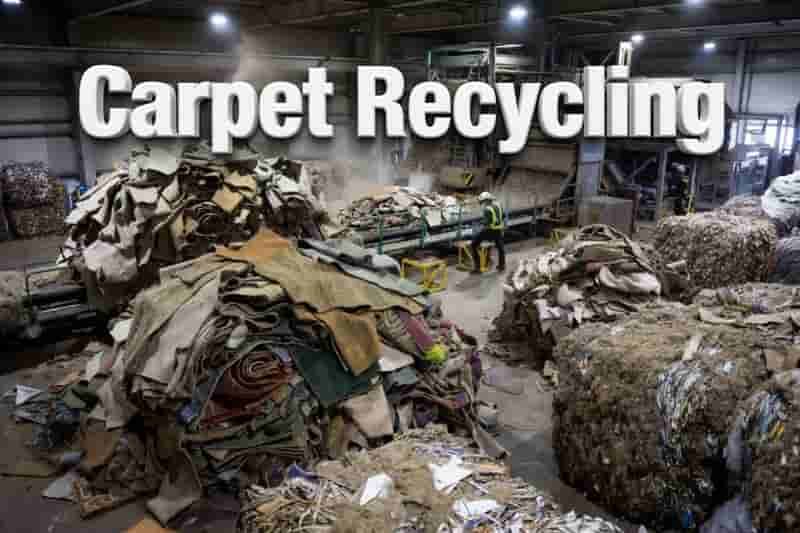
As sustainability moves from a buzzword to a business imperative, textile recycling has become one of the most critical frontiers in circular manufacturing. Every year, millions of tonnes of clothing and industrial fabrics end up in landfills or incinerators — a waste stream rich in recoverable materials like polyester and cotton.
In this context, the new partnership between Erema Group, a global leader in plastic and polymer recycling machinery, and BlockTexx Pty Ltd, an Australian startup pioneering fiber recovery from blended textiles, marks a turning point in the global textile recycling movement.
The collaboration — officially signed during the K 2025 trade fair in Düsseldorf, Germany — represents more than just a financial investment. It’s a strategic alliance designed to accelerate scalable solutions for post-consumer textile recycling, bridging technology, engineering, and sustainability expertise.
Why This Partnership Matters
The textile industry has long grappled with the challenge of poly-cotton blends — fabrics made from a mixture of polyester (PET) and cotton fibers. These materials are notoriously difficult to separate and recycle efficiently. BlockTexx, however, has developed a proprietary process to solve this.
By partnering with Erema, the company gains access to industrial-scale recycling technology, advanced process engineering, and the ability to scale globally. For Erema, this collaboration expands its portfolio beyond traditional plastics recycling into fiber-to-fiber circularity — a major strategic shift toward textile recycling.
Erema’s Strategic Expansion Into Fiber Recycling
Over the past decade, Erema has built a strong reputation in bottle-to-bottle PET recycling. Now, the company is applying its technological and R&D resources to textiles — an industry where fiber recycling is still in its early stages.
According to Manfred Hackl, CEO of Erema, this step is both necessary and inevitable.
“Twenty-five years ago, people said bottle-to-bottle recycling wouldn’t work,” Hackl said. “But within 10 years, it proved them wrong. I believe textile-to-textile recycling is needed — and it will happen in the next few years.”
Erema’s long-term goal is to see half of its business come from the fiber sector, reflecting its confidence in the massive growth potential of textile recycling. The partnership with BlockTexx accelerates that timeline.
BlockTexx: Turning Poly-Cotton Waste Into New Value
Founded in Australia, BlockTexx has built one of the world’s most innovative textile recycling facilities. Its first plant, located south of Brisbane, processes 10,000 tonnes of textile waste annually. Plans are already underway for a second site in New South Wales, with a capacity of 50,000 tonnes per year.
Co-founder Adrian Jones explained the importance of industrial partnerships for scaling:
“You can’t just keep doing it alone. You need experience and deep engineering knowledge — and that’s what we found in Erema.”
BlockTexx’s technology can separate post-consumer poly-cotton blends into two key raw materials:
-
rPET (recycled polyester) — suitable for re-spinning into new fibers or packaging
-
cellulose powder — derived from cotton, used for industrial or chemical applications
This dual-output process not only diverts textile waste from landfills but also reintroduces high-quality materials into the circular economy.
How the Partnership Works in Practice
The partnership involves Erema becoming a minority shareholder in BlockTexx and providing technical support through its Intarema FibrePro:IV system — a specialized recycling technology capable of transforming recovered PET into usable pellets.
During test runs, recovered PET from BlockTexx’s Australian plant was shipped to Erema’s headquarters in Austria. There, it was pelletized and remade into new textiles and T-shirts — proof that the process works end-to-end.
These first sample products were proudly displayed at Erema’s outdoor exhibition during the K 2025 trade fair, symbolizing the dawn of large-scale textile-to-textile circularity.
The PET Equation: Bottles, Fibers, and Circular Loops
One of the most compelling aspects of this collaboration lies in its broader impact on the PET recycling ecosystem.
According to Hackl, the PET fiber industry is three times larger than the PET bottle industry. This imbalance creates a recycling paradox: many PET bottles are downcycled into textiles instead of being kept within the bottle-to-bottle recycling loop.
By advancing textile recycling technologies, Erema and BlockTexx aim to close the fiber loop, allowing more PET bottles to remain in their own cycle while textile waste develops its own sustainable recovery stream.
“The textile industry has to close its own loop,” Hackl emphasized. “With PET fiber production three times larger than PET bottle production, the business opportunity is clear.”
A Meeting of Minds: Trust and Innovation
The collaboration between the two companies began at a textile trade show in Milan, where their teams discovered a shared vision for sustainable materials recovery.
BlockTexx co-founder Graham Ross described it as a “meeting of the minds.”
“Both companies are intellectually curious. From the start, there was a strong foundation of trust and knowledge.”
Although Erema is a global industrial giant and BlockTexx a nimble startup, the relationship has felt balanced. “It wasn’t a question of if we’d work together — it was when,” Ross said.
Scaling Up: From Pilot to Industrial Scale
The first 10,000-tonne-per-year BlockTexx facility serves as proof of concept, demonstrating both technical and economic viability. The second site — designed for 50,000 tonnes per year — represents industrial-scale production.
Erema’s engineering expertise and global manufacturing network will be crucial in building and optimizing these next-generation plants. Together, the two firms aim to develop replicable models that can be implemented in Europe, Asia, and North America.
This global scalability is key to transforming textile recycling from a niche operation into a mainstream industrial process.
The Road to Circular Textiles
While mechanical recycling remains dominant in plastics, textiles introduce new challenges — dye residues, mixed fibers, and fast-fashion waste streams complicate the process.
However, advances in chemical separation, fiber recovery, and AI-driven sorting systems are rapidly improving efficiency and material purity. With leaders like Erema and BlockTexx driving technological integration, the industry is closer than ever to achieving true textile circularity.
Hackl believes the transition could happen sooner than expected:
“Textile-to-textile recycling will happen in the next few years. It’s not a dream — it’s a necessity.”
R&D and Investment: Building the Future of Textile Recycling
Erema has already invested heavily in this direction. Over the past seven years, the company has built a 15-person R&D team dedicated solely to textile recycling technologies. The company’s innovation centers in Austria now feature multiple pilot lines for fiber processing, chemical depolymerization trials, and quality testing.
“There has been a huge investment over the past five, six, seven years,” Hackl said. “And we still believe in the long-term opportunity in textile recycling.”
This commitment underscores Erema’s vision of a circular textile economy, one that mirrors the success story of bottle-to-bottle recycling.
The Broader Impact: Sustainability, Jobs, and Resource Recovery
Beyond environmental benefits, textile recycling also promises economic and social gains:
-
Job creation in recycling facilities and green engineering
-
Reduced landfill dependency and carbon emissions
-
Sustainable raw materials for textile, automotive, and packaging industries
-
Innovation opportunities for startups in AI, robotics, and material science
BlockTexx’s model, supported by Erema’s industrial backbone, provides a blueprint for circular manufacturing ecosystems that can scale globally.
Industry Implications: Closing the Loop on Fast Fashion
As consumers and brands face increasing scrutiny over textile waste, partnerships like this offer practical pathways to meet ESG goals and EU circular economy targets.
Fashion brands are already exploring take-back programs and fiber certification systems that align with upcoming regulations. The Erema–BlockTexx model could soon supply traceable recycled fibers directly into these supply chains, offering verifiable sustainability credentials.
This shift supports both environmental responsibility and supply chain resilience, giving manufacturers a competitive edge in a world moving toward circular production.
Looking Ahead: A Circular Future for Fibers
For decades, the textile industry has been linear — make, use, discard. But with new alliances like Erema and BlockTexx, that model is finally shifting.
By combining engineering excellence, sustainability vision, and scalable innovation, the two companies are redefining what’s possible in textile recycling. Their partnership demonstrates that with the right technology and collaboration, even complex waste streams can become valuable resources again.
“The textile problem is enormous,” Jones concluded. “And it needs to be solved — at scale.”
Key Takeaways
-
Erema and BlockTexx have partnered to scale up post-consumer textile recycling.
-
The collaboration combines Erema’s recycling expertise with BlockTexx’s fiber separation technology.
-
A new plant in Australia and plans for global expansion mark a major step toward circular textile manufacturing.
-
This partnership reinforces the need for closed-loop textile systems, helping both the planet and the industry.
Chemical Recycling of Automotive Polyamides: BASF’s Breakthrough at K2025
More…