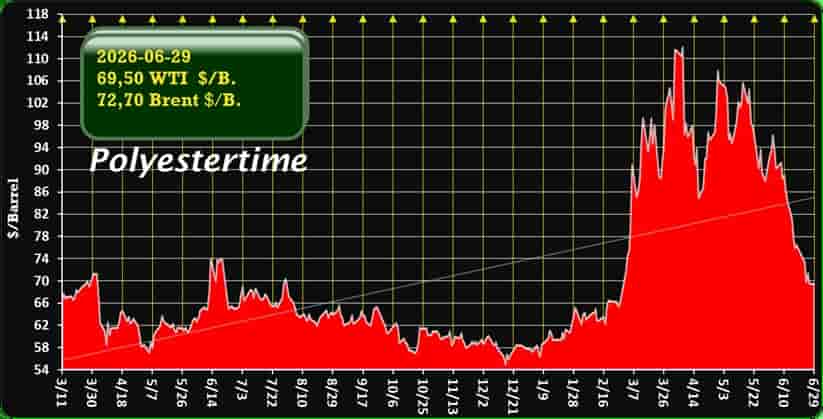
Oil Price Today December 16, 2025: Brent at $60.19 and WTI at $56.30 as Oversupply Fears, Weak China Data, and Peace Talks Push Prices Lower 16-12-2025
📊 Oil Price Today — Key Benchmarks (December 16, 2025)
| Benchmark | Price (USD / Barrel) | Daily Trend |
|---|---|---|
| Brent Crude | $60.19 | ↘ Slight decline Trading Economics |
| WTI (West Texas Intermediate) | $56.30 | ↘ Lower pressure Trading Economics |
These levels reflect the oil price environment as of December 16, 2025, with both Brent and WTI trading near multi-month lows. Trading Economics
📉 What’s Driving Today’s Oil Price Movement?
🔹 1. Supply & Demand Imbalance
Global oil markets are increasingly focused on a potential supply glut in 2026, as output from major producers expands while demand growth struggles to keep pace. Analysts warn that oversupply pressure could become a defining theme for oil prices into next year. OilPrice.com
This expectation weighs on the oil price today, limiting upside and keeping crude benchmarks under downward pressure. Recent forecasts suggest lower average Brent and WTI prices in 2026 due to this widening surplus. OilPrice.com
🔹 2. Russia-Ukraine Peace Talks Wider Impact
Growing optimism around peace negotiations between Russia and Ukraine has paradoxically pressured prices lower. Markets anticipate that eased sanctions on Russian oil flows—if a deal advances—might add fresh supply, contributing to a bearish backdrop for crude. OilPrice.com
These peace-talk dynamics not only influence geopolitical risk premiums but also affect long-term expectations about crude flows into global markets. OilPrice.com
🔹 3. Soft Demand Signals from China
China’s recent economic data painted a softer demand picture, with industrial output and retail sales slowing. As the world’s largest crude importer, weaker Chinese activity raises concerns about future fuel consumption and puts additional negative pressure on the oil price. OilPrice.com
Chinese refiners have turned to stockpiling at these lower price levels, but concerns linger that overall oil consumption growth may remain muted. Reuters
🛢️ Market Dynamics: Prices in Context
📍 Historical and Recent Trends
Over the past month, both Brent and WTI have shown a clear downward trend. Brent is roughly 6–7% lower in recent weeks, while WTI has also retreated amid bearish sentiment. Trading Economics
Such movements reflect a broader narrative: oil price benchmarks are sensitive to macroeconomic indicators, risk sentiment, global demand forecasts, and geopolitical developments. Trading Economics
📍 How Benchmark Prices Work
Brent and WTI represent two major global crude benchmarks used by traders and producers worldwide. Brent, sourced mainly from the North Sea, typically trades at a slight premium to WTI, which is U.S.-based crude. Wikipedia
These benchmarks serve as reference points for pricing hundreds of other crude streams and derivatives traded globally. Wikipedia
🔎 What Analysts Are Watching
📌 Geopolitical Risks
Even though peace talks can ease price risks, events such as tanker seizures near Venezuela or disruptions in other producing regions remind markets that geopolitical risk premiums are still active. These events can temporarily offset bearish oversupply pressures. MarketWatch
📌 Global Economic Health
Financial markets and economic indicators—such as industrial production data, manufacturing activity, and consumer demand—play a crucial role in shaping the oil price outlook.
Weak global growth prospects tend to dampen energy demand expectations, reinforcing pressure on crude benchmarks. OilPrice.com
🧠 Final Summary
Today’s oil price snapshot — Brent at $60.19 and WTI at $56.30 — reflects bearish sentiment driven by supply-side concerns, demand softness in China, and shifting geopolitical expectations. While short-term volatility remains possible, the broader market narrative suggests persistent downward pressure into 2026 unless demand accelerates or producers cut back output.