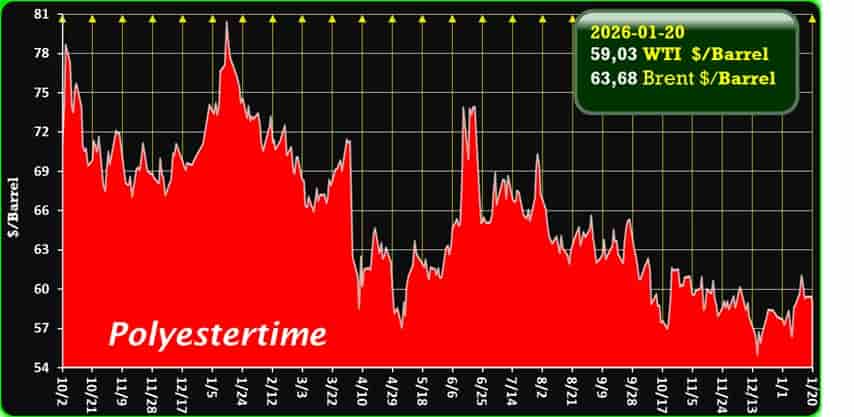
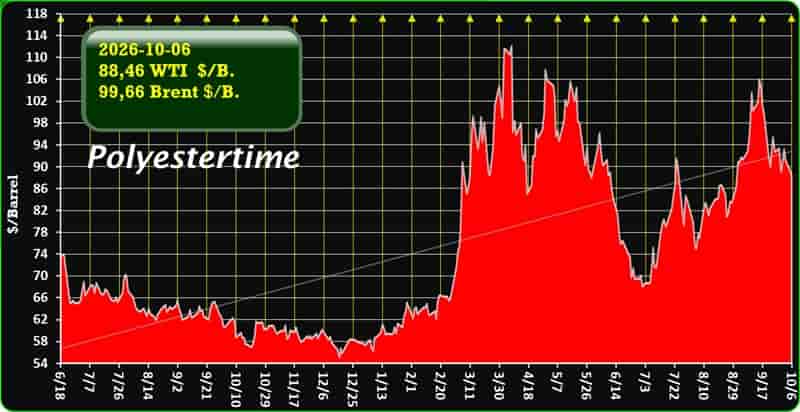
2026 Oil Price Reality Check: Why Brent at $63.68 and WTI at $59.03 Reflect Sluggish Demand, Rising Supply, and Uncertain Geopolitical Drivers 20-01-2026
Oil Price Overview (January 20, 2026)
On January 20, 2026, global oil price benchmarks reflect subdued energy market conditions:
| Benchmark | Price (approx.) | Comments |
|---|---|---|
| Brent crude | $63.68 per barrel | International benchmark priced in London |
| WTI crude | $59.03 per barrel | U.S. benchmark reflecting domestic supply dynamics |
These prices are consistent with recent market data showing Brent and WTI trading in the low-to-mid $60s and high-$50s, well below the peaks seen during previous geopolitical spikes and historic highs.
Recent Price Movements
Over the past week, oil prices have exhibited notable volatility:
-
Brent and WTI both rose early in January amid concerns of potential disruptions in the Middle East, particularly related to Iranian crude exports.
-
Mid-January saw a sharp reversal: oil prices retreated by more than 4 percent after U.S. political overtures and diplomatic statements eased fears of conflict involving Iran, a key crude exporter.
-
This push–pull dynamic underscores how geopolitical headlines can quickly sway markets but also reveals a stronger tether to fundamental supply and demand realities.
Key Factors Influencing Today’s Oil Price Trend
1. Global Supply and Demand Balance
Oversupply pressures continue to weigh on oil prices:
-
U.S. shale production, Russian output, and the gradual unwinding of OPEC+ voluntary production cuts have contributed to a surplus of crude in global markets.
-
Rising inventories reported in the United States have added to bearish sentiment, reinforcing the view that immediate demand is not outstripping available supply.
On the demand side, growth remains tepid in several major consuming regions:
-
Slower economic activity in China and advanced economies has dampened demand trends, moderating price support.
-
Structural shifts in energy consumption—such as increased adoption of electric vehicles and alternative energy sources—also temper long-term demand projections.
The interplay of these factors explains why oil has struggled to sustain rallies even when geopolitical events initially push benchmarks higher.
2. OPEC+ Actions and Policy Uncertainty
OPEC+ decisions remain central to oil price dynamics:
-
After significant voluntary output cuts in prior years, producers have been debating the pace and depth of future restrictions to balance the market.
-
Market expectations around OPEC+ compliance and potential deeper cuts frequently surface in price forecasts, with analysts divided on the association between new constraints and durable price gains.
This uncertainty around policy direction contributes to the broader lack of conviction among investors and traders.
3. Geopolitical Developments
Geopolitical headlines have repeatedly influenced sentiment:
-
Protests and instability in Iran drove prices up temporarily in early January before de-escalation reduced risk premiums.
-
U.S. intervention dynamics in Venezuela in early 2026 did not materially boost oil prices, as Venezuelan crude represents a smaller fraction of global supply than previously, and production by other major exporters remained stable.
These events illustrate that while geopolitics can inject volatility into price movements, structural market factors often dominate longer trends.
4. Economic Data and Investor Sentiment
Investor sentiment toward oil price trends is cautious:
-
Hedge funds and energy strategists show a largely bearish positioning, reflecting concerns about lagging demand and abundant supply.
-
Analysts warn that renewed geopolitical conflict could reverse this sentiment quickly, but consensus implies modest upside potential rather than aggressive price jumps.
The influence of broader economic signals—such as global growth forecasts, currency fluctuations, and monetary policy directions—also plays into risk appetite and commodity positions.
What This Means for the Global Economy and Energy Markets
Short-Term Outlook
In the near term (next 1–3 months):
-
Sideways trading between the low-$50s and mid-$60s for Brent and WTI appears likely unless disrupted by major supply shocks or demand surprises.
-
Seasonal demand patterns (e.g., winter heating needs) may provide modest support, but underlying fundamentals suggest limited upside momentum.
Price forecasts from macroeconomic models project gradual increases toward year-end, but with wide confidence intervals.
Implications for the Global Economy
-
Lower oil prices tend to benefit consumers and oil-importing economies by reducing fuel costs and inflationary pressures.
-
For energy sector producers and exporters, sustained lower prices can constrain investment in exploration and infrastructure, which may affect longer-term supply.
Conclusion
The oil price landscape as of January 20, 2026 — with Brent near $63.68 and WTI around $59.03 — reflects a market balancing oversupply, subdued demand, geopolitical signals, and cautious investor sentiment. While occasional spikes remain possible, the short-term outlook leans toward a range-bound scenario with moderate upside risk. Understanding these dynamics is essential for businesses, policymakers, and market participants navigating the global energy transition and economic growth prospects.
More…