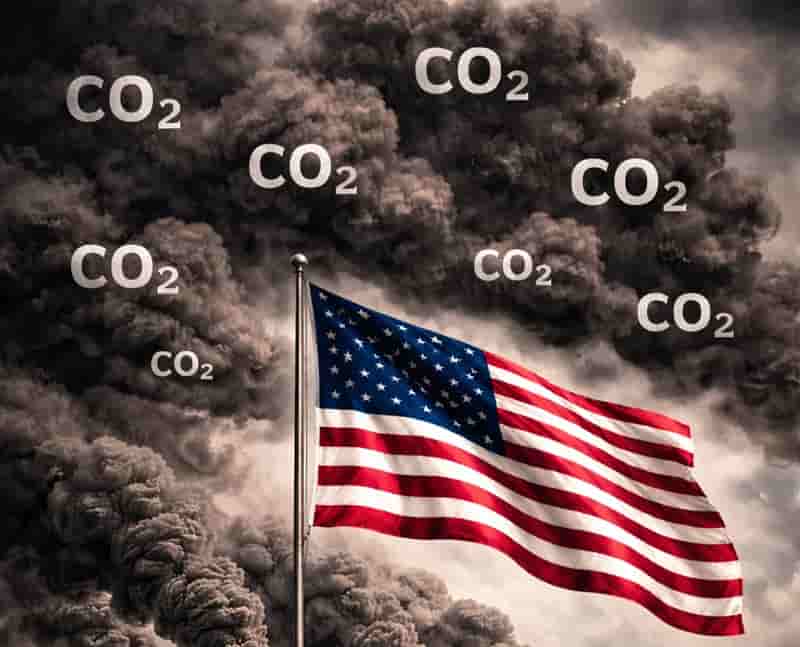
The Trump administration plans to revoke the EPA’s carbon dioxide health risk finding, a move that could dismantle the legal foundation of U.S. climate change policy and greenhouse gas regulations. 11-02-2026
Trump climate change policy
Trump Administration Moves to Overturn EPA Carbon Dioxide Health Risk Finding
The Trump administration is preparing to rescind a landmark scientific determination that carbon dioxide poses a threat to public health. The decision targets the Environmental Protection Agency’s endangerment finding, a cornerstone of U.S. climate change policy and the legal basis for regulating greenhouse gas emissions under the Clean Air Act. Trump climate change policy
If finalized, the repeal would remove the federal government’s primary justification for imposing greenhouse gas regulations on vehicles, engines, power plants, and industrial facilities. The move represents a sweeping rollback of environmental oversight and could significantly reshape U.S. climate change policy for years to come. Trump climate change policy
What Is the EPA Endangerment Finding?
The endangerment finding, issued in 2009 during the Obama administration, concluded that carbon dioxide and other greenhouse gases endanger public health and welfare. This scientific assessment empowered the EPA to regulate greenhouse gas emissions under existing federal law.
Without the endangerment finding, the EPA’s authority to limit carbon dioxide emissions would be severely constrained. In practical terms, revoking it would undermine the regulatory architecture that governs vehicle emissions standards, power sector pollution controls, and other climate-related rules.
The administration argues that the finding has been used by previous Democratic administrations to justify extensive greenhouse gas regulations. Officials claim those rules imposed heavy economic costs on industry and consumers while expanding federal oversight of the energy and transportation sectors.
A Major Shift in U.S. Climate Change Policy
The proposed repeal is widely viewed as one of the most consequential climate policy reversals undertaken by a Republican administration. It follows a broader pattern of deregulation aimed at accelerating fossil fuel development, easing restrictions on oil and gas production, and limiting incentives for clean energy expansion.
President Trump has repeatedly questioned mainstream scientific conclusions on climate change. He has described climate change as exaggerated and has withdrawn the United States from international climate agreements designed to curb global greenhouse gas emissions. Trump climate change policy
Revoking the endangerment finding would align domestic environmental policy with that broader agenda. It would signal a decisive shift away from federal climate intervention and toward a regulatory framework centered on energy independence and reduced compliance burdens for industry.
Economic and Regulatory Implications
EPA leadership has framed the move as a historic act of deregulation. According to agency officials, greenhouse gas regulations tied to the endangerment finding have justified trillions of dollars in compliance costs for vehicle manufacturers and other sectors. Trump climate change policy
Supporters of the repeal argue that removing the scientific finding will eliminate regulatory uncertainty and encourage investment in traditional energy industries. They contend that easing greenhouse gas regulations could reduce energy prices, stimulate domestic production, and strengthen U.S. competitiveness.
Critics, however, warn that dismantling the legal basis for regulating carbon dioxide emissions would create long-term economic and environmental risks. They argue that weakening climate change policy could expose U.S. industries to trade barriers from countries that impose carbon border adjustments or stricter environmental standards. Trump climate change policy
Legal challenges are also likely. Environmental groups and several states are expected to contest any attempt to revoke the endangerment finding, arguing that the scientific evidence supporting the link between greenhouse gas emissions and climate-related harm remains robust. Trump climate change policy
Impact on Greenhouse Gas Regulations
The practical consequences of repealing the endangerment finding would extend across multiple regulatory domains.
Vehicle Emissions Standards
Automotive greenhouse gas regulations rely heavily on the scientific determination that carbon dioxide emissions endanger public health. Removing that foundation could weaken or invalidate federal fuel economy and emissions standards for new vehicles. Trump climate change policy
Power Plant Oversight
Rules governing emissions from coal- and gas-fired power plants are similarly tied to the EPA’s authority under the Clean Air Act. Revocation could halt or reverse planned restrictions on carbon dioxide output from the electricity sector. Trump climate change policy
Industrial Emissions Controls
Large industrial facilities, including refineries and manufacturing plants, may also see changes to permitting requirements and emissions reporting if greenhouse gas regulations are curtailed.
The ripple effects would likely influence state-level climate initiatives as well. States with aggressive decarbonization targets could find themselves navigating a patchwork regulatory environment if federal oversight diminishes. Trump climate change policy
Political and International Repercussions
The repeal effort underscores the sharp partisan divide over climate change policy in the United States. While Democratic administrations have expanded greenhouse gas regulations and invested heavily in clean energy, Republican leadership has emphasized deregulation and fossil fuel development.
Internationally, the move may affect U.S. credibility in global climate negotiations. Countries pursuing coordinated emissions reductions could interpret the repeal as a retreat from collective climate commitments.
At the same time, supporters argue that energy sovereignty and economic growth should take precedence over international climate frameworks. They maintain that domestic policy should prioritize affordability and industrial resilience rather than emissions targets. Trump climate change policy
What Happens Next?
The EPA has indicated that the repeal of the endangerment finding will be formally announced this week. Following that announcement, a rulemaking process is expected, including public comment periods and regulatory review.
Any final decision is almost certain to face judicial scrutiny. Courts will examine whether the EPA has provided sufficient scientific and legal justification for reversing a prior determination that underpins U.S. climate change policy. Trump climate change policy
The outcome could redefine the scope of federal authority over greenhouse gas emissions and reshape the trajectory of American environmental regulation.
Conclusion
The Trump administration’s plan to revoke the EPA’s carbon dioxide health risk finding marks a pivotal moment in the evolution of U.S. climate change policy. By challenging the scientific and legal foundation of greenhouse gas regulations, the administration is pursuing one of the most far-reaching deregulatory actions in modern environmental history.
Whether the effort succeeds will depend on regulatory procedures, legal battles, and political dynamics. What is clear is that the decision has the potential to transform the regulatory landscape governing carbon dioxide emissions and redefine the federal government’s role in addressing climate change.
More…