LOOP-it Expands Mattress Recycling in Austria
Mattress recycling Austria
LOOP-it Scales Up Mattress Recycling in Austria, Reporting an 87% CO2 Reduction
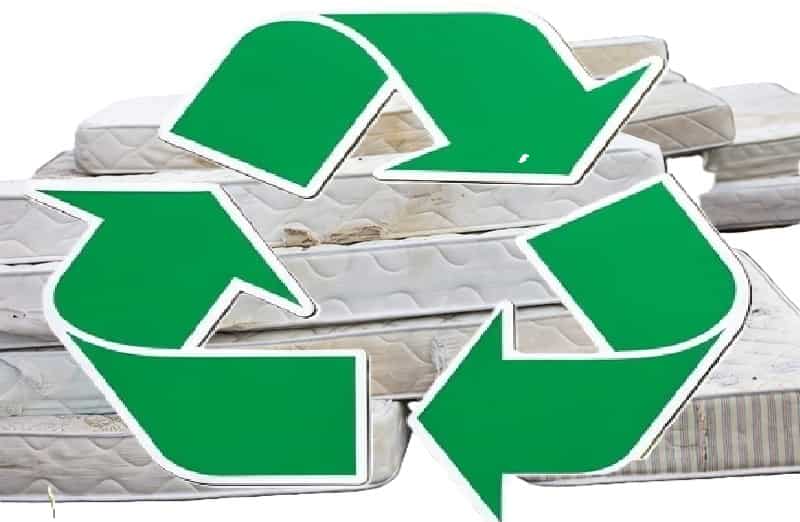
Austria’s first industrial-scale mattress-recycling operation is moving beyond its launch phase and demonstrating how discarded bedding can become a source of reusable materials.
LOOP-it, the joint venture created by foam specialist NEVEON and circular-economy company BRANTNER green solutions, says its facility in Oberwölbling, Lower Austria, can now process up to 500 used mattresses per working day.
That is equivalent to approximately seven tonnes of material each day and gives the plant an estimated annual processing capacity of 110,000 mattresses.
From disposal problem to material resource
Mattresses are difficult waste products to manage. They are bulky, contain several different materials and require dismantling before their components can be processed separately.
When LOOP-it was established in 2025, its founders intended to create a dedicated mattress-recycling system in a country where large quantities of used mattresses had traditionally been sent for incineration.
The company now reports that approximately 80% of the materials entering its recycling process can be recovered and returned to productive use.
Recovered foam can be processed into composite products such as carpet underlay and acoustic-insulation components. Other mattress materials, including metals and textiles, can be separated into appropriate recycling streams.
This approach does not return every component to a new mattress. It does, however, keep a substantial proportion of the material in circulation rather than immediately destroying it through combustion. mattress recycling Austria
LOOP-it reports substantially lower emissions
According to figures published by the companies, incinerating a mattress weighing 14 kilograms produces an average of 26.47 kilograms of carbon dioxide.
LOOP-it says recycling the same mattress produces approximately 3.42 kilograms of carbon dioxide. On that basis, the process avoids around 23.05 kilograms of emissions per mattress, representing a reduction of approximately 87%.
The carbon-footprint calculation was prepared in collaboration with ClimatePartner, according to the official project update.
These figures are company-reported results and should be understood as a comparison between the recycling process assessed by LOOP-it and the stated incineration scenario. The precise footprint of an individual mattress may vary according to its composition, transport distance and final treatment route.
Why mattress recycling matters in Austria
More than one million mattresses are estimated to reach the end of their useful lives in Austria each year.
Their size and mixed construction make them expensive to collect, transport and process. Without a dedicated dismantling system, valuable foam, steel and textile materials can be lost.
LOOP-it addresses this problem by working with collection centres and other partners to receive used mattresses, dismantle them and mechanically separate their components.
Its current annual capacity of 110,000 mattresses would represent roughly one-tenth of Austria’s estimated yearly mattress-disposal volume if the facility operated at its stated capacity and the national estimate remained constant.
That comparison illustrates both the scale of the new plant and the amount of additional collection and processing capacity that would be required to manage Austria’s entire discarded-mattress stream.
A recycling system developed without mattress EPR funding
Extended Producer Responsibility, commonly known as EPR, makes producers responsible for some or all of the cost of collecting and treating products after consumers discard them.
Dedicated mattress EPR systems already operate in some European markets. Austria, however, has not supported its mattress-recycling infrastructure through an equivalent producer-fee system.
NEVEON and BRANTNER therefore developed LOOP-it as a private industrial initiative rather than waiting for a national mattress EPR framework.
This gives the project strategic importance beyond the number of mattresses it processes. Its performance may provide useful evidence about collection costs, material quality, operational efficiency and demand for recovered foam.
Recovered materials need stable markets
Recycling does not end when a mattress is dismantled. Recovered materials must meet technical requirements and find manufacturers willing to use them.
This is especially important for flexible polyurethane foam, one of the principal materials found in many mattresses. Contamination, variable foam formulations and collection costs can limit the applications available for recycled material.
LOOP-it’s model connects waste collection and dismantling with downstream manufacturing. NEVEON and other producers can use recovered foam in composite products, helping create a practical outlet for the material.
Reliable demand for secondary raw materials is essential. Without buyers, technically recyclable components can still become waste.
An early industrial test for circular mattresses
The first operational results indicate that mattress recycling can recover a meaningful share of material and reduce emissions compared with incineration under the conditions assessed by LOOP-it.
The next test will be whether the system can maintain consistent material quality, secure sufficient volumes of used mattresses and operate economically as collection expands.
Greater cooperation among municipalities, collection centres, mattress manufacturers, recyclers and material buyers will be necessary if Austria wants to process a much larger proportion of its discarded mattresses.
LOOP-it does not solve the country’s entire mattress-waste problem. It does, however, provide Austria with working industrial infrastructure and measurable operating data where neither previously existed.
For the circular economy, that transition from proposal to daily processing is a significant step.
More…