Bottle-to-bottle – Plastic-industry 01-02-2022 - Archive
Bottle-to-bottle – Plastic-industry
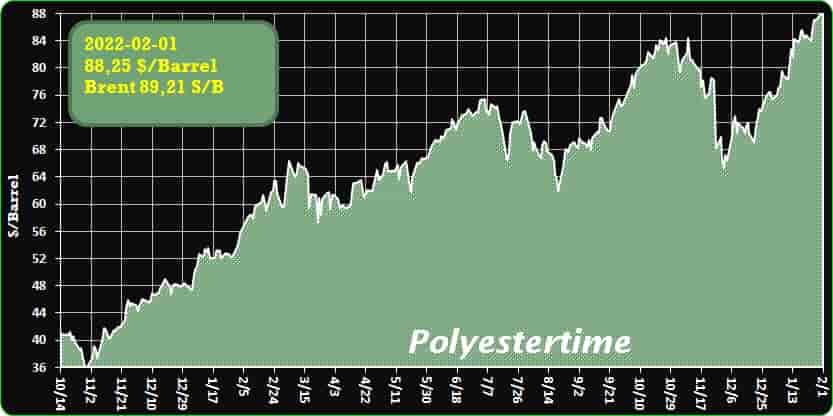
Crude Oil Prices Trend
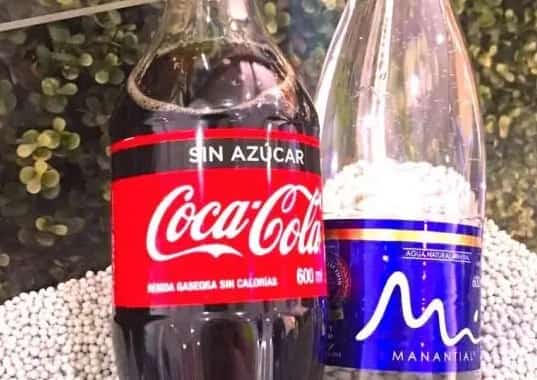
-Multi-million-dollar facility boosts Mexico’s PET recycling
A major plant to recycle plastic bottles in south-east Mexico is underway in a joint venture between Coca-Cola and bottle-to-bottle recycling major Alpla. The project is being hailed as ‘a major boost for the circular economy’ in the region.
A ceremony has been held to mark the start of construction of the plant at Cunduacán in the state of Tabasco. With an investment of more than US$ 60 million (EUR 54 million), the Planta Nueva Ecología de Tabasco (Planeta) will be equipped with the latest technology. Bottle-to-bottle – Plastic-industry
It will have the capacity to process 50 000 tonnes of post-consumer PET bottles per year, delivering 35 000 tonnes of recycled PET flakes.
Construction and operation of the Planeta recycling plant is expected to generate more than 20 000 jobs. The facility will be supplied by a network of 18 collection centres spread across south and south-east Mexico. ‘In addition to offering an environmental service, it will boost the region’s economy,’ the partners stress.
The facility will be Alpla’s third recycling plant in Mexico making the company ‘a spearhead at a national level and a recycling benchmark for the rest of the world,’ according to Alpla’s md for Mexico, Central America and the Caribbean, Carlos Torres Ballesteros. Bottle-to-bottle – Plastic-industry
The project in Mexico is part of a wider strategy from Alpla which in 2021 announced it would invest more than EUR 50 million each year until 2025 to expand its global recycling capacity.
-What the plastic industry doesn’t want us to know
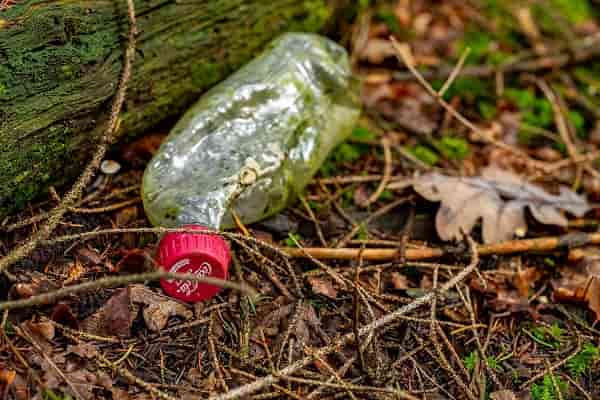
As I am writing this article on the outdoor patio of the Free Speech Movement Cafe, the plastic water bottle that I purchased two minutes ago is glaring at me in my periphery. Bottle-to-bottle – Plastic-industry
What gives me the right to study and advocate for environmental issues? I occasionally forget my reusable bottle at home, and the computer I am typing on will end up in a landfill one day, releasing harmful toxins into the environment. The truth is we are all living in a society and economy that make the picture-perfect, sustainable lifestyle — free of plastics — unattainable.
Even when we are not buying single-use plastic bottles, plastic is all around us — in our clothes, tea bags, food packaging, chewing gum and even our bodies. We are frequently ingesting small plastic particles found in our food, water and air, and these toxic particles accumulate in our cells, causing a plethora of health issues that scientists are only beginning to understand.
Synthetic plastics didn’t even exist 150 years ago, so how did we get to the point where they are prevalent in our everyday lives?
The first synthetic plastic was invented in 1907 by Leo Hendrik Baekeland, a chemist who desired to create a material with endless possibilities. As this proved successful, the plastic industry surged during the industrial mobilization of World War II. Post-war consumerism contributed to its continued growth throughout the 21st century, becoming the trillion-dollar industry it is today. Bottle-to-bottle – Plastic-industry
In the 1960s, the initial enthusiasm about plastics started to diminish. Scientists began noticing that plastic waste was accumulating and persisting in the environment, and anxieties about pollution and environmental degradation permeated throughout society, especially during the counterculture movement.
While the phrase “reduce, reuse, recycle” is considered synonymous with environmental advocacy, its history is rooted in the corporate greed of the plastic industry.
A confidential report was sent to industry officials in 1973, revealing that plastic recycling on a large scale is not feasible. As this threatened to discourage consumers from buying plastic and could potentially lead to plastic bans, the industry did everything in its power to hide this knowledge from the public. Tens of millions of dollars were spent on recycling initiatives that deceived people into believing that producing and purchasing plastic had a net-zero impact on the environment as long as consumers reduce, reuse and recycle. In reality, less than 10% of plastic has been recycled, which translates to millions of tons of plastic ending up in U.S. landfills every year. Bottle-to-bottle – Plastic-industry
-Multi-million-dollar facility boosts Mexico’s PET recycling
-What the plastic industry doesn’t want us to know
–Solvay introduces recycled-content polyamide line
–Recycled resins :Revolution unifies brand identity
– “The most efficient economy is a circular one where you’re continually reusing materials.”
–Oerlikon Nonwoven to make Filtech debut
-Why are oil prices high, and any relief in sight?
Bottle-to-bottle – Plastic-industry