Powerful LDPE Recycling Plant Strengthens Chile’s Circular Economy
LDPE recycling Chile
Powerful LDPE Recycling Plant Strengthens Chile’s Circular Economy
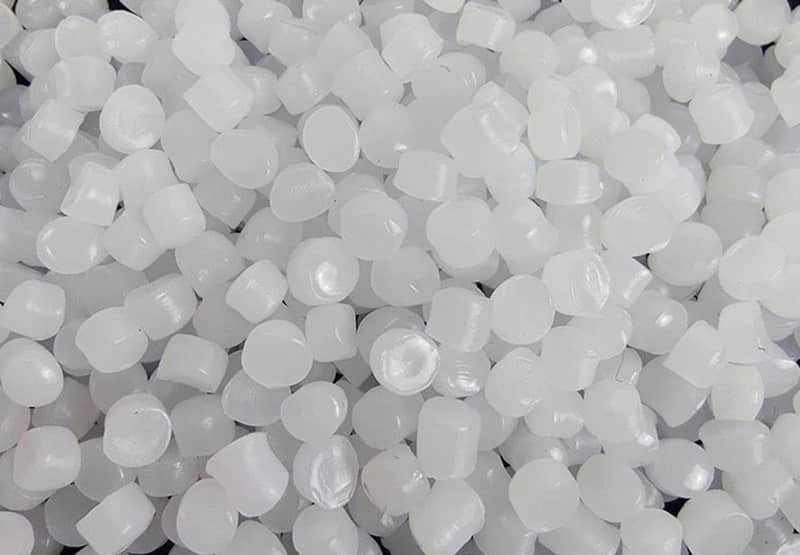
Chile’s plastics recycling industry is moving from waste management toward the production of industrial raw materials. A new LDPE recycling line operated by Recupac in San Bernardo, near Santiago, can produce up to 500 metric tons of recycled polyethylene pellets per month.
The project was developed with Austria-based Lindner-Recyclingtech and Lindner Washtech, while the downstream extrusion system was supplied by Erema. The plant is designed to process heterogeneous post-consumer LDPE packaging and convert it into recycled material for new film applications. LDPE recycling Chile
From waste collection to recycled pellets
Recupac is the waste management division of Chile’s Coipsa Group. The company manages more than 150,000 metric tons of waste annually and serves approximately 500 customers, according to information published by Lindner and industry media.
The San Bernardo facility represents a strategic change in the company’s business model. Instead of handling used LDPE packaging only as a waste stream, Recupac is processing it into a secondary raw material that can return to manufacturing.
The recycled pellets produced at the plant already replace approximately 40% of the virgin resin used in selected plastic film production, according to Lindner’s project information. This figure should be understood as a project-specific result rather than a universal replacement rate for all LDPE applications. LDPE recycling Chile
Why LDPE recycling is technically demanding
Post-consumer LDPE packaging is rarely a uniform feedstock. It can contain films from different sources, labels, adhesives, inks, moisture and other polymer fractions. These variations make it difficult to produce recycled pellets with stable colour, contamination levels and processing performance.
For this reason, pellet quality depends on the complete process rather than on one piece of equipment. Recupac’s system includes:
-
Collection of material from customers.
-
Sorting and baling.
-
Secondary quality inspection.
-
Shredding.
-
Washing.
-
Drying.
-
Extrusion and pelletizing.
This sequence is especially important for flexible packaging, where low bulk density, high surface area and contamination can complicate handling and cleaning.
Washing and extrusion must work together
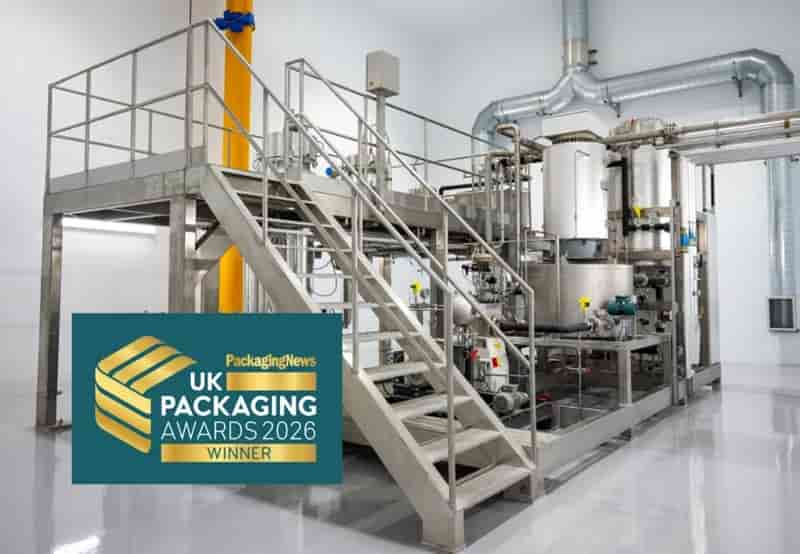
Lindner Washtech supplied the washing technology used to clean and homogenize the LDPE stream before extrusion. The objective is to remove contaminants and create a more consistent material flow for the next stage.
The washed material is then transferred to an Erema extrusion line. In practice, the performance of the two stages is closely connected. A washing system may remove a high proportion of contamination, but the extruder must still be correctly configured for the remaining moisture, impurities and material variability.
Similarly, a highly capable extruder cannot fully compensate for poor sorting or inadequate washing. A stable recycling operation therefore requires coordinated control of feedstock preparation, cleaning, drying, extrusion temperature, filtration and throughput.
Recupac Industrial Manager Eugenio Bascuñan said the new line has improved cleaning efficiency, pellet consistency and operational stability. These statements come from the companies involved in the project and should be considered supplier- and operator-reported results rather than an independent performance audit. LDPE recycling Chile
Regulation is supporting investment
The project arrives as Latin American countries strengthen rules on packaging recovery, recycled content and extended producer responsibility.
Chile’s REP framework, established by Law No. 20.920, is associated with a target of recovering 32% of plastic packaging by 2026. Brazil has also introduced reverse-logistics rules for plastic packaging, including a reported minimum recycled-content requirement of 22% from 2026. Colombia has established recycled-content requirements for PET bottles, with targets that increase over time.
These requirements can create additional demand for recycled polymers. However, regulation alone does not guarantee profitable recycling. Plants must also secure suitable feedstock, control contamination, sell material into applications that accept recycled content and manage energy, water, labour and maintenance costs.
For recyclers, the commercial opportunity is strongest when collection systems and offtake agreements develop together. Consistent traceability can also help converters and brand owners verify the origin and quality of recycled material.
What the Chilean project shows
The Recupac facility illustrates several broader trends in plastics recycling:
-
Recyclers are investing in processing capacity rather than limiting their role to collection.
-
Washing quality is becoming increasingly important for flexible post-consumer packaging.
-
Extrusion and filtration must be matched to the actual feedstock.
-
Traceability is gaining importance as recycled-content obligations expand.
-
Local technical support can reduce the risks associated with complex recycling projects.
Lindner has also expanded its regional presence. The company established Lindner LATAM in São Paulo in 2025 to provide technical, project-development and commercial support in Latin America, according to Lindner.lindner
Limits and open questions
A capacity of 500 metric tons per month is significant for a regional recycling project, but installed capacity should not be confused with guaranteed annual output. Actual production depends on feedstock availability, plant uptime, maintenance, contamination levels and market demand.
The project’s long-term performance will also depend on the quality specifications required by film producers. Recycled LDPE can be suitable for different applications, but the acceptable level of odour, colour, gel content, moisture, ash and other contaminants varies by product. LDPE recycling Chile
Further technical information would be needed to independently assess the plant’s yield, energy consumption, water use, washing losses, filtration performance and final pellet specifications. These data are not provided in the publicly available project descriptions reviewed for this article.
A practical model for circular LDPE
The San Bernardo project reflects a wider shift in the plastics industry: recycling plants are increasingly expected to produce materials that meet industrial specifications, not simply reduce the volume of waste sent to landfill.
For LDPE packaging, that requires an integrated chain covering collection, sorting, cleaning, drying and extrusion. Recupac’s collaboration with Lindner and Erema demonstrates how equipment integration and process control can support this objective.
Chile’s regulatory targets may continue to encourage investment in recovery infrastructure. The decisive test, however, will be whether recycled LDPE can be supplied consistently, competitively and with sufficient traceability for converters and brand owners.
LDPE Recycling Europe: GreenDot Expands Capacity With Anviplas Spain
More…