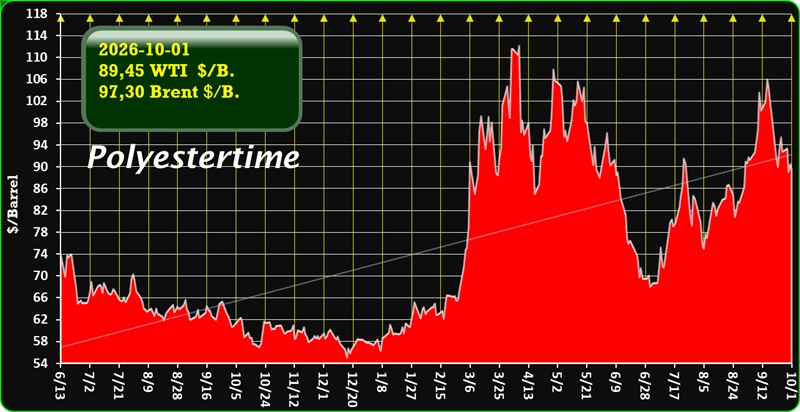
Oil Price Volatility Surges as Brent Holds Above $100 and WTI Nears Triple Digits Amid War Risks and Uncertain Global Demand Outlook
Oil Price Trend Analysis – April 1, 2026
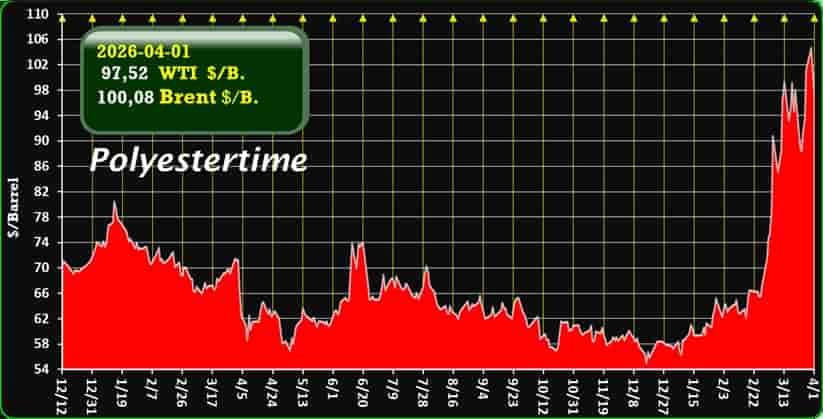
As of April 1, 2026, the oil price remains at elevated levels but marked by extreme volatility. Brent crude is fluctuating in the $95–105 per barrel range, while WTI is trading between $90–100 per barrel, reflecting a market driven as much by geopolitical uncertainty as by underlying fundamentals.
Recent trading sessions highlight just how unstable the oil price environment has become. Brent briefly surged above $100 before retreating below that threshold on renewed hopes of de-escalation in the Middle East conflict . Meanwhile, WTI continues to oscillate just under the $100 mark, showing similar sensitivity to headlines and macro signals.
Current Oil Price Snapshot
| Benchmark | Price Range (April 1, 2026) | Trend | Key Driver |
|---|---|---|---|
| Brent Crude | $95 – $105 | Highly volatile | Geopolitical risk |
| WTI Crude | $90 – $100 | Range-bound | Demand uncertainty |
| Monthly Trend | +30–60% (March rally) | Strong upward | Supply disruption |
Brent has risen significantly over the past month, with gains exceeding 30% and even higher spikes during peak tensions . This sharp rally underscores how quickly the oil price can react to supply shocks.
Key Factors Driving the Oil Price Today
1. Geopolitical Tensions and Supply Disruptions
The dominant force behind the current oil price trend is geopolitics. The ongoing Iran-related conflict has disrupted critical supply routes, particularly around the Strait of Hormuz, a chokepoint for global oil flows.
Recent reports indicate that the conflict has caused one of the largest supply disruptions in modern oil market history, removing millions of barrels per day from global supply . Even as diplomatic signals hint at possible de-escalation, infrastructure damage and lingering instability continue to support elevated prices .
2. OPEC+ and Global Supply Dynamics
OPEC+ production policy remains a crucial variable. While some producers are attempting to increase output, the additional supply has not been sufficient to offset disruptions from the Middle East.
At the same time, emergency reserve releases by major economies have helped cap extreme spikes but have not stabilized the oil price entirely. The structural imbalance between supply and demand persists, especially as global production struggles to keep pace with consumption.
3. Demand Outlook and Economic Signals
On the demand side, the picture is mixed.
- Strong consumption in Asia and emerging markets continues to support the oil price
- However, concerns about slowing growth in Europe and parts of the U.S. are weighing on sentiment
- Manufacturing and industrial data suggest uneven recovery
This dual dynamic creates a fragile equilibrium where any negative macroeconomic data can quickly push prices lower, while supply shocks push them higher.
4. Investor Sentiment and Market Speculation
Investor sentiment is currently one of the most influential short-term drivers of the oil price.
Markets have been reacting sharply to headlines related to war developments, with intraday swings exceeding 10–15% in some cases . Hedge funds and commodity traders are actively repositioning based on geopolitical expectations, amplifying volatility.
For example:
- Optimism about peace talks triggered a sharp drop below $100
- Renewed uncertainty quickly pushed prices higher again
This behavior reflects a market dominated by event-driven trading rather than fundamentals alone.
Oil Price Outlook: Short-Term Direction
Looking ahead, the short-term outlook for the oil price remains uncertain but broadly supported by risk premiums.
Bullish Scenario
- Continued supply disruptions
- Escalation in geopolitical tensions
- Limited spare capacity from OPEC+
In this case, Brent could move toward $110–120, with potential spikes even higher.
Bearish Scenario
- De-escalation of the Middle East conflict
- Improved supply flows
- Weak economic data reducing demand
Under these conditions, Brent could stabilize closer to $90–95, with WTI following slightly below.
What This Means for the Global Economy
The current oil price environment has significant implications:
- Inflation pressure: Higher energy costs feed into transport, food, and industrial prices
- Central bank policy: Volatility complicates interest rate decisions
- Energy transition: Elevated prices may accelerate investments in renewables
- Corporate margins: Energy-intensive industries face rising costs
At the same time, any sustained drop in oil price levels could provide relief to consumers and support economic growth, particularly in energy-importing regions.
Final Takeaway
The oil price as of April 1, 2026 reflects a market in transition—caught between geopolitical instability and uncertain economic fundamentals. While prices remain elevated, the direction in the coming weeks will depend heavily on political developments rather than traditional supply-demand mechanics.
For now, volatility is the defining feature of the oil price landscape, and market participants should prepare for continued rapid shifts driven by global events.
More….