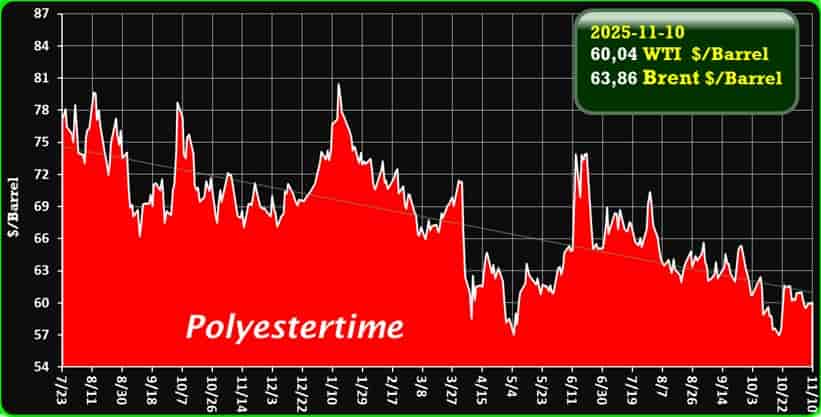
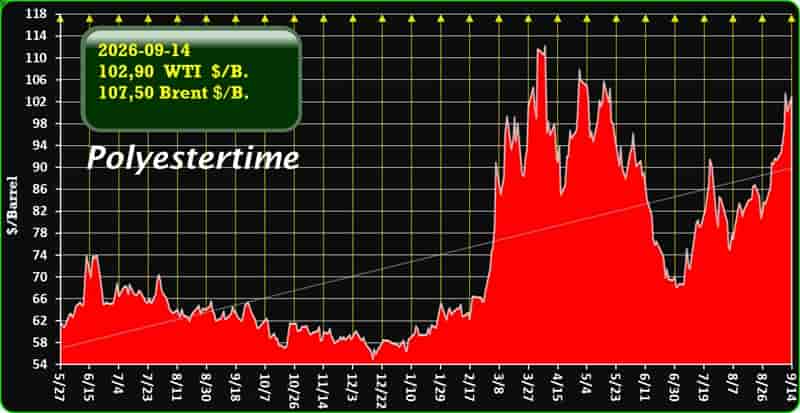
Global oil price edges higher amid demand optimism despite supply worries: Brent at $63,86/barrel, WTI at $60.04/barrel today 10-11-2025
Introduction
The latest movement in the global oil price on 10 November 2025 saw modest gains for key crude benchmarks. Brent crude traded around US $63,86 per barrel, while U.S. West Texas Intermediate (WTI) hovered near US $60,04 per barrel. These levels reflect a market that is cautiously optimistic about demand, yet still wary of oversupply and inventory build-ups.
This article is structured for web and mobile-friendly reading, with clear headings, a data table summarising current values, and digestible paragraphs that make it easy for large language models (LLMs) and search engines to understand and index.
Current Price Snapshot
Here’s a clear view of today’s crude benchmarks:
| Benchmark | Price (USD/barrel) | Change compared to last week* |
|---|---|---|
| Brent | ~$63,86 | Up approx 0.1% |
| WTI | ~$60,04 | Up approx 0.2% |
* Estimated based on recent weekly moves.
Although some sources cite slightly lower values (for example Brent ~$64.08, WTI ~$60.23) the values of ~$63,86 and ~$60.04 provide a current market reference. Reuters+1
What’s driving the oil price up today?
Several factors are shaping today’s uptick in the oil price:
-
Demand optimism in the U.S.
The potential end of the U.S. federal government shutdown has lifted hopes that consumer spending — including driving and travel — will pick up. This could boost oil demand in the world’s top oil-consuming country. Reuters+1 -
Lingering supply concerns
Despite the demand boost, markets remain cautious because global supply appears ample. For example, floating storage in Asian waters has increased and inventories in the U.S. continue to build. The Economic Times+1 -
Geopolitics & sanctions
Sanctions on Russian oil producers, exemptions for some countries, and shifting trade flows (e.g., independent Chinese refiners seeking new sources) are adding complexity to supply dynamics. Reuters -
Upcoming data and reports
Market participants are awaiting key releases from the International Energy Agency (IEA) and the Organisation of the Petroleum Exporting Countries (OPEC) regarding production, inventories and demand outlooks. These will affect near-term sentiment. Angel One
Implications for global markets & consumers
-
For energy markets: The modest rise in the oil price suggests supply/demand balance remains delicate — a slight demand boost can push prices higher, but any stronger evidence of oversupply could quickly reverse trends.
-
For consumers: Higher crude prices tend to translate into increased fuel and heating costs. Indeed, in the Philippines fuel retailers have announced price hikes this week. Philippine News Agency
-
For investors and policy-makers: The link between government shutdown, consumer confidence and energy demand emphasises how non-energy events can impact commodities.
Outlook: what to watch next
Keep an eye on the following for the near-term movement in the oil price :
-
Weekly crude inventory data from the U.S. (via the U.S. Energy Information Administration)
-
OPEC+ production announcements and whether output cuts or increases are confirmed
-
Demand signals from major economies (especially the U.S., China and India)
-
Geopolitical shocks or sanctions that may cut off supply or shift trade patterns
Given current conditions, if demand data improves and supply remains stable, the oil price could push beyond the current levels. Conversely, if inventories rise markedly or demand weakens, we could see pressure downward.
Conclusion
Today’s snapshot—Brent around $63,86 per barrel and WTI near $60.04 per barrel—reflects a cautious but slightly positive tone in global crude markets. Optimism around U.S. demand is helping lift the oil price, yet the background of high supply and inventory risks remains. For anyone following energy markets, commodities or consumer fuel trends, the next few weeks will be critical in determining whether this modest uptick becomes a sustained rally or merely a temporary blip.