Global oil price edges higher on supply-disruption fears despite looming surplus: key implications for markets and consumers 14-11-2025
Oil price – Introduction
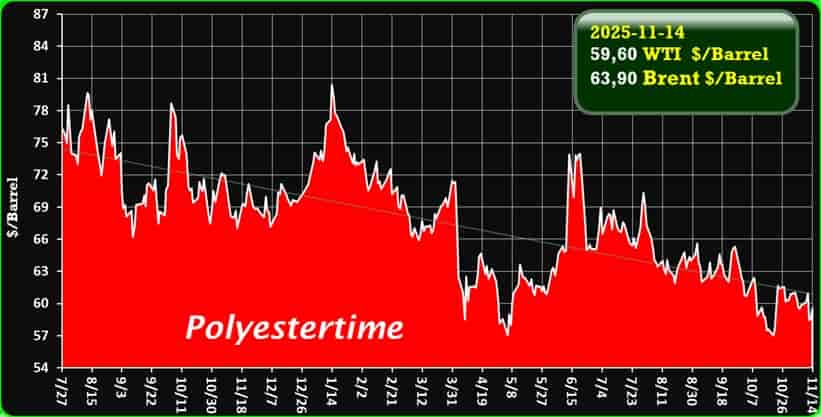
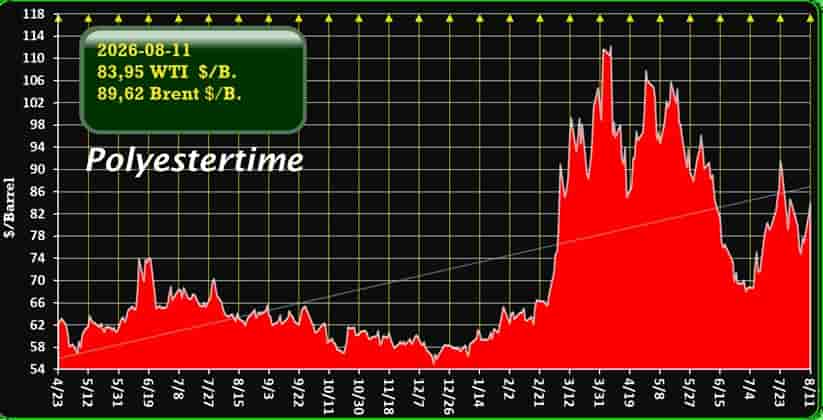
As of 14 November 2025, the global oil price landscape sees two major benchmarks at the following levels:
| Benchmark | Price (per barrel) |
|---|---|
| Brent crude | $63.90 |
| WTI (U.S. benchmark) | $59.60 |
These figures reflect the evolving tug-of-war between supply-side concerns (geopolitical disruption, sanctions) and demand/supply fundamentals (inventory builds, surplus expectations).
What’s driving the oil price today?
1. Supply disruption risks
A drone attack by Ukrainian forces on a Russian oil depot near Novorossiysk raised concerns of disrupted flows from a key export hub. That triggered a roughly 2% rise in crude prices, as traders weighed the interruption risk. Reuters+2Armenpress+2
2. Imminent sanctions on Russia
Upcoming sanctions on major Russian oil firms (such as Lukoil) are expected to tighten certain export channels, adding a potential upside to oil price. ETEnergyworld.com+1
3. Surplus warnings from agencies
On the flip side, the International Energy Agency (IEA) warns of a growing global oil surplus in 2026 – upwards of 4 million barrels per day – driven by rising supply and stagnant demand. Reuters+2Angel One+2
4. Inventory build-up in the U.S.
The U.S. Energy Information Administration (EIA) reported a crude oil stock build of ~6.4 million barrels in the week to 7 November – far above expectations – signalling weaker demand and putting downward pressure on the oil price. ETEnergyworld.com+1
5. Macro and market sentiment
Global equities fell as expectations for a near-term interest-rate cut by the Federal Reserve eased, yet the crude price jumped on safe-haven and supply-risk flows. SWI swissinfo.ch+1
Table: Key influences on oil price today
| Driver | Effect on oil price | Notes |
|---|---|---|
| Supply disruption (Russia) | Upward | Raises risk premium |
| Sanctions on exporters | Upward | Tightens export flows |
| Global surplus fears | Downward | Oversupply concern |
| US inventory build | Downward | Signals weak demand |
| Macro-economics / interest rates | Mixed | Risk sentiment affects flows |
Implications: what it means for you and markets
-
For consumers/fuel prices: With the oil price at these levels, downstream fuel costs are likely to edge higher in regions sensitive to crude-import cost. Indeed, in some markets pump prices are expected to rise. ABS-CBN+1
-
For investors and companies: Energy-sector firms may benefit from disruption-driven price spikes, but the longer-term surplus outlook warns caution.
-
For policy-makers: Balancing energy security and managing inflationary spill-overs from higher oil costs will be key.
-
For global growth: If the oil price rises further, cost of production and transportation across economies may increase, dampening growth. Conversely, a price crash could strain oil-exporting countries.
Outlook: where could the oil price head from here?
Given the mix of positive (disruption risk) and negative (surplus, inventories) drivers:
-
If disruption risks materialise (e.g., sanctions bite, export flows jammed) the crude price could break through $65–70 for Brent.
-
If surplus concerns dominate and demand remains weak, the crude price could drift back toward or below $60 for Brent and $55 for WTI. The Economic Times+1
-
Monitoring: sanctions developments, Russian export data, US inventory flows, OPEC+ decisions and global demand outlook.
Conclusion
On 14 November 2025 the oil price stands at $63.90 for Brent and $59.60 for WTI. While supply-side risks (export disruptions, sanctions) are currently providing support to the oil price, underlying fundamentals such as inventory build and surplus warnings are working in the opposite direction. For consumers, markets and policy-makers alike, the coming weeks will be crucial as the balance between these forces plays out. Monitoring key developments will be essential to anticipate the next move in the oil price.