Oil Price Slides Sharply as Brent Nears $66 and WTI $62 on De-Escalation Signals, Ample Supply and Softer Global Demand February 2, 2026
Oil Price Trend Today: Brent and WTI Under Pressure
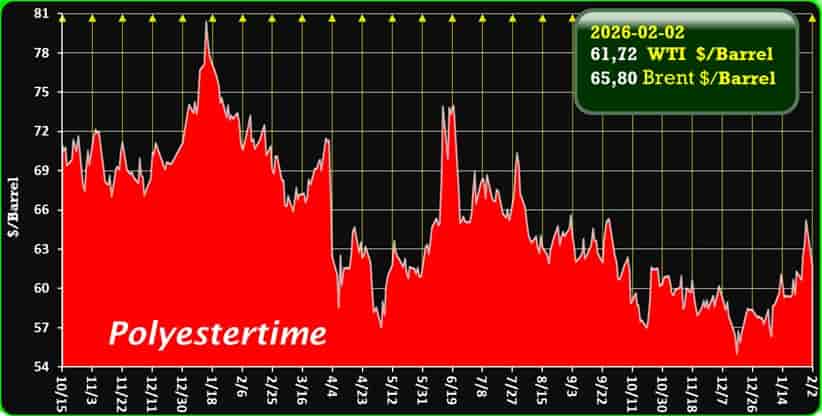
The oil price moved lower on February 02, 2026, reflecting a broad pullback across energy markets. Brent crude hovered around $66.20 per barrel, while West Texas Intermediate (WTI) traded near $62.10 per barrel, as traders reacted to easing geopolitical risk, persistent supply concerns and cautious macroeconomic signals.
The decline follows fresh headlines suggesting a de-escalation in US-Iran tensions, which reduced the geopolitical risk premium embedded in crude prices. Combined with signs of ample global supply and muted demand growth, the market tone has turned decisively cautious.
Current Crude Oil Prices Snapshot
| Benchmark | Price (Feb 02, 2026) | Daily Trend |
|---|---|---|
| Brent Crude | ~$66.20 / barrel | ▼ Lower |
| WTI Crude | ~$62.10 / barrel | ▼ Lower |
Prices reflect intraday trading levels reported across major commodity exchanges.
Why the Oil Price Is Falling Today
1. Easing Geopolitical Tensions
One of the most immediate catalysts for today’s oil price decline has been rhetoric signaling a cooling of tensions between the United States and Iran. Markets had previously priced in a higher risk premium amid fears of supply disruptions in the Middle East.
As diplomatic signals improved, traders unwound those risk positions, leading to a sharp pullback in crude. This reaction underscores how sensitive oil markets remain to geopolitical headlines, particularly those affecting major shipping routes and production hubs.
2. Global Supply Remains Abundant
Despite ongoing geopolitical uncertainty, global crude supply remains comfortable. Production from non-OPEC producers — notably the United States — continues at elevated levels, offsetting any potential supply risks elsewhere.
OPEC+ has so far refrained from announcing additional output cuts, opting instead for a wait-and-see approach. This stance has reinforced the perception that the market is well supplied, limiting upside potential for the oil price in the near term.
3. Demand Growth Signals Are Softening
On the demand side, economic data from major consuming regions has been mixed. While the US economy shows resilience, global growth expectations remain moderate, particularly in parts of Europe and emerging Asia.
China’s demand recovery has been uneven, and refiners have shown less urgency to secure additional barrels at current price levels. This combination of factors has kept demand expectations restrained, weighing further on crude prices.
4. Investor Sentiment Turns Risk-Averse
Investor sentiment across commodity markets has also cooled. A stronger US dollar and broader volatility in equities have reduced appetite for risk assets, including crude oil.
In this environment, hedge funds and short-term traders have trimmed long positions, accelerating the downward move in the oil price. The shift highlights how macro-financial factors now play a central role alongside physical supply-demand dynamics.
OPEC+ Strategy: Supportive but Cautious
OPEC+ remains a key stabilizing force, but the group faces a delicate balancing act. Cutting production aggressively could support prices but risks ceding market share to non-OPEC producers.
For now, the alliance appears focused on price stability rather than price maximization, a strategy that aligns with preventing excessive volatility while monitoring demand trends into the second quarter of 2026.
Short-Term Oil Price Outlook
Looking ahead, the oil price is likely to remain range-bound in the short term.
Key factors to watch:
-
Future OPEC+ policy announcements
-
Inventory data from the US and OECD countries
-
Macroeconomic indicators affecting fuel demand
-
Any renewed geopolitical escalation
If supply remains ample and geopolitical risks stay contained, Brent could test the $63–65 range, while WTI may hover near $60–61. Conversely, any unexpected supply disruption could quickly reverse sentiment and trigger a rebound.
What This Means for the Global Economy and Energy Markets
Lower oil prices offer short-term relief for inflation, particularly for energy-importing economies. Reduced fuel and transport costs can support consumer spending and ease pressure on central banks.
However, prolonged weakness in the oil price may discourage upstream investment, potentially tightening supply later in the decade. For energy markets, the current environment reinforces the importance of diversification, hedging strategies and efficiency improvements.
Final Takeaway
As of February 2, 2026, the oil price reflects a market recalibrating to lower geopolitical risk, comfortable supply levels and cautious demand expectations. While volatility remains a defining feature, the near-term outlook suggests limited upside unless fundamentals shift decisively.
For policymakers, investors and energy consumers alike, the current trend highlights how quickly sentiment can change — and why oil remains one of the most closely watched indicators of global economic health.
More…