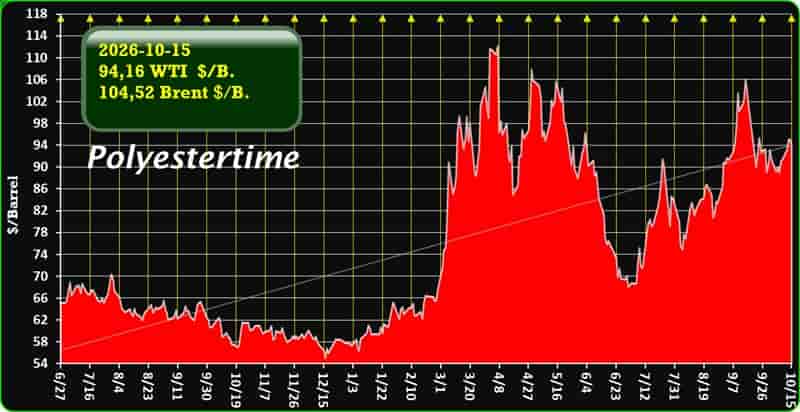
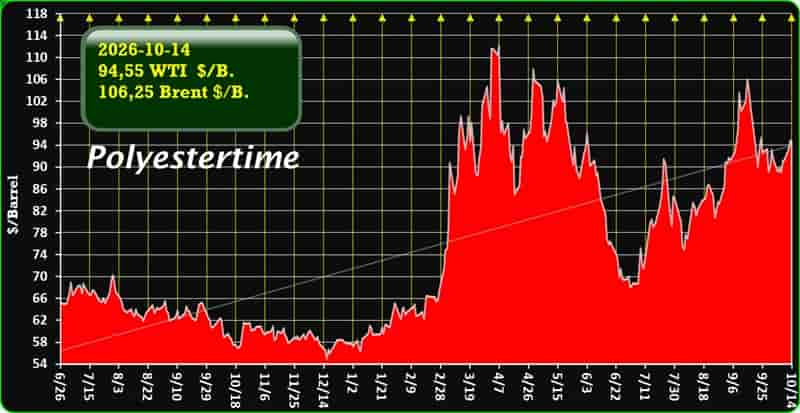
Global Oil Price Climbs Near $71 as Tensions Persist — How Brent & WTI Trends Signal Market Jitters, Supply Risks and Economic Impacts in Early 2026 19-02-2026
Today’s Oil Price Snapshot: Brent and WTI
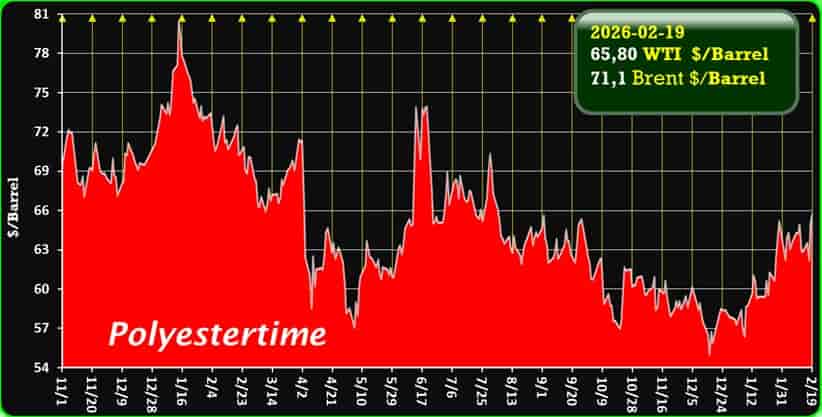
As of February 19, 2026, global oil benchmarks are trading with noticeable gains:
| Benchmark | Approx. Price (USD per Barrel) | 24-Hour Change | Source |
|---|---|---|---|
| Brent crude | ~ 70.95 $ | Slight increase | TradingEconomics/market data |
| WTI crude | ~ 65.69 $ | Mild upward drift | TradingEconomics/market data |
After a recent more than 4 % rally over two sessions, oil prices have found support, demonstrating sensitivity to geopolitical developments and supply data.
What’s Driving the Oil Price Right Now?
The current oil price trend reflects the interplay of several key market forces:
📈 1. Geopolitical Tensions Amplifying Risk Premiums
The dominant near-term influence on crude prices is escalating geopolitical risk, especially tensions between the U.S. and Iran. Recent developments include:
-
Iran temporarily closing the Strait of Hormuz for military drills — a chokepoint for roughly 20 % of global oil shipments — which underlines the vulnerability of supply routes.
-
Prolonged U.S.–Iran talks with limited progress and warnings that military action remains an option if diplomacy falters.
These geopolitical factors embed a risk premium into global oil price expectations, meaning markets are pricing in potential supply disruptions even without an actual output shock.
🛢 2. Supply and Inventory Signals
Another backbone for recent price behavior comes from U.S. supply data:
-
The American Petroleum Institute (API) reported an unexpected draw in U.S. crude inventories, which typically signals either stronger refinery demand or supply constraints.
However, despite periodic draws, global supply remains substantial. Analysts widely observe that production levels across major exporters — including OPEC+ members — continue to outpace demand growth, a factor traditionally bearish for the oil price.
🌍 3. OPEC+ Actions and Market Balance
OPEC+ policy decisions remain central to global oil market dynamics:
-
Recent reports suggest OPEC+ is maintaining production plans into early 2026, which places subtle pressure on price upside absent a major supply shock.
-
Forecasts continue to point to inventory builds over 2026, which, if realized, would dampen price momentum.
Understanding OPEC+ supply signals is essential for anticipating turning points in the oil price.
💹 4. Investor Sentiment and Caution
Market sentiment reflects a “risk-on, risk-off” pricing pattern: traders are quick to bid up oil on geopolitical tension but equally ready to pare gains on signs of diplomatic progress.
-
Instances of progress in U.S.–Iran talks have temporarily softened prices as markets recalibrate risk premia.
-
Despite recent geopolitical surprises, investors remain cautious about longer-term demand fundamentals and broader economic growth prospects.
This sentiment ecosystem underscores why oil price volatility remains elevated.
Broader Economic and Market Implications
A sustained move above key price thresholds — e.g., Brent above $70 — carries implications beyond energy markets:
-
Inflationary pressure: Higher crude often feeds into transportation and manufacturing costs, influencing CPI metrics.
-
Energy sector profits: Upward oil price shifts benefit upstream producers but also influence capital allocation and risk frameworks.
-
Consumer impact: Persistent price strength can filter down to gasoline and heating fuel costs, affecting households globally.
The nexus between crude benchmarks and economic indicators underscores oil’s macroeconomic influence.
What’s Next? Short-Term Outlook for Oil Price
Looking forward, the oil price environment in the next few weeks will likely be shaped by:
🧭 Key Short-Term Sentiment Drivers
-
Diplomatic developments in Middle East negotiations.
-
Inventory reports from EIA and API influencing perceptions of supply tightness.
-
OPEC+ communication around meeting schedules and supply adjustments.
📊 Analyst Forecasts
Economists and commodity strategists generally signal a balanced but slightly bearish bias over 2026, with many forecasts projecting Brent and WTI prices moderating if oversupply persists and geopolitical risks recede.
However, even limited supply disruptions (real or perceived) could trigger renewed upward pressure, especially given market sensitivity to geopolitical risk.
Conclusion
Today’s oil price trend — with Brent near ~$70.95 and WTI around ~$65.69 — reflects the tug-of-war between geopolitical tensions, supply/demand fundamentals, and investor psychology. While robust demand and OPEC+ discipline cushion prices, underlying market conditions suggest continued volatility.
In the short term, traders and energy strategists should watch geopolitical developments and inventory reports closely. For the global economy, oil price stability supports growth and inflation control, whereas renewed spikes could reverberate through broader markets and consumer prices.
More…