“Oil Price Today on October 13, 2025: Surging Market Trends, Key Drivers, and What’s Boosting Investor Confidence Right Now”
Oil Price
Introduction
The oil price continues to be a focal point of global markets, reacting to geopolitical shifts, supply & demand dynamics, and macroeconomic signals. On October 13, 2025, Brent crude and U.S. WTI both saw a modest rebound from recent 5-month lows amid renewed optimism around U.S.–China diplomacy and easing geopolitical risk in the Middle East. In this article, we’ll break down where the oil price stands today, why it’s moving, and what to watch next.
Current Oil Price Snapshot (October 13, 2025)
-
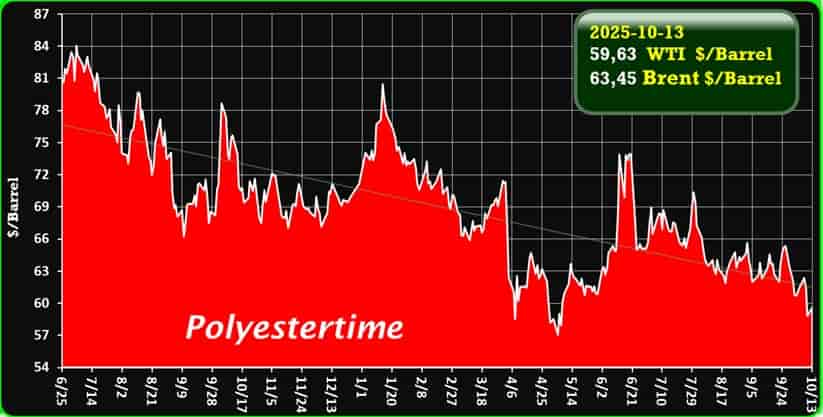
Brent crude rose by $0.92 to $63.65 per barrel, reversing some of last week’s sharp decline. Reuters
-
U.S. West Texas Intermediate (WTI) crude gained $0.89, trading around $59.79 per barrel. Reuters
-
Earlier in the week, oil had plunged to its lowest levels in five months, with Brent falling ~3.82% and WTI ~4.24%. Reuters+2Reuters+2
-
Some analysts see this rebound as tentative, influenced by hope for easing tensions between the U.S. and China. The Economic Times+4Reuters+4Bloomberg+4
That said, the market remains sensitive: a mix of demand hesitation, oversupply risks, and trade policy shifts still loom large.
Key Drivers Behind Today’s Moves
1. U.S.–China Trade Tension & Diplomatic Hopes
The sharp price drop earlier stemmed largely from fears that a renewed U.S.–China trade war would dampen global demand. Reuters+5Reuters+5Reuters+5
But Monday’s rebound is underpinned by speculation of a possible meeting between President Trump and China’s President Xi at this month’s APEC forum. Reuters+2Bloomberg+2
If trade tensions ease, that could restore some of the demand expectations baked into the oil price.
2. Geopolitics & Risk Premium
The ceasefire between Israel and Hamas has taken some of the immediate geopolitical premium off oil markets. Reuters+3Reuters+3Reuters+3
Some analysts estimate that this peace plan could lower the oil price risk premium by 1–2 % given reduced Middle East volatility. ETEnergyworld.com
Still, deeper or longer-lasting conflicts could reignite risk premia, so this is a volatile factor to monitor.
3. OPEC+ Strategy & Supply Discipline
OPEC+ has recently shifted to a more cautious posture. The group increased output modestly—137,000 barrels per day for November—rather than aggressively expanding. DailyForex+7Financial Times+7The Times of India+7
This restrained move helped ease fears of an oversupply glut. Reuters+2Reuters+2
Nevertheless, non-OPEC producers (notably in the Americas) have been ramping output, tightening OPEC’s buffer as a “shock absorber.” FinancialContent+3Reuters+3S&P Global+3
4. Inventory Trends & Stock Builds
Globally, oil inventories are rising as production outpaces demand growth. IEA+3U.S. Energy Information Administration+3S&P Global+3
China, in particular, has been stockpiling crude, pulling barrels out of the market and helping soften downward pressure. U.S. Energy Information Administration
In the U.S., declines in crude stocks (especially at the Cushing hub) and fuel inventories gave a bit of support to price. Reuters+3dtnpf.com+3OilPrice.com+3
But with projected inventory growth of ~2.6 million barrels/day in Q4 2025, downward pressure remains a key tail risk. S&P Global+1
5. Demand Concerns & Macroeconomic Signals
Demand is the wildcard. Sluggish global growth, industrial data, or signs of a weakening global economy could dent demand forecasts, which in turn would pressure the oil price. Reuters+3dtnpf.com+3FinancialContent+3
There is also a U.S. government shutdown threat, which some analysts cite as a factor dampening confidence and oil demand outlook. Reuters+1
Technical & Forecast Observations
-
According to DailyForex, WTI is expected to trade in a $60–66 range during October 2025. DailyForex
-
Some weekly forecasts expect further slide, especially if macro or inventory headwinds intensify. DailyForex
-
The EIA’s Short-Term Energy Outlook suggests Brent may average around $62 per barrel in Q4 2025. U.S. Energy Information Administration
-
Over 2026, the EIA sees sustained downward pressure—projecting average Brent of ~$52 if supply keeps expanding. S&P Global
So while today’s modest bounce is encouraging, the structural narrative leans toward sideways or modestly softer pricing over the medium term.
Implications for Stakeholders
Oil Producers & Exploration & Production (E&P) Firms
At ~$63–$64 per barrel, margins are tighter. Some firms are cutting back on growth investment, slowing acquisitions, or reviewing capital expenditures. RBN Energy
Dividend payments remain a top priority, so growth projects may take a back seat. RBN Energy
Refiners, Traders & Midstream
Refiners need stable crack spreads (difference between crude input cost and product output revenues). Fluctuating oil prices make that tricky.
Midstream operators benefit from volume stability, though weak demand or production cuts upstream could affect utilization and throughput.
Importers & End Consumers
For oil-importing nations, softness in the oil price helps reduce energy import bills and alleviates inflation pressures. But volatile swings can challenge budgets and fuel subsidy planning.
In regions with fuel subsidies or regulated domestic fuel markets, governments will closely monitor crude trends to balance budgets and social stability.
Investors & Market Participants
The rebound may attract short-term buyers, but guard against “false dawns.” The interplay of trade war risk, supply growth, and demand signals will dictate where momentum lies next.
Longer-term investors should consider structural themes: the energy transition, carbon regulation, and alternative energy investments.
What to Watch in the Coming Days & Weeks
| Indicator / Event | Why It Matters | Potential Impact on Oil Price |
|---|---|---|
| U.S.–China diplomacy (meetings, announcements) | Could ease demand fears | Upward push if positive outcomes |
| OPEC+ decisions & production announcements | Could alter supply balance | Surprise hikes → downward; restraint → support |
| U.S. & China inventory / import data | Reflects demand & supply balance | Larger than expected builds → bearish; draws → bullish |
| Macroeconomic data (PMIs, industrial output, GDP) | Demand signal | Weak data → downward pressure |
| Geopolitical incidents (Middle East, Russia, sanctions) | Risk premium adjustments | Heightened risk → premium built in; calm → discount |
Staying alert to these levers will help you interpret where the oil price might head next.
Conclusion
As of October 13, 2025, the oil price is showing signs of recovery after a steep drop. Brent is back above $63, and WTI is near $59–60. That said, the rebound is delicate. U.S.–China trade risk, supply dynamics from OPEC+ and non-OPEC producers, rising global inventories, and demand uncertainty are all tugging in different directions.
Chemical Recycling of Automotive Polyamides: BASF’s Breakthrough at K2025