Bottle-to-Bottle – Extrupet Expands PET Bottle-to-Bottle Recycling with New Cape Town Plant 13-10-2025
Bottle-to-Bottle
Extrupet Expands PET Bottle-to-Bottle Recycling with New Cape Town Plant
Overview: A Big Win for Circular Recycling in South Africa ♻️
South Africa’s plastics recycling industry received a major boost on October 6, 2025, with the opening of Extrupet’s second PET bottle-to-bottle recycling facility — and the first of its kind in the Western Cape.
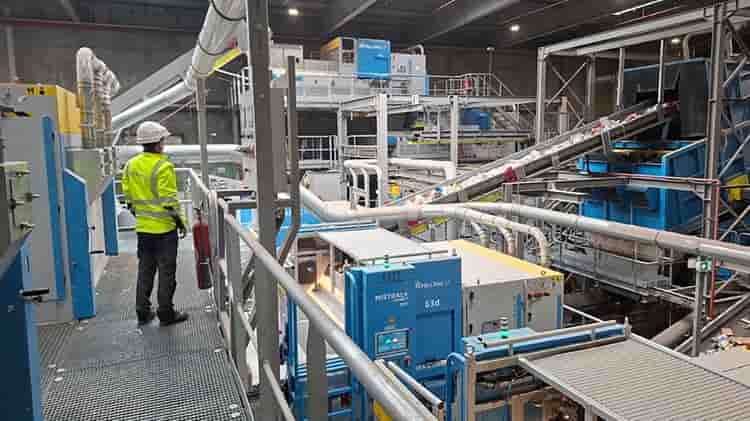
The new plant, located at Extrupet’s Propet site in Cape Town, officially began commercial production in March 2025. It’s designed to process post-consumer PET bottles into 15,000 tonnes of food-grade recycled PET (rPET) each year. That’s a major step toward closing the bottle-to-bottle recycling loop and supporting a sustainable circular economy across the country.
Speaking at the launch, Dr Dion George, Minister of Forestry, Fisheries and the Environment, emphasized that plastic pollution is not just an environmental issue but also a public health threat that harms communities and ecosystems. He reaffirmed the government’s commitment to building a regulatory framework that supports responsible plastic management throughout its life cycle — from design and production to consumption, reuse, and disposal.
“This facility is more than bricks and machinery,” said Dr George. “It’s a symbol of how South Africa can turn a crisis into an opportunity — transforming plastic waste into jobs, innovation, and inclusive growth through bottle-to-bottle recycling.”
He also highlighted PET’s dual role: it’s both a valuable recyclable material and a critical source of income for thousands of South Africans who work as waste pickers or run small recycling businesses.
“If we collect PET properly, it supports livelihoods,” he said. “If we don’t, it ends up in landfills, rivers, and oceans. The choice is ours — and this facility tilts the balance toward opportunity.”
Expanding National Recycling Capacity
Extrupet’s bottle-to-bottle journey began in Johannesburg back in 2009, with new lines added in 2014 and 2020. The new Cape Town plant represents phase one of a two-stage expansion plan that will double the company’s national rPET output once completed.
According to Chandru Wadhwani, Extrupet’s joint managing director, this new line increases total output from 30,000 to 45,000 tonnes in 2025. The second phase, expected next year, will raise production to 60,000 tonnes of food-grade rPET nationwide — all meeting international quality standards.
Wadhwani describes PET as a truly circular material — one of the few plastics that can be recycled safely into new food-grade packaging through bottle-to-bottle technology. This closed-loop process keeps valuable material in circulation longer, reducing waste and reliance on virgin plastics.
“With our increased rPET capacity,” he explained, “we can process more plastic waste and strengthen South Africa’s position as a bottle-to-bottle circular economy leader in Africa and globally. This new facility stands as a beacon of hope for sustainable innovation.”
Policy, Partnership, and Purpose
The Cape Town facility reflects a successful blend of policy alignment and private-sector initiative. While international negotiations on a global plastics treaty have slowed, South Africa continues to lead regionally by embedding sustainability in law and practice.
Through the Extended Producer Responsibility (EPR) framework, the country now requires producers and brand owners to manage their packaging throughout its full life cycle — from design and production to collection and bottle-to-bottle recycling.
Wadhwani noted that even though the United Nations has yet to finalize a global plastics agreement, progress within South Africa remains strong thanks to government-industry collaboration.
“Because we don’t yet have a global treaty,” he said, “it’s up to individual countries and companies to act. EPR gives us the legal and operational tools to make bottle-to-bottle recycling happen.”
Collaboration That Drives Impact
Extrupet’s achievements are closely tied to its two-decade partnership with Petco, South Africa’s producer responsibility organization for PET packaging. Together, they’ve built one of the most effective bottle-to-bottle collection and recycling networks on the continent.
Today, about 70% of PET beverage bottles placed on the South African market by Petco members are recycled — a figure that continues to climb. This level of recovery demonstrates that coordinated efforts between producers, recyclers, and government can deliver tangible circular outcomes.
Petco CEO Telly Chauke emphasized the strategic importance of infrastructure investments like this new plant. “Facilities such as these ensure the availability of food-grade rPET at scale for local producers,” she said. “They also help companies meet the growing regulatory demands for recycled content in their packaging.”
The new Western Cape facility is especially significant for the agricultural sector. Many export-oriented producers must now meet European Union requirements mandating that punnets and trays contain at least 25% certified rPET. Having a regional bottle-to-bottle supplier cuts logistics costs and ensures consistent supply — strengthening competitiveness in export markets.
Building Regional Circular Value Chains
Petco’s Chauke also highlighted how the new plant supports regional economic balance. Previously, most PET bottles collected in the Western Cape had to be transported hundreds of kilometers to Gauteng for processing. Now, more of that material can be recycled locally — reducing transport emissions, creating jobs, and supporting local entrepreneurs.
“For recycling to succeed, the economics must work,” she said. “Facilities in key regions like the Western Cape make bottle-to-bottle recycling more efficient and sustainable.”
The investment not only improves recycling infrastructure but also stimulates downstream demand for rPET — encouraging brands to adopt higher recycled content in packaging and helping South Africa move toward a truly circular plastics economy.
Consumers, too, play a key role. Petco continues to encourage households to separate recyclables from general waste, ensuring a cleaner, higher-quality feedstock for processing plants like Extrupet’s bottle-to-bottle operation.
The Bigger Picture: Why Bottle-to-Bottle Matters
Bottle-to-bottle recycling is more than a technical process — it’s the heart of a circular plastics system. By reprocessing post-consumer bottles into new, food-safe products, Extrupet extends the lifespan of materials that would otherwise become waste.
Each tonne of rPET produced through this bottle-to-bottle system represents a tangible reduction in carbon emissions, energy use, and raw material extraction. It also reduces dependence on imported virgin plastic resin, supporting national resource security.
The expansion aligns with global sustainability goals such as the UN’s Sustainable Development Goals (SDGs), particularly those addressing responsible consumption, climate action, and economic inclusion.
A Model for Inclusive Growth and Innovation
Beyond environmental benefits, bottle-to-bottle recycling creates inclusive economic opportunities. The sector supports thousands of informal waste pickers, community recyclers, and transporters — people whose livelihoods depend on strong, transparent value chains.
As South Africa’s recycling infrastructure scales up, so do training and entrepreneurship opportunities, from small-scale collectors to high-tech plant operators. The ripple effects include job creation, skills transfer, and new investments in local manufacturing.
Extrupet’s model shows that circular innovation can also be socially inclusive. By integrating informal collectors into formal supply chains and investing in community partnerships, the company strengthens both sustainability and social equity.
Looking Ahead: Doubling Down on Circular Progress
With this expansion, Extrupet is positioning itself not just as a recycler but as a catalyst for systemic change. Its focus on efficiency, innovation, and partnership ensures the PET value chain remains resilient in the face of regulatory and market shifts.
Over the next few years, the company plans to continue investing in technology upgrades, renewable energy integration, and digital tracking systems that trace PET from collection to new bottle-to-bottle packaging. Such transparency helps both regulators and consumers trust the circular claims attached to rPET products.
“When industry, government, and consumers work together,” Wadhwani said, “we can transform waste into opportunity — one bottle at a time.”
Conclusion: Closing the Loop in Cape Town
Extrupet’s new Cape Town plant represents a defining moment for South Africa’s recycling landscape. It strengthens regional infrastructure, meets international standards, and demonstrates how partnership and policy can turn environmental challenges into growth opportunities.
By expanding its bottle-to-bottle capacity, Extrupet helps close the PET loop — transforming waste into a renewable resource that fuels jobs, innovation, and sustainability. This model offers a blueprint for other regions seeking to balance economic growth with environmental responsibility.
In every sense, the Cape Town facility proves that the future of recycling is circular, collaborative, and full of potential.
Chemical Recycling of Automotive Polyamides: BASF’s Breakthrough at K2025
More…