Recycled Plastics Italy: First Consumption Decline Signals Pressure on the Supply Chain
Recycled Plastics Italy: First Consumption Decline Signals Pressure on the Supply Chain
Italy’s recycled plastics market has entered a more difficult phase. After several years of relative stability, the volumes of recycled polymers used by Italian converters are expected to fall in 2025, marking the first decline in a long period of growth and consolidation.
The latest IPPR quantitative analysis, prepared by Plastic Consult, estimates that Italian industry used about 1.318 million tonnes of recycled plastic in 2025, down slightly from 2024. IPPR describes the fall as modest, but significant because it comes after recycled plastics had become a structural part of Italian manufacturing.
Why the decline matters
The drop is not large in percentage terms, but it sends a clear signal: the recycling chain is no longer being pulled forward automatically by demand.
For years, recycled plastics benefited from regulatory pressure, sustainability commitments and the post-Covid rebound in industrial activity. Now, the market is more selective. Buyers are more cautious, end-use demand is weaker, and virgin polymers remain highly competitive in several applications.
This is not just an Italian issue. In early July 2026, OPIS reported that the European recycled plastics spot market remained subdued in June, with limited trading activity, weak demand across most recycled polymer grades and pressure from competitively priced virgin materials and lower-cost imports.
Packaging remains the strongest outlet
Packaging is still the main destination for recycled plastics in Italy. According to IPPR, it accounts for around 40% of total consumption and was the main application area still growing in 2025.
This resilience is not surprising. Packaging is the sector most directly exposed to recycled-content targets, brand sustainability policies and consumer scrutiny. PET, in particular, continues to benefit from demand in beverage bottles and from European rules requiring recycled content in plastic bottles. IPPR also identifies PET as the polymer with the most significant growth in its 2025 analysis.
The picture is less positive in sectors tied to durable and semi-durable goods. Construction, technical articles, household goods and other industrial applications are more exposed to weak manufacturing demand. When companies reduce production or delay purchasing, recycled material demand immediately feels the impact.
PET improves, polyolefins remain under pressure
The Italian data show a divided market. PET is performing better because it is supported by regulation and by relatively clear demand from packaging. PVC also appears more stable than other polymer families.
Polyolefins, by contrast, remain under stronger pressure. These materials are widely used, but they compete directly with virgin polyethylene and polypropylene. When virgin polymers are cheap, recycled alternatives struggle unless buyers have a regulatory, technical or reputational reason to choose them.
This is one of the central problems for recyclers: recycled plastic is no longer competing only on environmental value. It must also compete on price, quality, consistency, certification and availability.
The pressure from virgin plastic and imports
The recycled plastics chain is facing a difficult combination of weak demand, cost pressure and global competition.
IPPR has warned that the market is being affected by weak industrial demand, the competitiveness of virgin raw materials and uncontrolled imports from outside the EU.
OPIS also reported that European recyclers are facing margin pressure from competitively priced virgin polymers and an influx of lower-cost imports. Its July 6 market update said buyers were purchasing cautiously and delaying orders in expectation of further price decreases.
For recyclers, this creates a structural problem. Collection, sorting, washing and reprocessing carry significant operating costs. If the final market does not reward recycled content, many producers are squeezed between high processing costs and customers looking for cheaper material. recycled plastics Italy
Recycling is no longer a niche, but growth is not guaranteed
The most important takeaway from the IPPR data is not that recycled plastics are disappearing from Italian industry. They are not.
On the contrary, recycled polymers are now embedded in many supply chains. IPPR says the 2025 data confirm that recycling is no longer a niche, but a stable component of industrial supply.
The problem is different: stability is not the same as growth.
To move from resilience to expansion, the sector needs stronger and more predictable demand. That means clear rules, credible certification, better traceability, public and private procurement policies, and more industrial applications where recycled content is treated as a strategic material rather than a secondary option.
What could support recovery
A broad recovery is not yet visible, but some areas may perform better than others.
The most likely growth will come from sectors where regulation creates demand. Packaging is the obvious example. Recycled PET for beverage bottles has a clearer market because companies must meet recycled-content obligations and because the material has established collection and processing channels.
Other sectors may recover more slowly. Construction, technical goods, automotive-related applications and household products depend more heavily on general industrial demand. If those markets remain weak, recycled plastics will struggle to grow there.
A selective recovery is therefore more realistic than a rapid rebound across the whole market.
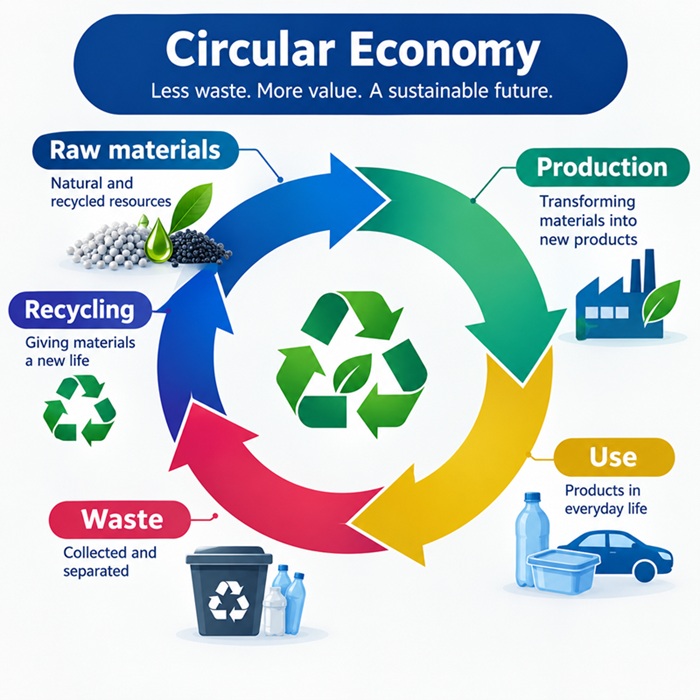
What this means for Italy’s circular economy
Italy has built a significant recycled plastics supply chain, but the 2025 decline shows that circular economy targets cannot rely on voluntary demand alone.
If recycled materials are expected to replace virgin polymers at scale, the market needs stronger alignment between environmental policy and industrial economics. Recyclers need demand they can plan around. Converters need reliable quality and certification. Brands need transparent claims that can withstand scrutiny. Policymakers need to prevent low-standard imports from weakening domestic recycling capacity.
The IPPR figures should therefore be read as a warning, not a failure. Italy still uses more than 1.3 million tonnes of recycled plastics in manufacturing. But the first decline in consumption shows that the next stage of the circular economy will depend less on declarations and more on enforceable demand, traceable materials and competitive industrial conditions.
For recycled plastics in Italy, the question is no longer whether the material has a place in manufacturing. It clearly does. The question is whether the market can create enough value to keep that place growing.
Italy’s Plastic Recycling Crisis Deepens as Utilitalia Warns of System Paralysis
More…