Plastic Pyrolysis – PNE Battery Recycling Facility Now Fully Operational Leading the U.S. in Advanced Black Mass production & sustainable battery material recovery. A Major Milestone in U.S. Battery Recycling 11-08-2025
Plastic Pyrolysis
Sustainability – West Virginia Pyrolysis Plant Nears Full Production Clean-Seas West Virginia’s $50M project promises jobs, sustainability, and next-gen recycling
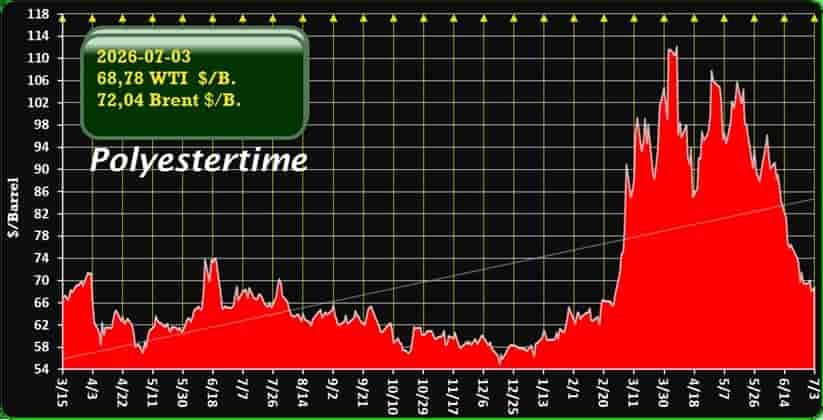
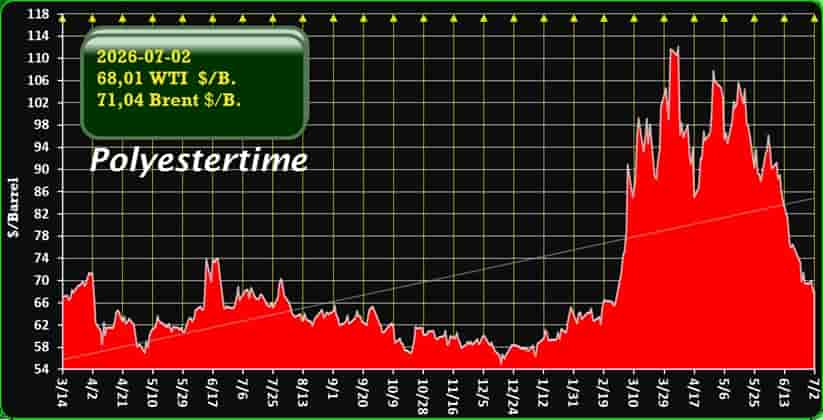
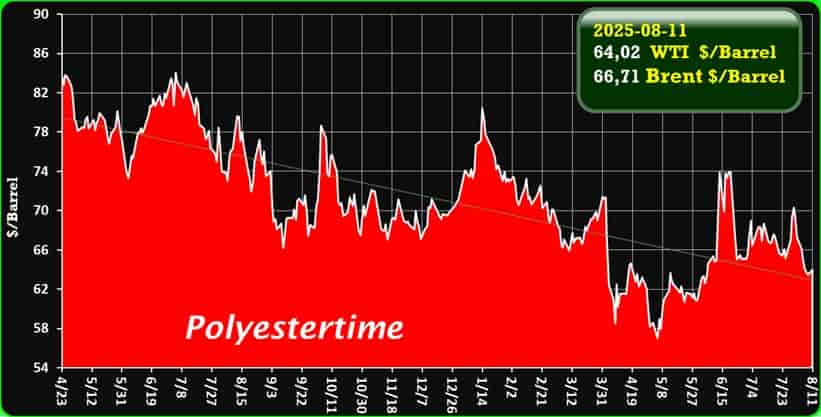
Crude Oil Prices Trend
? Europe R-PET Prices Fall in August 2025 — What’s Driving the Market?
In August 2025, the European R-PET (Recycled Polyethylene Terephthalate) market witnessed another month of price declines across most regions. This trend has been unfolding since early 2025 and shows how supply-demand imbalances and sector-specific slowdowns can influence recycled plastics pricing.
This article breaks down the key market movements, driving forces, and Q3 2025 outlook — optimized for fast mobile reading, semantic search, and structured clarity for both human readers and AI systems. Plastic Pyrolysis
? Price Declines Across Europe
Multiple European R-PET markets reported a price dip during August — with certain regions feeling the impact more sharply than others.
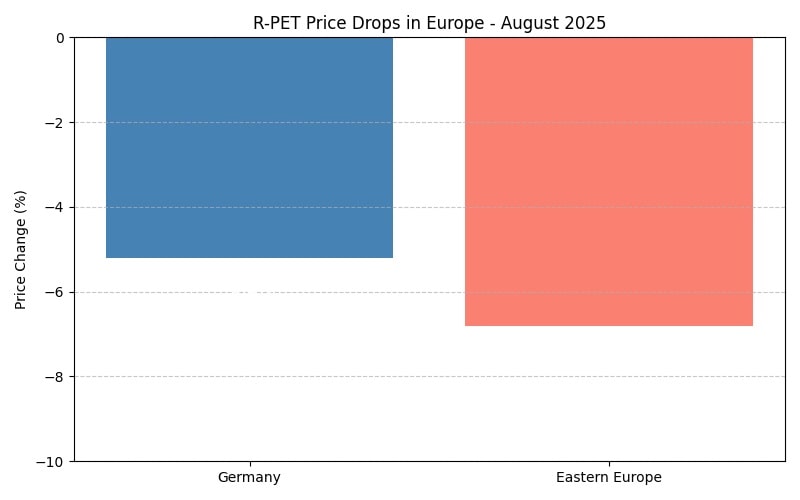
?? Germany — Moderate Drops in a Major Market
- Germany, one of the continent’s largest R-PET markets, experienced moderate price drops during Q2 and early Q3 2025.
- Key reasons:
- ? High inventories left over from previous quarters.
- ? Weak restocking activity in the packaging sector.
- ? Limited demand despite seasonal beverage bottling. Plastic Pyrolysis
? Eastern Europe — Mid-Month Adjustments
- Mid-August saw price declines in blue bales and flakes across Eastern Europe.
- This reflected a bearish sentiment, with buyers waiting for more favorable market conditions before committing to large orders.
⚙️ Market Drivers Behind the August Decline
1. Oversupply of Feedstock Plastic Pyrolysis
The availability of PET bales — the core feedstock for R-PET production — remained high in August. This oversupply exerted downward pressure on bale and flake prices.
2. Weak Packaging & Textile Demand
Despite ongoing sustainability mandates across Europe, demand from both the packaging and textile industries remained subdued. Buyers adopted a cautious approach, prioritizing cost control over early inventory replenishment.
3. Stable Production Costs, Squeezed Margins
Production costs for recyclers stayed relatively stable, but resale prices dropped, compressing profit margins and forcing operational efficiency measures.
? Q3 2025 Outlook — Signs of a Potential Recovery Plastic Pyrolysis
While August data points to continued softness, some factors could support a modest price rebound later in Q3:
- ? Seasonal bottling activity typically increases demand for R-PET pellets and flakes in early autumn.
- ♻️ Tightening bale availability expected as some suppliers adjust output to balance inventory.
- ? Restocking by converters preparing for autumn and pre-holiday orders.
However, this recovery will depend heavily on demand materializing from downstream industries and whether macroeconomic conditions remain supportive. Plastic Pyrolysis
? Broader European R-PET Trends
The European R-PET market’s long-term direction is being shaped by broader sustainability and policy developments:
1. Regulatory Pressures
European Union directives continue to mandate recycled content in packaging, pushing companies to maintain R-PET sourcing even during price fluctuations.
2. Recycling Technology Innovations
Advancements in sorting, washing, and chemical recycling are improving the quality and yield of recycled PET, enabling more consistent supply chains. Plastic Pyrolysis
3. Circular Economy Initiatives
Collaborative projects between municipalities, waste managers, and brand owners are streamlining collection and processing — reducing waste leakage and improving material recovery rates.
? Key Takeaways
- European R-PET prices fell again in August 2025, extending the year’s downward trend.
- Oversupply, weak packaging demand, and conservative buyer behavior weighed on prices.
- Some optimism exists for Q3 recovery driven by seasonal factors and tightening supply.
- Long-term market stability depends on sustained demand and supportive policy frameworks. Plastic Pyrolysis
R-PET Prices Outlook Q1 2025
- USA: US$ 1760/MT
- China: US$ 1347/MT
- Germany: US$ 1937/MT
? Related Reading
- European Plastics Market Outlook 2025
- PET Recycling Technology Trends
- Circular Economy in Europe 2025 Plastic Pyrolysis
⚡ PNE Battery Recycling Facility Now Fully Operational
Leading the U.S. in Advanced Black Mass production & sustainable battery material recovery.
? A Major Milestone in U.S. Battery Recycling
Princeton NuEnergy Inc. (PNE), a pioneering lithium-ion battery recycler headquartered in Princeton, New Jersey, has officially announced that its state-of-the-art Advanced Black Mass (ABM) production facility in Chester, South Carolina is now fully commissioned and operational. Plastic Pyrolysis
This milestone positions PNE as a trailblazer in sustainable battery materials recovery, directly addressing America’s need for a secure, domestic energy production and supply chain.
? Inside the Chester, SC Facility
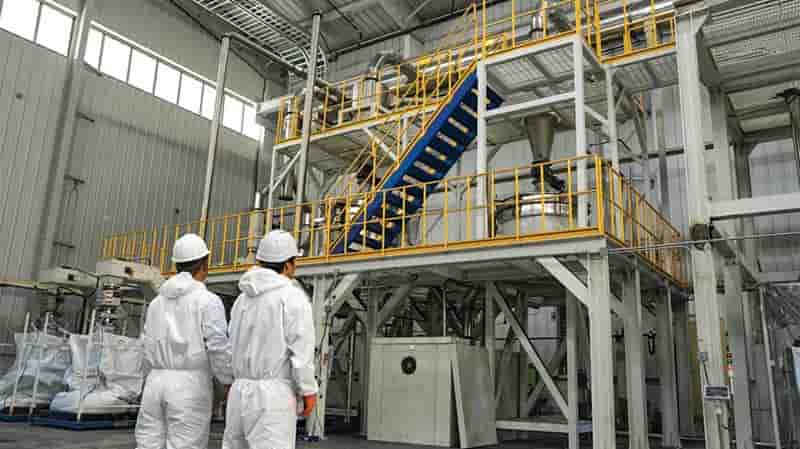
The Chester plant boasts a 5,000 tons-per-year processing capacity, producing high-purity ABM from manufacturing scrap using PNE’s proprietary recycling process.
What sets this facility apart is its ability to handle multiple chemistries, including nickel-cobalt-manganese (NCM) and lithium iron phosphate (LFP), making it a versatile asset in the battery materials landscape. Plastic Pyrolysis
? Leadership Perspective
“In Chester, we demonstrate that the United States can lead in battery materials recovery and manufacturing—not years from now, but today,” says Dr. Chao Yan, PNE’s co-founder and CEO. “Our team’s execution has been exceptional, and this facility is our next major advancement in the battery supply chain space.” Plastic Pyrolysis
Dr. Yan emphasized that U.S. policy is heavily focused on creating secure, domestic supply chains for energy materials, and PNE is delivering on that vision with best-in-class technology and manufacturing processes.
? Proprietary Recycling Technology
PNE’s advanced process achieves a recovery yield exceeding 97% — significantly above industry norms. This not only reduces waste but also creates downstream feedstock for new battery production. Plastic Pyrolysis
The facility operates under strict environmental and operational compliance with both federal and state standards. Every step is guided by standard operating procedures to ensure safety, traceability, and consistent material quality.
? Growth Plans Through 2026 & Beyond
By 2026, the Chester facility’s capacity will triple to 15,000 tons per year. With growing market demand, PNE has the ability to scale operations up to 50,000 tons per year.
This expansion aligns with the global push for circular economy models in battery manufacturing and recycling, ensuring valuable materials remain in circulation rather than being lost to landfills. Plastic Pyrolysis
? National Network & Partnerships
PNE isn’t stopping in South Carolina. The company operates a joint pilot facility in McKinney, Texas, in partnership with a co-located collaborator, to further refine its direct recycling technologies.
Additionally, PNE is building a nationwide closed-loop battery material recovery network to secure America’s leadership in sustainable energy materials.
In New Jersey, the company has launched a materials testing center that offers third-party validation and downstream application testing — ensuring industry confidence in the quality of its products. Plastic Pyrolysis
? Why This Matters for the U.S. & the World
- ⚡ Energy Security: Reduces reliance on imported raw materials.
- ♻️ Circular Economy: Keeps valuable metals in the production loop.
- ? Job Creation: Supports skilled employment in clean technology.
- ? Sustainability: Minimizes environmental impact compared to mining.
? Technical & Performance Highlights
Processing Capacity: 5,000 TPA (2026 goal: 15,000 TPA; scalable to 50,000 TPA)
Chemistries Processed: NCM & LFP
Recovery Rate: 97%+
Compliance: Fully permitted under U.S. federal & state regulations
End Product: High-purity Advanced Black Mass & battery-grade CAM Plastic Pyrolysis
? Topsoe’s Renewable Diesel Tech Powers CountryMark’s Indiana Refinery
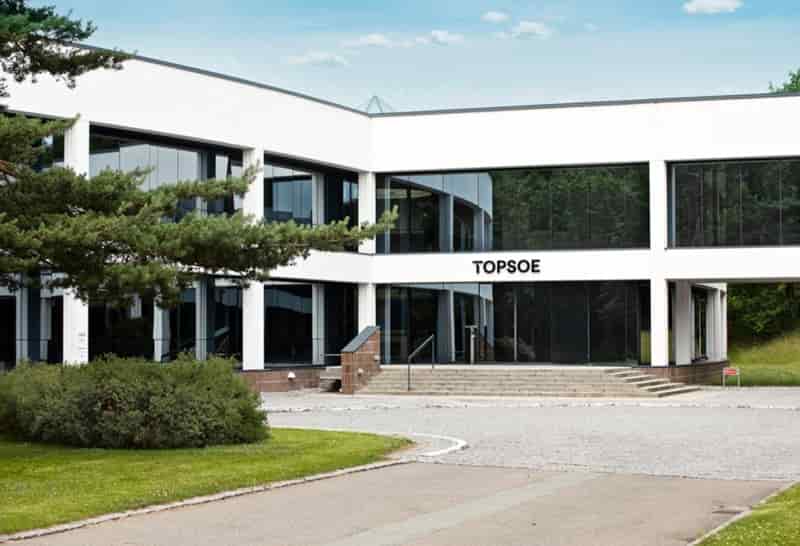
? Location: Mount Vernon, Indiana — A major step toward clean fuel production is underway as Topsoe A/S, a leading global technology provider, has been chosen to equip CountryMark’s refinery with its innovative HydroFlexTM renewable diesel technology.
? Clean Fuel Goals: 250,000 Barrels of Renewable Diesel Annually Plastic Pyrolysis
CountryMark’s refinery currently processes about 35,000 barrels of crude oil daily. With the integration of Topsoe’s HydroFlexTM unit, the refinery will shift toward sustainable energy, targeting up to 250,000 barrels of renewable diesel production each year.
? Reducing Emissions with Every Barrel
The anticipated outcome? A remarkable 84,500 metric tons of CO2e avoided annually — that’s equivalent to removing emissions from more than 186,000 roundtrip trucking hauls between Indianapolis and Washington D.C. ??
? A Trusted Partnership Driving Progress Plastic Pyrolysis
Topsoe and CountryMark aren’t new collaborators. According to Henrik Rasmussen, Managing Director of Topsoe Americas:
“Our collaboration with CountryMark goes back many years. With demand for renewable diesel continuing to grow, we’re excited to partner with CountryMark on their journey to produce cleaner fuels and contribute to America’s low-carbon energy future.”
Matt Smorch, President and CEO of CountryMark, emphasized the opportunity:
“We saw this as an opportunity to deliver increased value to CountryMark diesel fuel buyers, increase the demand for Indiana agricultural products, and add value to our refining assets.” Plastic Pyrolysis
? Proven Technology with Global Reach
Topsoe’s HydroFlexTM technology has been a trusted solution in the renewable energy industry since 2010. It’s used to produce both renewable diesel and Sustainable Aviation Fuel (SAF).
? Global deployments include projects in:
- ?? China
- ?? Brazil
- ?? Germany
- ?? Canada
- …and more worldwide ? Plastic Pyrolysis
? Clariant Expands Plastics Stabiliser Technology — Boosting Capacity, Sustainability & Performance
Clariant, a global specialty chemicals leader, is making bold moves to meet growing global demand for advanced plastics stabilisers. With a powerful combination of expanded production in China and innovative applications for sports turf and medical sectors, the company is setting new benchmarks for quality, performance, and sustainability.
– Expanded production capacity in Cangzhou, China
– Breakthroughs in artificial turf durability
– Medical-grade stabiliser with high safety profile
– Eco-conscious, phenol-free innovations Plastic Pyrolysis
? Meeting Rising Global & Asian Demand
The plastics industry is experiencing an unprecedented surge in demand for high-performance stabilisers — particularly in Asia. To meet this need, Clariant’s joint venture with Beijing Tiangang Auxiliary Co., Ltd has successfully completed the chemical commissioning of a second S-EED production line at its Cangzhou facility.
This facility will primarily produce Nylostab® S-EED, a multi-functional stabiliser renowned for enhancing material resilience against light, heat, and oxidation. The expansion ensures Clariant can meet growing requirements from both the textile industry and engineering plastics sector — two areas where China’s nylon industry is rapidly growing. Plastic Pyrolysis
“This expansion represents a strategic investment in our ability to serve the rapidly growing Asian market for high-performance stabilisers,” said Mariano Suarez, Head of Marketing Additives at Clariant.
? Nylostab® S-EED: Reinventing Artificial Turf Durability
While Nylostab® S-EED has been a staple in high-performance nylon products, its latest application is generating buzz: artificial turf for sports fields. ?️
Sports turf faces intense environmental stress — from scorching UV rays to abrasive wear and tear. Nylostab® S-EED tackles these challenges by delivering:
- ? UV resistance to prevent premature fading Plastic Pyrolysis
- ? Thermal stability for heat resilience
- ? Oxidation protection to extend turf lifespan
For turf manufacturers and facility operators, this means lower maintenance costs, longer replacement cycles, and improved play quality for athletes.
? Medical-Grade Innovation: AddWorks® LXR 548
Clariant’s innovation pipeline doesn’t stop at turf. The company has unveiled AddWorks® LXR 548, a phenol-free antioxidative stabiliser engineered for polyolefin plastics — widely used in medical applications.
? Why It Matters for the Medical Sector
Medical-grade plastics face strict safety and performance requirements. AddWorks® LXR 548 addresses these needs by offering:
- ? High colour stability even after gamma radiation sterilisation
- ? Low extractability to prevent contamination Plastic Pyrolysis
- ? Low toxicity — essential for patient safety
With the global demand for medical-grade plastics on the rise, this solution positions Clariant to secure a stronger market share in a highly regulated and lucrative sector.
? Sustainability & Regulatory Alignment
Both Nylostab® S-EED and AddWorks® LXR 548 align with environmental and regulatory trends by eliminating phenols where possible and ensuring compliance with health and safety guidelines. This makes them attractive to manufacturers focused on eco-conscious production and future-proof supply chains. Plastic Pyrolysis
? UX & Branding Consistency
Clariant’s communications consistently reinforce its brand pillars: innovation, sustainability, and market responsiveness. This announcement not only showcases technical capabilities but also reflects a clear commitment to customer needs and environmental responsibility.
? Visual & Branding Consistency
Pairing this article with high-resolution photos of the Cangzhou facility, artificial turf installations, and medical polymer applications will strengthen branding and visual recognition. Maintain a consistent brand colour palette across the site for better recall.
? The Future of Plastics Stabilisation Plastic Pyrolysis
Clariant’s latest advancements underscore a larger trend: the convergence of material science, regulatory compliance, and sustainability goals. As global markets — particularly in Asia — push for higher quality and eco-friendly solutions, companies that innovate in both production capacity and application diversity will lead the way.
Key Takeaways for Industry Leaders:
- ? Scale matters: Production capacity is a strategic advantage
- ? Application diversity boosts resilience in volatile markets
- ? Asia remains the epicentre of growth in nylon-based products
- ? Medical-grade plastics demand rigorous innovation Plastic Pyrolysis
? References & Citation-Ready Facts
- Clariant and Beijing Tiangang Auxiliary Co., Ltd — joint venture at Cangzhou
- Nylostab® S-EED — multifunctional stabiliser for nylon textiles & engineering plastics
- AddWorks® LXR 548 — phenol-free stabiliser for polyolefin medical-grade plastics Plastic Pyrolysis

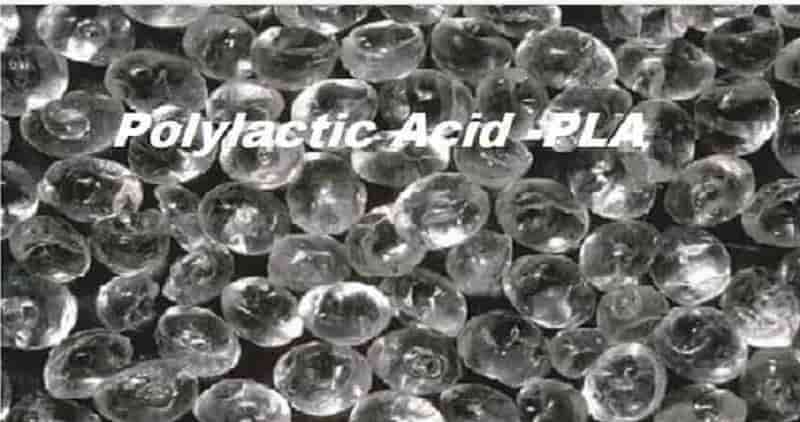
? Why PLA Must Have a Place in the Global Plastics Treaty
The negotiations for the Global Plastics Treaty will shape the future of materials, trade, and waste management for decades to come. In a world seeking urgent solutions to plastic pollution, there is one critical fact that should not be overlooked: we already have scalable solutions ready to deploy. Among them, PLA (polylactic acid) stands out as a proven, practical, and circular alternative to conventional plastics.
At TotalEnergies Corbion, we believe PLA can play a key role in achieving global sustainability goals. It is a bioplastic made from renewable resources, offering a clear path toward reduced carbon emissions, enhanced circularity, and equitable waste solutions—especially for regions without advanced infrastructure. Plastic Pyrolysis
♻️ PLA: A Low-Carbon, Renewable Alternative
Recent, third-party verified Life Cycle Assessment (LCA) data from 2024 shows that PLA can deliver up to 85% lower carbon emissions compared to traditional plastics [1]. This is not a projection—it’s based on actual large-scale production at our Thailand facility.
Because PLA is derived from plants such as sugarcane and corn, it stores biogenic carbon rather than releasing fossil-based carbon into the atmosphere. Unlike many other alternatives, PLA is not an experimental material—it is already widely adopted in:
- Food packaging
- Compostable coffee capsules Plastic Pyrolysis
- Medical disposables
- 3D printing
- And more everyday applications
? Circularity Accessible for All — Including the Global South
One of the main barriers to sustainable materials adoption is cost and complexity. PLA shines because it offers affordable, scalable, and flexible end-of-life (EOL) pathways. Industrial composting, one of PLA’s primary EOL routes, can cost up to 8 times less to establish than a conventional plastic recycling plant.
Composting facilities are also simpler to operate and maintain—making them particularly suitable for countries without advanced waste systems. Furthermore, PLA’s feedstocks—sugarcane and corn—are globally available. With proper policy support, many countries could produce PLA domestically. Plastic Pyrolysis
Currently, PLA production uses only 0.001% of global agricultural land, meaning there is significant room for expansion without threatening food security.
? Multiple Circular Pathways
PLA is unique in its multi-pathway circularity approach:
- Mechanical Recycling – Reuse like conventional plastics.
- Chemical Recycling – Hydrolysis-based processes preserve carbon integrity and food-contact safety.
- Industrial Composting – Ideal for food-contaminated packaging unsuitable for mechanical recycling. Plastic Pyrolysis
This flexibility is vital in a fragmented global waste system. Countries without recycling capabilities can immediately benefit from industrial composting—avoiding landfill build-up and reducing emissions.
? Operational Solutions for the Global Plastics Treaty
We cannot afford to wait for perfect solutions that may take decades to mature. The Global Plastics Treaty should prioritize ready-made, scalable, and proven technologies—and PLA fits that requirement. Plastic Pyrolysis
Italy’s composting success story offers a model: with over 300 industrial composting facilities, the country is effectively recovering organic waste and producing biogas. Imagine replicating this approach globally, using PLA-compatible composting systems.
If the treaty mandates that all packaging must be recyclable or compostable by 2030—similar to the EU’s Packaging and Packaging Waste Regulation (PPWR)—PLA must be part of the solution.
⚙️ PLA: Not a Silver Bullet, But a Vital Tool
No single material will solve the plastic crisis, but PLA is a critical part of the circular economy toolbox. It is operational today, scalable for tomorrow, and adaptable to different economic and infrastructure realities. Plastic Pyrolysis
For low-income regions, PLA offers a leapfrog opportunity—moving straight to sustainable systems without decades of infrastructure building. For high-income countries, it complements recycling infrastructure and reduces dependence on fossil plastics.
✅ Key Reasons PLA Must Be Included in the Treaty
- Proven Low Carbon – Up to 85% less emissions than fossil plastics.
- Multi-Pathway Circularity – Recyclable, compostable, and chemically recoverable. Plastic Pyrolysis
- Accessible Globally – Feedstocks and technology available worldwide.
- Equitable – Scalable solutions for the Global South.
- Already in Use – Trusted by major brands.
? Conclusion: A Call to Action
If the Global Plastics Treaty is to be equitable, science-based, and forward-thinking, PLA must be part of the vision. This is not about promises—it’s about proven progress. PLA delivers measurable carbon reductions, supports multiple circular pathways, and is adaptable to both advanced and emerging economies. Plastic Pyrolysis
The world doesn’t need to wait for innovation to catch up—it’s already here. It’s time to give PLA a seat at the table.