Rare Earths Are the New Global Gold, and U.S. Trade Wars Are Strengthening China While Leaving Europe Dangerously Exposed 06-01-2026
Rare earths: the strategic resources shaping the future
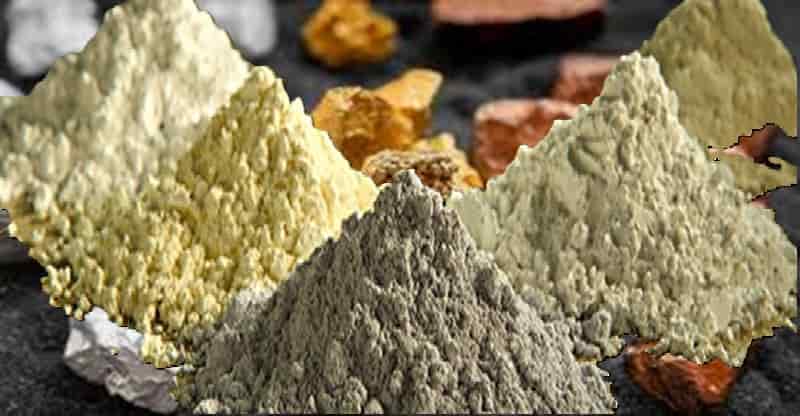
Rare earth elements have become one of the most strategic resources of the 21st century. These critical minerals are essential for advanced technologies, clean energy systems, electric vehicles, semiconductors, artificial intelligence, and modern defense infrastructure. Without rare earths, the global energy transition and digital transformation would slow dramatically.
As demand accelerates, control over rare earth supply chains has evolved from a technical issue into a geopolitical battlefield. Today, rare earths are no longer just industrial inputs; they are instruments of economic power, national security, and diplomatic leverage.
This growing importance has triggered what many analysts describe as a global rare earth war. At the center of this competition are China and the United States, while Europe risks becoming a passive observer in a sector vital to its long-term economic resilience.
China’s dominance in rare earths and strategic minerals
China currently dominates the global rare earth market, particularly in refining and processing. While rare earth deposits exist in many regions of the world, China controls the most critical part of the value chain: turning raw materials into usable components for high-tech manufacturing.
This dominance is not accidental. It is the result of decades of industrial policy, large-scale investment, and environmental trade-offs that other economies were unwilling to make. Today, the largest rare earth mines, refining facilities, and supply chain infrastructures are concentrated within Chinese territory.
Beijing’s strategy is clear. Control over rare earths strengthens China’s economic position and provides geopolitical leverage over trade partners. As global dependence grows, this control translates into influence across technology, defense, and clean energy sectors.
Export restrictions and geopolitical pressure
Since 2023, China has progressively reduced rare earth exports to the United States. These measures have amplified instability in an already tense trade and technology environment. Rare earths have become a strategic pressure point, used to counter tariffs, sanctions, and technology restrictions imposed by Washington.
This is not merely an economic dispute. It is a strategic confrontation in which China holds a structural advantage. Policies such as Made in China 2025 reinforce this position by prioritizing technological self-sufficiency and domestic control over critical inputs.
As a result, the United States and its allies face growing uncertainty about long-term access to essential minerals.
Why U.S. trade wars are backfiring
In response to China’s dominance, the United States has attempted to reduce its reliance on imported rare earths. Washington has promoted supply diversification, increased domestic mining initiatives, and sought partnerships with countries such as Australia, Canada, and India.
However, trade protectionism has produced unintended consequences. Tariffs, sanctions, and political pressure have made global mineral markets more volatile, not more secure. Instead of weakening China’s position, trade wars have encouraged Beijing to consolidate control and weaponize its advantage.
Discussions about Greenland and Canada as alternative sources reflect how urgent the issue has become. Yet building new supply chains takes years, massive investment, and stable international cooperation. In the short and medium term, the United States remains exposed.
Europe’s slow response to the rare earth challenge
Europe faces an even more precarious situation. Despite its industrial strength, the European Union has long underestimated the strategic importance of critical minerals. Rare earths were treated as abundant, accessible commodities rather than geopolitical assets.
This assumption has proven dangerously flawed. Europe remains heavily dependent on China for both the production and refining of rare earth elements. This dependency creates vulnerabilities across automotive manufacturing, renewable energy, electronics, and defense industries.
While some initiatives exist, including limited mining projects and recycling programs, Europe still lacks a coherent and unified rare earth strategy. National efforts remain fragmented, and access to secure supply channels is far from guaranteed.
Recycling and sustainability are not enough
Europe has invested in recovering critical minerals from electronic waste and promoting circular economy models. While these efforts are important, they cannot meet growing demand alone.
Recycling rare earths is technologically complex, expensive, and currently insufficient in scale. Without new extraction, processing, and international partnerships, Europe risks structural shortages that could undermine its industrial competitiveness.
Sustainability must be paired with strategic realism. Environmental responsibility cannot come at the cost of long-term economic security.
The need for a common European strategy
To remain competitive, Europe must fundamentally change its approach to rare earths and critical minerals. This requires coordinated policies at the European level, not isolated national initiatives.
A secure strategy should focus on diversified supply chains, strategic stockpiles, and investment in domestic refining capacity. Cooperation with allies such as the United States and Canada is essential, but Europe must also think beyond traditional partners.
Countries like Brazil, which holds significant rare earth reserves but contributes only a small share of global production, represent untapped opportunities. Strategic partnerships could reduce dependence on China while supporting sustainable development abroad.
Innovation, industry, and strategic autonomy
Europe must also invest heavily in research, innovation, and industrial capacity. Creating a European market for critical materials would allow companies, research institutions, and governments to pool resources and share risks.
By integrating mining, refining, recycling, and manufacturing, Europe could reduce vulnerabilities and position itself as a global leader in sustainable critical mineral supply chains. This approach aligns with broader goals of strategic autonomy and green transition.
Rare earths are not just a resource challenge; they are an opportunity to redefine Europe’s industrial future.
A global power struggle with long-term consequences
The global competition for rare earths reflects a broader transformation of geopolitics. Control over critical minerals increasingly defines economic influence and strategic power.
China is using its dominance to secure long-term advantages. The United States is struggling to adapt amid trade wars that often produce counterproductive results. Europe, meanwhile, risks irrelevance unless it acts decisively.
The rare earth war is not a temporary phenomenon. It is a structural shift that will shape global politics, technology, and economic growth for decades.
Conclusion: rare earths and Europe’s strategic choice
Rare earths are the new gold of the global economy. They underpin technological innovation, energy transition, and national security. As competition intensifies, passive reliance on external suppliers is no longer viable.
Europe must move from awareness to action. Only through a clear vision, common strategy, and long-term investment can the European Union secure its future in a world defined by critical minerals.
Failure to act now would leave Europe exposed in one of the most decisive battles of the modern global economy.
More…