Sustainable Geosynthetics From Recycled Plastics Reveal a Breakthrough for Roofing and Construction—but Major Infrastructure Challenges Remain 06-01-2026
Sustainable geosynthetics
Sustainable Design of Geosynthetics and Roof Underlayments From Recyclates
The construction industry is under increasing pressure to reduce its environmental footprint, especially when it comes to plastics. Roofing membranes, geosynthetics, and technical textiles consume enormous quantities of polymer-based materials every year, most of which are still produced from virgin resources. At the same time, millions of tons of plastic waste remain underutilized due to contamination, poor sorting, or inadequate recycling technologies.
Recent research demonstrates that this gap can be closed. Sustainable geosynthetics and roof underlayments made from recycled plastics and biopolymers are no longer a theoretical concept but a realistic industrial pathway. By rethinking recycling processes, material purity, and the entire value chain, researchers are proving that recyclates can meet the demanding requirements of technical construction applications. sustainable geosynthetics sustainable geosynthetics
Why Recycled Plastics Struggle in High-Performance Construction Products
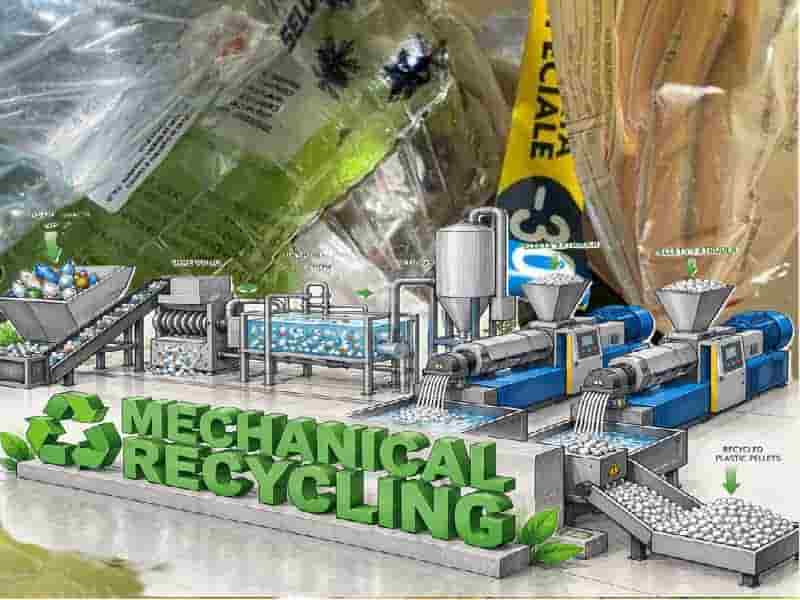
Recycled plastics such as polypropylene and polyethylene terephthalate are widely available, yet their use in high-value applications remains limited. The main barrier is quality. Mechanical recycling alone often fails to remove contaminants, additives, and foreign polymers. Even small impurities can compromise processing stability and mechanical performance.
This challenge is particularly severe for textile-based products like nonwovens, membranes, and fibers used in roof underlayments. These products require extremely consistent melt flow, uniform extrusion, and high tensile strength. Any inconsistency increases filament breakage, production downtime, and manufacturing costs. sustainable geosynthetics
As a result, recyclates frequently cannot compete with virgin plastics in demanding applications, despite growing market demand for sustainable alternatives.
Rethinking the Entire Value Chain for Circular Plastics
To overcome these limitations, researchers adopted a holistic approach that analyzes the entire value chain at pilot scale. Instead of focusing only on recycling, the process begins with waste stream analysis and sorting, continues through advanced recycling and purification, and ends with real-world product manufacturing.
This system-level perspective is critical for producing sustainable geosynthetics and roof underlayments that meet industrial standards. It ensures that recycled plastics are not only environmentally beneficial but also economically viable and technically reliable.
Several hundred million square meters of roofing underlay membranes are installed in Europe each year alone. Even a partial replacement with recycled materials would significantly reduce carbon emissions and resource consumption.
Innovative Recycling Processes for High-Purity Recyclates
One of the most promising developments lies in solvent-based recycling. Unlike mechanical recycling, this method selectively dissolves target polymers and removes unwanted additives and foreign plastics. Using this approach, polypropylene can be recovered from complex waste streams that were previously considered unusable. sustainable geosynthetics
In practice, waste streams containing only one-third polypropylene and two-thirds foreign plastics can be transformed into nearly uncontaminated material. After processing, polyethylene remains the only significant impurity, accounting for less than two percent of the final recyclate.
This level of purity allows recycled polypropylene to be processed into high-quality fibers, nonwovens, and membranes suitable for roof underlayments and geosynthetics.
Chemical Recycling Unlocks New Potential for PET Waste
Polyethylene terephthalate presents a different challenge due to its widespread use in packaging and the complexity of its waste streams. Chemical recycling through glycolysis offers an effective solution. sustainable geosynthetics
In this process, PET is depolymerized into its monomer building blocks using ethylene glycol. The resulting intermediate can then be repolymerized into high-quality recycled PET with properties comparable to virgin material.
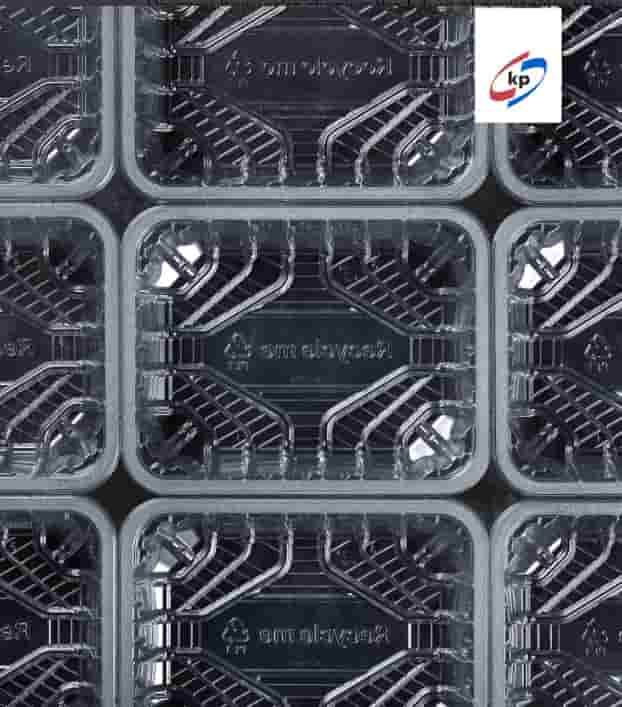
Even PET trays containing significant impurities can be successfully recycled using this method. The resulting recycled PET can be melt-spun into multifilament yarns and further processed into technical textiles for construction applications.
Processing Stability Is the Key to Industrial Viability
Producing fibers and films from recyclates places extreme demands on processing stability. Melt spinning requires uniform extrusion through fine capillaries and the ability to withstand high tensile forces during drawing. sustainable geosynthetics
Additivation plays a decisive role in meeting these requirements. By tailoring stabilizers and processing aids, researchers significantly improved the thermal and mechanical stability of both polypropylene and PET recyclates. This ensures continuous production, reduces filament breakage, and lowers operational costs.
As a result, recycled materials can now be processed on pilot-scale production lines using standard textile manufacturing equipment.
Turning Recycling Residues Into Valuable Resources
Circular design does not stop at polymer recovery. Residues from solvent-based recycling and chemical recycling processes can be further utilized through pyrolysis.
Polypropylene residues yield a high proportion of pyrolysis gas with minimal coke formation, while PET residues produce pyrolysis oils with favorable compositions. These outputs can be used as chemical feedstocks or energy carriers, further improving the overall resource efficiency of the system.
By integrating pyrolysis, the recycling process approaches a zero-waste model, maximizing material recovery and minimizing environmental impact. sustainable geosynthetics
Life Cycle Assessment Confirms Climate Benefits
Environmental performance is a critical metric for sustainable geosynthetics. Life cycle assessments reveal that the developed value chains offer a significantly better climate footprint than conventional production using virgin plastics.
Both recycled polymers and biopolymers outperform virgin materials in terms of greenhouse gas emissions. However, the analysis also highlights an important challenge: access to suitable waste streams depends on logistics, sorting infrastructure, and regional availability.
To scale these solutions, investments in collection systems and advanced sorting technologies are essential.
Biodegradable Geotextiles for Temporary Applications
In addition to recyclates, biopolymers offer a complementary solution for applications with limited service life. Polylactide and polybutylene succinate are particularly suitable for biodegradable geotextiles used in landscaping and civil engineering.
These materials are ideal for temporary stabilization of slopes, riverbanks, and construction access roads. The key requirement is controlled degradation. The material must remain stable during use and then degrade rapidly and completely afterward without causing environmental harm. sustainable geosynthetics
Controlled Degradation Through Material Design
Biodegradability is not simply a material property but a design parameter. By using tailored additives, researchers achieved precise control over the onset and progression of degradation in PLA and PBS fibers.
Under simulated soil conditions with elevated temperature and humidity, the fibers demonstrated stable performance followed by accelerated degradation once triggered. This balance ensures functional reliability during use and environmental compatibility after disposal.
Ecotoxicity tests confirm that these biodegradable geotextiles do not produce harmful effects, making them suitable for real-world applications.
Implications for the Construction Industry
The successful development of sustainable geosynthetics and roof underlayments made from recycled plastics marks a turning point for circular construction. It demonstrates that high-performance technical textiles no longer require virgin polymers.
For manufacturers, this opens new opportunities to meet regulatory requirements, reduce carbon footprints, and respond to growing customer demand for sustainable products. For policymakers, it highlights the importance of supporting advanced recycling infrastructure and circular value chains. sustainable geosynthetics
The Road Ahead for Circular Plastics in Construction
Despite the technological progress, challenges remain. Scaling these solutions requires reliable access to suitable waste streams, consistent quality control, and collaboration across industries. Recycling technologies must be integrated with sorting, logistics, and product design from the outset.
Nevertheless, the results clearly show that previously unused plastic waste streams can be transformed into valuable resources. Sustainable design is no longer a compromise between performance and environmental responsibility. It is becoming the new standard.
More…