Russian Scientists Create Stronger, Cheaper Roads Using Recycled Plastic Asphalt Technology That Cuts Waste, Improves Durability, and Transforms Sustainable Infrastructure Development 19-01-2026
Recycled Plastic Asphalt Signals a New Era for Sustainable Roads
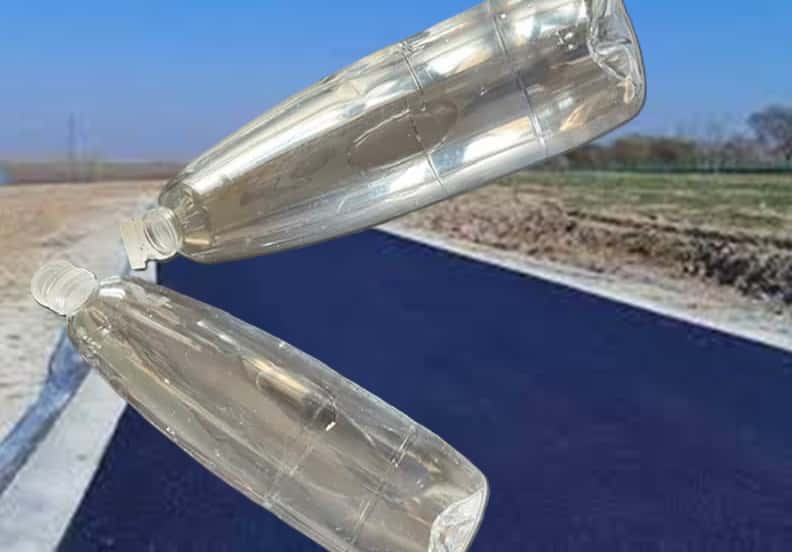
A major innovation in sustainable infrastructure has emerged from Russia, where university scientists have developed a new type of asphalt that incorporates recycled plastic waste. This advanced material is designed to make roads more durable, environmentally responsible, and cost-effective without requiring significant changes to existing production methods.
The research was conducted by scientists at North-Caucasus Federal University, who focused on solving two major challenges at once. The first is the growing volume of plastic waste that ends up in landfills. The second is the ongoing need for stronger road surfaces capable of withstanding extreme temperature changes and heavy traffic loads.
By combining recycled plastic with conventional asphalt mixtures, researchers have created a practical solution that aligns with modern sustainability goals while remaining suitable for large-scale implementation.
Plastic Waste Remains a Growing Environmental Problem
Plastic pollution continues to be a serious issue in Russia and globally. Each year, Russia consumes more than 600,000 tonnes of polyethylene terephthalate, commonly known as PET plastic. This material is widely used in beverage bottles, food containers, cosmetics packaging, and household chemical products.
Despite its widespread use, PET recycling rates remain low. Only around 30 percent of PET waste is recycled annually, while the remaining 70 percent is sent to landfills or incineration facilities. Due to strict regulations, recycled PET cannot be reused in food-related applications, which further limits recycling options.
As landfills continue to expand, scientists are increasingly exploring alternative uses for plastic waste. Road construction offers a promising opportunity, as asphalt can safely bind plastic materials and prevent them from entering the environment.
How Recycled Plastic Asphalt Works
The research team at North-Caucasus Federal University studied the binding properties of modified PET waste to determine how it interacts with bitumen, the key binding agent in asphalt. Through extensive laboratory testing, they identified optimized compositions that allow PET plastic to function as a performance-enhancing additive.
In recycled plastic asphalt, PET waste is incorporated directly into the bitumen. Once bound, the plastic remains chemically stable and environmentally safe, meaning it does not release harmful substances into soil or water. This makes the technology suitable for widespread use in road construction projects.
Importantly, the process does not require complex new equipment or major changes to existing asphalt production lines. This significantly lowers barriers to adoption and makes the solution attractive for both public and private infrastructure developers.
Improved Performance Across Extreme Temperatures
One of the most significant advantages of recycled plastic asphalt is its enhanced performance under extreme temperature conditions. Traditional asphalt can soften under intense heat and crack during cold weather, leading to frequent maintenance and high repair costs.
Laboratory tests showed that PET-modified asphalt maintains better plasticity while resisting deformation across a wide temperature range. At high temperatures, the material retains its shape more effectively, reducing the risk of rutting and surface damage.
Under extreme heat conditions, the strength of recycled plastic asphalt increased by 11 to 23 percent compared to conventional asphalt. Adhesion between layers also improved by 7 to 20 percent, which helps prevent cracking and surface separation over time.
These improvements suggest that roads built with recycled plastic asphalt could last longer and require fewer repairs, especially in regions with harsh climates.
Cost Reduction Without Complicating Production
Beyond performance improvements, recycled plastic asphalt offers clear economic advantages. Polymer modifiers are often used to enhance asphalt properties, but they can be expensive and increase overall project costs.
By replacing some of these modifiers with recycled PET plastic, construction costs can be reduced without compromising quality. Since the production process remains largely unchanged, manufacturers do not need to invest heavily in new machinery or retraining staff.
This cost efficiency makes recycled plastic asphalt an appealing option for governments seeking to modernize infrastructure while managing tight budgets. It also supports circular economy principles by turning waste into a valuable construction resource.
Environmental Benefits and Long-Term Impact
The environmental benefits of recycled plastic asphalt extend beyond waste reduction. By diverting plastic from landfills and incineration, the technology helps reduce greenhouse gas emissions associated with waste management.
Additionally, longer-lasting roads mean fewer repairs and reconstructions, which further reduces material consumption, energy use, and carbon emissions over time. The combination of durability and sustainability positions recycled plastic asphalt as a smart solution for future infrastructure development.
From an environmental safety perspective, researchers confirmed that PET remains securely bound within the asphalt matrix. This prevents microplastics from entering surrounding ecosystems, addressing a key concern associated with plastic reuse.
Next Steps Toward Industrial Implementation
The research team plans to move beyond laboratory testing by conducting pilot industrial trials. These trials will evaluate how recycled plastic asphalt performs under real-world conditions, including heavy traffic, seasonal temperature changes, and long-term wear.
Based on the results, scientists aim to develop technical guidelines and standards that support widespread adoption across Russia’s road construction industry. If successful, the technology could be scaled nationally and potentially adapted for use in other countries facing similar environmental and infrastructure challenges.
A Model for Sustainable Infrastructure Innovation
The development of recycled plastic asphalt demonstrates how scientific innovation can address environmental challenges while delivering practical economic benefits. By transforming plastic waste into a valuable construction material, Russian scientists have opened new possibilities for sustainable road building.
As governments worldwide seek solutions that balance durability, cost, and environmental responsibility, recycled plastic asphalt stands out as a technology with real potential to reshape modern infrastructure.
More…