Shale Revolution Prevented $200 Oil Shock and Relentless Inflation, Researcher Warns of Economic Strain Without U.S. Energy Breakthrough 20-02-2026
Shale Revolution: How U.S. Energy Production Prevented $200 Oil and Structural Inflation
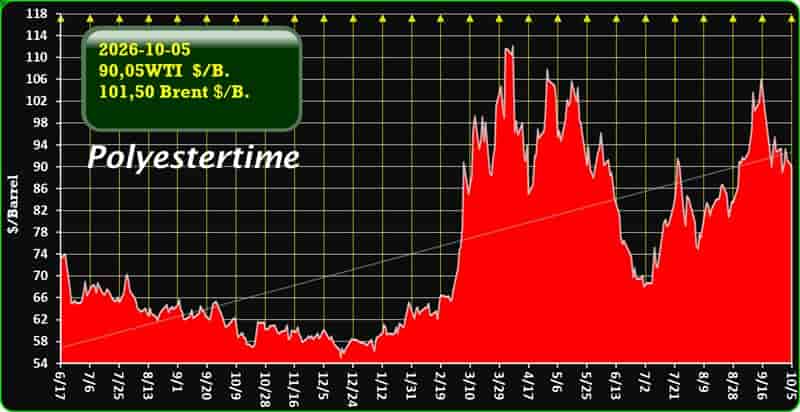
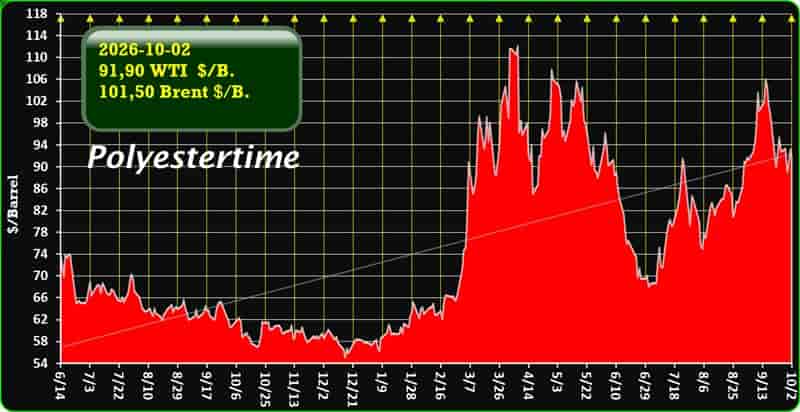
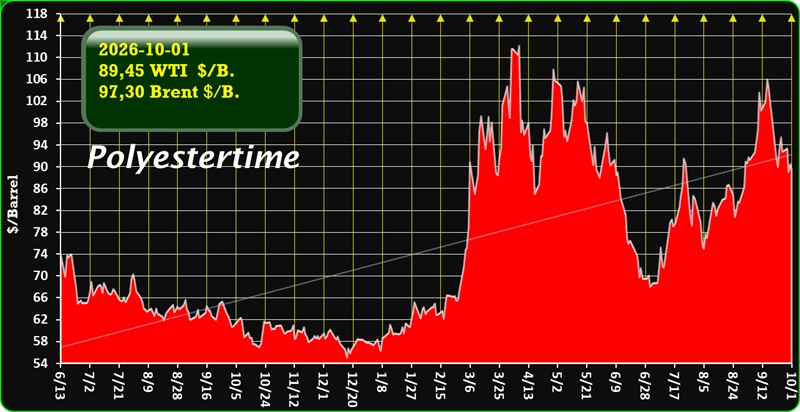
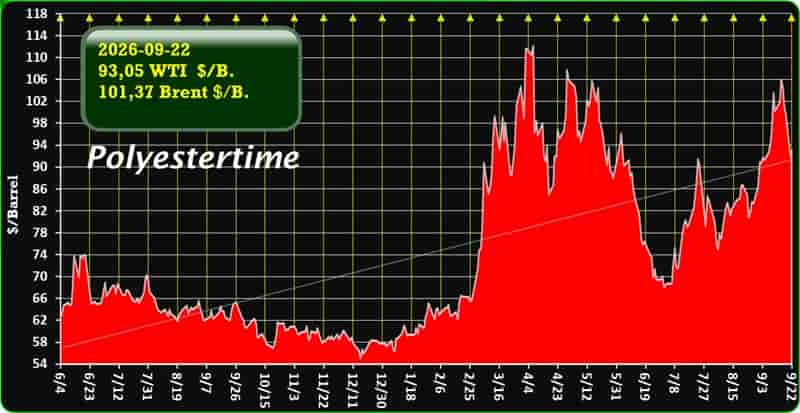
The shale revolution transformed the United States into the world’s leading oil and natural gas producer, fundamentally altering global energy markets. According to energy analyst Rob West, founder of Thunder Said Energy, without shale oil and shale gas production, crude prices today could range between $150 and $200 per barrel. The implications for inflation, household budgets, and global economic growth would be profound.
For residents of the Permian Basin and other major producing regions, the shale revolution is a visible economic force. But its broader macroeconomic impact extends far beyond Texas or New Mexico. It has reshaped the global energy market, reduced structural inflation, and strengthened U.S. geopolitical leverage.
Energy Prices and the Consumer Price Index
Energy costs are deeply embedded in the U.S. Consumer Price Index. Approximately 15 percent of the CPI basket is directly linked to energy expenses. Roughly half of that reflects direct consumer spending such as gasoline and residential heating. Airfares represent about 1 percent of CPI, with jet fuel accounting for roughly 20 percent of airline operating costs. Retail spending, which makes up nearly 30 percent of CPI, also contains an energy component, with about 2 percent going toward electricity and fuel inputs.
In practical terms, nearly every line item in the CPI basket contains embedded energy costs. From transportation and logistics to manufacturing and food distribution, oil and natural gas prices influence the broader price structure of the economy. shale revolution
West argues that shale production lowered annual inflation by approximately 0.7 percentage points year over year over the past decade. That deflationary effect, he says, delivered roughly $800 billion in annual savings to consumers through lower energy prices.
What $150–$200 Oil Would Have Meant
If shale oil production had not expanded rapidly after 2010, global supply constraints would likely have pushed crude prices toward $150–$200 per barrel. Natural gas prices, in this scenario, could have exceeded $10 per Mcf. Such pricing would have triggered sustained cost pressures across transportation, manufacturing, agriculture, and utilities. shale revolution
Higher oil prices would not only have raised gasoline costs but also affected freight rates, airline tickets, plastics production, and diesel-intensive industries. The ripple effects across supply chains could have reinforced structural inflation, limiting central banks’ ability to maintain accommodative monetary policy.
West suggests that the deflationary impact of shale allowed for expansionary monetary policy, enabling lower borrowing costs and easier access to capital. Businesses benefited from cheaper financing, which supported investment, job creation, and innovation. Consumers, in turn, retained greater purchasing power.
The U.S.–Europe Energy Divide
The contrast between the United States and Europe illustrates the strategic importance of domestic energy production. In recent years, European energy prices have trended higher, partly due to decarbonization policies that prioritized certain technologies before fully replacing low-cost legacy supply. The energy crisis following Russia’s invasion of Ukraine further exposed structural vulnerabilities. shale revolution
U.S. liquefied natural gas exports became critical to European energy security, helping offset reduced Russian pipeline flows. However, geopolitical tensions could reshape future trade patterns. If transatlantic cooperation weakens, European demand for U.S. LNG may become less certain, affecting global natural gas markets.
The shale revolution thus extends beyond domestic economics. It also strengthens U.S. geopolitical positioning in global energy markets. shale revolution
Oil Demand Outlook to 2030
Despite rapid growth in renewable energy and electrification, oil demand remains resilient. West projects that global oil demand could plateau around 2030, potentially stabilizing between 1.7 million and 1.10 million barrels per day of incremental growth before flattening.
Demand patterns are not uniform. Jet fuel consumption, plastics production, and diesel use in heavy transport may continue expanding. In some developed markets, demand for specific refined products remains strong due to aviation recovery, industrial activity, and freight movement. shale revolution
Consumer behavior also matters. Since the COVID-19 pandemic, migration trends in the United States have shifted toward suburban and lower-density regions. Longer commuting distances and increased vehicle reliance may have added roughly one million barrels per day to oil demand.
The global energy market is shaped by hundreds of simultaneous trends, from urbanization and digitalization to supply chain restructuring and demographic change. Shale production remains a central stabilizing force within that system.
Climate, Emissions, and Energy Economics
The climate debate adds another layer of complexity. Global carbon dioxide emissions currently total approximately 50 billion tons annually. In a worst-case scenario, emissions could approach 100 billion tons per year by 2050, implying severe warming outcomes.
However, energy economics may alter that trajectory. Natural gas and solar power have become increasingly competitive. Technological efficiency allows economies to generate more output with fewer inputs. West expects emissions to peak and eventually decline to 20–30 billion tons annually rather than double.
Climate models generally project warming of around 2 to 3 degrees Celsius by 2100 under current policy pathways. While this exceeds pre-industrial baselines, it falls well below catastrophic scenarios often cited in extreme projections.
The shale revolution plays an indirect role here as well. Abundant natural gas has displaced coal in the U.S. power sector, reducing carbon intensity. At the same time, affordable energy has supported economic growth that funds clean energy research and infrastructure.
The Structural Legacy of Shale Oil and Shale Gas
The shale revolution represents more than a supply increase. It has altered inflation dynamics, monetary policy flexibility, trade balances, and geopolitical influence. By stabilizing oil prices and expanding natural gas production, the United States reshaped the global energy market.
Without shale oil, American households would likely face higher gasoline prices, elevated heating bills, and broader inflationary pressures. Businesses would contend with tighter margins and more volatile input costs. Global energy markets would be more vulnerable to supply disruptions.
As oil demand approaches a potential plateau and climate policies evolve, the long-term trajectory of the energy market remains uncertain. Yet one conclusion stands out: the shale revolution fundamentally changed the economic landscape, preventing a $200 oil shock and reshaping inflation, energy security, and global power dynamics.
More…