Sustainable Innovation – Russia’s Recession Looms: What Putin’s Ministers Are Saying Economic Outlook at a Crossroads After over three years of war in Ukraine, Russia’s economy appears to be at a critical inflection point 26-06-2025 - Archive
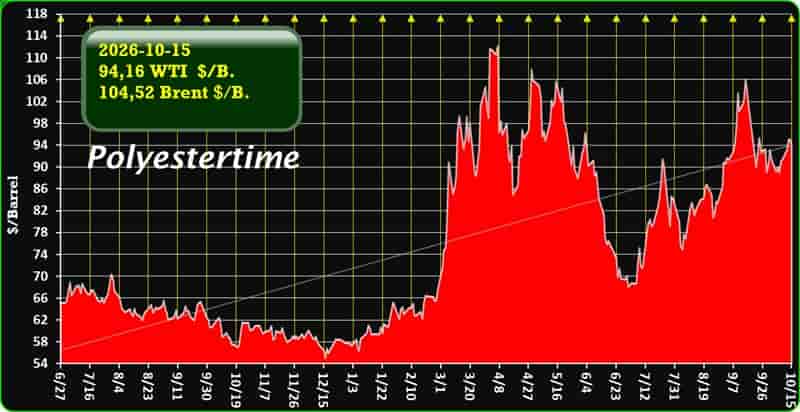
Crude Oil Prices Trend

UPM Raflatac Becomes UPM Adhesive Materials: A Strategic Shift for Broader Growth
As of June 12, 2025, UPM Raflatac is officially renamed to UPM Adhesive Materials. This change marks a new chapter in the company’s strategic expansion and positions it for greater visibility across diverse adhesive applications—not just labels.
Why the Name Change?
The rebranding is more than just a facelift. It reflects the business area’s ambitious plan to grow beyond traditional label materials into adjacent sectors such as graphic solutions and specialty tapes. Sustainable Innovation
Although the business unit will now be known as UPM Adhesive Materials, the UPM Raflatac brand continues to live on as a leading global product name within the label materials portfolio.
“The new business area name reflects our expanded portfolio and growth aspirations and highlights the value we deliver to our customers through the adhesive material performance.”
— Tim Kirchen, Executive Vice President, UPM Adhesive Materials
What Does UPM Adhesive Materials Do?
UPM Adhesive Materials builds on UPM Raflatac’s legacy by leveraging cutting-edge adhesive technologies, high-performance materials, and top-tier customer services.
The division maintains a leading market position in label materials and is actively extending its influence into new markets, fueled by both innovation and strategic acquisitions. Sustainable Innovation
A Broader Portfolio, Backed by Key Acquisitions
The growth strategy of UPM Adhesive Materials is not just theoretical—it’s grounded in action. Over the past years, the company has expanded its product offerings significantly through the acquisition of three major players in the graphics and specialty materials space:
- AMC AG: A specialist in self-adhesive materials
- Grafityp: Known for vinyl films and large-format media
- Metamark: A UK-based leader in graphic signage materials
These acquisitions have helped UPM Adhesive Materials move beyond labels and into segments that demand higher performance and visual impact—ideal for advertising, branding, and industrial applications. Sustainable Innovation
When Will the Change Take Effect?
The name change is already in effect as of June 12, 2025. The new identity, UPM Adhesive Materials, will be reflected in all corporate reporting starting with the Q2 2025 Interim Report.
For partners, stakeholders, and customers, this transition brings:
- More clarity on the business unit’s focus
- An updated identity that better reflects the evolving product mix
- Continuity of excellence, with the same commitment to innovation, quality, and customer service
What This Means for Customers
If you’re a customer or partner, here’s what stays the same—and what evolves:
Stays the same:
- The UPM Raflatac brand for label products Sustainable Innovation
- The people, service, and product quality you trust
What changes:
- A broader scope of solutions available under the UPM Adhesive Materials banner
- Greater integration of adhesive technologies into graphic, industrial, and specialty applications
Looking Forward
This renaming signals more than a corporate update—it’s a strategic milestone. UPM Adhesive Materials is poised to lead in a new era of adhesive innovation, delivering smarter, more versatile solutions across a wider range of markets.
For businesses in labeling, branding, industrial manufacturing, or advertising media, the message is clear: UPM Adhesive Materials is your partner for performance-driven adhesive solutions—now and in the future. Sustainable Innovation
Lifeline for Avantium: €10 Million Bridge Loan Averts Bioplastics Firm Collapse
Avantium, a pioneering Dutch bioplastics company, has secured a critical €10 million in bridge financing to stay afloat, following delays in securing a much larger round of funding. This urgent cash injection prevents what could have been a dramatic collapse for the company, known for its efforts in sustainable plastics.
Financial Trouble Sparks Urgent Action
Based in Groningen, Avantium has long been heralded for its innovation in developing bio-based alternatives to traditional plastics, particularly a plant-based substitute for PET bottles. But despite the technological promise, the company has faced steep financial challenges. Persistent losses over the years have put strain on operations and investor confidence alike. Sustainable Innovation
Earlier this year, Avantium announced plans to raise €40 million through a share issue to fuel its expansion and commercialization efforts. However, progress on that front has stalled, leaving the company in a precarious financial position. The newly secured €10 million will now act as a short-term buffer, providing liquidity to keep operations running while larger funding talks continue.
Who’s Behind the Bridge Financing?
The emergency loan is backed by a consortium of supporters:
- Province of Groningen – Taking a proactive role in sustaining regional innovation.
- Invest-NL – The Dutch national investment institution, which typically supports forward-looking companies.
- Various banks – Though unnamed, they are likely local and sustainability-focused lenders. Sustainable Innovation
This financial patchwork demonstrates both regional and national belief in Avantium’s potential, even in tough times.
Rethinking Strategy: Selling Business Units
To improve cash flow and reduce burn rate, Avantium is reportedly exploring the sale of non-core parts of its business—including its Research & Development (R&D) department. This move reflects a shift in strategy from R&D-heavy innovation to commercially-driven execution.
While R&D has been at the heart of Avantium’s identity, the mounting urgency for revenue and profitability now requires tough decisions. This strategic pivot could help streamline the company and attract longer-term investors willing to back a leaner operation focused on go-to-market efforts.
Commercial Production Begins in 2024
Despite the financial turmoil, there is a silver lining: Avantium remains committed to beginning commercial production this year. The company plans to start producing and selling both PEF (polyethylene furanoate) and FDCA (furandicarboxylic acid)—key building blocks for renewable plastics. Sustainable Innovation
This marks a major milestone. Avantium currently operates three pilot plants across the Netherlands, including a flagship FDCA plant in Delfzijl. The expansion into commercial sales could be a game-changer if the company manages to scale effectively and meet growing market demand for sustainable materials.
Backed by Infrastructure, Powered by Innovation
Avantium’s network spans beyond its headquarters in Amsterdam. The company has invested heavily in pilot infrastructure—critical for testing, refining, and validating its bio-based technologies.
The Delfzijl plant, in particular, is seen as pivotal in its transition from pilot phase to full-scale production. The move to bring PEF and FDCA to the market could provide the revenue streams necessary to stabilize the business, especially if demand from the packaging industry surges as expected. Sustainable Innovation
What’s Next for Avantium?
Looking forward, the company is still in talks with:
- Current lenders
- The Dutch government
- Potential new investors
to secure medium- and long-term financing. Whether Avantium can close the €40 million equity round remains uncertain, but the immediate future has been secured—for now.
In the meantime, the company’s decision to possibly downsize R&D and streamline operations may help win investor confidence and speed up its path to profitability.
Final Thoughts
Avantium’s journey reflects the high-stakes reality of sustainable innovation. While the future of plastics may be bio-based, scaling those solutions profitably remains a complex, capital-intensive endeavor. Sustainable Innovation
This €10 million bridge loan offers more than liquidity—it buys Avantium time, hope, and a second chance to prove that green chemistry can succeed not just in the lab, but in the marketplace.
RIT Unveils AI-Powered Breakthrough in Textile Recycling
The Rochester Institute of Technology (RIT) is redefining how we recycle clothing. Through its Golisano Institute for Sustainability (GIS), a dedicated research team has developed a fully automated, AI-powered system to identify, sort, and dismantle garments for recycling — one every 10 seconds.
Tackling a Global Waste Crisis with Smart Automation
Led by program manager Mark Walluk, the project addresses the growing challenge of textile waste, aiming to make post-consumer clothing recyclable at scale. Traditional textile recyclers have long struggled with inconsistencies in material composition and labor-intensive sorting. RIT’s solution? Advanced machine vision, robotic cutters, and real-time AI decision-making.
The system begins with garments traveling on a conveyor belt to a high-tech imaging station. There, three specialized cameras capture high-resolution, multi-dimensional images, enabling millimeter-accurate fiber composition analysis. Sustainable Innovation
How AI Handles the Chaos of Used Clothes
“Unlike factories where automation knows what part comes next, used clothing is unpredictable,” said Associate Research Professor Abu Islam. “Every garment is different.”
To overcome this, Islam and AI specialist Sri Priya Das developed vision-guided algorithms capable of identifying complex features like logos, zippers, collars, and cuffs. These algorithms also use infrared reflections to determine fabric types on the fly. Once mapped, the garment moves to a robotic laser cutter, which removes non-recyclable parts without damaging reusable sections.
Next, a robotic gantry system places the processed materials into separate bins based on recyclability — all within seconds.
The system’s ability to handle a garment every 10 seconds makes it one of the fastest and most intelligent textile recycling prototypes to date. Sustainable Innovation
Built for Real-World Impact and Circular Economies
Walluk emphasized scalability and adaptability in the system’s design: “Our goal is to turn post-consumer clothing into high-quality, reliable material. Right now, recyclers prefer post-industrial fabrics because they’re consistent. We’re pushing to make reused clothing just as dependable — and more sustainable.”
This innovation supports the global shift toward a circular economy, where products and materials are reused instead of discarded.
Collaboration Powers Progress
The project draws strength from strategic partnerships:
- Ambercycle, a California startup, provides expertise in polyester recycling.
- Goodwill of the Finger Lakes supplies garments for testing and insights into resale markets.
- Nike offered early-stage industry guidance.
These partnerships ensure that the system isn’t just innovative but also grounded in the real-world dynamics of textile recovery and reuse. Sustainable Innovation
Funded by REMADE, Recognized Worldwide
The initiative is backed by a $1.3 million grant from the REMADE Institute, a U.S. Department of Energy-sponsored public-private partnership that champions circular manufacturing solutions. The team presented their progress at the REMADE global conference in Washington this past April.
“This work represents a huge leap forward,” said Nabil Nasr, GIS director and REMADE CEO. “Not only does it make a measurable environmental impact, but it opens new opportunities for innovation and job creation.”
What’s Next: Global Testing and Scaling Up
Though the system is still in its pilot phase, interest is growing rapidly. Textile recyclers across the U.S., Europe, South Asia, and Latin America are already in discussions to test and possibly deploy the technology later this year. Sustainable Innovation
If successful, RIT’s AI-powered recycler could become a global standard for textile sustainability, making landfill-destined clothing a thing of the past.

ALPLA Expands Global Reach with Acquisition of Closure Specialist KM Packaging
ALPLA Group has taken a bold step in expanding its injection-moulding division, ALPLAinject, by acquiring the renowned closure manufacturer KM Packaging. This strategic move bolsters ALPLA’s global capabilities and product offerings in closures for tubes, bottles, and jars—bringing clean-room manufacturing options to six additional facilities across Germany, Austria, Poland, and the USA.
With this acquisition, ALPLA strengthens its position as a global leader in safe, sustainable, and innovative plastic packaging. Sustainable Innovation
A Strategic Acquisition to Power Sustainable Growth
The acquisition of KM Packaging, headquartered in Ubstadt-Weiher, Germany, is a significant expansion for ALPLAinject. KM Packaging produces more than 6.5 billion injection-moulded parts annually and operates with around 500 employees. These high-performance facilities are now integrated into ALPLA’s expanding footprint.
“This acquisition allows us to offer a broader and more sophisticated range of injection-moulded parts,” says Michael Feltes, Managing Director of ALPLAinject. “KM Packaging is a perfect fit, especially given its strength in closures, dispensing systems, and technical expertise in clean-room manufacturing.”
Seamless Integration with Shared Values
The entire KM Packaging management team, led by Managing Director Klaus Mauer, along with all personnel, will continue operations under ALPLA’s umbrella. This ensures business continuity, sustained customer relationships, and protection of skilled jobs across all locations. Sustainable Innovation
“Both ALPLA and KM Packaging are family-run companies built on trust, responsibility, and high quality standards,” notes Klaus Mauer. “Joining ALPLA’s ‘Family of Pioneers’ guarantees the longevity of our sites and strengthens global access to our closures.”
Technology and Sustainability: A Perfect Match
KM Packaging, with roots tracing back to 1949, is known for its tailored closures and precision-engineered caps made from polypropylene (PP) and polyethylene (PE). Serving the cosmetic, pharmaceutical, and food sectors, the company emphasizes both technical excellence and environmental responsibility. Sustainable Innovation
KM Packaging has long supported its customers in:
- Developing custom packaging solutions
- Implementing lightweight designs to minimize material use
- Using up to 100% post-consumer recycled (PCR) material
- Offering HDPE-based screw caps and flip-tops for monomaterial packaging
These qualities make KM Packaging a prime partner for ALPLA, especially as global demand increases for sustainable and recyclable packaging options.
ALPLA’s Vision: Innovation, Efficiency, and Circularity
“KM’s experience in clean-room production and advanced closure systems adds substantial value to our own technical profile,” explains Nicolas Lehner, Chief Commercial Officer at ALPLA. “This acquisition not only strengthens our innovation pipeline but reinforces our commitment to the circular economy.” Sustainable Innovation
With the integration of KM Packaging, ALPLA injects new energy into its mission of becoming a world leader in sustainable plastic packaging, underpinned by:
- Efficient manufacturing processes
- High-end design capabilities
- A global support network for seamless customer servic
What’s Next?
The acquisition agreement was officially signed on June 23, 2025. The transaction is still subject to final approval from competition regulatory authorities. Details of the deal remain confidential by mutual agreement.
Once approved, this move is set to reshape the global closures market, enabling ALPLA to deliver smarter, cleaner, and more efficient packaging to a growing customer base worldwide. Sustainable Innovation
Final Thoughts
With the acquisition of KM Packaging, ALPLA doesn’t just gain more facilities—it gains legacy, technical mastery, and a sustainability-focused culture. Customers across cosmetics, pharmaceuticals, and food industries can expect enhanced capabilities, wider access to innovative closures, and a stronger partner in their journey toward a greener packaging future.
This integration marks another milestone in ALPLA’s pursuit of holistic packaging solutions—where design, production, and sustainability go hand in hand.

Archroma Unveils Revamped Website to Boost Sustainable Innovation
Archroma, a global leader in specialty chemicals, has launched a completely redesigned website to empower textile, packaging, and paper industries with smarter and more sustainable decision-making tools.
This new digital experience is more than just a design upgrade—it’s a step forward in Archroma’s commitment to driving sustainability through transparency, innovation, and accessible technology. Sustainable Innovation
A Platform Designed for Sustainable Impact
With growing demand for low-impact manufacturing and stricter regulatory standards, businesses today face mounting pressure to adopt greener practices. Archroma’s new website directly addresses this need, offering a resource-rich platform for companies aiming to reduce their environmental footprint.
“More than a visual refresh, our upgraded website reflects our commitment to helping customers navigate fast-changing, competitive markets with smart, sustainable, accessible solutions,” says Dhirendra Gautam, VP Global
Smart Navigation for Smarter Decisions
Marketing and Strategy, Archroma Textile Effects.
Archroma has reimagined the user journey by organizing its Textile Effects solutions by end-use market and innovation theme. Sustainable Innovation
One of the standout features is the SUPER SYSTEMS+ tool—an interactive engine that guides users in selecting low-impact chemical systems tailored to specific fabrics, sustainability goals, compliance demands, and shade requirements.
Whether you’re in dyeing, denim, printing, or finishing, the tool makes it easier to align product choices with ecological and performance needs.
Circular Packaging Gets a Spotlight
The Packaging Technologies section is now more dynamic than ever. It showcases Archroma’s cutting-edge innovations in sustainable chemistry across industries including:
- Pulp & Paper
- Tissue & Toweling
- Building & Construction
- Flexible & Rigid Packaging
Here, visitors can explore how Archroma’s solutions are enabling the shift to circular packaging systems and a more sustainable materials ecosystem.
Driving Innovation & Thought Leadership
The revamped Innovation area features the company’s latest breakthroughs and expert-driven content aimed at sparking new ideas and guiding industry transformation. It acts as a hub for thought leadership, offering insights into emerging trends and evolving compliance standards. Sustainable Innovation
“Our new website brings to life our broad portfolio in Packaging Technologies, enabling the shift to more sustainable solutions,” adds Lisa Clark, VP, Marketing and Sustainability, Archroma Packaging Technologies.
A Stronger Digital Experience for a Greener Future
Archroma’s updated site isn’t just a facelift—it’s a tool to empower brands and manufacturers with the knowledge and solutions they need to make meaningful, sustainable changes. It aligns seamlessly with today’s business landscape where environmental responsibility is not just expected, but essential. Sustainable Innovation
Explore the new platform and discover how Archroma is reshaping the future of sustainable chemicals:
Visit Archroma’s New Website
✔️ Optimized for Mobile & Performance
This rewrite adheres to modern content practices:
- Short paragraphs and headers for mobile readability
- Fast-loading, clean structure to meet Core Web Vitals
- Clear calls to action and internal linking potential Sustainable Innovation

Russia’s Recession Looms: What Putin’s Ministers Are Saying
Economic Outlook at a Crossroads
After over three years of war in Ukraine, Russia’s economy appears to be at a critical inflection point. At the St. Petersburg International Economic Forum—often dubbed the “Russian Davos”—Economy Minister Maxim Reshetnikov issued a stark warning: Russia is teetering on the brink of recession.
“According to current business sentiment and economic indicators, we are already, in my opinion, on the brink of recession. On the brink,” Reshetnikov told RBC, a Russian news agency. Sustainable Innovation
While he later walked back this dire assessment slightly, clarifying that he wasn’t predicting a recession outright, Reshetnikov admitted that without a shift in monetary policy, the economy risks falling into a downward spiral.
The Role of Monetary Policy
At the heart of the economic strain is Russia’s central bank interest rate, which sits at a punishing 20%—even after a 1% cut in May. These sky-high rates were originally intended to tame surging inflation, but they now threaten to suffocate growth and discourage investment. Sustainable Innovation
Reshetnikov emphasized that the key to avoiding a recession lies in upcoming monetary decisions. The future of Russia’s economic health, he suggested, hinges on how quickly and effectively the central bank can pivot away from such restrictive policies.
War-Fueled Growth Showing Cracks
Since the 2022 invasion of Ukraine, Russia has operated a de facto wartime economy. Heavy government spending on defense projects has bolstered economic activity and kept unemployment numbers low. On the surface, it seemed like Russia had found a way to weather sanctions and economic isolation imposed by the West.
Inflation, which had been projected at 4%, has ballooned to 9.9%. While wages have risen in tandem—giving the impression that Russian workers are faring relatively well—many experts caution that this balance is fragile and misleading. Sustainable Innovation
A False Sense of Stability
The sustainability of war-driven growth is increasingly in question. Economists warn that such expansion doesn’t reflect actual productivity gains or long-term economic health. The artificial nature of defense-related spending can mask deeper structural weaknesses.
“This resilience has always been temporary,” noted one analyst. “You can’t fuel a nation’s economy indefinitely on tanks and munitions.”
Indeed, the risk is that Russia’s economy is overheating in sectors related to the war effort, while neglecting the broader foundation needed for real, lasting prosperity.
Mixed Messages from Officials
While Reshetnikov painted a bleak picture, not all voices at the economic forum were as pessimistic. Sustainable Innovation
Finance Minister Anton Siluanov described the situation as a “cooling down,” likening it to seasonal weather:
“After the cold, summer always comes.”
Elvira Nabiullina, head of the Russian Central Bank, echoed that sentiment, arguing that the economy is simply “coming out of overheating”—a necessary adjustment after prolonged, unsustainable growth.
What Comes Next?
Despite diverging views among officials, one point is clear: Russia’s current economic model is under immense strain. With inflation running hot, interest rates sky-high, and real investment faltering, the country stands at a fiscal crossroads.
The next few quarters will be crucial. If the central bank relaxes monetary conditions without unleashing inflation, and if policymakers can stimulate sectors beyond defense, Russia might yet steer away from a full-blown recession. Sustainable Innovation
But if current trends continue unchecked, the “brink” Reshetnikov spoke of could soon become a full plunge into economic contraction.
Key Takeaways
- Russia’s economy is under severe pressure, with recession risks growing.
- High interest rates (20%) are stifling investment and growth.
- War-related spending has propped up short-term numbers but is not sustainable.
- Inflation has nearly hit double digits, but wages are keeping pace—for now.
- Officials are divided: some see a downturn, others a natural correction.
- The next monetary policy moves will be critical to determining Russia’s economic future. Sustainable Innovation