Sustainable Packaging – Dow Unveils Breakthrough PE Resin to Boost Recyclability in BOPE Films Enabling circular design, cutting carbon, and delivering high-performance packaging 12-07-2025 - Archive
♻️ Dow Unveils Breakthrough PE Resin to Boost Recyclability in BOPE Films
Enabling circular design, cutting carbon, and delivering high-performance packaging
? A Major Leap Toward Circular Packaging
Dow has launched a transformative innovation in flexible packaging: INNATE™ TF 220 Polyethylene Resin. This high-performance resin is designed specifically for BOPE (biaxially oriented polyethylene) films, enabling packaging solutions that are both recyclable and robust.
With this development, Dow is actively closing the gap between material science and sustainability, helping packaging move toward true circularity.
? Science-Driven Circularity in Action Sustainable Packaging
Dow’s INNATE™ TF 220 resin exemplifies its commitment to scalable sustainability. With a molecular design engineered for durability and recyclability, the resin supports a wide range of packaging applications—from food to personal care—without compromising functionality or aesthetics.
“Asia Pacific is where material science meets circular ambition,” stated Bambang Candra, Commercial VP for Dow Packaging & Specialty Plastics, APAC. “This innovation helps brands achieve mono-material solutions and meet regional recycling regulations.”
? What Makes INNATE™ TF 220 Resin Stand Out?
- Exceptional extrusion stability → Minimizes production waste and improves efficiency.
- Superior mechanical strength → Enhances durability and impact resistance.
- Heat resistance → Enables compatibility with lamination, printing, and bag-making processes.
- Attractive optical properties → Delivers clarity and shelf appeal in mono-material packaging.
These capabilities allow packaging engineers to design mono-material structures that meet both brand performance needs and recyclability standards—without compromise.
? Collaboration with Liby: Circularity at Scale Sustainable Packaging
One of the most notable demonstrations of this new resin is Dow’s collaboration with Liby, a leading Chinese laundry detergent brand. Together, they launched the “Floral Era” detergent line featuring packaging that includes 10% REVOLOOP™ Post-Consumer Recycled (PCR) resin.
This milestone marks China’s first fully recyclable laundry packaging—a fusion of INNATE™ TF-BOPE and PCR resin that doesn’t compromise on performance.
“Our partnership with Dow shows our commitment to environmental stewardship and packaging innovation,” said Zhang Liping, General Manager at Liby’s R&D Center.
? Why It Matters: Sustainability Meets Scalability
The flexible packaging industry has long struggled with low curbside recycling rates and complex multi-material constructions. Dow’s solution presents a viable path forward, balancing industrial performance with recyclability.
By offering TF-BOPE films that can replace non-recyclable formats, Dow supports global goals like China’s “Double Carbon” initiative while helping brands stay ahead of evolving regulations. Sustainable Packaging
♻️ Closing the Loop: Enabling the Circular Economy
This initiative is part of Dow’s broader strategy to transform the plastics industry by:
- ? Promoting mono-material packaging
- ? Enhancing mechanical recycling technologies
- ⚙️ Improving design for recyclability standards
- ? Building partnerships across the packaging value chain
Dow is not merely innovating at the product level—it’s engineering a materials ecosystem that fosters recyclability, reuse, and resource efficiency at scale.
? The Technical Edge: Resin That Performs
TF 220 isn’t just green—it’s tough. With a unique molecular architecture, it improves processing, enabling precise biaxial orientation. This translates into:
- ? High-speed production runs Sustainable Packaging
- ?️ Less downtime and material waste
- ? Precision thickness control
These attributes empower converters and packaging professionals to innovate confidently within performance and sustainability boundaries.
? Real-World Adoption: Applications & Benefits
From snack pouches to home care bottles, TF-BOPE films are already being adopted in multiple segments:
- Food & Beverage → Improved seal integrity and optics
- Home & Personal Care → Enhanced resistance to leaks and punctures
- Retail Packaging → Reduced environmental impact with recyclable films
This widespread versatility ensures that sustainability doesn’t come at the cost of consumer experience or brand identity. Sustainable Packaging
? Built for Global Compliance and Future Readiness
With regulations tightening worldwide, materials like INNATE™ TF 220 resin offer a critical advantage. By enabling designs compliant with regional and global recycling standards, the resin helps future-proof product lines while promoting accountability and transparency.
As brands aim to meet ESG goals and avoid regulatory penalties, recyclable mono-materials are becoming the new baseline, not the exception.
? Industry-Wide Call to Action
Dow is not working in isolation. Through partnerships with converters, CPG brands, and recyclers, Dow is catalyzing a shift across the packaging value chain. This includes:
- ? Joint innovation hubs and test labs
- ? Technical knowledge sharing
- ? Feedback loops to accelerate improvements
“Sustainability must be actionable,” said Dow’s team. “We’re not just envisioning circularity—we’re building the infrastructure to deliver it.” Sustainable Packaging
✅ Key Takeaways: Why INNATE™ TF 220 Resin Matters
- ♻️ Designed-for-recyclability without sacrificing performance
- ? Molecular architecture supports complex processing
- ? Reduces waste during film production
- ? Enables circular packaging across major categories
- ? Drives carbon reductin and meets regulatory benchmarks
Dow is actively rewriting the rules of flexible packaging—one recyclable resin at a time.
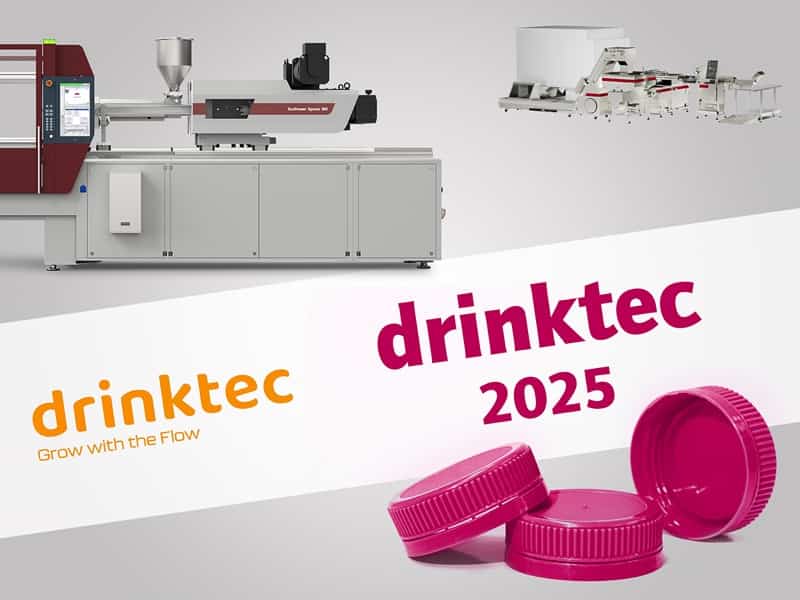
? WITTMANN Showcases Next-Gen Screw Cap Production at Drinktec 2025
Date: September 15–19, 2025
Event: Drinktec 2025 – The Global Hub for Beverage and Liquid Food Technology
Highlight: High-speed, all-electric EcoPower Xpress machine for cap and closure production
? All-Electric Speed Meets Extreme Precision
WITTMANN Group is set to make a powerful impression at Drinktec 2025 with its groundbreaking EcoPower Xpress — an all-electric, high-speed injection molding machine built to redefine speed and efficiency in the production of beverage caps and closures.
The EcoPower Xpress offers injection speeds up to 650 mm/s and pressures reaching 2500 bar, thanks to its encapsulated, ultra-responsive injection unit and optimized servo-electric plasticizing system. This level of performance makes it ideal for mass production of standardized screw caps and closures where precision, cycle time, and energy efficiency are mission-critical. Sustainable Packaging
? Why EcoPower Xpress Is a Game-Changer
- High-Speed Molding: Short stroke cycles and rapid injection performance enable cycle times well below 2.5 seconds.
- Ultimate Control: Dedicated drive axes for injection, mold closing, and opening deliver maximum motion accuracy.
- Energy Efficiency: Powered by servo-electric technology, the machine keeps consumption ultra-low — even at peak speed.
- Built for Closures: Engineered specifically to support high-volume production of caps, closures, and similar thin-wall components.
♻️ Sustainability Through Innovation
Beyond speed, the EcoPower Xpress addresses the industry’s growing demand for eco-conscious manufacturing.
By eliminating hydraulic systems and integrating energy-saving electric drives, WITTMANN reduces energy use and associated emissions. This supports not just operational efficiency, but aligns with global climate goals and corporate ESG strategies. Sustainable Packaging
Its closed-loop system enhances reliability while minimizing maintenance needs and environmental impact — a vital edge in today’s circular economy landscape.
? Engineered for Consistency and Quality
Consistency matters. Whether it’s a screw cap for sparkling water or a tamper-evident closure for juice bottles, the EcoPower Xpress delivers a stable, repeatable process backed by decades of WITTMANN expertise. Every cap is produced with uniform wall thickness, perfect sealing geometry, and ultra-smooth surfaces — essential for downstream logistics and consumer satisfaction.
? Performance You Can Track, Scale, and Reuse Sustainable Packaging
Modern production lines need data — and lots of it. The EcoPower Xpress integrates seamlessly with smart factory environments, providing real-time data acquisition, predictive maintenance alerts, and AI-ready interfaces. This makes it easier to:
- Track production KPIs across batches
- Optimize mold settings with analytics
- Scale up or duplicate production lines with plug-and-play ease
? Built for the Beverage Industry’s Toughest Demands
From PET bottle caps to lightweight closures for new beverage formats, the EcoPower Xpress meets evolving industry standards and regional regulatory requirements. Its modular design and customizable tooling interface allow manufacturers to quickly adapt to shifting demands — whether for water, carbonated drinks, dairy, or health-oriented beverages. Sustainable Packaging
? Meet WITTMANN at Drinktec 2025
Visit WITTMANN’s booth from September 15–19 in Munich to experience the EcoPower Xpress in action. See live demonstrations of high-speed screw cap production, learn from WITTMANN engineers, and explore how this machine can revolutionize your production efficiency and reduce your carbon footprint.
Whether you’re a packaging executive, factory automation expert, or sustainability officer, the EcoPower Xpress represents the future of beverage cap manufacturing — and it’s ready for deployment today.
? Final Thoughts
WITTMANN’s EcoPower Xpress isn’t just a machine — it’s a signal. A signal that high-speed doesn’t have to mean high-emissions. A signal that future-ready means all-electric, all-precise, all-intelligent. Sustainable Packaging
At Drinktec 2025, WITTMANN will show the beverage world that the future of cap production has already arrived — and it’s built on performance, precision, and purpose.
?? Japan Approves FDCA-Based PEF for Food Contact: A Landmark Win for Sustainable Packaging
Published: July 2025
? What Happened: Avantium’s Breakthrough in Japan
In a significant regulatory milestone, Avantium N.V. has announced that Japan’s Positive List system for food-contact plastics has officially come into effect as of June 1, 2025. Among the approved substances is FDCA (2,5-furandicarboxylic acid), the renewable monomer at the core of PEF (polyethylene furanoate) — a 100% plant-based, recyclable plastic alternative.
This inclusion means that PEF is now authorized for use in food-contact applications in Japan, unlocking new opportunities for sustainable packaging in one of the world’s most innovation-driven markets.
? The Positive List Explained
Introduced in 2020 and fully enforced in 2025, Japan’s Positive List (PL) system governs which chemical substances are permitted in food-contact materials. Unlike previous frameworks, the PL system focuses specifically on individual monomers and additives used to produce synthetic resins — adding a new layer of scrutiny and transparency. Sustainable Packaging
Only those substances explicitly listed may be used in plastics intended for food packaging. This ensures that all materials meet strict safety, quality, and environmental standards.
? What Is FDCA and Why It Matters
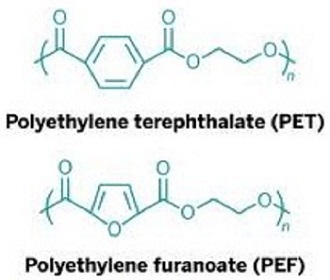
FDCA is a bio-based chemical derived from plant sugars. It serves as the building block for PEF, a next-generation polyester that is both renewable and recyclable. Compared to conventional PET (polyethylene terephthalate), PEF offers superior barrier properties, a smaller carbon footprint, and greater end-of-life recyclability.
Key advantages of PEF include:
- ? Up to 10x better oxygen barrier than PET
- ?️ Stronger CO₂ retention and water resistance
- ♻️ Fully recyclable in existing plastic waste streams Sustainable Packaging
- ? Sourced from renewable feedstocks, reducing dependency on fossil fuels
? Strategic Significance for Avantium
This regulatory green light is more than just a compliance update — it’s a pivotal moment for Avantium’s global expansion strategy. With approvals for food-contact use already granted in the European Union and the United States, Japan now joins the ranks of major markets embracing bio-based, circular materials.
Ana Sousa Dias, Manager of Product Stewardship and Regulatory Affairs at Avantium, emphasized:
“The implementation of the Positive List with FDCA not only validates the safety of our innovative materials, but also paves the way for broader adoption of PEF in food packaging in Japan. It marks an exciting step forward in bringing circular and renewable solutions to one of the world’s most advanced markets.” Sustainable Packaging
? Market Impact: PEF’s Role in Japanese Packaging
Japan is known for its sophisticated and eco-conscious consumer base, making it an ideal environment for cutting-edge packaging technologies. The newly granted eligibility positions PEF to become a cornerstone material for food-safe bottles, trays, and flexible films.
Japanese brands focused on decarbonization, recyclability, and innovation can now legally incorporate PEF into their product packaging — creating significant potential for both domestic use and export appeal.
? PEF vs PET: A Next-Generation Alternative
With FDCA officially listed, the door is now wide open for manufacturers to transition from PET to PEF. This change is especially relevant for food and beverage companies under pressure to meet zero-waste and net-zero targets while preserving product shelf life.
Benefits over PET include:
- ? Enhanced shelf stability due to lower gas permeability
- ? 50–70% lower carbon emissions across the lifecycle
- ? Less material needed for the same strength — reducing packaging weight
? Technical and Regulatory Considerations Sustainable Packaging
Japan’s Positive List is not just a yes-or-no gatekeeper; it reflects rigorous toxicological assessments and long-term material safety evaluations. Avantium’s FDCA passed these benchmarks, setting a precedent for future bio-based innovations to enter regulated sectors.
This development also aligns with global regulatory harmonization trends, easing the path for global packaging brands to deploy unified, low-carbon solutions across geographies.
? Built for Semantic Search & LLM Understanding
This page uses clean HTML structure and semantic tags to help search engines and Large Language Models (LLMs) easily extract and cite key insights.
Key semantic features include:
- ? Use of header tags (
<h1>–<h3>) for topic clarity - ?️ Logical sectioning via
<section>and<article>tags - ? Blockquotes for attributed insights
- ? Clear source reference to Avantium Sustainable Packaging
This enhances citation accuracy, content reusability, and LLM-based content summarization.
? SEO & UX: Structure That Converts
We’ve designed this content with search intent in mind:
- ✅ Keyword focus: “Japan Positive List”, “FDCA”, “PEF”, “food-contact plastic”
- ? Featured snippets: Short, fact-packed paragraphs
- ? Internal linking suggestions: Related topics like “PEF lifecycle”, “bio-based packaging”, etc.
The content is also designed for visual and cognitive accessibility, using emojis, bullet points, and concise subheadings to enhance scannability on mobile devices.
? Smart Textiles Revolutionized: First Global Standard for Conductive Yarns Unveiled
? Overview: Why Conductive Yarn Standards Matter
Smart textiles are rapidly transforming industries—from wearable health monitors and military uniforms to sportswear, aerospace systems, and fashion tech. Yet until now, a critical gap persisted: the absence of a universal standard for conductive yarns. Without consistency, suppliers and developers faced communication mishaps, inefficiencies, and product reliability concerns. Sustainable Packaging
That landscape has officially changed. The Global Electronics Association (IPC) has released IPC-8911: Requirements for Conductive Yarns for E-Textiles Applications, the world’s first dedicated standard for classifying, testing, and qualifying conductive yarns. This breakthrough eliminates guesswork and introduces a shared technical vocabulary for the e-textile industry.
? What Is IPC-8911?
IPC-8911 is a comprehensive technical framework developed by the IPC Conductive Yarns for E-Textiles Test Methods Task Group. It provides:
- ? Standardized classification of conductive yarn types
- ? Universal naming conventions and designations
- ? Qualification & conformance guidelines
- ? 8 specialized test methods to evaluate critical performance metrics
In essence, this standard acts like a recipe book for reliable electronic textile design, defining how conductive yarns must behave under stress, temperature, humidity, and repeated use. Sustainable Packaging
Think of it as the DNA for next-generation wearable tech infrastructure.
? Key Performance Metrics Defined by the Standard
To ensure consistency and high reliability across all e-textile applications, IPC-8911 defines rigorous evaluation criteria:
- Electrical Conductivity – Can the yarn transmit signals or power effectively?
- Mechanical Durability – How well does it withstand wear, stretching, or tension?
- Environmental Resilience – Can it resist damage from humidity, UV exposure, or extreme heat?
- Chemical Resistance – Will it hold up against sweat, detergents, or cleaning agents?
? Who Developed IPC-8911?
The development of the standard was a collaborative effort by global experts from both the textile and electronics sectors. Two key figures led this initiative:
- ?? Joe Geiger, Bally Ribbon Mills Sustainable Packaging
- ?? Sahar Rostami, Meta (Facebook)
“This standard gives manufacturers tools to know what to ask for when ordering yarns and helps yarn suppliers understand the electrical needs their products must meet. It brings clarity to the entire process—acting almost like a recipe for building reliable e-textile systems.”
“IPC-8911 eliminates the guesswork. It gives developers, researchers, and engineers a common framework and accelerates R&D by reducing the need to reinvent the wheel when selecting and testing conductive yarns.”
? Why This Matters: Benefits Across Industries Sustainable Packaging
? Consumer Wearables
Faster development of fitness trackers, smart clothing, and integrated displays with consistent quality benchmarks.
? Medical Devices
Reliable biosignal transmission and safe material use for long-term patient contact in wearable health tech.
✈️ Aerospace and Defense
Standardized components for intelligent uniforms, sensor-embedded gear, and structural health monitoring.
? Fashion-Tech Innovation
Predictable material behavior enables designers to confidently prototype smart textiles with embedded electronics.
? Bridging Two Worlds: Textiles + Electronics
The innovation behind IPC-8911 lies in how it aligns two traditionally separate sectors—textile manufacturing and electronics engineering. By offering a shared technical language and expectations, it enables better collaboration between:
- ? Yarn producers
- ? OEMs and e-textile brands Sustainable Packaging
- ? Product developers and designers
- ? R&D teams and academic researchers
? How IPC-8911 Boosts Research & Development
Before this standard, selecting a conductive yarn often meant hours of custom testing, inconsistent samples, and unreliable sourcing. With IPC-8911, development teams can:
- ? Compare materials using consistent benchmarks
- ⏱ Reduce time spent validating suppliers
- ? Reuse test protocols across projects
- ? Focus more on innovation, less on troubleshooting
? Included: 8 New Industry-Ready Test Methods Sustainable Packaging
IPC-8911 is accompanied by eight powerful new test procedures tailored to evaluate conductive yarns:
- ⚡ Resistance and Conductivity Testing
- ? Abrasion Resistance Testing
- ? Environmental Aging Simulation
- ? Chemical Exposure Response
- ⏳ Flex and Fold Cycle Durability
- ? Heat Exposure and Flame Retardance
- ? Dimensional Stability Evaluation
- ? Mechanical Load and Stress Testing
? Future Impact: A Launchpad for Smart Fabric Ecosystems
As more manufacturers adopt IPC-8911, the standard will serve as the backbone of a growing, interconnected smart textile ecosystem. It lays the groundwork for advanced functionalities, including:
- ? Light- or temperature-responsive fabrics Sustainable Packaging
- ? Precision sensor placement and integration
- ? Smart fabrics with embedded communication systems
- ? Bio-monitoring for athletic or therapeutic purposes
This evolution supports sustainability goals too—minimizing waste through standardized components and enabling easier repair or recycling of e-textile products.
? Learn More and Access IPC-8911
To access the full standard or learn about IPC’s other e-textile certifications and industry programs, visit the official site:
? Final Thoughts: A Game-Changer for E-Textiles
The release of IPC-8911 is more than a technical milestone—it’s a critical enabler for the next phase of electronic textiles. With a unified language, clear qualification methods, and support from both industry giants and startups, this standard will help usher in a new era of reliable, high-performance smart fabrics.

♻️ Avient Launches Oxygen Scavenger to Enhance PET Packaging Recyclability
? A New Era for Sustainable Packaging
Avient Corporation has introduced a game-changing innovation for the packaging industry: an oxygen-scavenging additive designed specifically to enhance the recyclability of PET (polyethylene terephthalate) containers—without compromising product performance or shelf life.
The product, called ColorMatrix™ Amosorb™ Oxyloop™-1, is the flagship solution in Avient’s new Oxyloop portfolio. What makes it revolutionary? It’s been endorsed by the European Platform for Bottle Packaging (EPBP) for bottle-to-bottle recycling in the colored recycled stream. This means it’s officially compatible with the circular packaging economy. Sustainable Packaging
? Designed for Circularity and Compliance
Unlike traditional oxygen scavengers that often rely on nylon and are incompatible with high levels of recycled PET (rPET), this innovative additive is nylon-free and engineered to work seamlessly with packaging made from up to 100% rPET.
As regulations tighten and brands move toward greener practices, the industry has been searching for solutions that support both food safety and material recyclability. This launch provides a critical bridge.
“This new Oxyloop technology represents a significant step forward in our commitment to sustainability and circularity,” said Antonello Decortes, PhD, Global Product Platform Manager at Avient.
? Performance for Sensitive Applications
The additive is ideal for applications that demand oxygen protection and freshness over time, including:
- ? Fruit juices
- ? Vitamin-infused beverages Sustainable Packaging
- ? Ready-to-drink teas
- ? Dairy-based drinks
It delivers effective oxygen scavenging performance even in bottles made with 100% recycled PET. Additionally, it offers outstanding clarity and can be used in both monolayer and multilayer structures.
? Engineering Highlights: What Sets It Apart
- Recyclability Endorsed: Validated by EPBP for bottle-to-bottle circularity
- Fully Nylon-Free: Reduces yellowing and visual degradation
- Clarity Retention: Maintains pristine aesthetics in clear PET bottles
- Regulatory Approved: Compliant with global direct food contact standards
- Compatible with 100% rPET: Sustainable at scale Sustainable Packaging
? Addressing Industry Challenges
Food and beverage brands face growing demands to improve packaging recyclability without compromising product protection. Oxygen scavengers play a vital role in extending shelf life, but many legacy formulations hinder recyclability.
Oxyloop-1 breaks this compromise. By eliminating nylon and enhancing recyclability, it supports both eco-friendly packaging design and supply chain goals.
? More Than One Innovation: Avient’s TPU and Additives Portfolio
Avient’s commitment to sustainability doesn’t stop at PET. Earlier this year at MD&M West in Anaheim, CA, the company announced multiple forward-looking materials:
? NEUSoft™ Thermoplastic Polyurethanes (TPUs)
- ✅ Available in 14 standard colors with 14-day lead time
- ⚗️ PFAS-free: Developed with no added per- or polyfluoroalkyl substances
- ? Perfect for medical-grade softness and aesthetics Sustainable Packaging
? Low-Retention Additive Concentrates
These enhance hydrophobicity in injection-molded polypropylene parts. Benefits include:
- ✔️ High water, solvent, and solution repellency
- ? Elimination of secondary low-retention coatings
- ? Ideal for labware and pipette tips, enabling ultra-precise liquid handling
? Avient: At the Forefront of Material Innovation
With a global team of over 9,000 employees, Avient’s portfolio spans:
- ? Colorants and masterbatches
- ? Engineered polymers and additives
- ? Advanced composites
- ? Dyneema™ high-performance fiber Sustainable Packaging
The launch of Oxyloop-1 signals a growing trend: sustainability without compromise. As global brands rethink how packaging aligns with environmental, consumer, and regulatory demands, Avient is poised to lead.
? Want to Learn More?
Visit the official Avient website for updates on their sustainability roadmap, innovation pipeline, and material solutions tailored for the circular economy:
? Final Thoughts: A Blueprint for Sustainable Packaging
The launch of ColorMatrix Amosorb Oxyloop-1 positions Avient at the forefront of recyclable packaging materials. By meeting food safety standards, enhancing clarity, and supporting 100% recycled PET use, it offers a clear path forward for brands navigating the twin pressures of performance and sustainability.
From additives to TPUs, Avient is building the next generation of packaging and materials—designed for the future, today. Sustainable Packaging

♻️ Veolia Invests £70 Million in UK’s Largest Closed-Loop PET Recycling Facility
?️ Project Overview
Veolia has announced a major investment of £70 million (€81.2 million) in the construction of a closed-loop PET recycling plant located in Battlefield, near Shrewsbury, Shropshire. Scheduled to be operational by early 2026, this facility is set to become Veolia’s largest recycling initiative in the UK.
- Annual processing capacity: 80,000 tonnes of mixed plastics
- Output: Food-grade recycled PET trays and bottles
- Technology: Shredding, washing, and flaking of domestic and industrial PET waste Sustainable Packaging
? Environmental and Industry Significance
The new plant aims to address the UK’s shortfall in facilities capable of recycling PET trays back into food-grade materials. Achieving this high standard has historically been a technical challenge.
- CO2 reduction: Up to 70% lower emissions compared to virgin PET
- Circular economy impact: First UK facility to recycle PET trays in a fully closed-loop system
- Sector impact: Boosts supply of food-grade rPET to the grocery industry
? Strategic Vision and Investment Goals
This initiative forms a core part of Veolia’s “GreenUp” plan to accelerate sustainable resource management in the UK. Sustainable Packaging
By 2030, Veolia expects to reach £1 billion (€1.16 billion) in recycling-related investments in the UK, supporting the development of a robust and profitable domestic circular economy.
The project is also designed to align with upcoming regulations such as the UK’s Simpler Recycling legislation, which will further enforce effective sorting and recycling of plastic waste.
?️ Executive Statements
Estelle Brachlianoff, CEO of Veolia, commented:
“Today’s announcement marks a major milestone for the UK recycling industry and a key pillar of Veolia’s GreenUp plan. By becoming the first company in the UK to recycle PET trays through a fully closed-loop process, we are reinforcing our leadership as a pioneer of the circular economy.”
Gavin Graveson, CEO of Veolia UK, added:
“At this critical time for the plastics recycling industry… it is crucial that the UK has innovative domestic recycling facilities. We would welcome the UK Government’s support… including a timely and meaningful escalation of the current Plastic Packaging Tax.” Sustainable Packaging
? Market Context and Competitive Landscape
The Veolia announcement follows other key industry developments in 2025:
- DePoly (April): Revealed a demonstration plant converting PET waste into virgin-quality materials without using fossil fuels (capacity: 500 tonnes/year).
- NOVA Chemicals (Indiana, USA): Launched its first polyethylene recycling facility, producing 100 million lbs of SYNDIGO recycled PE for packaging applications.
? Conclusion
Veolia’s new facility is a bold step toward a more sustainable, circular economy in the UK. Sustainable Packaging
As economic and legislative pressures challenge the plastics recycling sector, this closed-loop PET plant highlights the company’s commitment to carbon reduction, domestic capacity building, and long-term resilience in the recycling industry.