Biodegradable Plastics – Indonesia Champions Biodegradable Plastics: A Bold Move to Tackle the Waste Crisis ? A Nation Confronts Its Plastic Problem Indonesia, one of the world’s largest contributors to ocean plastic pollution, is launching a transformative initiative aimed at combating its plastic waste crisis 14-07-2025
Biodegradable Plastics
Oil Demand Growth – EU-Wide End-of-Waste Criteria Needed for ELT-Derived Rubber ? Why Harmonized End-of-Waste Criteria Matter Europe is at a pivotal moment in its transition toward a circular economy. One area that demands urgent attention is the recycling of end-of-life tires (ELTs)
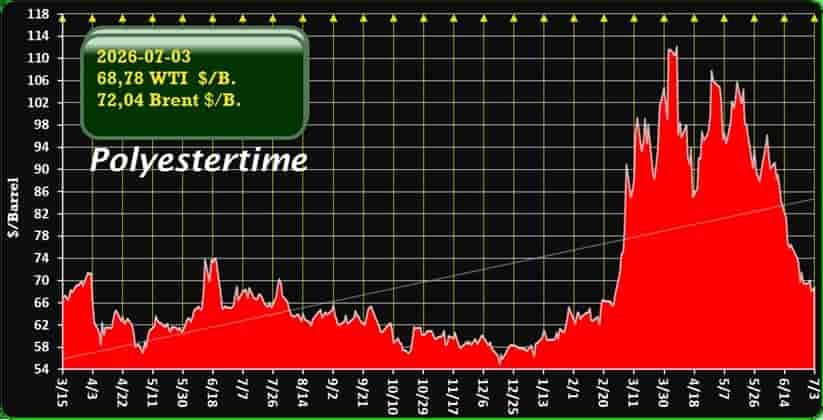
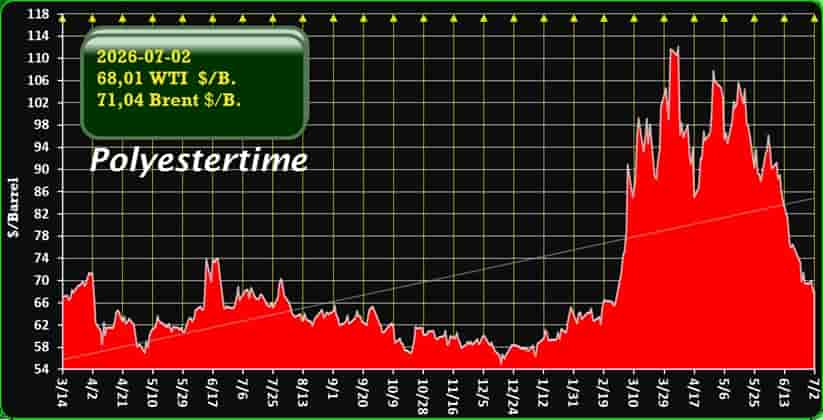
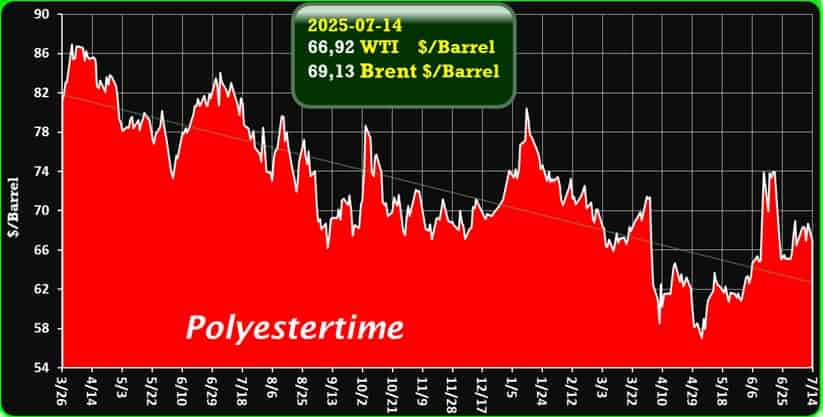
Crude Oil Prices Trend
? Indonesia Champions Biodegradable Plastics: A Bold Move to Tackle the Waste Crisis
? A Nation Confronts Its Plastic Problem Biodegradable Plastics
Indonesia, one of the world’s largest contributors to ocean plastic pollution, is launching a transformative initiative aimed at combating its plastic waste crisis. Under the leadership of Industry Minister Agus Gumiwang Kartasasmita, the government is prioritizing biodegradable plastics powered by biotransformation technology.
This ambitious step could position Indonesia as a regional trailblazer in sustainable packaging and industrial innovation—an urgent shift amid mounting global pressure for environmental accountability.
? What Is Biotransformation Technology?
At the heart of Indonesia’s strategy lies biotransformation, a next-gen process that uses living organisms (such as bacteria or fungi) to break down plastic waste rapidly.
Unlike traditional biodegradable plastics, biotransformation:
- ✅ Leaves no microplastics or toxic residues behind
- ✅ Enables controlled breakdown—industries can degrade or recycle waste on-demand
- ✅ Is compatible with existing plastic production pipelines with minimal disruption
? “Such technology offers a concrete solution to the problems caused by plastic waste, particularly single-use plastics.”
— Agus Gumiwang Kartasasmita, Industry Minister
? Indonesia’s Road Map to Eco-Friendly Plastics Biodegradable Plastics
Minister Kartasasmita announced a strategic framework to build momentum:
- Draft a National Standard for biodegradable plastic products
➤ Establishing clear compliance and performance benchmarks - Develop a Road Map for technology integration
➤ Aligning industrial policies with environmental goals - Launch an Action Plan to support R&D and commercialization
➤ Stimulating public-private collaboration and investment
? Green Plastics for a Global Market
This isn’t just an environmental play—it’s industrial strategy.
Indonesia’s shift toward green manufacturing aims to give local businesses a competitive edge in international markets where eco-credentials are becoming essential. Biodegradable Plastics
- ? Global demand for sustainable packaging is surging
- ? Brands and regulators are phasing out single-use plastics
- ? Green certifications enhance exportability and market access
“We believe it’s crucial to ensure that all plastic products in the country meet strict environmental standards,” Kartasasmita emphasized.
? Raw Materials: Sustainability Without Sacrifice
To avoid unintended consequences, the ministry plans to identify renewable feedstocks that don’t compromise food security.
That means:
- Conducting integrated research into plant-based materials
- Avoiding raw materials that conflict with staple crops
- Leveraging Indonesia’s rich biodiversity and agricultural waste streams
? Examples include:
Cassava
Sugarcane bagasse
Palm kernel shell
Seaweed Biodegradable Plastics
? Aligning Green Growth with Industrial Resilience
The initiative isn’t merely about cleaner plastics—it’s a restructuring of industrial policy for long-term resilience:
- ? Encouraging green manufacturing ecosystems
- ? Supporting technology transfers and capacity building
- ? Implementing life-cycle assessments (LCAs) for eco-product validation
Indonesia is signaling that sustainability is no longer an afterthought—it’s the foundation of future-ready industries.
? Incentives for Eco-Innovation
To catalyze adoption, the government is considering incentive packages for manufacturers, researchers, and tech startups that commit to sustainable plastic alternatives.
Possible mechanisms include:
- ? Tax breaks or R&D subsidies
- ?️ Priority access to green industrial zones
- ? Labeling schemes and environmental certification support
- ?? Public funding for pilot projects and material testing
This builds a policy environment where green alternatives are not just preferable—but profitable. Biodegradable Plastics
? A Call for Collaboration
Kartasasmita emphasized the need for multi-stakeholder engagement to ensure systemic change:
- ?? Researchers developing safe, cost-effective biopolymers
- ? Manufacturers retooling production lines for new materials
- ? Retailers adopting sustainable packaging models
- ?️ Government ensuring regulatory clarity and investment incentives
“Modern technology and cross-sector collaboration will help Indonesia reduce plastic waste while continuing to support industrial development,” said the minister.
? Why It Matters: Indonesia’s Plastic Waste Crisis
Indonesia produces 6.8 million tons of plastic waste annually, with around 620,000 tons leaking into the ocean each year, according to UNEP.
Single-use plastics—from sachets and bags to cutlery—represent a major share of this waste stream. Biodegradable Plastics
Without urgent intervention:
- ? Marine life will face increasing risk
- ?️ Coastal tourism could suffer massive damage
- ? Microplastics will continue contaminating food chains
By pushing biodegradable alternatives, Indonesia hopes to reduce environmental damage while unlocking economic opportunities.
? Global Context: Who Else Is Going Green?
Indonesia isn’t alone—but its timing is crucial.
| Country | Biodegradable Strategy |
|---|---|
| EU | Phasing out single-use plastics by 2030 |
| China | Banning certain non-degradable plastics since 2021 |
| India | National plastic ban on carry bags under 75µm |
| U.S. States | Varied legislation; growing push for compostables |
Indonesia’s approach, focused on biotransformation and scalable standards, could become a model for other Southeast Asian nations, which face similar challenges.
? Final Thoughts: A Green Plastics Revolution in the Making Biodegradable Plastics
Indonesia’s push for biodegradable plastics isn’t just a policy shift—it’s a nationwide call to action. With the right mix of technology, standards, and collaboration, the country could turn a dire waste crisis into a springboard for sustainable innovation.
As the world looks for scalable, science-backed solutions to the plastic problem, Indonesia may well lead the way—not just in Southeast Asia, but on the global stage.
? Guangdong Launches World’s First 200,000 Tons/Year Plastic Recycling Superplant
Category: Sustainability | Tags: Chemical Recycling, Circular Economy, China, Green Tech
Published: July 14, 2025
? A Global Milestone in Plastic Waste Recycling
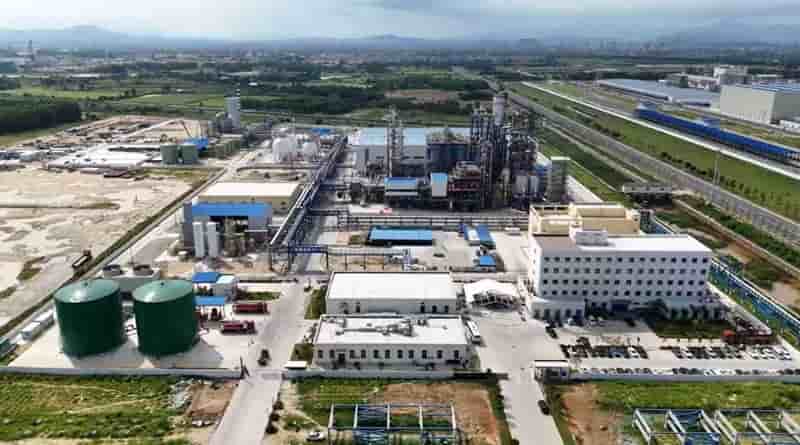
China has officially unveiled the world’s first industrial-scale plant capable of recycling 200,000 tons of mixed plastic waste annually. Located in Jieyang, Guangdong Province, this state-of-the-art facility has entered trial production—marking a major step toward a scalable circular economy model.
The plant uses an innovative “one-step” deep catalytic cracking process to transform mixed, low-value plastics directly into valuable chemical feedstocks. This breakthrough sidesteps the need for complex sorting and sets a new global benchmark for industrial sustainability. Biodegradable Plastics
? The Science Behind the Innovation
Conventional recycling requires multi-step sorting and processing. In contrast, this new method allows for direct conversion of unsorted, low-value plastics into chemical raw materials, delivering a >92% product yield.
“Unlike typical two-step methods, our process eliminates the sorting phase,” explains Zhang Xingong, Chairman of Guangdong Dongyue Chemical Technology Co. “It’s more efficient, cost-effective, and environmentally responsible.”
? Environmental Impact and Green Goals
The plant’s cutting-edge approach aligns with Guangdong’s broader goals of green innovation. According to Wang Shaole, Deputy Party Secretary of Jieyang, this project will reduce China’s reliance on crude oil and help solve the global plastic pollution crisis.
“We aim to set a new global standard for green chemical recycling,” Wang stated at a news conference. “It’s a Chinese contribution to the world’s circular economy movement.”
? From Local Project to Global Blueprint Biodegradable Plastics
More than just a local achievement, Guangdong’s initiative is positioned to serve as a model for sustainable industrial transformation worldwide. It turns hard-to-recycle plastic waste into economic opportunity—without sacrificing environmental responsibility.
This success positions Jieyang as a key player in the global push for carbon-neutral industrial innovation.
? Expansion Plans and Economic Impact
The government plans to fully support Phases II and III of the facility, expanding its capacity to process over 3 million tons annually. The long-term vision: make Jieyang the global hub for plastic chemical recycling.
“We’ll continue optimizing our business environment to attract international investment,” said Wang. “This is just the beginning.” Biodegradable Plastics
? Key Technical Features
- One-Step Cracking: Avoids sorting, reducing time and cost.
- Integrated Systems: Combines multiple technologies into one seamless process.
- High Efficiency: Product yield exceeds 92% from unsorted plastics.
- Low Emissions: Designed to meet and exceed global environmental standards.
? Strategic Benefits
- Pollution Control: Tackles plastic waste at scale.
- Energy Security: Replaces crude oil with recycled plastic feedstock.
- Economic Value: Cuts costs and boosts yields through innovation.
- Job Creation: Fuels a new green industrial sector in Guangdong.
? Why Jieyang?
Jieyang’s strategic coastal location offers logistics advantages, access to raw materials, and an innovation-ready workforce. Combined with strong government support, the city is well-positioned to become a global recycling capital. Biodegradable Plastics
? Looking Ahead: What This Means for the World
As plastic waste continues to rise globally, the success of Guangdong’s plant offers a blueprint for scalable, circular recycling infrastructure. Other countries are likely to follow this model, adapting the one-step chemical recycling process to meet local needs.
Expect similar initiatives across Europe, the U.S., and emerging economies as the world pivots toward sustainable waste management.
? Summary Takeaways
- ✅ World’s first 200,000 tons/year plastic chemical recycling plant launched in Guangdong, China.
- ⚙️ Uses breakthrough one-step deep cracking technology—no sorting needed. Biodegradable Plastics
- ? Contributes to global circular economy and reduces oil dependency.
- ? Jieyang set to become the global base for advanced plastic recycling by 2030.
? BASF Slashes 2025 Forecasts Amid U.S. Tariffs and Weak Global Demand
? Revised Estimates Reflect Global Market Struggles
BASF, one of the world’s largest chemical companies, has significantly lowered its financial outlook for 2025. The updated forecast points to a decline in both revenue and profitability, driven by macroeconomic uncertainties, sluggish global chemical demand, and intensifying geopolitical pressures — especially U.S. trade tariffs.
? Key Highlights:
- Adjusted EBITDA revised down to €7.3–€7.7 billion (from previous €8–€8.4 billion).
- Free cash flow remains forecast between €0.4–€0.8 billion.
- Q2 2025 sales down by 2.1% to €15.77 billion.
- Chemicals division under pressure from lower global pricing.
- Tariffs from the U.S. and a weak Chinese market are key culprits.
⚠️ Economic Headwinds and Tariff Tensions Biodegradable Plastics
Global Demand Slows
The chemical sector is traditionally a bellwether for broader industrial health. BASF’s revised estimates reflect declining demand from key markets, particularly Asia and the Americas, where purchasing volumes have stagnated or receded due to slowed construction, automotive production, and reduced infrastructure investments.
U.S. Tariffs Amplify Pressure
The resurgence of protectionist policies — most notably U.S. tariffs targeting Chinese-origin chemicals and raw materials — is reverberating throughout global supply chains. BASF, with its global production footprint and export-heavy operations, is increasingly vulnerable to these disruptions.
This hostile tariff climate has heightened operational uncertainty and pricing volatility, compelling BASF to adopt a more conservative financial stance.
? Financial Breakdown: What Changed?
? Adjusted EBITDA Outlook
In its preliminary Q2 2025 financial release, BASF announced a cut to its adjusted EBITDA forecast for the full year:
- New estimate: €7.3–€7.7 billion
- Previous range: €8–€8.4 billion Biodegradable Plastics
This 8% drop reflects lower-than-expected operating income, tighter margins, and curtailed investments across the board.
? Free Cash Flow
Despite the revenue crunch, free cash flow projections are holding steady in the €0.4–€0.8 billion range. This stability is largely due to decreased capital expenditures, particularly in property, plant, and equipment, as the company slows down expansion to preserve liquidity.
? Second-Quarter 2025 Snapshot Biodegradable Plastics
| Metric | Q2 2025 (Preliminary) | Analyst Consensus | Deviation |
|---|---|---|---|
| Sales | €15.77 billion | N/A | -2.1% YoY |
| Adjusted EBITDA | €1.77 billion | ~€1.77 billion | In-line |
| Adjusted EBIT | €0.81 billion | ~€0.78 billion | Slightly above |
| EBIT | €0.49 billion | ~€0.70 billion | Significantly below |
| Net Income | €0.08 billion | ~€0.08 billion | In-line |
| Free Cash Flow | €0.53 billion | ~€0.50 billion | Slightly better |
? Chemicals Segment: A Core Concern
The chemicals division, BASF’s bread and butter, saw the steepest contraction. Sales slumped due to lower average selling prices — a result of both oversupply in some sub-sectors and competitive pressures in others. Notably:
- Commoditized chemicals such as acetylene derivatives and polyurethane precursors saw pronounced pricing dips. Biodegradable Plastics
- Specialty chemicals, typically resilient, also posted lackluster growth due to shrinking OEM orders and inventory reductions.
This volume-price double blow underscores the structural vulnerability of even diversified chemical giants in turbulent macroeconomic environments.
? Strategic Implications for BASF
Investment Retrenchment
To conserve capital and avoid overextension, BASF is likely to slow or pause non-essential CAPEX. This includes:
- Delaying plant upgrades
- Reevaluating international expansion (especially in Asia)
- Halting lower-margin product lines Biodegradable Plastics
Portfolio Prioritization
Management is expected to shift focus toward high-margin, innovation-driven segments, such as:
- Agricultural solutions
- Battery materials and cathode production
- Bio-based and circular economy chemicals
This pivot aligns with the long-term decarbonization and energy transition themes reshaping the industrial landscape.
? What It Means for Investors and Stakeholders
Confidence Hit, But No Panic Biodegradable Plastics
While the downward revisions are a red flag, the market reaction has remained relatively muted. This suggests stakeholders understand the global forces at play and view BASF’s response as proportionate and strategic.
Liquidity and Credit Ratings Intact
With free cash flow stable and no material increase in debt, BASF’s credit profile remains solid. Agencies are unlikely to downgrade unless Q3 and Q4 2025 show further erosion in profitability.
Dividends May Be Reviewed
Although no official statement has been made, dividend adjustments could be on the table if pressures persist — a move that would preserve capital and reinforce long-term resilience. Biodegradable Plastics
? Final Thoughts: The Bigger Picture
BASF’s revised 2025 outlook paints a sobering picture of how even industrial titans are not immune to the triple challenge of:
- Trade disruption
- Shifting demand dynamics
- Margin compression from pricing power loss
That said, the company’s stable cash flow, prudent capital deployment, and strategic recalibration toward high-margin, sustainable sectors offer hope for long-term resilience.
As the world reorients its supply chains and energy dependencies, BASF — with the right structural adjustments — is still well-positioned to lead in a post-carbon, post-globalized future. Biodegradable Plastics
? Related Articles You Might Like
- Chemical Sector Outlook 2025: Winners & Losers
- Europe vs. U.S. Tariffs: What It Means for Industrial Giants
- BASF’s Green Transformation: Innovation, Batteries & Bioeconomy
♻️ PCX Unveils Global Marketplace for Recycled Plastics
Empowering Brands to Close the Loop and Fund Waste Recovery in Emerging Markets
In a major step toward solving the global plastic crisis, PCX Markets, a Singapore-based plastic credits platform, has launched a transformative solution: PCX Circular Plastic, a digital recycled plastics marketplace. This platform enables brands worldwide to source high-quality recycled plastic resins and support waste recovery initiatives in Asia through a dual-credit and resin purchase model.
? The Circular Marketplace: What It Is and Why It Matters
PCX Circular Plastic gives brands and manufacturers direct access to recycled plastic resins—PET, HDPE, LDPE, PP, and PE—in forms such as flakes, pellets, and powders. Sourced from five certified recycling partners across Indonesia, India, and the Philippines, the platform represents an annual capacity of 70,000 tonnes of verified post-consumer plastics. Biodegradable Plastics
This offering marks a key evolution in sustainable sourcing, where buying recycled plastics is seamlessly linked to supporting local waste economies.
? How the System Works: Resin + Credits = Real Impact
The marketplace operates on a dual model:
- Purchase Recycled Plastic Resin
Companies can directly buy high-quality, vetted recycled materials tailored to their needs. - Fund Waste Recovery via Plastic Credits
Optionally, buyers can purchase plastic credits—a mechanism for funding the collection and recycling of one tonne of plastic waste. This capital goes directly to recyclers, empowering them to buy more waste from aggregators and waste pickers.
This integrated approach allows brands to meet recycled content goals while directly contributing to waste reduction and social impact at the source.
? What Are Plastic Credits and How Do They Work?
Plastic credits function similarly to carbon credits. They’re environmental commodities that represent the verifiable collection or recycling of one metric tonne of plastic waste. Biodegradable Plastics
Under PCX’s Plastic Pollution Reduction Standard (PPRS):
- Each project is audited twice:
- A third-party conformity assessment ensures the environmental and social criteria are met.
- A second verification audit occurs when credits are issued to ensure true impact.
- Credits are fully traceable, from pickup to processing.
- Only audited recovery activities qualify for credit issuance.
This ensures transparency, impact integrity, and trustworthiness, which are essential for ESG compliance and stakeholder confidence. Biodegradable Plastics
? Where the Money Goes: Closing the Loop with Funding
When a brand buys a plastic credit:
- The funds are routed to recyclers in the field.
- These recyclers then use the money to purchase more plastic waste from pickers or aggregators, often local micro-enterprises or cooperatives.
- The process is monitored via the PPRS platform, ensuring every dollar supports a closed-loop, ethical recycling chain.
“The brand can help fund audited cleanup through the credit and also buy resin from the recycler,”
— Cris Prystay, Director of Communications, PCX Markets Biodegradable Plastics
? Resin That’s Competitive and Certified
PCX offers resin globally, with pricing structured around:
- Resin Type (PET, HDPE, LDPE, PP, PE)
- Volume Requirements
- Food-Grade Certification
- Color Consistency
- Purity and Performance Specifications
The company emphasizes that its pricing remains competitive in the high-quality post-consumer recycled (PCR) market, especially when combined with the verified origin and impact tracking. Biodegradable Plastics
? Global Reach, Local Impact
By sourcing from audited partners in Indonesia, India, and the Philippines—regions with high waste leakage risk—PCX directs capital where it’s needed most. This helps:
- Improve local livelihoods for waste pickers
- Build infrastructure for recycling
- Reduce marine pollution and landfill overflow
- Foster circular supply chains in underserved regions
? Why This Marketplace Is a Game-Changer for Brands
Here’s what sets PCX Circular Plastic apart from traditional recycled resin vendors:
✅ Fully Audited Supply Chain
Every flake and pellet is tracked, verified, and audited. Biodegradable Plastics
✅ Dual Impact Model
Buy resin and fund cleanup—at the same time.
✅ ESG Reporting & Compliance
Perfect for brands working toward plastic neutrality, net-zero waste, or EPR mandates.
✅ Accessible & Transparent
Offered as a global B2B platform, PCX allows businesses to track impact through verifiable data trails.
✅ Contribution to the UN SDGs
Supports goals related to responsible consumption, decent work, and climate action.
? Visual & Branding Consistency for Impactful UX Biodegradable Plastics
- Use circular economy imagery (e.g., recycling symbols, community cleanup)
- Maintain a calming color palette with greens, blues, and neutrals
- Incorporate trust badges (certifications, audits, standards)
- Highlight testimonial quotes from recyclers and brand partners
- Use data visualizations to show impact (e.g., tons of waste diverted)
This will create an authentic, data-driven brand narrative that connects with sustainability-minded users.
? Reusability & Strategic Content Repurposing
Maximize your messaging by repurposing this content into:
- ? Short explainer videos about “How Plastic Credits Work”
- ? Downloadable PDFs for investors or ESG audits
- ? Guest blog posts on sustainability news sites Biodegradable Plastics
- ? Email series for procurement teams & CSR managers
- ? Interactive dashboards showing real-time cleanup impact
? Final Thoughts: A Smart, Scalable Model for Plastic Neutrality
PCX Circular Plastic represents more than just a recycled resin shop—it’s a bold, smart ecosystem for closing the loop and tackling plastic pollution at its root. With transparent traceability, direct community benefit, and global supply capability, it’s built for companies that are serious about ESG, compliance, and impact.
“When businesses invest in this solution, they’re not just meeting their recycled content targets. They’re helping to close the funding gap for waste management solutions in markets that need it the most.”
— Sebastian DiGrande, CEO, PCX Markets Biodegradable Plastics

♻️ The Future of PET Packaging: Inside the New Circularity Test Protocol by EPBP
In a major leap toward sustainable packaging, the European PET Bottle Platform (EPBP) has launched a revolutionary Circularity Test Protocol. This next-gen tool redefines how PET bottles are evaluated during their design and development, offering unmatched insight into their true potential in a circular economy.
? What Is the Circularity Test Protocol?
The Circularity Test Protocol is not just an incremental upgrade. It’s a paradigm shift.
Unlike conventional recyclability assessments that analyze a single recycling cycle, this new protocol simulates multiple recycling loops, offering a more realistic picture of how PET bottles behave over time and across reuse stages. Biodegradable Plastics
It’s the first protocol of its kind tailored specifically for multi-loop material assessment, addressing a critical blind spot in traditional testing.
“This protocol helps PET packaging designers think in full circular loops — not just a one-time use-to-recycle pattern.” — EPBP
? A Giant Step for the Circular Economy
PET (polyethylene terephthalate) bottles are among the most commonly recycled plastic packaging materials in Europe. But their circularity potential has long been hampered by limited testing frameworks.
This new protocol fills that gap by:
- ✅ Measuring performance across multiple recycling iterations
- ✅ Reflecting real-world conditions in the PET value chain
- ✅ Helping brands design packaging that sustains its quality and utility over time Biodegradable Plastics
By doing so, EPBP directly supports the European Union’s ambitions for a truly circular economy — where waste becomes value, and resources are reused endlessly.
? Aligned with EU Legislation: PPWR and Beyond
The timing of the Circularity Test is no coincidence.
The European Commission is pushing forward with the Packaging and Packaging Waste Regulation (PPWR), aimed at reducing packaging waste and increasing recycled content.
EPBP’s Circularity Test aligns with these goals and extends its impact beyond the current Design for Recyclability Protocol. It becomes a critical tool for:
- ? Hitting recycled content targets
- ⚖️ Meeting legal design-for-recycling requirements
- ? Supporting recyclers, producers, and policy makers alike
? Recyclability vs. Circularity: What’s the Difference?
Understanding the distinction is key:
| Aspect | Recyclability Test | Circularity Test Protocol |
|---|---|---|
| Focus | One-time recycling loop | Multiple recycling loops |
| Evaluation Scope | Immediate recycling compatibility | Long-term performance and degradation |
| Insight Depth | Basic material compatibility | Lifecycle-level behavior and risks |
| Strategic Use | Initial compliance | Long-term design optimization |
Recyclability is about whether it can be recycled.
Circularity is about whether it can be recycled again and again — while still delivering value. Biodegradable Plastics
?️ How It Works: Inside the Circularity Test
The test protocol evaluates PET bottles through several key criteria:
- Degradation over recycling cycles
Assesses material stability over 3–5 recycling loops. - Additive interaction
Measures how colorants, barriers, and closures impact circularity. - Contamination risk
Identifies potential threats to rPET quality from external materials. - Sortability performance
Evaluates how well the package can be detected and sorted in facilities. - End-market readiness
Ensures recycled PET from tested bottles remains usable in high-quality applications like food-grade packaging. Biodegradable Plastics
? The protocol includes both laboratory testing and simulation modeling, ensuring results are both practical and predictive.
? Transition Strategy: Coexistence Before Full Switch
EPBP isn’t flipping a switch overnight.
Both the existing Recyclability Protocol and the new Circularity Test Protocol will be available to stakeholders during a transition phase. However, brands are strongly encouraged to adopt the new protocol early.
Why?
✅ Designs validated under the recyclability protocol might not pass under the stricter circularity rules.
Early adopters gain competitive advantage by staying ahead of regulatory shifts and internalizing circularity principles before they become mandatory. Biodegradable Plastics
?️ EPBP’s Legacy: 17 Years of Innovation and Trust
EPBP isn’t new to the scene. Since 2006, the platform has:
- Published Design-for-Recycling (DfR) guidelines
- Evaluated thousands of packaging solutions
- Partnered with the European Committee for Standardisation (CEN)
- Served as a liaison body in shaping EU-wide packaging norms
This legacy ensures the new protocol isn’t just technically solid — it’s also backed by years of industry collaboration, scientific rigor, and policy integration.
? Benefits for Stakeholders Across the Value Chain Biodegradable Plastics
| Stakeholder | Key Benefits |
|---|---|
| Brand Owners | Better R&D, future-proof designs |
| Packaging Designers | Clearer guidance on long-term viability |
| Recyclers | Higher quality and consistency of rPET feedstock |
| Policymakers | Evidence-based support for circular targets |
| Consumers | Trust in packaging sustainability claims |
The Circularity Test Protocol bridges R&D, regulation, and real-world impact — ensuring closed-loop thinking becomes standard in the PET packaging ecosystem.
? Strategic Impacts: Why This Matters Now
? rPET Demand Is Growing Biodegradable Plastics
The EU requires higher minimum rPET content in packaging. Designing for multi-loop performance helps guarantee stable supply.
⚠️ Innovation Comes with Risk
Additives that pass recyclability tests may fail circularity checks. This protocol protects investments by validating materials long-term.
? Design for the Future
Brands aiming for net-zero and science-based targets need packaging that won’t become obsolete with the next regulation.
? Tips for Implementation
- Start with current PET designs and test them using both protocols.
- Involve your R&D early to embed circularity into innovation.
- Map material flows across the recycling chain to assess impact.
- Use test results to inform procurement and packaging decisions.
? Conclusion: A Protocol for a Circular Future Biodegradable Plastics
The Circularity Test Protocol by EPBP is more than a technical tool — it’s a strategic enabler for the next era of sustainable packaging.
With clear alignment to EU policy, deep integration with industry needs, and forward-looking design principles, this protocol offers every PET value chain player a practical path to circularity.
Now is the time for packaging professionals, designers, and decision-makers to embrace this tool — not just to comply, but to lead.
? Sustainability isn’t just about recycling. It’s about recycling again, and again, and again — without compromise. Biodegradable Plastics