The Taiwan Arms Deal : 7 Alarming Signals of a Coming U.S.–China Clash
The geopolitical landscape of Asia may soon face another turning point as Washington prepares what could become the largest Taiwan arms deal in history.
The proposed package, estimated at roughly $14 billion, includes advanced interceptor missiles and other defensive systems designed to strengthen Taiwan’s ability to deter a potential military attack.
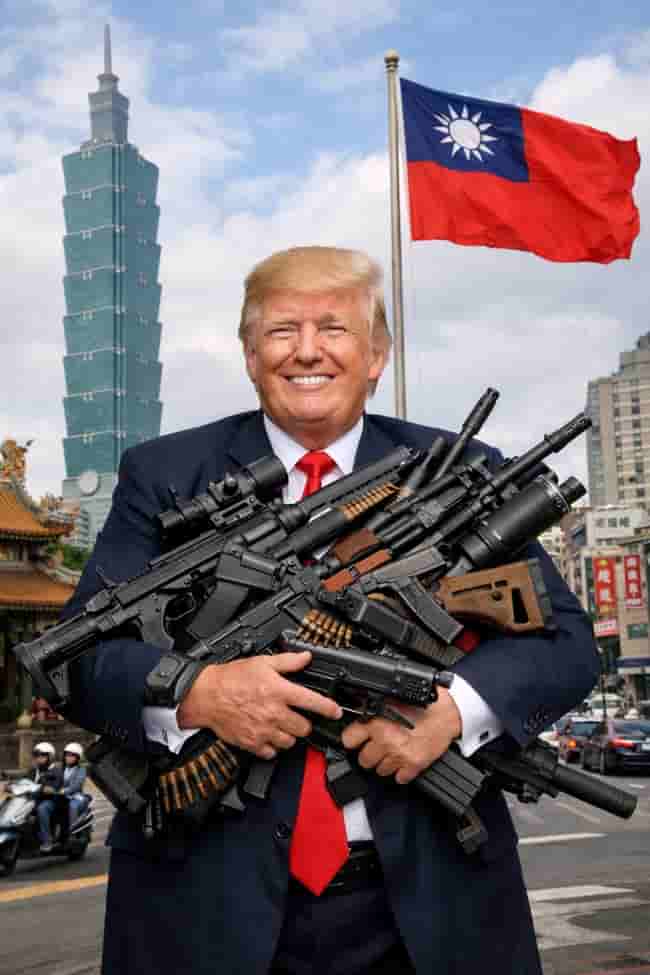
The Taiwan arms deal is reportedly awaiting final approval from U.S. President Donald Trump. According to sources familiar with the discussions, the announcement could come after Trump’s planned diplomatic visit to China, where he is expected to meet Chinese President Xi Jinping. The timing reflects the delicate balance Washington is trying to maintain between deterrence and diplomacy in one of the world’s most sensitive geopolitical arenas.
The scale of the Taiwan arms deal would mark a major escalation in U.S. military support for the self-governed island. Washington has long been Taiwan’s primary security partner and arms supplier, despite not maintaining formal diplomatic relations. Under the Taiwan Relations Act, the United States is required to provide the island with sufficient defensive capabilities to deter aggression.
Rising tensions in the Taiwan Strait
Taiwan sits at the center of one of the most volatile geopolitical disputes in the world. Beijing considers the island a breakaway province and has repeatedly stated that reunification with mainland China is inevitable, even by force if necessary.
In recent years, China has significantly increased military pressure on Taiwan through large-scale naval exercises, air patrols near the island, and aggressive diplomatic campaigns aimed at isolating Taipei internationally. The Taiwan arms deal now under discussion is therefore seen by U.S. policymakers as a critical step in maintaining the military balance in the Taiwan Strait.
Earlier arms packages approved by Washington already included sophisticated systems such as HIMARS rocket launchers, tactical missiles, artillery systems, drones, and anti-tank weapons. These deals exceeded $11 billion and were among the largest ever approved for Taiwan.
The new Taiwan arms deal could expand that arsenal further, particularly by strengthening Taiwan’s air defense network. Advanced interceptor missiles and integrated defense systems would allow Taiwan to respond more effectively to missile attacks, drones, or aircraft approaching the island.
The diplomatic shadow of the Trump–Xi meeting
The potential announcement of the Taiwan arms deal is closely tied to President Trump’s upcoming diplomatic engagement with Xi Jinping. Reports suggest that the White House may delay revealing the agreement until after the meeting to avoid inflaming tensions ahead of the visit.
China has consistently opposed any foreign arms sales to Taiwan, arguing that such moves violate Beijing’s sovereignty and undermine regional stability. During previous discussions with Washington, Chinese officials warned that military cooperation with Taiwan remains the most sensitive issue in bilateral relations.
Xi reportedly told Trump that arms sales to Taiwan must be handled with extreme caution, reflecting how central the issue has become in the strategic rivalry between the two powers.
For the United States, however, the Taiwan arms deal serves a broader purpose: maintaining deterrence and signaling continued commitment to Taiwan’s security in the face of growing Chinese military power.
Taiwan’s growing defense strategy
Taiwan itself has been investing heavily in its own defense capabilities. The government in Taipei recently announced a long-term plan to dramatically increase military spending, including a multibillion-dollar program focused on air defense systems, asymmetric warfare technologies, and drone capabilities.
This strategy is designed to make a potential invasion by China significantly more costly and complicated. Smaller, mobile, and technologically advanced systems are increasingly prioritized over large conventional weapons platforms.
The Taiwan arms deal aligns closely with this approach. Many of the systems included in previous packages are intended to enhance rapid-response defense and missile interception capabilities.
Taiwanese officials argue that these investments are necessary to preserve peace and stability in the region by deterring aggression rather than provoking conflict.
The wider geopolitical contest
Beyond the immediate military implications, the Taiwan arms deal reflects a broader global contest between Washington and Beijing. The rivalry now extends across trade, technology, supply chains, and strategic influence throughout the Indo-Pacific region.
Taiwan plays a unique role in this competition. The island is not only strategically located but also home to the world’s most advanced semiconductor manufacturing industry, making it indispensable to global technology supply chains.
For China, regaining control over Taiwan would carry enormous strategic and symbolic importance. For the United States and its allies, preventing that outcome is seen as essential to preserving the current regional balance of power.
This explains why each new Taiwan arms deal triggers strong reactions from Beijing and intense debate within international policy circles.
A fragile balance of deterrence
The coming months may prove decisive for the future of the Taiwan Strait. If approved, the Taiwan arms deal would significantly enhance Taiwan’s defensive capabilities while reinforcing Washington’s role as the island’s security guarantor.
At the same time, it risks further inflaming already tense relations between the United States and China. Military modernization on both sides of the Strait continues to accelerate, raising concerns that miscalculation or escalation could lead to a broader confrontation.
For now, the Taiwan arms deal stands as another indicator of how strategic competition between major powers is reshaping global security. Whether it ultimately stabilizes the region through deterrence or contributes to rising tensions will depend on how Washington, Beijing, and Taipei navigate the fragile geopolitical landscape ahead.
What remains clear is that Taiwan has become one of the central fault lines of twenty-first-century geopolitics—and decisions taken today could shape the balance of power for decades to come.
7 Dangerous Reasons Trump Chose the Iran Attack Now and Risked Everyt
More…