Lithium-ion battery innovation – Akira Yoshino’s Inspiring Visit Sparks Ambitious New Partnerships Advancing Global Lithium-Ion Battery Innovation and Clean Energy Research Across Universities, Industry and Government Networks 17-11-2025
Lithium-ion battery innovation
A landmark event at the University of Toronto brought together more than 200 leaders from academia, industry, government and First Nations communities to explore the future of lithium-ion battery innovation. Held on November 10, the gathering celebrated global collaboration and highlighted how strategic partnerships can accelerate clean energy technologies.
Jointly hosted by U of T’s Faculty of Arts & Science, the Department of Chemistry, the Faculty of Applied Science & Engineering and Asahi Kasei Corporation, the event showcased how research ecosystems can converge to shape the next generation of energy solutions.
A Lecture from the Inventor Who Transformed Modern Energy
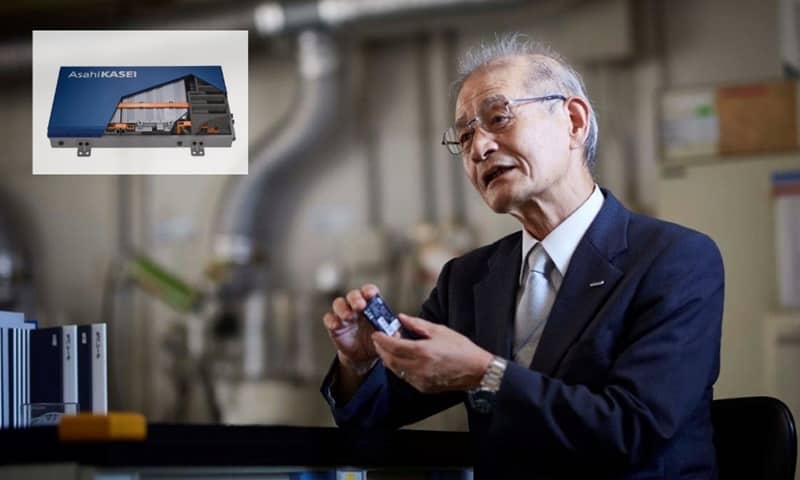
A major highlight of the event was a special lecture titled The Future Society Made Possible by Lithium-ion Batteries, delivered by Professor Akira Yoshino. Yoshino, Honorary Fellow of Asahi Kasei Corporation and professor at Meijo University, is widely recognized for his groundbreaking work developing the lithium-ion battery — an achievement that earned him the 2019 Nobel Prize in Chemistry.
Since their invention in the mid-1980s, lithium-ion batteries have become essential to modern life, powering smartphones, electric vehicles, and even large-scale energy storage installations. But according to Yoshino, a new chapter of lithium-ion battery innovation is on the horizon. lithium-ion battery innovation
“In the coming years, I believe we’ll see meaningful progress in several key areas of battery technology,” Yoshino explained. “From advances in recycling that support circularity to next-generation materials that expand functionality, the opportunities ahead are significant.”
Yoshino emphasized that new breakthroughs will depend on resilient global supply chains and long-term investment in R&D and manufacturing capacity to support the clean energy transition. lithium-ion battery innovation
Connecting Leading Research Minds
Following his lecture, Yoshino met with U of T researchers leading global work in battery science, materials engineering, power electronics and clean energy. Many of these experts are active within world-class research hubs, including:
-
The Acceleration Consortium, which merges AI, robotics and materials science to rapidly design and test new molecules.
-
The Lawson Climate Institute, dedicated to accelerating technologies and policies required for the global transition to net zero.
-
The Centre for Quantum Information and Quantum Control, supporting innovation in rapidly evolving, interdisciplinary quantum research.
These discussions reinforced the potential for multi-disciplinary collaboration to accelerate lithium-ion battery innovation, particularly in the areas of sustainable materials, circularity, and advanced manufacturing.
Industry Partnerships Strengthening the Battery Supply Chain
Representatives from Asahi Kasei Corporation — a global producer of battery separators — joined the event and toured U of T’s research facilities. The company recently began developing a new separator manufacturing facility in Port Colborne, Ontario, strengthening North American battery supply chain resilience.
“We were pleased to team with the University of Toronto for this event,” said Samuel Mills, President of Asahi Kasei Battery Separator North America. “We hope it sparks a long-term partnership that drives innovation, supports workforce development and strengthens the battery supply chain across Ontario and North America.”
U of T Researchers Advancing Next-Generation Battery Solutions
The event also highlighted the breadth of U of T research that builds directly on Yoshino’s foundational work, including:
-
Professor Cristina Amon (MIE): Designing batteries that perform reliably under extreme thermal conditions.
-
Professor Gisele Azimi (ChemE, MSE): Creating environmentally responsible recycling processes to recover valuable battery materials.
-
Professor Dwight Seferos (Chemistry): Investigating organic materials as potential components of future battery systems.
-
Professor Olivier Trescases (ECE) and the UTEV Research Centre: Advancing power electronics, EV battery systems and charging technologies.
-
Professor Alex Voznyy (UTSC) and the Clean Energy Lab: Developing scalable, low-cost materials for energy conversion.
Collectively, these research efforts demonstrate U of T’s influential role in advancing lithium-ion battery innovation and shaping future energy technologies.
Government Support for Clean Energy Research
Ontario’s Associate Minister of Energy-Intensive Industries, the Honourable Sam Oosterhoff, attended the event and underscored the province’s commitment to supporting partnerships that foster clean energy growth.
“Ontario’s universities offer world-class research and a highly skilled talent pool,” Oosterhoff said. “With expertise in EVs, advanced batteries, and energy, the University of Toronto is uniquely positioned to drive innovation, create jobs and strengthen our economy for decades to come.”
A Vision for Collaborative, Clean Energy Progress
The event demonstrated how universities, industry, government and global leaders can unite around a shared mission: accelerating lithium-ion battery innovation to build a cleaner, more resilient future. Inspired by Akira Yoshino’s visionary insights, these partnerships promise to shape the next wave of technologies powering society’s transition to sustainable energy.
More…