Tire Waste Turns into Circular Opportunity as Lummus Investment Accelerates Advanced Tire Recycling Technology, Reducing Pollution and Redefining Sustainable Materials Markets Worldwide 23-01-2026
Tire Waste as a Growing Global Challenge
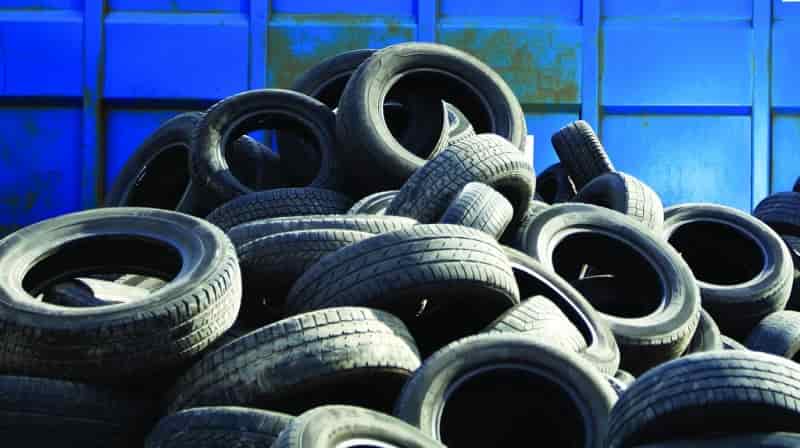
End-of-life tires represent one of the most persistent waste challenges facing modern industrial economies. Millions of tires are discarded every year, often ending up in landfills, illegal dumps, or open storage sites that pose long-term environmental and fire risks. Traditional disposal methods struggle to manage this volume sustainably, creating an urgent need for scalable recycling solutions.
At the same time, tires contain valuable hydrocarbons, carbon materials, and steel that are lost when disposal methods fail to recover them. Tire recycling technology has therefore become a strategic priority for companies seeking to reduce waste while recovering high-value materials for industrial reuse.
Lummus Technology Expands Commitment to Circular Solutions
Lummus Technology has announced a strategic investment in InnoVent Renewables, a move designed to accelerate the global deployment of advanced tire recycling technology. The investment reflects a growing emphasis on circular economy solutions that address real environmental challenges while delivering commercial value.
By investing in InnoVent Renewables, Lummus aims to strengthen its portfolio of sustainable process technologies and expand the reach of a proven tire recycling technology capable of operating at commercial scale. The collaboration builds on an existing partnership between the two Houston-based companies.
How InnoVent’s Tire Recycling Technology Works
InnoVent Renewables has developed a proprietary tire recycling technology based on advanced pyrolysis processes. This technology converts end-of-life tires into multiple valuable output streams rather than treating them as waste.
Through controlled thermal conversion, tires are processed into tire pyrolysis oil, recovered carbon black, pyrolysis gas, and steel. Each of these outputs can be reintroduced into industrial value chains, supporting a circular tire economy and reducing reliance on virgin fossil resources.
Tire pyrolysis oil can be used as a feedstock for fuels and chemicals, while recovered carbon black serves as a sustainable alternative to conventional carbon black used in rubber and plastics manufacturing. Pyrolysis gas supports energy efficiency within the process, and recovered steel reenters metal recycling streams.
Scalable End-to-End Recycling Infrastructure
One of the key advantages of InnoVent’s tire recycling technology is its end-to-end scalability. The system is designed to manage the entire recycling process, from tire feedstock handling to product recovery, making it suitable for large-scale industrial deployment.
This scalability is critical as global demand for tire recycling technology continues to rise. Many regions lack adequate infrastructure to manage tire waste, and modular, replicable solutions are essential for rapid deployment.
The Role of Lummus as Global Licensor
Lummus Technology serves as the exclusive global licensor of InnoVent’s tire pyrolysis technology, a role established through their partnership in 2025. As a licensor, Lummus provides engineering expertise, project execution capabilities, and global market access.
This structure enables faster adoption of tire recycling technology across multiple regions, reducing barriers for investors and operators seeking proven, commercially viable recycling solutions. The investment further aligns incentives between technology developer and licensor.
Commercial Operations in Monterrey, Mexico
InnoVent currently operates a commercial facility in Monterrey, Mexico, capable of processing up to one million passenger tires per year. This facility demonstrates that the tire recycling technology is not theoretical but already functioning under real industrial conditions.
Lummus’ investment is intended to increase production capacity at the Monterrey site while improving overall process efficiency and commercial performance. Expanding capacity also provides a reference model for future facilities worldwide.
Environmental and Economic Impact
Advanced tire recycling technology delivers both environmental and economic benefits. By diverting tires from landfill and uncontrolled disposal, it reduces pollution risks, fire hazards, and long-term soil contamination.
Economically, the recovery of tire pyrolysis oil and recovered carbon black creates new revenue streams while reducing dependence on virgin raw materials. This dual benefit strengthens the business case for circular tire recycling investments.
Accelerating the Circular Tire Economy
The partnership between Lummus Technology and InnoVent Renewables highlights how collaboration accelerates circular economy adoption. Combining process innovation with global commercialization expertise shortens the path from pilot technology to widespread market impact.
As regulations tighten around waste management and carbon emissions, tire recycling technology is expected to play an increasingly important role in sustainable materials strategies for the automotive, chemical, and manufacturing sectors.
A Model for Future Recycling Investments
Beyond tire waste, this investment signals a broader shift in industrial priorities. Advanced recycling technologies that recover materials at scale are becoming core infrastructure for the low-carbon economy.
Lummus’ investment in InnoVent Renewables positions tire recycling technology as a mature, investable solution rather than an experimental concept. It also sets a benchmark for how industrial players can support circular systems that deliver measurable environmental benefits.
Conclusion
The investment by Lummus Technology in InnoVent Renewables marks a significant step forward for advanced tire recycling technology. By scaling proven pyrolysis solutions, the partnership transforms end-of-life tires from an environmental liability into a source of high-value circular materials.
As global demand for sustainable waste solutions grows, tire recycling technology stands out as a critical enabler of the circular economy, combining environmental responsibility with industrial performance and long-term economic value.
More… |