Oil Price Trends Today: Brent Near $64.39 and WTI Around $59.70 Amid Global Supply Glut, Weak Demand, OPEC+ Moves and Mixed Investor Sentiment 23-01-2026
Current Oil Price Snapshot (January 23, 2026)
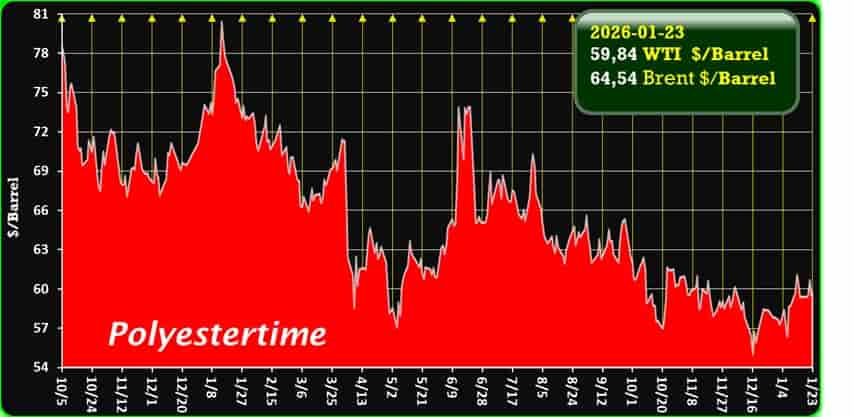
As of January 23, 2026, global crude oil benchmarks are trading at relatively modest levels compared with historical highs. Brent crude stands at about 64.39 USD per barrel while West Texas Intermediate (WTI) trades near 59.70 USD per barrel. These levels reflect a market that remains under pressure due to structural oversupply and mixed demand signals.
Price Table: Key Benchmarks
| Benchmark | Price (Approx.) | Trend Context |
|---|---|---|
| Brent Crude | 64.39 USD/b | Modest recovery from last month but below year-ago levels |
| WTI Crude | 59.70 USD/b | Stable near multi-month averages but pressured by supply |
Source: Latest market data as of January 23, 2026.
Market performance over recent weeks shows some resilience, with Brent having recovered part of earlier losses; however, prices are still broadly lower than a year ago, signaling underlying softness.
What Is Driving Oil Price Movements Right Now?
Understanding the current trend requires unpacking the principal market forces at play. The interplay between supply, demand, policy decisions, geopolitical tensions, and investor psychology together shape today’s oil price environment.
1. Global Supply and Demand Dynamics
A key theme in early 2026 is the persistent oversupply relative to demand growth. Major producer nations, including those in OPEC+ alongside the United States and other exporters, continue to lift production. Contributing factors include strong output from key nations and rising inventories globally.
At the same time, global oil demand growth remains subdued. Economic headwinds in major consuming regions—due to slower industrial activity or energy transition effects—have dampened expectations for robust consumption. This imbalance tends to exert downward pressure on crude prices.
2. OPEC+ Actions and Policy Signals
Decisions by the Organization of the Petroleum Exporting Countries (OPEC) and allied producers (OPEC+) remain central to oil price dynamics. While the group has periodically hinted at production discipline, recent policy implementation has been mixed and has not fully counteracted the broader supply glut.
Market watchers interpret OPEC+ communications and compliance data closely, as any credible commitment to deeper cuts can spark short-term price support. Conversely, lackluster coordination reinforces bearish sentiment.
Geopolitical Developments
Geopolitical risk has historically had outsized influence on oil price volatility. In early 2026, tensions in the Middle East, Eastern Europe, and disruptions affecting exports from certain regions continue to be monitored.
However, recent stabilization in some fronts—such as easing risk of supply interruptions—has mitigated upside shocks to prices. When political risk eases, markets tend to reprioritize fundamentals (supply/demand balance) over uncertainty premia.
Economic Data and Investor Sentiment
Oil markets are sensitive to macroeconomic indicators, including GDP growth, manufacturing activity, and employment figures from major economies. Soft economic data often signals weaker fuel demand ahead, which weighs on oil price expectations.
Investor sentiment reflected in trading positions and futures market flows also tells a nuanced story: despite occasional rallies, the broader trend from financial markets leans cautious, with traders pricing in a continuation of modest prices given structural oversupply and uncertain demand drivers.
Short-Term Outlook: Where Oil Price May Head
Analyst forecasts and official energy outlooks point to a continuation of the current pattern in the near term:
-
Bearish pressure persists: Oversupply and rising inventories—especially if demand remains weak—could keep prices subdued in the coming months.
-
Potential support zones: Should OPEC+ tighten supply or geopolitical risk intensify, both Brent and WTI could find upward support near key technical thresholds (e.g., Brent in the mid-60s).
-
Seasonal demand effects: Approaching seasonal transitions in consumption (e.g., increased spring transport demand) may help underpin oil price stability.
Given these influences, most models do not currently project a sharp sustained rally in the immediate future, but neither do they forecast dramatic collapses absent major macro shocks.
Implications for the Global Economy and Energy Markets
The current oil price environment carries several important implications:
-
Inflation and consumer costs: Lower crude prices can temper fuel costs for consumers and businesses, providing modest relief to inflation metrics in energy-importing economies.
-
Energy sector investments: Prolonged modest pricing may weigh on investment returns for higher-cost oil projects and influence capital allocation in the energy sector.
-
Geopolitical leverage: Countries reliant on oil revenues face tighter fiscal prospects when prices remain below long-term break-even levels.
Final Thoughts
As of January 23, 2026, the oil price landscape remains in a state of cautious equilibrium. With Brent around 64.39 USD/b and WTI near 59.70 USD/b, the balance of supply and demand, OPEC+ decisions, and broader economic signals continue to dictate price direction. While short-term volatility may arise from geopolitical or policy shifts, the prevailing structural forces suggest a measured price range unless disrupted by major external events.
For global markets and energy consumers alike, understanding these drivers offers valuable context for navigating commodity price risks and evaluating future economic trajectories.
More…