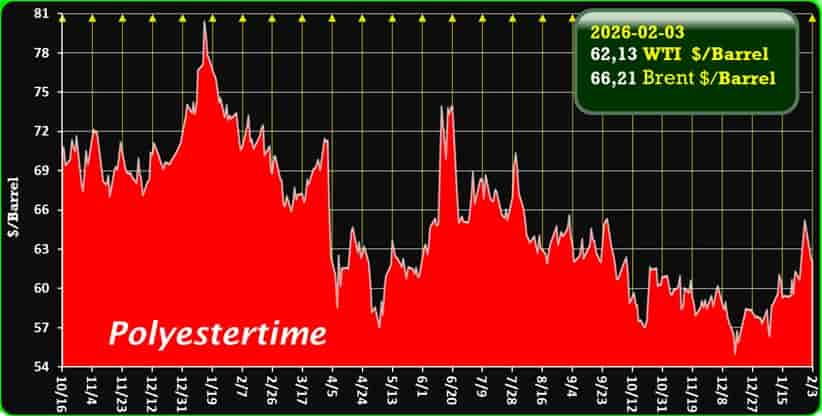
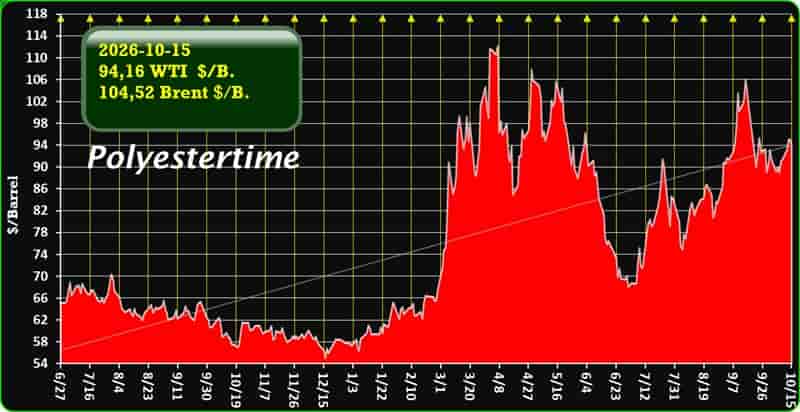
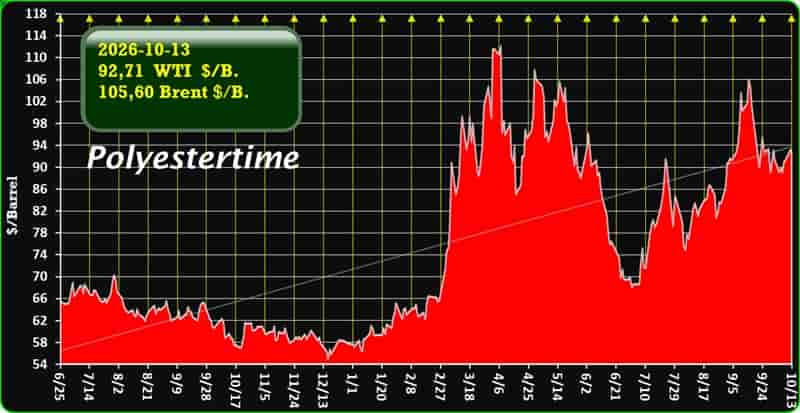
Oil Price Drops Sharply on Geopolitical Calm: Brent at ~$66/B and WTI ~$62/B as Easing US-Iran Tensions Dampen Speculation and Global Supply Pressures 03-02-2026
Oil Price Trend Update – What’s Driving Markets on February 7, 2026
As of February 7, 2026, oil price indicators show a softening trend for crude benchmarks: Brent crude trades at approximately $66.07 per barrel, while West Texas Intermediate (WTI) stands near $62.02 per barrel. This represents a notable retreat from January peaks when geopolitical tensions briefly pushed oil significantly higher. Several market forces — from geopolitics to supply/demand fundamentals — are shaping this recent movement.
Current Price Movements: Brent and WTI
| Benchmark | Approx. Price (Feb 7, 2026) | Recent Trend | Key Driver |
|---|---|---|---|
| Brent (Global) | ~$66.21/b | Lower from recent highs | Geopolitical de-risking |
| WTI (US) | ~$62.13/b | Also easing | Reduced speculation, strong supply |
Brent and WTI both retreated from multi-month highs recorded during a bout of US-Iran tensions late January. Analysts and trading desks attribute much of the downturn to easing fears of an imminent conflict that had previously added a risk premium to crude markets.
Main Market Drivers
1. Geopolitical Developments — De-escalation Lowers Risk Premium
Markets reacted sharply to comments from U.S. and Iranian officials suggesting that diplomatic talks were underway, effectively dousing fears of a U.S-Iran military confrontation. This softening of geopolitical stress has removed some upward pressure on the oil price, triggering sell-offs by speculative funds and reducing risk premiums built into futures.
Previously, prices surged — with Brent briefly exceeding $70 per barrel — as fears of conflict disrupting flows through the Persian Gulf intensified. The recent shift in rhetoric has rippled through energy markets, leading to broader commodity weakness and a strengthening U.S. dollar that further pressures oil.
2. OPEC+ Actions — Steady Output Keeps Markets Ample
The OPEC+ alliance has opted to hold production steady through March 2026, maintaining the status quo rather than tightening markets in response to price fluctuations. This approach signals confidence in current supply balances, but also limits potential price support from coordinated cuts.
With production levels unchanged, global crude inventories remain relatively well-supplied. Combined with resilient output from non-OPEC producers such as the U.S. and Brazil, the risk of prolonged tightness in crude markets has diminished. Broader forecasts suggest continuing oversupply relative to demand in 2026, which adds structural pressure on oil price benchmarks.
3. Supply & Demand Fundamentals
According to recent energy agency projections, global oil supply growth continues to outpace demand growth, leading to inventory builds that weigh on price momentum. This surplus dynamic has been a persistent theme through 2025 and into 2026.
Demand growth, while positive, remains moderate and is being counterbalanced by higher production from shale and other non-OPEC sources. Continued high stock levels suggest that a meaningful shift in the oil price will require either a substantive uptick in consumption or coordinated supply adjustments.
4. Investor Sentiment & Risk Appetite
Investor sentiment is presently cautious. After a recent surge tied to geopolitical risk, traders have reversed positions in response to diplomatic developments. This speculative unwinding has been amplified by broader commodity market weakness and equity volatility, reducing risk appetite for high-beta assets like oil.
A strong U.S. dollar has also played a role: commodities priced in dollars become more expensive in other currencies, which can dampen demand and put additional downward pressure on prices.
What This Means for the Global Economy
-
Inflation & Energy Costs: Lower crude benchmarks could ease energy cost pressures, benefiting oil-importing countries and consumers at the pump.
-
Energy Investments: Weak pricing creates mixed signals for upstream investment, which can slow new development spending while boosting profitability for downstream refiners when margins improve.
-
Policy & Geopolitics: Continued diplomatic progress in sensitive regions may reduce the likelihood of supply shocks, but political risks remain a wildcard.
Short-Term Outlook: Where Oil Prices May Head
Market forecasts suggest a range of possible scenarios:
-
Neutral to Slight Upside: If geopolitical calm persists and inventories stabilize, Brent and WTI could consolidate around current levels.
-
Volatility Remains: Any renewed tensions, OPEC+ policy shifts, or demand surprises — especially from China or global economic rebounds — could quickly trigger renewed volatility.
-
Seasonal Demand Effects: Spring refinery turnarounds and seasonal consumption effects could influence near-term balances.
Analysts emphasize that while the oil price may hover in the mid-$60 range in the short term, structural oversupply and moderated demand growth likely cap sustained upward momentum absent major geopolitical or supply shifts.
Summary
The oil price landscape as of early February 2026 reflects a market transitioning from risk-driven spikes to fundamentals-driven equilibrium. With Brent around $66.21 per barrel and WTI near $62.13, current dynamics show the influence of geopolitical de-risking, OPEC+ decisions to hold production steady, supply surplus pressures, and cautious investor sentiment. Understanding these drivers can help both market participants and wider economic observers anticipate evolving trends in energy markets.
More…