Oil Prices Iran: Why Brent and WTI Are Falling After the War Shock
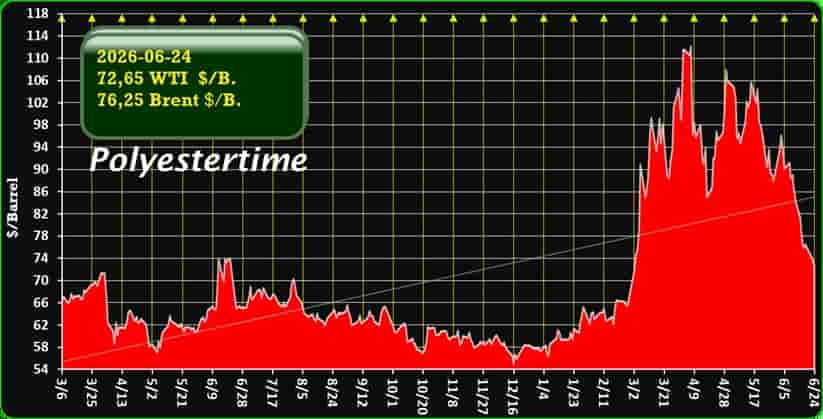
Oil Prices Iran: Brent Near $76 and WTI Near $73 as Markets Reprice War Risk
Main content begins
Oil prices are falling back from crisis levels, but the market is not yet back to normal.
Brent crude is currently trading around $76 per barrel, while WTI is near $73 per barrel. That is a sharp change from the panic-driven levels seen during the most intense phase of the U.S.–Iran war, when fears over the Strait of Hormuz pushed traders to price in a major supply shock.
The latest move lower does not mean the risk has disappeared. It means the market is now trying to separate immediate supply disruption from longer-term geopolitical uncertainty.
The central question for traders, refiners and consumers is simple: has the oil market moved from war premium to peace discount, or is this just a temporary pause before volatility returns?
Why oil prices are falling now
The main reason oil prices are easing is the improving outlook for shipping through the Strait of Hormuz.
The Strait is one of the world’s most important oil transit routes. When military conflict restricted flows through the area, oil markets reacted quickly because any disruption there affects crude, refined products and liquefied natural gas moving from the Gulf to global buyers.
Recent reports indicate that some stranded vessels have started moving again after the interim U.S.–Iran agreement. That has reduced the immediate fear of a complete supply freeze.
Markets are forward-looking. Once traders believe that oil can begin moving again, even partially, prices often fall before the physical market fully normalizes. This helps explain why Brent can be near $76 and WTI near $73 even though the logistics situation remains fragile. oil prices Iran
The Strait of Hormuz is still the key risk
The Strait of Hormuz remains the most important variable for oil prices.
Before the conflict, the route handled a major share of global seaborne oil trade. During the war, flows were severely reduced, forcing producers, refiners and shipping companies to adjust quickly. Alternative routes and emergency stock releases helped prevent an even more extreme price shock, but they did not remove the underlying vulnerability.
Even with limited traffic resuming, normal operations may take time. Ships, insurers, port operators and buyers need confidence that routes are safe, predictable and commercially viable.
This is why prices can fall sharply while the market remains nervous. The first phase of the sell-off reflects relief. The second phase depends on proof that barrels are actually moving reliably.
Brent and WTI: what the current spread tells us
Brent near $76 and WTI near $73 suggests that the global market is still pricing in some risk, but not the same level of emergency premium seen earlier in the conflict.
Brent is the international benchmark and is more directly exposed to disruptions affecting seaborne trade. WTI is the U.S. benchmark and is more influenced by domestic production, U.S. inventory levels and export demand.
When Middle East shipping risk rises, Brent often becomes more sensitive than WTI. When that risk fades, the Brent-WTI spread can narrow.
The current pricing suggests three things:
First, traders believe the worst-case scenario for Hormuz has become less likely.
Second, the market still expects some disruption to continue.
Third, demand concerns are helping limit the upside in crude prices.
That last point matters. Oil prices are not only about supply. If high fuel costs, weaker industrial activity or slower Asian demand reduce consumption, crude can fall even while geopolitical risks remain elevated.
Why prices may not return to pre-war normal immediately
A lower oil price does not mean the energy shock is over.
The war disrupted shipping, inventories, refinery planning and trade flows. These systems do not reset overnight. Companies may need weeks or months to rebuild normal supply chains, replenish storage and renegotiate delivery routes.
Some buyers may also keep extra inventories as insurance against a renewed escalation. That can support prices even when headlines look calmer.
There is also the issue of trust. The U.S.–Iran agreement is an interim arrangement, not a permanent settlement. If either side challenges the terms, if inspections become a political flashpoint, or if regional allies resume military action, the oil market could quickly reprice risk.
This is why Brent around $76 should not be read as a guarantee of stability. It is better understood as a market test: traders are testing whether diplomacy can hold long enough for physical flows to recover.
What could push oil prices higher again
Oil prices could rise again if the market sees evidence that the U.S.–Iran framework is weakening.
The most important bullish triggers would be:
A renewed military incident near the Strait of Hormuz.
Fresh restrictions on tanker traffic.
A breakdown in nuclear or sanctions negotiations.
Attacks on energy infrastructure in the Gulf.
A sharp drawdown in commercial crude inventories.
A faster-than-expected recovery in demand, especially from Asia.
Any of these factors could bring back the war premium. In that scenario, Brent would likely react first because it is more exposed to international supply and shipping risk.
What could push oil prices lower
Oil prices could continue falling if physical supply improves faster than expected.
The bearish case is based on a wider reopening of the Strait of Hormuz, a durable diplomatic process, weaker demand and improved inventory levels.
If tankers move more freely, insurance costs fall and Gulf producers restore output, the market could shift from fear of shortage to concern about oversupply.
That would be especially important if demand remains soft. In a market where consumption is slowing, additional supply can weigh heavily on prices.
This is the scenario that could keep Brent closer to the mid-$70s or even push it lower, provided there is no renewed military escalation.
What this means for consumers and businesses
For consumers, lower crude prices may eventually reduce gasoline, diesel and transport costs. However, the pass-through is rarely immediate.
Retail fuel prices depend on taxes, refining margins, distribution costs, currency movements and local inventories. Even when crude falls, pump prices can remain sticky for a while.
For businesses, the message is similar. Lower Brent and WTI prices are positive for transport, chemicals, aviation, shipping and energy-intensive industries, but planning should remain cautious.
Companies exposed to fuel costs should not assume that the crisis premium is gone permanently. A better approach is to treat current prices as an opportunity to review hedging, supply contracts and logistics resilience.
The bigger market lesson
The U.S.–Iran war has reminded markets that oil is not only a commodity. It is also a geopolitical risk asset.
A single chokepoint can influence inflation, trade, shipping, energy security and consumer prices across multiple regions. The market response also shows how quickly prices can move when traders shift from fear to relief.
Brent near $76 and WTI near $73 show that the market is no longer pricing the most severe version of the crisis. But the situation remains fragile.
The next direction for oil will depend less on headlines and more on physical evidence: tanker flows, inventory data, refinery demand, insurance rates and the durability of the U.S.–Iran diplomatic process.
Bottom line
Oil prices are lower because traders believe the immediate risk of a full Strait of Hormuz shutdown has eased.
But this is not a clean return to normal. The U.S.–Iran war has left behind disrupted supply chains, cautious shipping markets and a geopolitical risk premium that could return quickly.
For now, Brent around $76 and WTI around $73 suggest relief, not certainty.
The oil market is no longer trading in panic mode. It is trading in verification mode.
Oil Prices and the Iran War: Why Brent and WTI Are Cooling Despite Global Supply Risks
More…