Oil Prices Iran: Brent Near $73 as Markets Reprice War Risk
Oil Prices Iran: Brent Near $73 as Markets Reprice War Risk
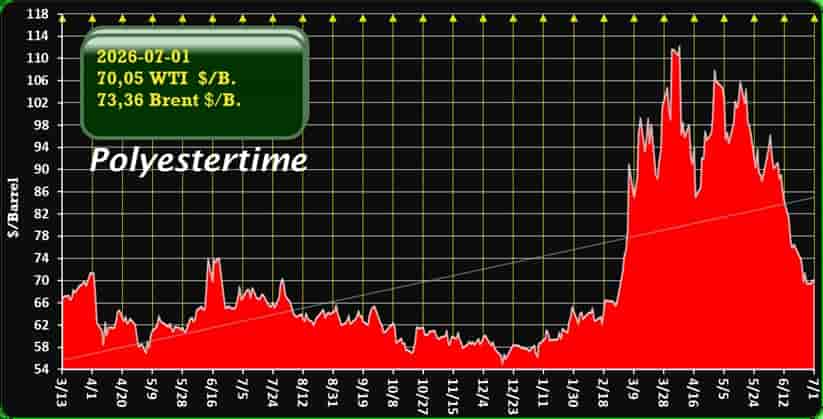
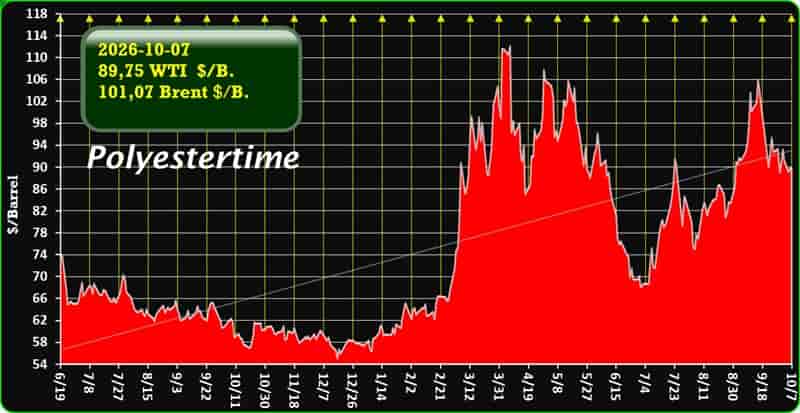
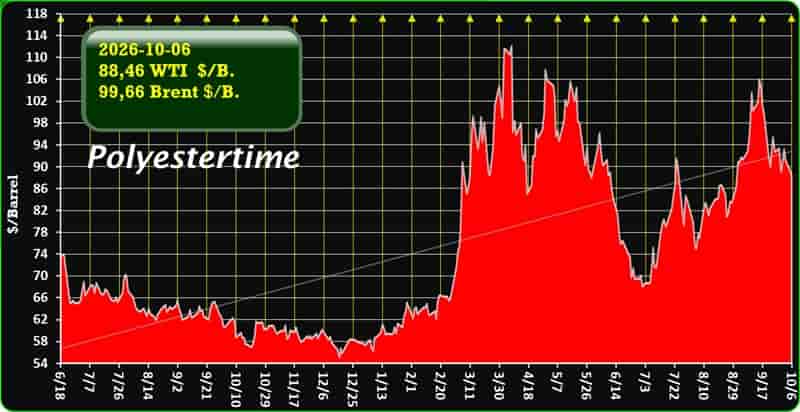
Brent crude is trading around $73 per barrel, while US West Texas Intermediate is near $69.5 per barrel, suggesting that the oil market has sharply reduced the extreme war premium seen earlier in the US-Iran conflict.
The latest price action does not mean that geopolitical risk has disappeared. It means traders are currently pricing a more balanced scenario: partial recovery in Gulf shipping, continued uncertainty around the Strait of Hormuz, and a fragile diplomatic path that could still reverse quickly.
Recent market data show Brent around $73.4 per barrel and WTI around $69.7 per barrel on July 1, 2026, broadly in line with the levels currently observed by the market.
Why oil prices have fallen from wartime highs
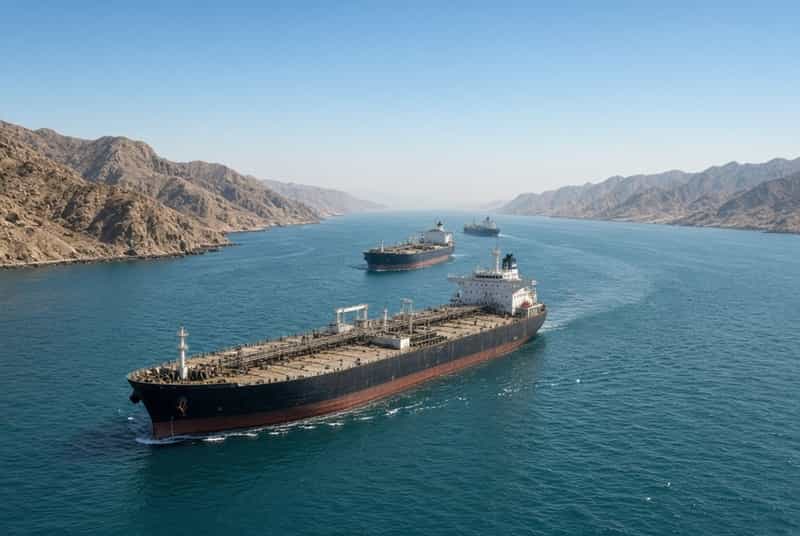
Oil prices surged earlier in the conflict because the Strait of Hormuz became the central risk point for global supply. The International Energy Agency says around 20 million barrels per day of crude oil and oil products moved through the Strait of Hormuz in 2025, equal to roughly 25% of the world’s seaborne oil trade.
That chokepoint matters because it is not only a route for Iranian oil. It is also essential for Saudi Arabia, Iraq, Kuwait, Qatar, Bahrain and the United Arab Emirates. If flows are restricted, the impact is immediately global.
The reason prices are now closer to $70 than to wartime peaks is that the market has seen signs of partial normalization. The IEA’s June oil market report said an interim US-Iran agreement could pave the way for reopening the Strait of Hormuz and lifting restrictions on Iranian oil traffic, helping send prices to their lowest levels since early March.
The Strait of Hormuz remains the key risk
The oil market is not relaxed. It is cautious.
AP reported that the future of the Strait of Hormuz remains unsettled after new strikes and disputes over shipping routes. According to AP, ship and oil flows had begun to recover after a US-Iran interim agreement, but later incidents slowed confidence and kept traffic below pre-war levels.
This is why Brent near $73 and WTI near $69.5 should not be read as a “risk-free” price. Instead, these levels suggest the market believes the worst disruption scenario is less likely than before, but still possible.
In practical terms, the current price range reflects three competing forces:
Diplomatic progress is pulling prices lower.
Partial recovery in Gulf shipping is easing supply fears.
The unresolved military and legal situation around Hormuz is keeping a geopolitical premium in the market.
Why Brent and WTI are moving differently
Brent is the global benchmark and is more directly exposed to international shipping risks, Middle East supply flows and European-Asian crude balances. WTI is more US-focused and reflects domestic inventories, refinery demand and pipeline logistics.
That is why Brent is currently trading above WTI. The spread is normal, but in a crisis it becomes especially important because Brent captures more of the geopolitical risk linked to the Persian Gulf and seaborne oil trade.
The EIA’s latest available spot-price table still shows how sharply the market moved in June, with Brent and WTI falling from elevated mid-June levels as supply fears eased. EIA data are useful, but they lag intraday market prices, so live market references are more relevant for the current Brent-$73 and WTI-$69.5 environment.
What traders are watching now
The next move in oil prices will likely depend on whether the recovery in Gulf shipping becomes durable.
If tanker traffic through Hormuz continues improving, Brent could remain under pressure, especially if demand growth is weak and non-OPEC supply remains resilient. But if new attacks, route restrictions or sanctions disputes escalate again, the market could quickly rebuild a war premium.
The IEA has warned that available alternative export routes are limited. Saudi Arabia and the UAE have some bypass capacity, but many Gulf exporters rely heavily on Hormuz. That means even a short-lived disruption can have a major effect on global oil and gas markets.
The inflation angle: why oil still matters
Lower crude prices reduce immediate pressure on fuel markets, transport costs and industrial energy bills. This matters for manufacturers, logistics companies and polymer producers, where crude and naphtha-linked feedstocks influence margins.
However, the pass-through from crude oil to gasoline, diesel, petrochemicals and freight costs is not instant. Refinery margins, inventories, taxes, shipping costs and local supply conditions can delay or reduce the benefit for end users.
For plastics and packaging markets, the key issue is not only the outright oil price. It is volatility. When crude swings violently, buyers delay decisions, producers adjust pricing more cautiously, and downstream margins become harder to manage.
What this means for the petrochemical and plastics chain
For polymer markets, Brent around $73 is less alarming than triple-digit crude, but it does not remove uncertainty.
Naphtha-based producers remain exposed to crude-linked feedstock costs. Recycled polymer markets may also feel indirect effects, because lower virgin resin prices can reduce the economic incentive to buy recycled material unless regulation or brand commitments support demand.
If the US-Iran situation stabilizes, petrochemical buyers may regain visibility on feedstock costs. If the conflict escalates again, converters and packaging producers could face renewed cost pressure across energy, logistics and raw materials. oil prices Iran
Base case: lower risk, not no risk
The current oil market is pricing a fragile improvement.
Brent near $73 and WTI near $69.5 suggest traders believe a full-scale Hormuz disruption is less likely than it was during the most severe phase of the crisis. But the situation remains highly sensitive to military incidents, shipping rules, sanctions enforcement and the durability of US-Iran negotiations.
The most realistic conclusion is that the oil market has moved from panic pricing to risk monitoring. Prices have fallen, but the geopolitical floor has not disappeared.
For energy-intensive industries, this is a moment to avoid complacency. The market has stabilized, but the Strait of Hormuz remains the single most important variable for crude oil prices in the weeks ahead.
Key takeaways
Brent is currently around $73 per barrel, while WTI is near $69.5 per barrel.
Oil prices have fallen because markets are pricing partial recovery in Gulf shipping and possible diplomatic progress.
The Strait of Hormuz remains the main risk because it handles around a quarter of global seaborne oil trade.
A durable reopening would pressure prices lower, while new military incidents could rapidly rebuild the war premium.
For petrochemicals and plastics, the main issue is not only price level, but volatility in crude-linked feedstocks.
US-Iran Oil Prices: Brent Near $73 as Markets Watch Hormuz Talks
More…