BRICS New Delhi Declaration 2026: Breakthrough Consensus for a Stronger, Fairer Global Order
BRICS New Delhi Declaration (2026): What It Says and Why It Matters
On 12 September 2026, BRICS leaders adopted the New Delhi Declaration under India’s 2026 chairship, titled “Building for Resilience, Innovation, Cooperation and Sustainability”. The 140‑paragraph text sets out a shared vision for a more representative global order, stronger multilateral trade rules, coordinated responses to regional conflicts, and deeper cooperation on terrorism, technology, and sustainable development.mea.gov+3
Context: A consensus document in a divided world
The declaration was announced by Prime Minister Narendra Modi as adopted “with full consensus” after intense, late‑night negotiations that bridged sharp differences among members, especially over the Middle East and the US–Iran war. Coming at the 20th anniversary of BRICS, the document frames the grouping as a voice for Emerging Markets and Developing Countries (EMDCs) and the Global South in an increasingly multipolar system.mea.gov+1
Core pillars of the declaration
The text is organized around the classic BRICS pillars—political and security cooperation, economic and financial cooperation, and cultural and people‑to‑people ties—but with a strong development and sustainability lens. Four themes dominate: reforming global governance, reshaping trade and finance rules, managing regional conflicts, and tightening cooperation on non‑traditional security threats.BRICS New Delhi Declaration
-
Reforming global governance and the UN
BRICS reaffirms commitment to the UN Charter and calls for a more just, equitable, and representative multilateral system. The declaration explicitly supports UN Security Council reform to increase representation of developing countries, recognizing African aspirations under the Ezulwini Consensus and Sirte Declaration, and noting China’s and Russia’s support for larger roles for Brazil and India, including in the Security Council.mea.gov+2
It also urges more equitable geographical representation in the UN Secretariat and other international bodies, and greater participation of women—especially from EMDCs—in leadership positions. The text backs revitalization of the General Assembly and ECOSOC, and implementation of the 2025 review of the UN peacebuilding architecture.mea.gov
-
Trade, finance, and the rules of the global economy
On economics, the declaration pushes for deep reform of the Bretton Woods institutions so that governance and quotas reflect today’s economic realities. It calls for urgent entry into force of the 16th IMF General Review quota increases and early progress on meaningful quota realignment under the 17th Review, guided by the “Diriyah Guiding Principles”.mea.gov
For the World Bank, BRICS supports a “better, bigger” institution through the 2025 Shareholding Review and realignment to correct historic underrepresentation of developing countries. On trade, the text strongly backs WTO reform, restoration of a fully functioning two‑tier dispute settlement system with immediate Appellate Body appointments, and opposition to protectionism disguised as environmental policy.mea.gov
The declaration condemns unilateral tariff and non‑tariff measures inconsistent with WTO rules, and supports Ethiopia’s and Iran’s bids to join the WTO. It also criticizes unilateral economic sanctions and secondary sanctions that distort trade and investment, without explicitly naming any country.BRICS New Delhi Declaration
-
Peace, security, and regional conflicts
BRICS reiterates commitment to conflict prevention, peaceful settlement of disputes, and mediation in line with the UN Charter. The declaration expresses deep concern over rising global military spending and growing nuclear risks, and calls to invigorate disarmament, arms control, and non‑proliferation, including support for nuclear‑weapon‑free zones and efforts toward a WMD‑free zone in the Middle East.mea.gov
On West Asia/Middle East, the text urges “maximum restraint”, protection of civilians and civilian infrastructure, and diplomatic efforts for long‑term peace, while stressing the need to keep global trade, supply chains, and energy flows smooth. It expresses serious concern over attacks on civilian infrastructure and peaceful nuclear facilities under IAEA safeguards.mea.gov
On Gaza and Palestine, the declaration voices deep concern over continued violence despite the October 2025 ceasefire, opposes forced displacement of Palestinians, and supports a two‑state solution based on 1967 borders with East Jerusalem as capital. It backs Palestine’s full UN membership and adequate representation in international institutions.mea.gov
The text welcomes the ceasefire in Lebanon, calls for full implementation of UNSC Resolution 1701, condemns violations, and emphasizes the safety and mandate of UNIFIL. On Sudan, it expresses grave concern over the humanitarian crisis, calls for an immediate permanent ceasefire and scaled‑up aid, and supports “African solutions”. On Syria, it reaffirms sovereignty and backs a Syrian‑led political process under UNSC Resolution 2254, plus withdrawal of occupying forces.mea.gov
Notably, the declaration does not mention Russia’s war in Ukraine, marking a departure from some previous BRICS texts and reflecting the difficulty of reaching consensus on that file.
-
Terrorism, illicit finance, corruption, and drugs
BRICS strongly condemns terrorism in all forms and explicitly condemns the 22 April 2025 Pahalgam terror attack in Jammu & Kashmir, which killed 26 people. It calls for zero tolerance of cross‑border terrorism and safe havens, and stresses that all acts of terrorism are criminal and unjustifiable regardless of motivation.mea.gov+1
The declaration focuses on illicit financial flows, money laundering, cyber‑enabled fraud, scam networks, and misuse of virtual assets, pushing for enhanced cross‑border cooperation among financial intelligence units, customs, law enforcement, and tech platforms. On corruption, it reinforces cooperation under the UN Convention against Corruption, strengthens asset recovery mechanisms, and welcomes practical tools like the BRICS Expert Network on Asset Recovery.mea.gov
On drugs, BRICS expresses concern over global illicit drug production and trafficking and welcomes the Guwahati Declaration by BRICS anti‑drug agencies to boost operational and technical cooperation. BRICS New Delhi Declaration
-
Science, technology, space, and sustainability
The text recognizes the BRICS Remote Sensing Satellite Constellation (RSSC) for socio‑economic development and emphasizes peaceful use of space, space debris mitigation, and finalizing amendments to include new BRICS space agencies and establish a BRICS Space Council. It reaffirms the 2030 Agenda for Sustainable Development, with focus on poverty eradication and reducing inequality (SDG 10), and notes a South Africa–Brazil proposal for an international panel on inequality.mea.gov
BRICS opposes unilateral coercive measures (sanctions) that harm development, health, and food security, and exacerbate environmental challenges. In his closing remarks, Prime Minister Modi also warned against the “weaponisation of technology and critical minerals”, cautioning that it could hinder shared progress and prosperity. BRICS New Delhi Declaration
What this means for markets and industry
For professionals tracking chemical commodities, polymers, and energy‑intensive industries, several elements of the declaration are market‑relevant. The strong stance against unilateral tariffs and non‑tariff barriers and the push for a functioning WTO dispute system signal a preference for more predictable trade rules, which matters for feedstocks, intermediates, and polymer flows across BRICS and partner economies. BRICS New Delhi Declaration
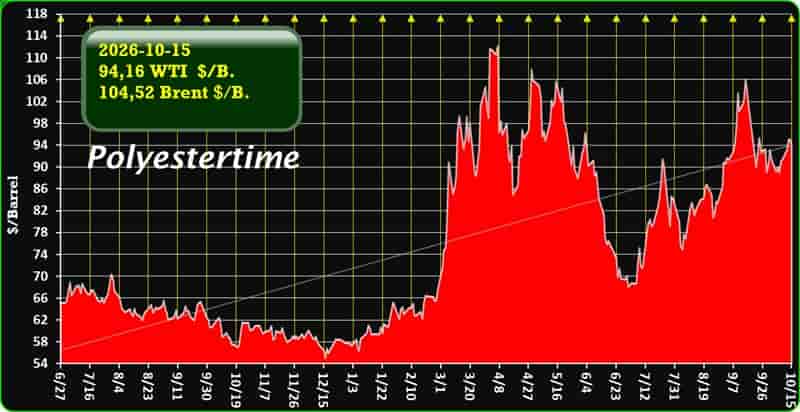
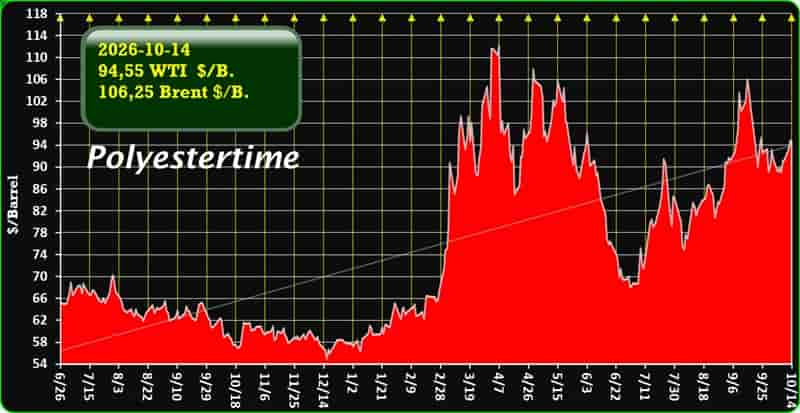
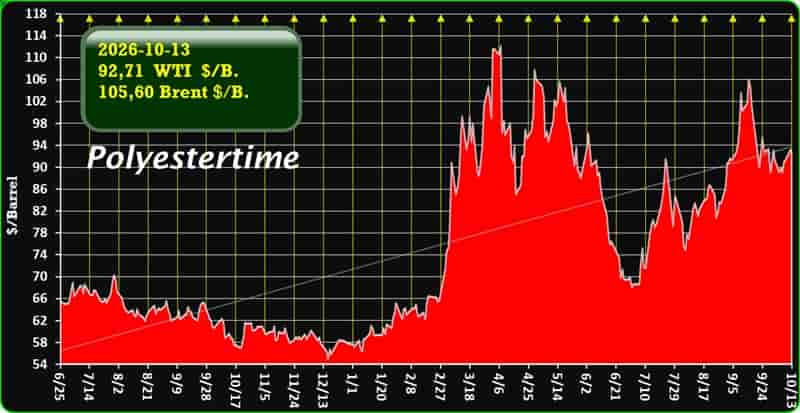
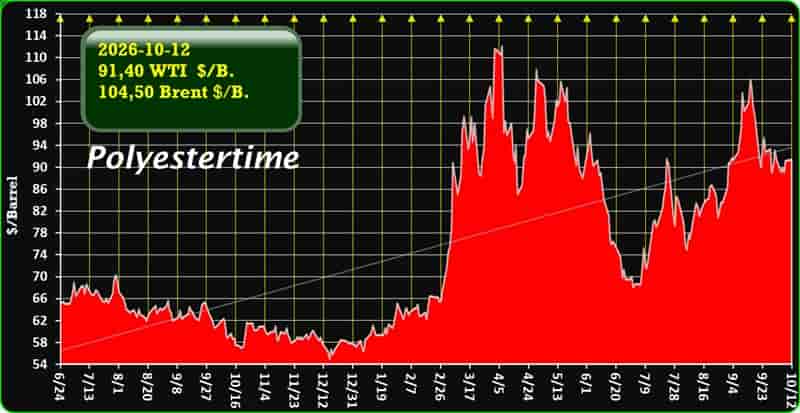
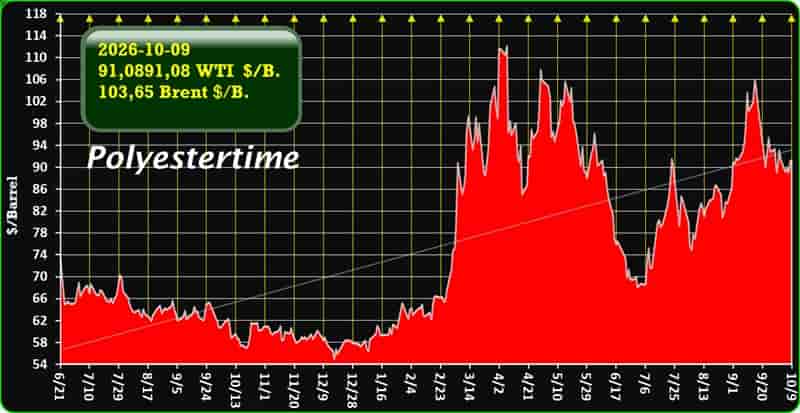
Repeated emphasis on protecting shipping routes, energy flows, and civilian infrastructure in West Asia directly affects oil, gas, and naphtha price risk, and by extension olefins and aromatics chains. The condemnation of unilateral sanctions and the push for IMF and World Bank reform could, over time, reshape financing conditions and payment corridors for large capex projects in EMDCs, including in petrochemicals and refining.mea.gov+1
Enhanced BRICS cooperation on satellite constellations and remote sensing can improve monitoring of logistics, agriculture, and environmental compliance—factors that increasingly feed into commodity forecasting, supply chain risk management, and ESG reporting.
BRICS De-Dollarisation Gains Momentum After Russia’s Stark Dollar Warning