Why Slovak Scientists Built a Mind-Blowing Edible Bioplastic Out of Algae
Algae Biodegradable Bioplastics
Why Slovak Scientists Built a Mind-Blowing Edible Bioplastic Out of Algae
Petroleum-derived plastics have dominated global manufacturing for nearly a century due to their durability, low weight, and versatile applications. However, those same traits have sparked a severe environmental crisis. Standard polymers do not readily decompose, leading to vast accumulations in landfills and aquatic ecosystems.
In response to this global pollution issue, biotechnologists from the Slovak company BioX Technologies have engineered an innovative bioplastic solution derived from microalgae and organic plant compounds. Reported by the News Agency of the Slovak Republic, this new material presents a sustainable alternative to traditional crude-oil plastics. Beyond offering standard biodegradability, specialized formulations of this material can even be made edible. Algae Biodegradable Bioplastics
+-----------------------------------------------------------------------+
|                       PLASTIC MATERIAL COMPARISON                     |
+--------------------------+--------------------+-----------------------+
| Feature                  | Petro-Plastics     | Algae Bioplastics     |
+--------------------------+--------------------+-----------------------+
| Primary Raw Material     | Crude Oil          | Microalgae Biomass    |
| Degradation Mechanism    | Centuries (Micro)  | Biological Breakdown  |
| Specialized Capability   | Non-edible / Toxic | Edible Formulations   |
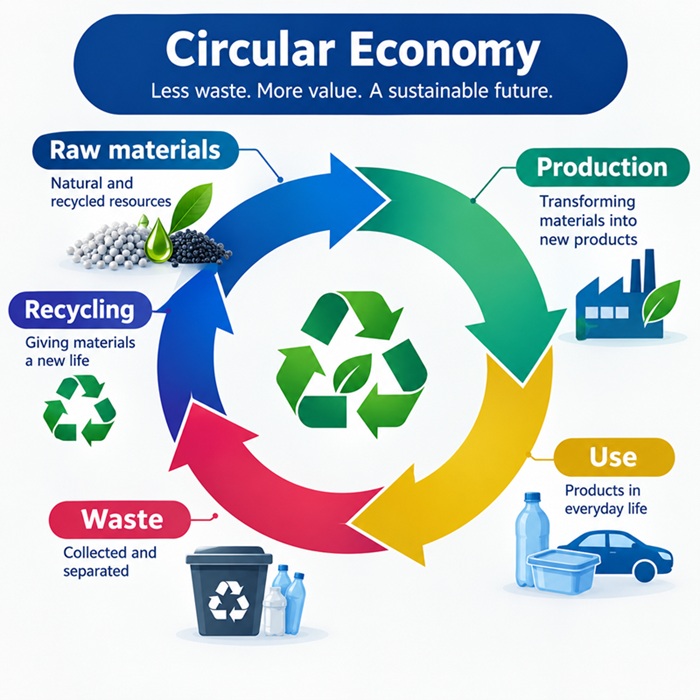
| Circular Economy Loop    | Complex Sorting    | Natural Decomposition |
+--------------------------+--------------------+-----------------------+
The Single-Use Plastic Problem
Conventional plastics present significant end-of-life challenges. Standard recycling loops require intense sorting, cleaning, and thermal processing. Moreover, polymers degrade in quality each time they are melted down, meaning they cannot be recycled indefinitely.
As Ema Ondrejkova of BioX Technologies explained during the announcement, plastics are light, strong, and vital across multiple industrial sectors, but single-use items create persistent environmental waste.
Because standard mechanical recycling cannot infinitely process fossil-fuel resins, the research team focused on renewable biological feedstocks. By leveraging microalgae—organisms that grow rapidly while absorbing carbon dioxide—they created a scalable organic substrate designed to naturally break down at the end of its product lifecycle.
How Algae Transforms Sustainable Material Engineering
Microalgae offer several distinct ecological advantages over conventional plant-based bioplastics derived from cornstarch or sugarcane:
-
Zero Agricultural Competition: Microalgae cultivation does not require fertile arable land or deforestation, preventing competition with global food crops.
-
Rapid Carbon Sequestration: Microalgae capture atmospheric carbon dioxide through photosynthesis faster than terrestrial forests, reducing net greenhouse gas emissions during raw material production.
-
High Biomass Yield: Microalgae yield significantly more biomass per square meter than traditional land crops, minimizing total land footprint.
The Slovak development team isolated cellular lipids, proteins, and polysaccharides from algae cultures to form a cohesive polymer matrix. This yields structural properties similar to commercial packaging films without adding long-chain synthetic additives.
Algae Cultivation & CO2 Capture
               │
               ▼
Cellular Extraction (Lipids & Polysaccharides)
               │
               ▼
BioX Polymer Formulation
               │
               ▼
+------------------------------+------------------------------+
│                              │                              │
▼                              ▼                              ▼
Biodegradable Packaging     Edible Film Coatings      Natural Organic Return
End-of-Life Disposability and Edible Formulations
The primary distinction between petro-chemical plastics and BioX Technologies’ algae bioplastic lies in their degradation pathways. Standard polymers require specialized municipal recycling facilities to prevent persistent contamination. In contrast, algae-based bioplastics break down organically under standard environmental composting conditions, turning into natural biomass and water.
In specialized packaging applications, such as fruit wraps or single-serve condiment packets, the researchers adjusted the formula to render the bioplastic completely non-toxic and edible. If ingested by wildlife or marine life, the biological material breaks down harmlessly in digestive systems, eliminating the threat of microplastic toxicity.
Economic Viability and Industrial Scalability
For algae bioplastics to replace fossil-fuel options globally, manufacturers must produce them at scale while keeping costs competitive. Bioplastic production historically faced higher cost barriers due to the price of raw biological extracts.
Recent advancements in automated photobioreactor technologies have dramatically lowered the cost of harvesting microalgae. Coupled with tightening environmental regulations—such as single-use plastic bans across the European Union—the market demand for scalable biopolymers is growing rapidly.
BioX Technologies continues to refine these material formulations, optimizing tensile strength, moisture resistance, and heat tolerance to match industrial packaging standards. By shifting away from crude oil substrates, this Slovak innovation provides a actionable step toward a cleaner circular economy.
More…